North Dakota Towing Rules for an OHV
It can be incredibly confusing trying to figure out the rules for towing an off-highway vehicle (OHV) in North Dakota. You might be out enjoying the Pembina Gorge or exploring the section lines, and suddenly a buddy gets stuck, or your machine breaks down miles from the nearest paved road. What do you do? This guide will walk you through the specific regulations and best practices for legally and safely towing an ATV or UTV across the varied landscapes of North Dakota.
Understanding North Dakota's Basic Towing Requirements for OHVs
Towing an OHV isn't as simple as just hooking up a chain and dragging it. North Dakota has specific rules, especially regarding where and how you can tow. The state's primary concern is safety on public thoroughfares, whether that's a paved highway or a roadside ditch. The first thing you need to understand is the distinction between towing an OHV as a vehicle and towing it as an implement. Generally, if it's being towed behind another vehicle (like a truck or another OHV), it falls under towing regulations.
One of the most unique and important aspects of North Dakota's towing law, particularly for those of us who spend a lot of time in the ditches, involves the type of hitch you use. The law specifies that when an OHV is being towed in a ditch or on a back-slope, it must be connected to the towing vehicle by a hinged swivel hitch. This isn't just a recommendation; it's a legal requirement designed for safety. This specialized hitch allows the towed OHV to articulate independently from the towing vehicle, preventing dangerous situations like jackknifing or losing control, especially in uneven terrain. Without it, you could be risking a ticket and a much more serious accident.
The Critical Role of a Hinged Swivel Hitch
When you're out there, whether you're bringing home a deer on the back of your UTV or just pulling a small utility trailer, you need to understand the nuances of the law. For standard trailers or implements, a rigid hitch is fine. But for towing another OHV itself, particularly in the unique environment of a roadside ditch or back-slope, a hinged swivel hitch is paramount. This specialized equipment allows for movement on multiple axes, preventing the towed vehicle from dictating the direction or stability of the towing vehicle, which is a real danger on uneven, sloped ground.
Imagine trying to tow a disabled ATV out of a muddy ditch with a standard rigid tow bar. The moment the towed ATV hits a rut or a bump off-angle, it could wrench the towing vehicle sideways, potentially causing both machines to roll. A hinged swivel hitch mitigates this by allowing the towed machine to pivot and flex with the terrain independently. It’s an investment, but a crucial one for anyone planning to tow another OHV in less-than-ideal conditions. Many riders in North Dakota carry these hitches or make sure their recovery vehicle is equipped, knowing the unpredictable nature of prairie riding.
Speed and Visibility When Towing
Beyond the hitch, speed and visibility are critical. When towing any vehicle, including an OHV, you need to ensure that your speed is appropriate for the conditions and the combined weight. The general rule of thumb is to go slow. Very slow. Especially if the towed machine is disabled and not contributing its own braking. You need to make sure you can stop safely, and that means significantly reducing your speed compared to normal riding.
Visibility is another huge factor. If you're towing an OHV on a public road, even if it's a gravel road where [North Dakota Rules for Riding a Gravel Road] allow OHVs, the towed machine itself needs to be visible. This means using appropriate lighting, especially if you're out after dark. The towed OHV should have functioning tail lights, brake lights, and turn signals, if possible, mirroring the towing vehicle. If the OHV is disabled and its lights aren't working, you'll need to use reflective tape, flares, or even supplemental battery-powered lights to make it visible to other traffic. This is particularly important on the long, flat stretches of North Dakota roads where vehicles can approach at high speeds. Ignoring these basic safety measures is not only dangerous but can also lead to citations for [North Dakota Ticket Cost for a Road Violation].
Towing Scenarios: Ditches, Roads, and Recovery Operations
North Dakota offers diverse riding environments, from designated trails to wide-open ditches and gravel roads. Each of these areas comes with its own set of rules and considerations for towing an OHV. It's not a one-size-fits-all situation, and understanding these distinctions can save you from legal trouble and, more importantly, keep you safe.
Towing in North Dakota Ditches and Back-Slopes
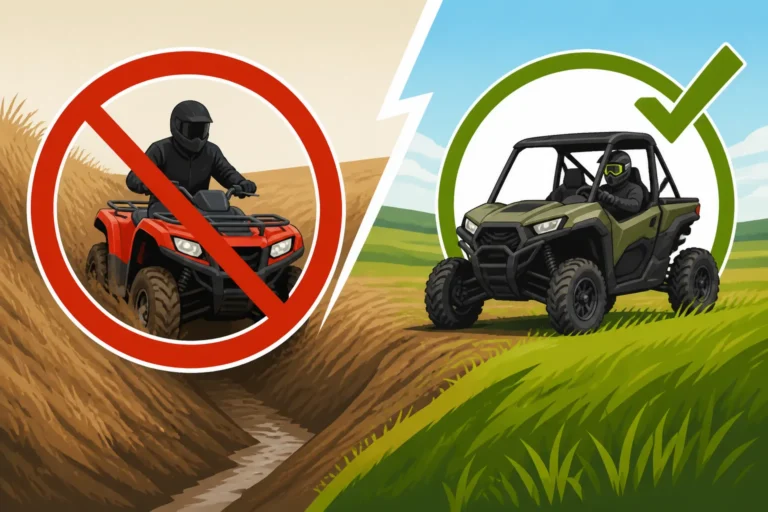
North Dakota's ditches are a unique aspect of OHV riding in the state, often functioning as de facto trails, and [North Dakota Ditch Riding: The Legal Right Explained] is a common topic. However, towing in these areas comes with a very specific legal requirement: the hinged swivel hitch. As mentioned earlier, this isn't negotiable if you want to stay on the right side of the law. The terrain in a ditch can be highly variable – steep slopes, hidden culverts, uneven ground, and thick vegetation. A rigid connection between the towing and towed OHV can be extremely hazardous, increasing the risk of rollovers or loss of control.
When you're pulling a disabled machine from a ditch, remember that the goal is always safety first. Even with the proper hitch, assess the path carefully. Look for soft spots, steep grades, and obstacles that could further complicate the tow. Often, it's a slow, deliberate process, requiring a spotter to guide the driver of the towing vehicle. Many experienced riders carry robust tow straps and even winches, like those offered by SuperATV, for recovery situations where towing might be impractical or too dangerous. These tools can be invaluable for extracting a stuck machine before attempting to tow it over distance.
Towing on North Dakota Roads
If you find yourself needing to tow an OHV on a public road in North Dakota, whether it's a gravel or paved surface, the rules shift to align more closely with general vehicle towing laws, though with some OHV-specific caveats. First, your OHV must meet certain criteria to even be legally operated on many roads in the first place, such as having a minimum engine size for some paved routes, as detailed in [North Dakota's 350cc Minimum for Road Riding]. When towing, the focus is on making the towed OHV as visible and road-legal as possible.
This means ensuring the towed OHV has all the necessary lights functioning. If the machine's own lights are dead, you must use auxiliary lighting. This could involve a temporary lighting kit that plugs into the towing vehicle's electrical system, or robust, battery-powered LED lights that mimic brake lights and turn signals. Reflective triangles or flares are also highly recommended, especially if you have to pull over for any reason. Speed limits also apply, and often, you'll want to be well below them. A heavy-duty UTV, perhaps equipped with a winch or heavy-duty suspension from a brand like SuperATV, might be capable of towing another machine, but always respect the combined weight limits and your ability to control the setup.
Recovery Operations and "Transitory Operation"
Sometimes, you're not towing a broken-down machine for miles, but simply recovering it from a tough spot. North Dakota law allows for "transitory operation" past an obstruction, which can apply to recovery efforts. This means if your OHV is stuck in a ditch, or you're pulling another machine out of immediate danger, you can make a brief, necessary deviation from the strictest rules to accomplish the task. This is the common-sense approach to getting unstuck.
However, "transitory" doesn't mean you can tow it all the way home without proper equipment. It refers to the short distance needed to clear an obstruction or get to a safer, more stable location where you can then hook up with the correct hinged swivel hitch or load it onto a trailer. Always use common sense and prioritize safety during these recovery moments. Having a good snatch strap or a portable winch in your kit is far better than risking damage or injury by trying to muscle a machine out of a bad spot without the right tools.
Essential Equipment and Safety for Towing OHVs
Towing an OHV effectively and safely requires more than just a rope or chain. It demands the right equipment, a clear understanding of your capabilities, and an unwavering commitment to safety. Skimping on these aspects can turn a simple breakdown into a dangerous, costly ordeal.
Proper Towing Hardware
Beyond the legally mandated hinged swivel hitch for ditch towing, other hardware is crucial. A quality tow strap with reinforced loops is far superior to a chain or an old rope. Chains can snap under sudden tension, becoming dangerous projectiles, and ropes can fray and break, especially if they’re not designed for towing. Look for tow straps with a breaking strength well above the weight of the OHV you intend to tow. Many reputable brands offer heavy-duty tow straps and recovery kits designed specifically for off-road use, which can be an excellent investment for any serious rider.
When connecting, ensure secure attachment points on both the towing and towed vehicles. Never attach a tow strap to an axle or a steering component unless absolutely necessary and done with extreme care, as this can cause damage. Frame-mounted tow hooks or receiver hitches are the safest points. For UTVs and larger ATVs, having a rear receiver hitch on the towing machine is ideal. Remember to keep the strap taut but not overly stretched before beginning to pull, to avoid sudden jerks.
Weight Limits and Braking Considerations
One of the biggest mistakes people make when towing is underestimating the combined weight and the impact on braking. The towing vehicle, whether it's another ATV, a UTV, or a truck, must be capable of safely pulling and, more importantly, stopping the towed OHV. If the towed machine has non-functional brakes, the towing vehicle bears the entire braking load, which can be significant. This dramatically increases stopping distances and makes controlling the combined unit much harder.
Always check your towing vehicle's manufacturer specifications for towing capacity. Don't exceed it. When towing, anticipate stops much earlier than usual. If possible, have someone on the towed OHV who can manually apply its brakes, even if they're not fully functional. This is where a good communication system, like two-way radios, becomes invaluable. If you're towing a heavy side-by-side with a lighter ATV, you're asking for trouble. It's often safer to wait for a larger vehicle or a proper trailer if the distance is significant or the terrain is challenging.
Visibility Aids and Communication
As discussed, visibility is non-negotiable, especially on roads. But it’s also important in ditches or on trails. Brightly colored tow straps are easier to see. If you're towing in low light conditions, beyond the required lights, consider placing a bright flag on the rearmost point of the towed OHV. For recovery or even short-distance towing on challenging terrain, clear communication between the towing vehicle driver and any spotters or the person on the towed OHV is paramount. Hand signals, shouted commands, or even walkie-talkies can prevent misunderstandings that lead to accidents.
When you're out there, especially in areas like Turtle Mountain or [Kimball Bottoms: North Dakota's Open Play Area], breakdowns can happen. Being prepared means having not just a tow strap, but also knowing how to safely execute a tow. Maybe your SuperATV winch needs to pull the machine free first, and then you use a tow strap for the rest of the journey. Planning ahead and carrying the right gear makes all the difference.
Penalties and Best Practices for Towing OHVs in North Dakota
Understanding the rules and having the right equipment is one thing, but knowing the potential consequences of not following them and adopting best practices will ensure your riding adventures remain safe and compliant. North Dakota takes public safety seriously, and that extends to how you move disabled vehicles.
Consequences of Improper Towing
Ignoring North Dakota's towing regulations, especially the requirement for a hinged swivel hitch when towing an OHV in a ditch or on a back-slope, can lead to more than just a stern talking-to. You could be facing citations and fines. While specific dollar amounts can vary, any violation of OHV laws can be classified as a misdemeanor. Furthermore, if an accident occurs due to improper towing, the penalties could escalate significantly, potentially involving liability for damages, injuries, and even more severe legal repercussions.
Beyond the legal ramifications, consider the safety aspect. An improper tow dramatically increases the risk of accidents, which can lead to damage to your valuable machines, personal injury to yourself or others, or even worse. No matter how urgent the situation feels, a hasty, unsafe tow is never worth the risk. It's far better to wait for appropriate assistance or equipment than to attempt a dangerous recovery. [North Dakota Penalties for Riding Unregistered] might seem clear, but the lesser-known towing rules can be just as impactful.
Table of North Dakota OHV Towing Rules by Location
Here’s a quick overview of key towing rules based on where you are in North Dakota:
| Location Type | Permitted Towing Devices | Key Considerations |
|---|---|---|
| Ditches & Back-Slopes | Hinged Swivel Hitch (MANDATORY) | Allows articulation; prevents jackknifing. Go slow, assess terrain. Maximize visibility. |
| Gravel Roads | Tow Strap, Tow Bar, or Hinged Swivel Hitch | Towed OHV must have working lights (or auxiliary lights/reflectors). Follow road speed limits appropriate for towing. Ensure clear visibility to other traffic. |
| Paved Roads | Tow Bar or Hinged Swivel Hitch | Towed OHV must meet road-legal equipment standards (lights, reflectors, turn signals if possible). Best practice: Use a dedicated trailer. Slow speeds are crucial. |
| Private Land / Trails | Tow Strap, Tow Bar, or Hinged Swivel Hitch | While not strictly regulated by state law, safety is still paramount. Match equipment to terrain. Consider potential damage to land. |
| Recovery from Obstruction | Tow Strap, Winch, or Manual Assistance | "Transitory operation" is allowed for short distances to clear an obstruction. Not for extended towing. Focus on safe extraction to a stable point. |
Best Practices for Responsible OHV Towing
- Always Carry Recovery Gear: A high-quality tow strap, some D-rings, and potentially a small recovery shovel or a portable winch can be lifesavers. Consider brands like SuperATV for durable, field-tested equipment. You never know when you or a fellow rider might need assistance.
- Know Your Machine's Limits: Understand the towing capacity of your OHV. Just because you can hook up to something doesn't mean you should. Overloading can damage your machine, compromise steering and braking, and void warranties.
- Pre-Plan for Breakdowns: If you're going on a long ride, especially in remote areas, consider riding with a buddy who has a heavier-duty OHV capable of assisting with a tow, or plan routes that aren't too far from vehicle access points where a trailer can meet you.
- Communicate Clearly: When towing with multiple people, establish clear hand signals or use communication devices. Misunderstandings can lead to serious accidents.
- Prioritize Safety Over Speed: Always. A slow, controlled tow is always better than a fast, risky one. Be patient, especially on challenging terrain or when navigating around obstacles.
- Check Local Ordinances: While North Dakota has state-level laws, some counties or cities might have specific ordinances regarding OHV operation and towing on their roads. It's always a good idea to check with local law enforcement if you're unsure about a specific area, especially in places like [North Dakota Counties That Restrict Riding].
By understanding and adhering to North Dakota's towing rules and adopting these best practices, you can ensure that your off-road adventures remain fun, safe, and worry-free, even when unexpected breakdowns occur.
Disclaimer
This article is for general informational purposes only and does not constitute professional advice. Laws, prices and regulations vary by location and change over time. Consult a qualified professional for guidance on your specific situation.