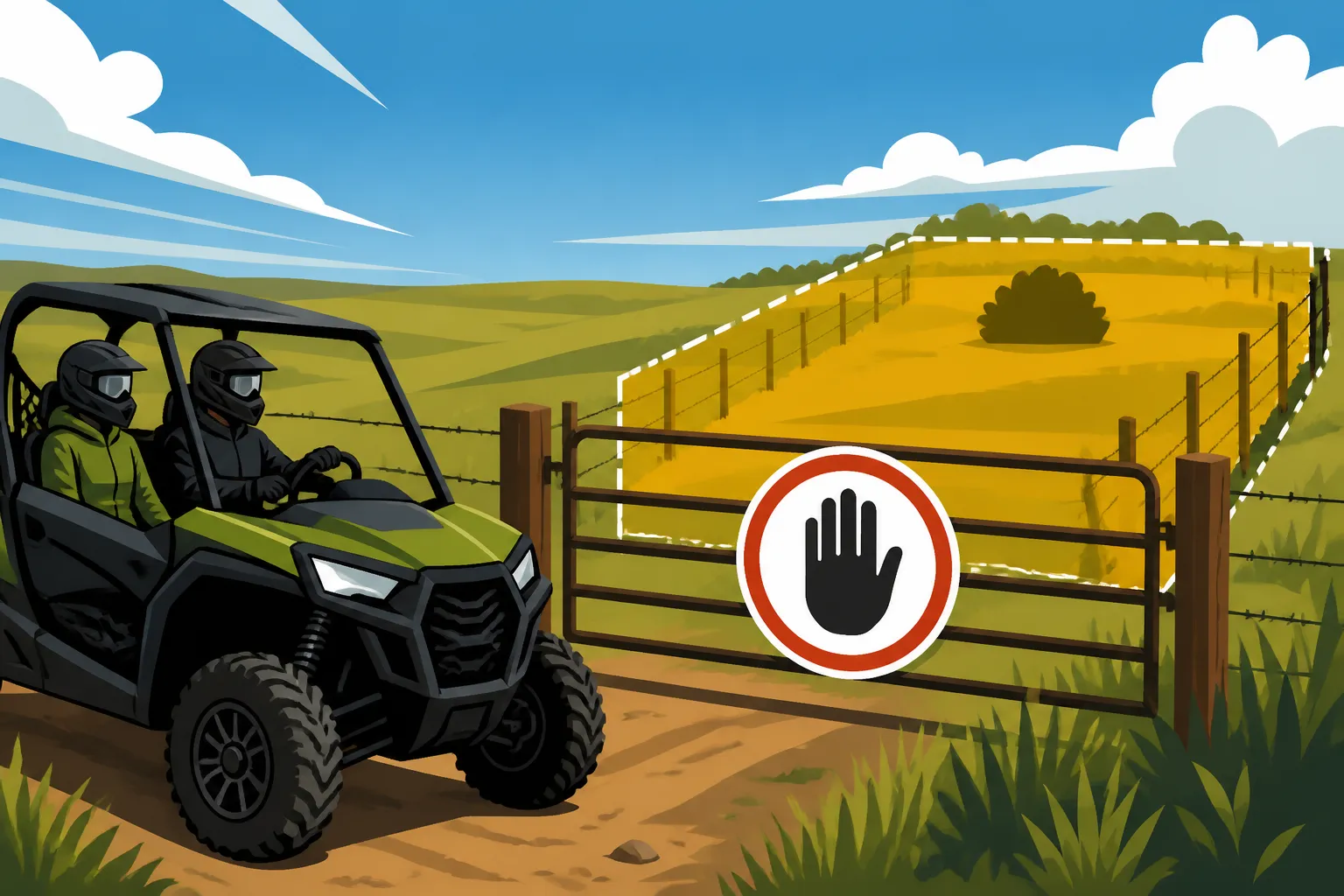
Why a Fenced Parcel Is Posted at the Gates
It’s a scenario many of us have faced: you’re out on your ATV or UTV, enjoying the wide-open spaces of North Dakota, and you come across a tempting-looking trail or field. You see a fence, maybe even a gate, but no signs. Is it okay to ride? This guide will dive deep into North Dakota's specific laws regarding private land, explaining why a simple fence isn't always enough to prevent trespass, and why those "Posted" signs at the gates are absolutely crucial for both landowners and riders.
Understanding Posted Land in North Dakota: The Basics
When you're exploring the vast and often unfenced landscapes of North Dakota, it's easy to assume that if there isn't a visible barrier or specific signage, the land might be open for recreational use. However, this is a common misconception, especially for those new to off-highway vehicle (OHV) riding in the state. North Dakota law is quite clear: all private land is, by default, off-limits unless you have explicit permission from the landowner. A fence might mark a boundary, but for legal purposes, "posted" land often requires more.
Imagine you're cruising along a gravel road, and you see a beautiful stretch of prairie grass that looks perfect for a scenic ride. There's a barbed-wire fence running along the roadside, but no signs proclaiming "No Trespassing." Your instinct might be to assume that if there's no sign, it's fair game. This is precisely where riders can get into trouble. While the fence clearly delineates private property, the legal intent to prevent trespass, with its associated penalties, often relies on proper posting. It's a subtle but significant difference that every OHV enthusiast needs to understand to avoid unintentional violations.
The General Rule: Permission Required
At its core, North Dakota operates on a simple principle: if it's not explicitly public land designated for OHV use, or if you don't have direct, verifiable permission, you should assume it's private and therefore off-limits. This rule is the bedrock of responsible land use and prevents countless potential conflicts between riders and landowners. It doesn't matter if the land looks abandoned, unkempt, or like prime riding territory; if you don't have a green light from the owner, stay off.
This expectation puts the onus on the rider to know where they are and whose land they are on. It's not the landowner's job to put up a million signs to keep you out; it's your job to ensure you have permission to be there. This can be particularly tricky in areas where land ownership changes frequently, or where boundaries are less clear due to natural features rather than man-made markers. Always err on the side of caution; a friendly inquiry to a local farmer or rancher can often clear things up quickly, and sometimes even open up new, permitted riding opportunities.
Beyond Just a Boundary: Why a Fence Isn't Always Enough
While a fence undeniably marks a property line, North Dakota law differentiates between simply marking a boundary and posting a boundary in a way that establishes legal notice for trespass. A fence prevents livestock from wandering and gives a visual cue of a division of land, but it doesn't always carry the same legal weight as explicit "No Trespassing" signs. For a landowner to effectively prosecute someone for trespass, they generally need to demonstrate that the individual knew or should have known they were entering private property without permission.
A fence alone, especially one that is old, dilapidated, or easily passable, might not sufficiently convey this "knowledge" to a rider who genuinely believes they haven't seen any explicit prohibition. This is where the specific requirements for posting come into play. A fence is a physical barrier, but posting is a legal act designed to remove any ambiguity about the landowner's intent. Without proper posting, proving criminal trespass can be significantly more challenging for law enforcement, even if the rider was clearly on private property.
North Dakota's Posting Requirements: More Than Just a Fence
For landowners in North Dakota, simply having a fence or a natural boundary isn't always enough to legally "post" their land against trespassers, especially when it comes to enforcing penalties. North Dakota law specifies how land must be marked to constitute formal posting, providing clear notice to anyone who might enter. This isn't just a suggestion; it's a legal standard designed to protect both the landowner's rights and to give potential trespassers clear warning. Understanding these specifics is key for landowners to enforce their property rights and for riders to know exactly what to look for before venturing off-pavement.
The intent behind these regulations is to remove all doubt. A person cannot claim ignorance if the land is posted according to state law. This includes specific types of signage, their placement, and even modern alternatives like electronic posting. For those with powerful machines, perhaps equipped with heavy-duty parts from a brand like SuperATV, it’s crucial to respect these clear boundaries. Ignoring a well-marked posted sign, even if you could easily ride around it, can lead to serious legal repercussions, far beyond just an inconvenience.
The Visible Signage Standard
North Dakota Century Code (NDCC) sets out very specific criteria for what constitutes proper physical posting. These aren't just any old signs tacked haphazardly to a tree. The signs must be readily visible, clearly stating "No Trespassing" or "Private Property," and crucially, they need to be placed at regular intervals. This means signs shouldn't be so far apart that someone could reasonably miss them and claim they weren't aware they were entering posted land. [What a Posted-Land Sign Must Show in North Dakota] elaborates on the exact content and visibility requirements.
Generally, these signs must be posted at each corner of the property and at intervals of not more than 880 yards (half a mile) along the property boundaries, or at the primary entry points. This methodical placement ensures that anyone approaching the property from any direction has a high likelihood of encountering a sign. Furthermore, the signs should be maintained and visible, not overgrown with weeds or faded to illegibility. If you're a landowner, regularly checking and replacing your signs is part of your due diligence. If you're a rider, look for these consistent markers; they are the clear legal indicators that you absolutely should not proceed.
Electronic Posting: A Modern Approach
In an effort to keep up with technology and offer landowners more options, North Dakota also provides for "electronic posting." This method allows landowners to register their land as "posted" with a state agency, and this information then becomes accessible to the public, often through an online portal or app. [North Dakota Electronic Posting and Riders] provides a comprehensive look into how this system works and its legal implications. The beauty of electronic posting is that it removes the need for physical signs across vast tracts of land, which can be expensive and time-consuming to maintain.
For riders, this means adding another layer to your "know before you go" routine. Before heading out on an adventure, especially in unfamiliar territory, it's wise to check the electronic posting database. While not all landowners utilize this system, it's an increasingly popular method, particularly for large agricultural operations or hunting preserves. Combining physical sign awareness with electronic checks ensures that you are fully informed about property boundaries and restrictions, preventing accidental trespass and promoting a respectful relationship with North Dakota's landowners.
Gates as a Crucial Component of Posting
When you encounter a gate on private land in North Dakota, it's more than just a physical barrier; it often serves as a powerful reinforcement of the "posted" status of the property. While a gate itself might not always meet the full legal definition of posting without accompanying signage, a gate that is posted with clear "No Trespassing" signs becomes an unmistakable signal. It's a clear statement from the landowner that entry is prohibited, and it significantly strengthens their ability to pursue legal action against trespassers.
For OHV riders, a gate, especially one that is closed and marked, should always be treated as an absolute stop sign. Even if your machine is a powerful beast, capable of climbing obstacles with ease thanks to heavy-duty suspension and tires from a company like SuperATV, the presence of a posted gate means you stop. It represents a boundary that is not only physical but also legal and ethical. Ignoring such a clear demarcation of private property isn't just poor etiquette; it's a direct violation of landowner rights and can carry significant penalties under North Dakota law.
Gates as Physical Barriers
A gate's primary function is, of course, to physically control access. Whether it's a simple wire gate, a sturdy pipe gate, or a more elaborate automated entry system, its presence immediately suggests that the land beyond is not open to general passage. For farmers and ranchers, gates are vital for containing livestock, preventing unauthorized vehicle traffic that could damage crops or infrastructure, and maintaining privacy. A closed gate, regardless of its type, is a visual cue that you're approaching private land with restricted access.
Even without explicit "No Trespassing" signs, a closed and secured gate strongly implies a desire to exclude. A rider who goes around, over, or through a closed gate could still be considered a trespasser, as they are actively circumventing a physical measure put in place to prevent entry. This physical impediment, combined with the general rule that all private land requires permission, means that encountering a gate should always prompt caution and a re-evaluation of your intended route.
The Legal Weight of a Posted Gate
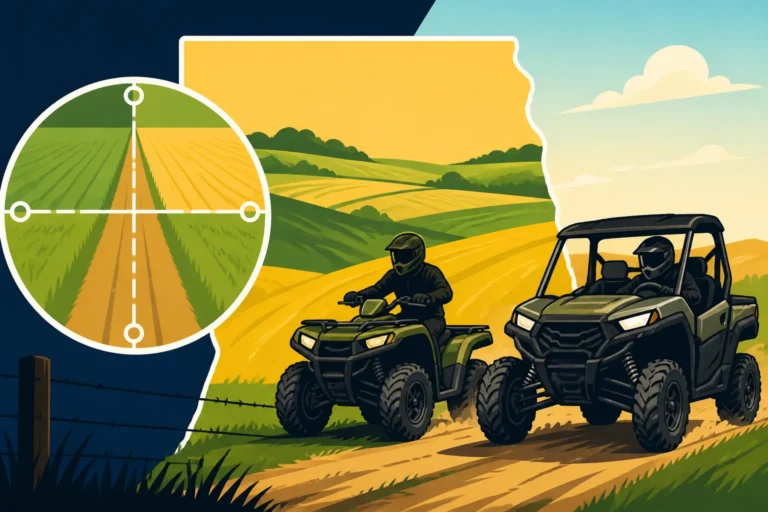
When a gate is adorned with "No Trespassing" or "Private Property" signs, its legal significance as a warning against trespass is amplified considerably. This combination of a physical barrier and clear legal notice leaves no room for ambiguity. [Gates on a Fully Enclosed Parcel] are particularly effective in conveying this message, as they leave little doubt about the landowner's intent to control access. The signs on the gate fulfill the legal requirement of providing conspicuous notice, making it much harder for someone to claim they didn't know the land was private.
North Dakota law views such a clearly marked gate as a definitive declaration. Any individual who then proceeds to open, bypass, or damage that posted gate to gain entry is not only trespassing but potentially committing additional offenses like property damage. This direct and unmistakable warning at a natural access point serves as a critical defense for landowners and a stark reminder for riders about the importance of respecting private property boundaries.
Protecting Landowner Rights and Preventing Trespass
Landowners in North Dakota, whether they operate large farms, sprawling ranches, or simply own a rural parcel, have a fundamental right to control who enters their property. The laws surrounding "posted" land are designed specifically to protect these rights and provide a legal framework for preventing and addressing unauthorized entry. For many landowners, their property is not just a place to live; it's their livelihood, their sanctuary, or a significant investment. Trespassing, particularly by OHVs, can disrupt operations, cause damage, and create significant liability concerns.
The regulations dictating how land must be posted are a direct response to the need to balance recreational access with private property protection. These laws are not arbitrary; they reflect the realities of land ownership in a state where agricultural activity is paramount and personal privacy is highly valued. Understanding this perspective is crucial for OHV riders who wish to enjoy North Dakota's outdoor spaces responsibly, ensuring they don't inadvertently infringe on someone else's rights.
Deterring Unwanted OHV Traffic
The primary goal of posting land, especially at gates, is to deter unwanted traffic. OHVs, while incredibly fun and useful, can inadvertently cause significant damage to private property. This could range from compacting soil and destroying crops, to tearing up delicate prairie grass, disturbing livestock, or creating excessive noise near residences. The tracks left by a UTV or ATV, even a well-maintained one with quality tires from SuperATV, can take years to disappear from certain types of terrain, leading to erosion or long-term scarring of the landscape.
Beyond physical damage, unauthorized riding also raises serious liability issues for landowners. If a trespasser is injured on their property, even if they were there illegally, the landowner could still face legal challenges or be held partially responsible depending on the circumstances. This burden of potential liability is a major reason why landowners are so diligent about posting their land and ensuring gates are secured. Preventing entry in the first place is the simplest and most effective way to mitigate these risks and maintain control over their valuable land.
Legal Recourse for Trespass
When land is properly posted according to North Dakota law, it significantly strengthens a landowner's ability to pursue legal recourse against trespassers. If someone ignores clear "No Trespassing" signs at a gate and enters private property without permission, they are committing a prosecutable offense. The consequences for [North Dakota Trespass Law for Riders] can range from fines to potential impoundment of their vehicle, and in some cases, even more serious charges depending on the extent of damage or intent.
Landowners can contact local law enforcement to report trespassers. With properly posted land, officers have a clear legal basis to intervene, issue citations, and remove individuals from the property. This legal framework provides landowners with the peace of mind that their property rights are enforceable, and it serves as a powerful deterrent to those who might consider ignoring private property boundaries. It's a system designed to protect the integrity of private ownership and ensure that those who respect the rules are upheld.
What OHV Riders Need to Know About Posted Land
For those of us who love to hit the trails, explore new territory, or use our ATVs and UTVs for work or recreation, understanding North Dakota's rules about posted land is absolutely essential. It’s not just about avoiding a ticket; it’s about being a responsible, respectful member of the OHV community and maintaining good relationships with the landowners who share this beautiful state. Many frustrations arise from simply not knowing the rules or making assumptions. This section will equip you with the knowledge to navigate private land boundaries safely and legally.
Your machine might be incredibly capable, perhaps outfitted with robust accessories like a heavy-duty winch or a lift kit from SuperATV, allowing you to conquer diverse terrains. However, no amount of capability gives you the right to ignore property boundaries. The principle of "know before you go" is paramount. It means being proactive in understanding where you can and cannot ride, recognizing the signs of posted land, and respecting the wishes of property owners. This proactive approach not only keeps you out of legal trouble but also helps preserve access to the areas where riding is permitted.
Always Seek Permission
The most straightforward and bulletproof way to ensure you're legally riding on private land is to obtain explicit permission from the landowner. This might sound obvious, but many riders either shy away from asking or assume that a general area is open if others ride there. North Dakota law is clear: without permission, you should not enter. [Landowner Permission in Writing] is always the best practice, as it provides undeniable proof of consent and can prevent misunderstandings down the line. A simple handshake might feel neighborly, but a written note, even an email, can save a lot of headaches.
Approaching landowners respectfully, explaining your intentions, and assuring them you will be a responsible rider can often open doors to new riding opportunities. Many landowners are happy to grant permission, especially if they know who is on their land and that they will be careful. Conversely, attempting to sneak onto land, or ignoring visible signs, is a suofire way to damage relationships and lead to increased restrictions for all riders. A quick call or a knock on the door can make all the difference, transforming a potential trespass into a permitted adventure.
The "Know Before You Go" Mentality
Embracing a "know before you go" mentality is perhaps the single most important piece of advice for any OHV rider in North Dakota. This means doing your homework before your wheels ever touch dirt. Consult maps, both physical and digital, to identify public lands and designated OHV trails. Pay close attention to county and township lines, as regulations can sometimes vary. Be aware of [North Dakota Electronic Posting and Riders] as another layer of information.
Before you head out, have a plan. Identify your route, potential bail-out points, and clearly marked public access areas. If your route skirts private land, be extra vigilant for signs, fences, and gates. It's not enough to just see a boundary; you need to understand its legal implication. Equip your machine not just for performance, but for safety and navigation. A reliable GPS unit, coupled with paper maps for backup, can be invaluable in staying on track and off private property.
Consequences and Best Practices for Riders
Riding an ATV or UTV in North Dakota offers incredible freedom and access to stunning landscapes. However, this freedom comes with significant responsibilities, particularly concerning private land. Ignoring "Posted" signs, especially at gates, isn't a minor oversight; it's a legal infraction with tangible consequences. Understanding these repercussions and adopting best practices will not only keep you out of trouble but also contribute to a positive image for the entire OHV community, helping to preserve and expand riding opportunities for everyone.
It's about more than just avoiding a fine. It's about respecting the land, the people who own it, and the delicate balance of property rights and recreational access. A single instance of irresponsible riding can lead to a landowner closing off access for everyone, even those who ride respectfully. Therefore, every rider has a role to play in upholding the integrity of the sport.
Penalties for Trespassing on Private Land
The legal ramifications for trespassing on properly posted private land in North Dakota can be significant. A basic trespass violation can result in a fine, and if damage is done to property, additional charges may apply. For instance, while it’s a different scenario, [North Dakota Penalties for Riding Unregistered] gives an idea of how the state takes violations seriously, often with increasing fines for repeat offenses. In the case of trespassing, law enforcement has the authority to issue citations on the spot.
Beyond fines, there's the possibility of your OHV being impounded, leading to additional costs for towing and storage. If you damage a gate, fence, or other property, you could be held financially responsible for repairs, and face further charges for property destruction. In more serious cases, or if there's a history of similar incidents, the charges could escalate. The legal system in North Dakota is designed to protect landowners, and ignorance of the law is generally not considered a valid defense when proper posting is in place.
Being a Responsible OHV Enthusiast
Being a responsible OHV enthusiast goes far beyond simply avoiding trespass. It's about embodying a mindset of respect, safety, and stewardship. First and foremost, always carry identification and any necessary permits or registration documents. [North Dakota Insurance Requirements at Registration] are important to remember, as having appropriate insurance is not only legally required in many circumstances but also a responsible safeguard against unforeseen incidents.
Secondly, familiarize yourself with local ordinances and rules, as some counties or townships may have specific restrictions on OHV use. Practice [North Dakota Trail Etiquette Locals Expect] to ensure you're not disturbing wildlife, livestock, or other recreational users. This includes riding quietly, staying on designated paths, and closing any gates you open (after confirming you have permission to be there). If you observe someone else trespassing or acting irresponsibly, consider [Reporting a Rider on Posted Land] to the appropriate authorities, helping to maintain order and protect access for all. By taking these steps, you contribute to a positive future for OHV riding in North Dakota.
Here's a quick reference on what constitutes proper posting and why it matters:
| Posting Aspect | Description | Why It Matters for Landowners | Why It Matters for Riders |
|---|---|---|---|
| Physical Signs | "No Trespassing" or "Private Property" signs, placed at corners and every 880 yards along boundaries, or at primary access points. Clearly visible and maintained. | Establishes clear legal notice for trespass prosecution. Deters unwanted entry, reduces liability risk. | Provides unmistakable warning; ignoring them is a clear legal violation. Helps avoid accidental trespass. |
| Fences & Gates | Physical barriers marking property lines and controlling access. | Contain livestock, protect crops, and signal private domain. Gates, especially when closed, imply restricted access. | Fences mark boundaries; closed gates further emphasize exclusion. Respecting these prevents conflict and damage. |
| Posted Gates | Gates explicitly marked with "No Trespassing" signs. | Combines physical barrier with clear legal notice, significantly strengthening trespass claims and acting as a strong deterrent. | An absolute stop signal. Bypassing a posted gate is a clear, intentional act of trespass with higher likelihood of legal repercussions. |
| Electronic Posting | Landowners registering their land as "posted" with a state agency, information available online. | Modern, efficient way to post large areas; reduces need for physical sign maintenance. Provides clear, searchable notice. | Allows riders to check property status digitally before riding. Essential for "know before you go" in areas with electronic posting. |
| Written Permission | Documented consent from the landowner to enter their property. | Provides legal protection for both landowner and rider, preventing misunderstandings. | The only foolproof way to legally ride on private land. Protects you from trespass accusations and builds trust with landowners. |
Disclaimer
This article is for general informational purposes only and does not constitute professional advice. Laws, prices and regulations vary by location and change over time. Consult a qualified professional for guidance on your specific situation.