North Dakota Cities Cannot Require Local Registration
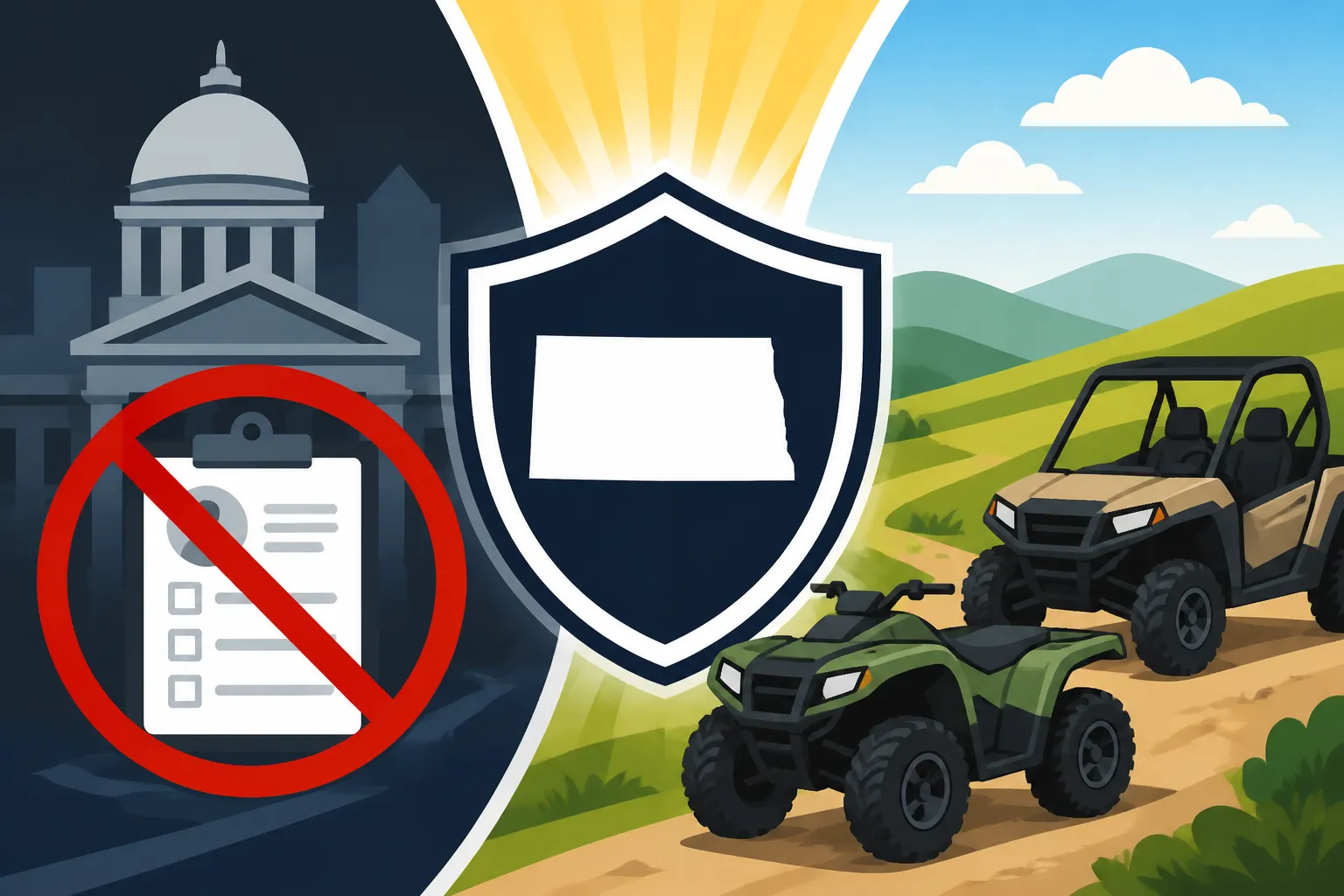
One of the most common headaches for ATV and UTV enthusiasts in North Dakota is the sheer confusion surrounding local rules. You've got your state registration in hand, you know the basics of [North Dakota's Two-Year OHV Registration], but then you pull into a new town, and suddenly you're wondering if there's some secret local sticker or permit you're supposed to have. It's enough to make anyone nervous about exploring new areas! This guide is here to clear the air and offer a huge sigh of relief: North Dakota cities absolutely cannot require their own local registration for your off-highway vehicle (OHV). We'll dive into what this means, what cities can regulate, and how to enjoy the vast landscapes of our state without unnecessary worry.
Understanding North Dakota's Statewide OHV Registration System
Navigating the world of OHV laws can sometimes feel like trying to find your way through a blizzard without a compass. Many states have a patchwork of rules, where every county or even every city seems to have its own unique set of requirements. This kind of system creates a lot of frustration for riders who just want to hit the trails or use their machines for work without constantly checking a different rulebook. Thankfully, North Dakota has taken a much more streamlined approach, particularly when it comes to the fundamental act of registering your machine.
Why Centralized Registration Matters
Imagine if every town you drove through required you to get a new license plate for your car. It sounds absurd, right? The same principle applies to OHV registration here in North Dakota. The state understands that OHV owners often travel across county lines, through different municipalities, and sometimes even spend extended periods in various areas of the state. Requiring local registration would create an administrative nightmare for both riders and local governments, making it incredibly difficult for anyone to keep track of what's legal where.
A centralized system, where you [Registering an ATV in North Dakota] once with the state, ensures uniformity. When you've gone through the process, paid your [North Dakota OHV Registration Cost], and received your official state-issued decal or plate, that's it. You're good to go, from the Red River Valley to the Badlands, as long as you adhere to the state's rules of operation. This singular point of registration removes a significant barrier to entry for new riders and simplifies compliance for seasoned veterans. It fosters a sense of consistency, allowing you to focus on the ride itself rather than constantly second-guessing your paperwork. This centralized approach acknowledges that OHVs are used for recreation, utility, and transportation across vast distances, making local registration impractical and burdensome.
The Role of the State in OHV Regulation
The state of North Dakota is the primary authority when it comes to the fundamental aspects of OHV ownership and basic operation. This includes everything from initial titling requirements to the collection of excise taxes, and, critically, the registration of your machine. The North Dakota Department of Transportation (NDDOT) is the agency responsible for issuing registrations, decals, and titles, ensuring that a consistent standard is applied statewide. This means that whether you bought your machine in Fargo, Bismarck, or Williston, the process to get it legally registered for public land or road access is the same.
This comprehensive state oversight prevents a chaotic free-for-all where local jurisdictions could invent their own unique registration requirements, creating a confusing maze of bureaucracy for riders. Instead, the state sets the baseline, establishing what constitutes a legally registered OHV in North Dakota. This framework is vital because it establishes clear expectations for all riders, regardless of where they reside or where they plan to ride within the state. It's a foundational element of how OHVs are managed in North Dakota, providing a stable and predictable environment for the OHV community. The state focuses on broad categories like [North Dakota's Class I, II and III Machines] and general operating parameters, leaving more granular, localized restrictions to be dealt with under different legal avenues.
Local Ordinances and Their Limits
While North Dakota cities and counties can't require you to get a special local registration, that doesn't mean they're entirely powerless when it comes to OHV activity within their borders. It's a nuanced distinction, and understanding it is key to being a responsible and law-abiding rider. They can't demand another sticker, but they absolutely can, and often do, have rules about how and where you operate your OHV within their specific boundaries.
What Cities Can Regulate (and What They Can't Touch)
The important thing to remember is that cities and counties can regulate the operation of OHVs, but not the registration itself. Think of it this way: your state registration proves your machine is legal to own and licensed for use, but local ordinances dictate the specific conditions of that use on local roads, trails, or public lands. For instance, a city might establish speed limits on certain gravel roads, restrict riding hours in residential areas, or even prohibit OHVs entirely from paved city streets. They might also have rules regarding noise levels or even specific equipment requirements, like requiring mirrors or turn signals on local roads, even if the state doesn't universally mandate them for all types of OHV use. This is where researching [North Dakota County and City ATV Ordinances] becomes really important.
What they cannot do is require you to obtain a separate license plate, decal, or permit issued by the city itself, beyond your state registration, simply for the privilege of riding in their jurisdiction. They also can't impose a local "OHV tax" that acts as a de facto registration fee. Your valid North Dakota OHV registration, along with any necessary non-resident permits if you're visiting from out of state (see [North Dakota's 30-Day Out-of-State Rule]), is the only registration document you need. This distinction is crucial for maintaining a unified state system and preventing a confusing patchwork of bureaucratic hoops.
Here’s a simple breakdown of what cities and counties generally can and cannot regulate:
| Aspect of OHV Use | What Localities CAN Regulate | What Localities CANNOT Regulate |
|---|---|---|
| Registration | Operation hours, speed limits, noise ordinances, specific road closures, parking rules, specific equipment for road use (e.g., mirrors, horns on local roads), age restrictions for local roads. | Requirement for a local registration sticker, decal, or plate; local OHV registration fees; re-titling of an OHV already titled by the state. |
| Operation | Designate specific routes or trails, prohibit riding in parks or on sidewalks, set curfews for youth riders on local roads, enforce state laws on local roads (e.g., DUI). | Override statewide registration exemptions (e.g., [North Dakota Registration Exemptions Explained] for private land), impose vehicle specifications that contradict state definitions, charge fees for statewide registration. |
| Enforcement | Issue citations for violations of local ordinances, impound vehicles for serious infractions, enforce state OHV laws within their jurisdiction. | Demand proof of a local permit that does not exist; deny access based solely on the absence of a non-existent local registration. |
Navigating County vs. City Rules
It's important to understand that while cities can't require local registration, both counties and cities can enact local ordinances that affect how and where you can ride your OHV within their specific boundaries. This means that while your state registration is always valid, the rules of the road – or ditch, or trail – can change from one town to the next, and even from one county to another. For example, some counties might have broad permissions for ditch riding, while a city within that same county might have strict prohibitions on OHVs within its corporate limits.
Consider a rider traveling from rural Cass County into the city of Fargo. While the county might allow [North Dakota Ditch Riding: The Legal Right Explained] in many areas, Fargo might have very specific [North Dakota Rules for Riding in Fargo] that restrict OHV use on city streets or within city parks. The key is that these are operational rules, not registration requirements. It's about where you can go and how you must behave, not about whether your state registration is sufficient. For instance, you might need to equip your rig with items like SuperATV mirrors or turn signals if you plan to operate on city streets where such equipment is mandated for safety, even if it's not strictly required for off-road use elsewhere. Always check with the local sheriff's department or city clerk's office for the most current information before you ride in an unfamiliar area.
What This Means for Your Riding Freedom
This clear distinction – state-level registration, local-level operational rules – is actually a huge benefit for OHV riders in North Dakota. It simplifies a lot of the initial hurdles and provides a solid foundation for legal OHV use, regardless of where your adventures take you. It means less red tape and more time enjoying the open spaces.
Simplified Paperwork for Riders
Think about the time and effort saved by not having to deal with multiple layers of bureaucracy. Instead of needing to check a dozen different municipal websites for their unique registration forms and fee schedules, you just have one process to follow at the state level. This singular approach means you only need to concern yourself with your [North Dakota ATV Registration Renewal] every two years and keep your state-issued documentation current. There's no need to wonder if you've missed a local deadline or if a small town's specific OHV department has different office hours.
This simplification extends beyond just the initial registration. When you're out riding, if an officer pulls you over to check your papers, they're looking for your state registration, not a local one that doesn't exist. This streamlines enforcement and reduces potential misunderstandings. It makes it easier to comply, and easier for law enforcement to verify compliance, leading to a smoother experience for everyone involved. Having clear, concise, and consistent paperwork allows you to spend more time enjoying the vast North Dakota landscape with your machine and less time worrying about administrative details.
Consistency Across Different Jurisdictions
One of the greatest benefits of the state-only registration policy is the consistent legal standing of your OHV across the entire state. Once your machine is properly registered with North Dakota, its legal status doesn't magically change when you cross a city limit sign. This provides a baseline level of certainty for riders, knowing that their core paperwork is always valid. While the specific rules of operation might vary—like speed limits, hours of use, or permitted road types (e.g., [North Dakota ATV Road Rules by Surface Type])—the fact that your machine is registered to operate remains constant.
This consistency is particularly helpful for those who use their OHVs for various purposes, whether it's farming, hunting, or recreational riding. You don't have to worry about whether your machine is suddenly "unregistered" just because you drove it into the next town over. This allows for greater freedom of movement and promotes more widespread OHV use where operational rules permit. It also simplifies the purchase and sale of machines, as the registration requirements are uniform across the state, removing any complications that might arise from different local standards. For example, if you're looking at SuperATV accessories to make your machine more versatile for different terrains, you can be confident that your base registration will cover you wherever you go, allowing you to focus on the operational enhancements rather than local registration quirks.
Staying Informed About Local OHV Rules
While cities cannot require local registration, they can certainly create operational rules that impact your riding experience. Being an informed rider isn't just about avoiding a ticket; it's about being a good neighbor, preserving riding opportunities, and ensuring safety for yourself and others. This means taking a proactive approach to understanding the specific nuances of local regulations wherever you plan to ride.
How to Check for Valid Local Restrictions
Since there's no central database for every single city and county OHV ordinance in North Dakota (that would be a beast!), staying informed requires a bit of detective work. The best first step is always to check the official website of the city or county you plan to visit. Many municipalities will have their ordinances posted online. Look for sections related to "motorized vehicles," "off-highway vehicles," or "municipal code." If you can't find what you're looking for online, don't hesitate to call the city clerk's office or the local sheriff's department. These are the folks who can give you the most accurate and up-to-date information directly.
It's also a good idea to chat with local riders or OHV clubs in the area. They often have firsthand knowledge of specific local nuances or unwritten rules that might not be easily found in official documents. Remember, laws can change, as evidenced by significant updates like [North Dakota Rules That Changed With HB 1346]. So, if you haven't ridden in a particular area in a while, it's always wise to double-check before you hit the trails or roads. Knowing the rules beforehand ensures you're prepared for [What an Officer Can Ask to See] if you happen to be stopped.
Advocating for Rider Rights in Your Community
If you find that local ordinances are overly restrictive, or if there's confusion about current rules, don't just throw up your hands in frustration. Being an active participant in your community and advocating for responsible OHV use can make a real difference. Attend local city council or county commission meetings. Express your concerns respectfully and offer solutions, perhaps drawing on successful examples from other communities. Joining a local or state-level OHV club is also a fantastic way to pool resources and have a stronger collective voice.
These groups often work directly with local governments to help shape fair and reasonable regulations that balance rider access with public safety and environmental concerns. They can help educate officials on the economic benefits of OHV tourism or the practical utility of machines for rural residents. Remember, local officials are often just trying to address public concerns, and an educated, engaged rider base can help them make informed decisions. By engaging constructively, you contribute to a future where OHV opportunities are preserved and expanded across North Dakota, rather than inadvertently curtailed by misinformed policies.
Common Misconceptions and Clarifications
It's easy to get tangled up in the various rules and regulations surrounding OHVs, especially when trying to differentiate between what the state demands and what local governments can enforce. A clear understanding of these distinctions helps demystify the process and allows you to enjoy your ride with confidence.
The Difference Between Registration and Operation Rules
This is perhaps the most critical distinction to grasp: state-level registration simply grants your OHV the legal right to exist and be operated on public lands or roads where permitted, provided it meets the basic statewide equipment standards. It's the equivalent of having a valid title and license plate for your car. Once you've completed your [North Dakota Titling an ATV in North Dakota] and obtained your registration, that core legality is set.
Operational rules, on the other hand, dictate how and where you can actually ride your machine. These are the specific directives about speed limits, times of day, noise restrictions, passenger limits, and whether you can be on certain roads or in particular areas. Cities and counties have the authority to create these operational rules within their own jurisdictions, as long as they don't contradict or undermine the state's registration requirements. For example, a city might ban OHV use on all paved roads within its limits, or only allow them on certain designated routes like the [North Dakota Rules for Riding in Bismarck]. This is not about your OHV being unregistered; it's about where you're allowed to drive it. It's similar to how your car registration is valid everywhere, but you can't drive it on a sidewalk in any city.
What About Helmets, Passengers, and Equipment?
Local entities also have the ability to enforce state laws regarding safety equipment and passenger rules, and in some cases, they might even add more specific requirements for local operation. For instance, North Dakota has a [North Dakota Helmet Law for Riders Under 18]. A city or county law enforcement officer can certainly pull you over and issue a citation if a youth rider isn't wearing a DOT-approved helmet within their jurisdiction. These are not local registration issues, but rather safety and operational regulations.
Similarly, specific equipment might be required for certain types of road access. If a city allows OHVs on certain paved or gravel roads, they might require specific [North Dakota Mirror and Horn Requirements], or even turn signals, for safety reasons. While SuperATV offers a wide range of accessories that can help make your machine more compliant with these types of local rules, it's crucial to understand these are requirements for operating the vehicle in specific circumstances, not requirements for a local registration. Always check what [North Dakota Equipment Required on a Roadway] might apply for your intended riding area, and remember that local rules might add to, but not remove, state minimums.
Disclaimer
This article is for general informational purposes only and does not constitute professional advice. Laws, prices and regulations vary by location and change over time. Consult a qualified professional for guidance on your specific situation.