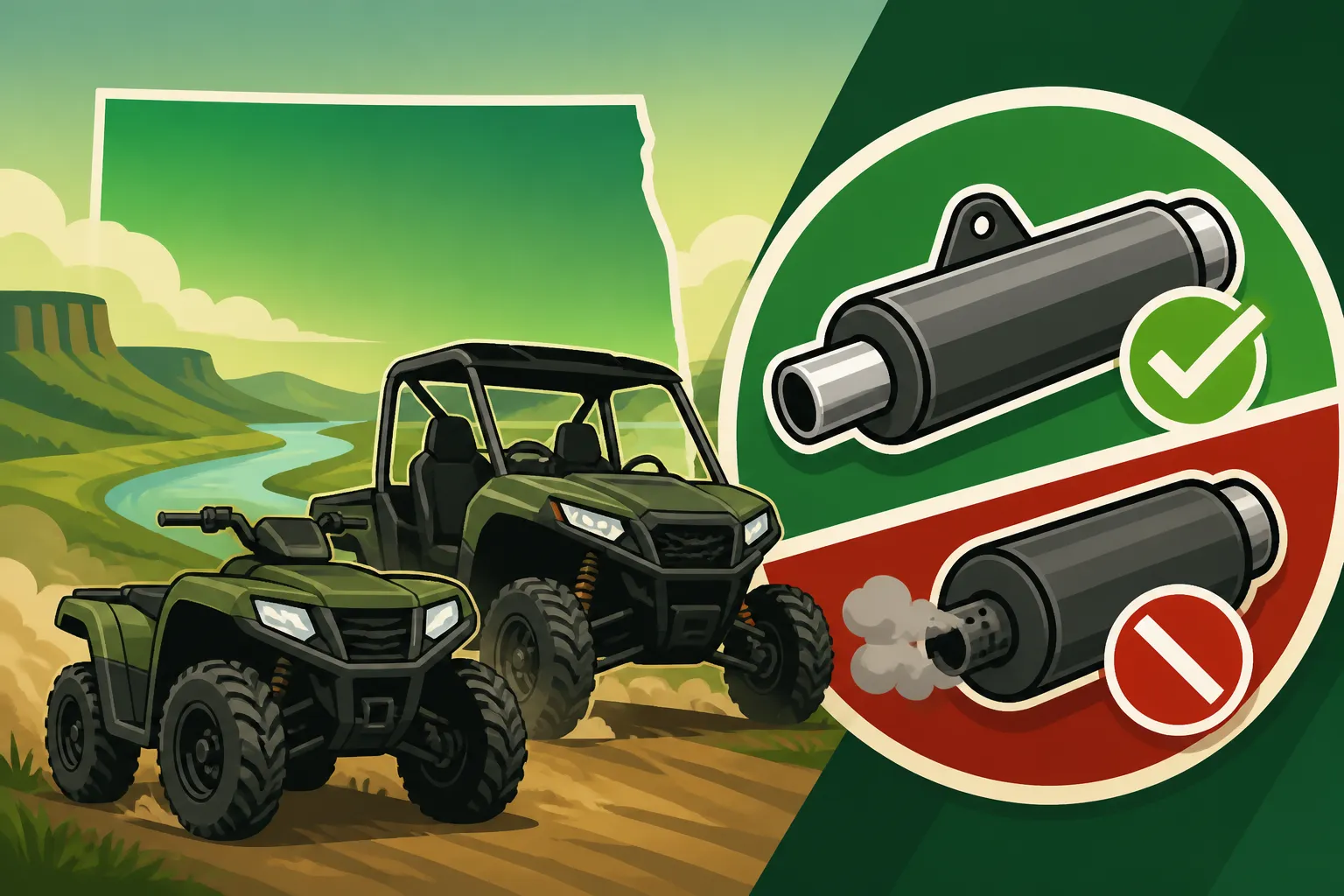
North Dakota Muffler Requirements
Riding an ATV or UTV across North Dakota's vast and beautiful landscapes is an experience like no other, but nothing can sour that experience faster than a run-in with the law or a disgruntled landowner over something as seemingly simple as the sound of your machine. Many riders find themselves scratching their heads, wondering exactly what constitutes an "acceptable" muffler, or how to balance performance with compliance. This guide is here to untangle the complexities of North Dakota's muffler requirements for off-highway vehicles, helping you understand the laws, avoid penalties, and ensure your ride is both thrilling and respectful.
The Basics of North Dakota's Muffler Law for OHVs
When you hit the trails, ditches, or gravel roads of North Dakota, your machine isn't just about power and fun; it's also about compliance. The state has specific rules in place to manage the noise generated by off-highway vehicles, and understanding these rules is your first step toward responsible riding. It's not just about avoiding a ticket; it's about being a good steward of the land and a good neighbor to those who live and work near your favorite riding spots.
What the Law Specifically Says About Mufflers
North Dakota law requires that every off-highway vehicle be equipped with an adequate muffler to prevent "excessive or unusual noise." Now, you might be thinking, "What exactly does 'adequate' mean, and who decides what's 'excessive'?" That's a common and completely valid question that can be a real source of frustration for riders. The statute is designed to prevent machines from being unnecessarily loud, which often translates to modified exhaust systems that bypass factory sound dampening.
This means your ATV or UTV needs a muffler that's in good working order and designed to keep noise levels within reasonable limits. It also specifies that modifications, cutouts, or bypasses that increase exhaust noise are generally prohibited. Essentially, if your exhaust system is intentionally altered to make your machine roar louder than it did from the factory, you're likely running afoul of the law. This doesn't necessarily ban all aftermarket parts, but it certainly puts the onus on you, the rider, to ensure those parts still meet the spirit and letter of the law regarding noise. Riders should always ensure their machines align with [What North Dakota's OHV Law Requires of Owners].
Why Muffler Laws Exist: Noise Pollution and Wildlife
It's easy to feel like these laws are just another hurdle, but they actually serve several important purposes, primarily around mitigating noise pollution and protecting wildlife. North Dakota is a state with vast open spaces, but also tight-knit communities, working farms, and sensitive natural habitats. Uncontrolled noise from OHVs can disrupt the peace for residents, startle livestock, and negatively impact wildlife behavior, especially during critical breeding or nesting seasons.
Imagine trying to enjoy a quiet afternoon on your farm only to have a group of machines roaring past your property line every few minutes. That's the kind of scenario these laws aim to prevent. They help to maintain harmony between riders and non-riders, ensuring that everyone can enjoy North Dakota's outdoors. By adhering to muffler requirements, we contribute to a more sustainable riding culture, where access to trails and riding areas is preserved for future generations, rather than jeopardized by noise complaints. This consideration extends to respecting [North Dakota Posted Land Rules for Riders] and the privacy of landowners.
Understanding "Excessive or Unusual Noise" in Practice
The phrase "excessive or unusual noise" can feel incredibly vague, leaving many riders wondering how to interpret it without a specific decibel limit stamped on the law. This ambiguity is precisely why it's a point of contention and often a source of misunderstanding between riders and enforcement officials. Let's delve into what this means in the real world and how it influences your choices as an OHV owner.
The Subjectivity of Sound and Enforcement Challenges
One of the biggest challenges with North Dakota's muffler law is the subjective nature of "excessive or unusual noise." What one person considers a thrilling engine note, another might perceive as an unbearable racket. This can make enforcement tricky, as an officer often relies on their judgment and the context of the situation. Factors like the time of day, proximity to residential areas, and the presence of other people or wildlife can all influence whether your machine's sound is deemed "excessive."
For example, riding a loud machine through a quiet small town square at noon on a Saturday might not draw as much ire as doing the same thing late at night near homes. However, riding even a moderately loud machine near a secluded cabin or a designated wildlife observation area could quickly lead to complaints. This subjectivity means that even if you haven't explicitly modified your muffler, a damaged or improperly maintained stock system that rattles or roars excessively could still land you in hot water. This is often where [North Dakota Noise Complaints About Quads] originate.
Comparing Stock vs. Aftermarket Exhaust Systems
When it comes to your OHV's exhaust, you generally have two main paths: sticking with the stock system or venturing into the world of aftermarket options. Each has its own set of characteristics, especially concerning noise and compliance.
Stock exhaust systems are designed by the manufacturer to meet a balance of performance, emissions, and noise regulations. They are typically the quietest option and almost always compliant with state laws right off the showroom floor. The main downsides might be perceived limitations in performance or a less aggressive sound than some riders desire. However, for guaranteed compliance and minimal hassle, stock is usually the safest bet.
Aftermarket exhaust systems, on the other hand, offer a wide range of choices, often promising increased horsepower, lighter weight, or a more robust engine sound. The temptation to upgrade for that extra edge or a cooler tone is strong, and brands like SuperATV offer a variety of performance parts, including exhaust components. However, this is where you need to exercise caution. Many performance-oriented aftermarket mufflers are significantly louder than stock and may not be designed to comply with local noise ordinances. It's crucial to research and select systems that specifically state they are "trail legal," "USFS approved," or meet SAE J1287 standards, which are often indicative of a quieter, more compliant design. Simply installing the loudest system you can find is almost a guaranteed path to a [North Dakota Ticket Cost for a Road Violation].
| Feature | Stock Exhaust System | Aftermarket Exhaust System |
|---|---|---|
| Noise Level | Generally quieter, designed for regulatory compliance | Varies widely; can be significantly louder than stock |
| Performance | Balanced for general use, may not maximize power | Can offer performance gains (HP, torque), but not always |
| Cost | Included with vehicle, replacement parts can be pricy | Varies greatly, from budget-friendly to high-end performance |
| Legality/Compliance | Almost always compliant out of the box | Crucially, riders must verify compliance with local laws |
| Sound Profile | Muted, typically lower tone | Can be aggressive, deep, or loud, depending on design |
| Durability | Designed for longevity, often robust | Varies by manufacturer and materials used |
Legal Consequences of Non-Compliant Mufflers
Ignoring North Dakota's muffler requirements isn't just a minor oversight; it can lead to tangible legal and financial repercussions. Understanding these potential consequences can help reinforce the importance of ensuring your OHV is in proper working order and compliant with state law. It's about protecting your wallet and your riding privileges.
Fines and Penalties for Noise Violations
If you're caught operating an OHV with a non-compliant muffler in North Dakota, you're looking at more than just a stern warning. Law enforcement officers have the authority to issue citations for equipment violations, and a loud or illegally modified exhaust falls squarely into this category. The initial fine can vary, but it's important to remember that these aren't just minor inconveniences. They add up, especially if you get cited multiple times or if the noise violation is paired with other infractions.
Beyond the monetary penalty, there could be other consequences. Repeated violations might lead to more significant legal trouble, and in some cases, you might even be required to fix the issue and show proof of compliance before being allowed to ride again. Imagine having your riding day cut short, or worse, having your machine impounded, all because of a muffler. It's a costly lesson that's easily avoided by ensuring your machine meets the standards. For more on what penalties riders can face, it's useful to look at [North Dakota Penalties for Riding Unregistered] as it highlights the state's stance on general non-compliance.
The Importance of a Spark Arrester in North Dakota
Closely related to muffler requirements, and equally critical, is the need for a properly functioning spark arrester. In North Dakota, as in many states with vast natural areas, preventing wildfires is a top priority. A spark arrester is a device designed to prevent hot carbon particles (sparks) from exiting the exhaust system, where they could potentially ignite dry grass, leaves, or other flammable materials.
North Dakota law generally requires OHVs operating on public lands or areas susceptible to fire to be equipped with a spark arrester that is approved by the U.S. Forest Service (USFS). This isn't just a suggestion; it's a mandatory safety feature. Without a spark arrester, or with one that is damaged or non-functional, you're not only risking a fine but also potentially causing a devastating wildfire. It’s a dual-purpose component: it works hand-in-hand with your muffler to control both sound and fire risk. So, when you're inspecting your exhaust system, always verify that your spark arrester is intact and functioning correctly. For specific details on this, refer to [What North Dakota Says About Spark Arresters].
Ensuring Your OHV Meets North Dakota's Muffler Standards
Meeting North Dakota's muffler standards is not just about avoiding trouble; it's about responsible OHV ownership and contributing to a positive image for all riders. Whether you're a seasoned veteran or new to the trails, there are practical steps you can take to ensure your machine is compliant and ready for adventure.
Regular Maintenance and Inspection Tips
The first line of defense against noise violations is simply keeping your OHV's exhaust system in top condition. Even a factory-compliant muffler can become "excessive" if it's damaged or neglected. Think about it: a small crack, a loose baffle, or a rusted-out pipe can completely change the sound profile of your machine, turning a quiet hum into an irritating drone or a loud roar.
Make it a habit to regularly inspect your muffler and exhaust pipes for any signs of damage, rust, or loose connections. Check for cracks, holes, or areas where the internal components might be compromised. Listen for unusual rattles, hisses, or loud bangs that weren't there before. Tighten any loose bolts or clamps. If you spot damage, address it promptly. Sometimes, a simple repair or replacement of a gasket can bring your noise levels back down to an acceptable range. This preventative maintenance is essential for all of your [North Dakota Equipment Required on a Roadway].
Choosing Compliant Aftermarket Mufflers and Accessories
If you're considering upgrading your exhaust system or replacing a worn-out stock muffler, the key is to choose wisely. The aftermarket is brimming with options, but not all of them are designed with noise compliance in mind. Your best bet is to look for aftermarket mufflers and accessories that are specifically advertised as "trail legal," "low noise," or certified to meet standards like SAE J1287. These certifications indicate that the manufacturer has designed and tested the product to keep noise levels within reasonable, often regulated, limits.
When shopping, don't be afraid to ask questions about sound output or look for customer reviews that mention noise levels. Brands that cater to responsible riders often provide clear information about their products' compliance. For instance, companies like SuperATV offer a range of OHV parts, and while their focus is often on performance and durability, they also recognize the need for compliance in various riding environments. If you're unsure, it's always safer to err on the side of caution and choose a system known for its quieter operation rather than one that promises an aggressive sound at the risk of legal trouble. Remember, while a loud exhaust might sound cool in your garage, it might not be appreciated on [North Dakota Ditch Riding: The Legal Right Explained] or public trails.
Practical Steps to Reduce Your OHV's Sound Footprint
Beyond the muffler itself, there are other ways to manage your OHV's sound footprint and be a more considerate rider. It’s a holistic approach that combines equipment choices with riding etiquette.
Firstly, consider your riding technique. Aggressive throttle input and high RPMs will inherently produce more noise, regardless of your muffler. Riding smoothly, maintaining a consistent pace, and avoiding unnecessary acceleration or deceleration can significantly reduce the perceived noise. This is particularly important when you're passing through residential areas, campgrounds, or near other people enjoying the outdoors.
Secondly, think about your tires. Aggressive, knobby tires can create a surprising amount of road noise, especially on harder surfaces. While often necessary for traction in challenging terrain, being mindful of where and when you're using such tires can help. For example, if you're primarily riding on gravel roads or smoother trails, a less aggressive tread pattern might offer a quieter experience without compromising too much performance.
Finally, and perhaps most importantly, adopt a mindset of respect. Recognize that not everyone shares your passion for the sound of a powerful engine. When you're near homes, farms, or other recreational users, slow down, be mindful of your throttle, and give them plenty of space. Being a considerate rider goes a long way in fostering good relationships with landowners and the general public, which in turn helps preserve access for all OHV enthusiasts. This kind of thoughtful riding is crucial for all machines, whether it's a small utility quad or a large side-by-side, including [North Dakota Class I Machines Defined]. Even when navigating [North Dakota DUI Rules for OHV Riders], remember that respect and responsibility are paramount. Consider a quick check of your machine’s general condition; it’s not only about the muffler. This approach to riding is key for a positive experience and to avoid unnecessary fines.
North Dakota Sound Limits on Public Land
North Dakota's commitment to preserving its natural beauty and ensuring peaceful coexistence among various land users extends to specific regulations regarding sound limits on public lands. While the general "excessive or unusual noise" rule applies everywhere, public lands often have additional considerations, and sometimes, more stringent expectations. Understanding these can help you avoid unintended run-ins with rangers or other recreational users.
Specific Decibel Considerations and Testing
While North Dakota's primary statute leans on the subjective "excessive or unusual noise," many public land management agencies, including those governing certain parks or designated trail systems, might refer to or enforce more specific decibel limits. These limits are usually established through recognized testing procedures, often adhering to standards set by organizations like the Society of Automotive Engineers (SAE), such as SAE J1287 for off-road motorcycles and ATVs. This standard typically involves measuring sound at a specific distance and RPM range to get a consistent reading.
For riders, this means that while your muffler might seem "okay" by ear, it could still exceed a specific decibel limit if tested. The key takeaway here is to always assume that quieter is better, especially when venturing onto managed public lands. If you've modified your exhaust, or if your machine is particularly loud, it's worth investigating if the specific public land you plan to visit has posted decibel limits. Sometimes, these limits are clearly stated at trailheads or on park websites. Non-compliance could lead to being asked to leave, or even a citation.
The Impact of Sound on Wildlife and Other Users
Beyond the legal aspect, adhering to sound limits on public lands is fundamentally about minimizing your impact on the environment and respecting other users. North Dakota's public lands are home to a diverse array of wildlife, from nesting birds to grazing deer. Excessive noise can disrupt their natural behaviors, cause stress, and interfere with their ability to hunt, mate, or care for their young. Imagine a family trying to enjoy a peaceful hike, or a birdwatcher hoping to spot a rare species, only to have their experience shattered by loud OHV exhaust.
For these reasons, many public lands actively promote quiet recreation. The sound of a loud engine travels far, penetrating deep into what might otherwise be tranquil areas. By ensuring your machine is as quiet as possible, you contribute to a more enjoyable experience for everyone – hikers, campers, equestrians, and even other OHV riders who appreciate a less intrusive environment. This thoughtful approach helps maintain open access and prevents public pressure from leading to stricter regulations or outright closures of riding areas. Remember to check local ordinances, as they can sometimes add layers of rules. Even when considering something like [North Dakota Riding Where the Seat Was Not Built], ensure you are also mindful of your machine's sound output.
Local Ordinances and Other Noise Considerations
While state laws provide a baseline for muffler requirements, it's crucial to remember that local jurisdictions—counties and cities—in North Dakota can, and often do, have their own ordinances regarding noise. These local rules can add layers of complexity for OHV riders, particularly if you're traveling through or near populated areas. A comprehensive understanding of these varied regulations is essential for truly responsible riding.
How County and City Ordinances Can Affect You
North Dakota law gives counties and cities the authority to enact their own ordinances that might be more restrictive than state law, especially concerning noise. This means that what's perfectly acceptable on a remote section line in rural Bottineau County might be considered a violation if you're riding through the outskirts of Fargo or Minot. These local rules often come into play when OHVs are operated on city streets, within city limits, or in areas where residential zones abut potential riding paths, like ditch bottoms.
For example, a city might have a specific ordinance banning the operation of any vehicle that produces noise above a certain decibel level within city limits, regardless of whether it's an OHV or a street-legal truck. They might also impose time restrictions, prohibiting loud activities (including OHV operation) during certain evening or early morning hours to protect residents' peace and quiet. The consequence of not knowing these local rules can be immediate: a citation from local law enforcement, potentially a higher fine, or even a public nuisance complaint. Always check with the local sheriff's office or city clerk's office when planning to ride in or near a specific town or county. This due diligence can save you a lot of hassle and help avoid local [North Dakota Noise Complaints About Quads].
Minimizing Your Impact on Private Land and Neighbors
Beyond formal laws and ordinances, a significant part of "muffler responsibility" involves being a good neighbor and respecting private land. North Dakota is a state built on agriculture and community, and many riding opportunities exist in proximity to farms, ranches, and private residences. Even if you're riding legally on public right-of-ways, the sound from your machine can easily carry onto private property.
The perceived "nuisance" of excessive noise is often the root cause of conflicts between OHV riders and landowners, and it can directly lead to reduced riding access or increased enforcement. If you're riding near private property, even if it's legally on a ditch bottom or section line, consider slowing down, shifting to a higher gear at lower RPMs, and generally being as quiet as possible. This small act of courtesy can make a huge difference in community relations. Landowners are far more likely to tolerate OHV use if riders are respectful and minimize disruption. Ignoring this can quickly lead to fences being put up, or "No Trespassing" signs multiplying, ultimately limiting everyone's access. Always consider the wider implications of your actions when you are out enjoying the land, including understanding rules such as those found in [North Dakota Ditch Riding: The Legal Right Explained].
Disclaimer
This article is for general informational purposes only and does not constitute professional advice. Laws, prices and regulations vary by location and change over time. Consult a qualified professional for guidance on your specific situation.