North Dakota Brake Light Requirement
One of the biggest headaches for off-road enthusiasts in North Dakota isn't just navigating the gopher holes in a ditch bottom, but figuring out the often-confusing rules about what equipment you actually need when you venture onto a public road. It's not always clear cut, and a simple thing like your brake lights can turn a fun ride into an expensive learning experience. This guide is here to clear up exactly what North Dakota law says about brake light requirements for your ATV or UTV when you're looking to hit the pavement or gravel.
Why Brake Lights Matter on North Dakota Roads
It might seem obvious, but when you're transitioning your off-highway vehicle from the wide-open prairie or a dedicated trail to a public roadway, the stakes change dramatically. Suddenly, you're sharing space with cars, trucks, and even semi-trucks, and they're not always expecting to see an ATV or UTV, especially one that might not have all the same bells and whistles as a passenger car. This is precisely why regulations like the North Dakota brake light requirement exist – it's all about keeping everyone safe.
The Core Safety Principle
Think about it from the perspective of the driver behind you. When you're slowing down or stopping, that bright red glow of your brake lights is the universal signal that something is happening up ahead. On a dirt trail, your hand signals or just the slowing of your machine might be enough for riders behind you to catch on. But on a busy gravel road, or even a quiet paved section line, that visual cue is absolutely critical. Without it, the driver behind you has to guess your intentions, which dramatically increases the risk of a rear-end collision. We've all had those moments of sudden panic when the car ahead of us slams on the brakes without warning, and that feeling is only amplified when dealing with a smaller, often less predictable vehicle like an ATV or UTV. The law isn't just making you jump through hoops; it's genuinely trying to prevent accidents.
Legal Implications of Missing Equipment
Beyond the immediate safety concerns, failing to meet the [North Dakota Equipment Required on a Roadway] standards can lead to some pretty significant legal headaches. An officer isn't just going to give you a friendly wave if they spot your OHV on a public road without proper lighting. You could be pulled over, issued a citation, and potentially face fines. In North Dakota, initial violations for equipment issues can certainly pinch your wallet, and nobody wants that. It's not just about the monetary cost either; it's the time lost, the potential for increased insurance rates, and the hassle of dealing with the court system. Imagine being halfway to your favorite fishing spot or hunting blind only to have your trip cut short by a preventable ticket. It's frustrating, and it's easily avoided by ensuring your machine is up to snuff before you leave private property.
Distinguishing Trail from Road Requirements
This is where a lot of confusion comes in for riders. Many ATVs and UTVs come from the factory equipped with basic taillights, and often a single brake light, because that's generally sufficient for off-road use. However, the moment you put rubber to public asphalt or gravel, you enter a different regulatory landscape. Dedicated trails, like those you might find at Pembina Gorge or Roughrider OHV Trail, have their own sets of rules, but they rarely mandate the same level of street-legal equipment as public roads. It's a common misconception that if it has lights, it's good to go. But North Dakota law draws a clear distinction. Riding on designated OHV trails or private land is one thing; navigating [North Dakota Gravel Roads Open to Registered Machines] or even crossing a paved highway is another entirely. Always check the specific requirements for the type of surface you plan to ride on, as what's acceptable in one area might be a violation just a few miles down the road.
North Dakota's Specific Brake Light Rules for OHVs
When the law talks about brake lights, it's not just a casual suggestion. North Dakota has specific requirements to ensure that these crucial safety features are not only present but also highly effective and easily understood by other drivers. These rules are designed to eliminate ambiguity and provide a clear standard for visibility.
Mandated Visibility and Intensity
North Dakota law requires that your brake lights, when activated, must be visible from a certain distance. This isn't just about having a light; it's about having one that's bright enough and positioned correctly to grab attention. Generally, this means a red light that is clearly discernible from at least 100 feet to the rear of the vehicle during normal daylight conditions. At night, that visibility distance significantly increases, often to several hundred feet, to compensate for the reduced ambient light. This is why a dim, dusty, or poorly positioned brake light simply won't cut it. Imagine a bright, sunny day on a dusty gravel road – if your brake light is barely glowing, it might as well not be there at all. The intensity must be sufficient to cut through distractions and environmental factors, ensuring that the driver behind you gets the message loud and clear.
Activation and Functionality
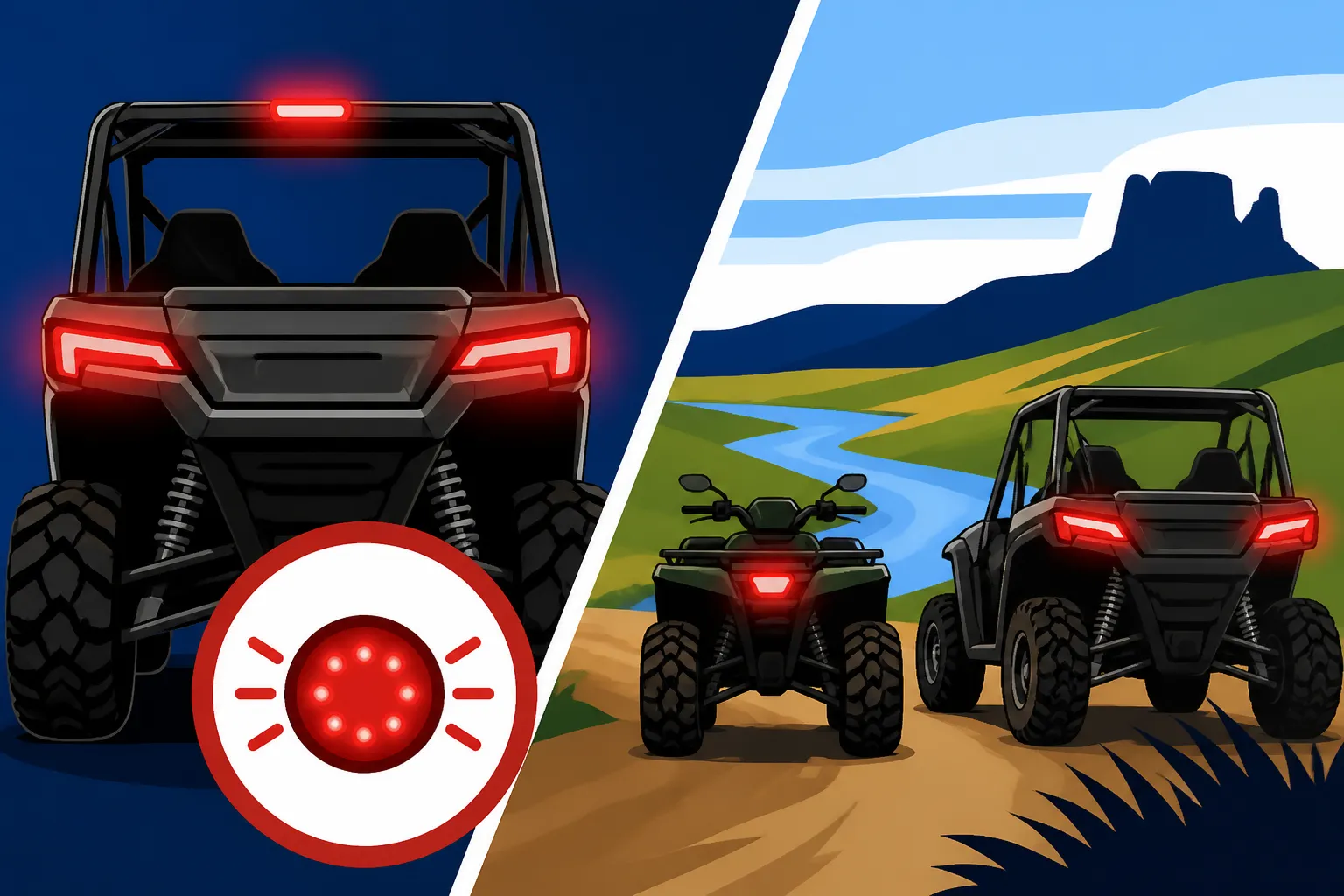
A brake light is only useful if it activates consistently and reliably when you apply the brakes. North Dakota law specifies that your OHV must have a stop lamp (brake light) on the rear that illuminates upon application of the service brake. This means that whether you're using a foot pedal or a hand lever to slow down, that brake light needs to come on immediately. It shouldn't flicker, it shouldn't delay, and it shouldn't require you to stomp on the pedal for it to work. We've all seen vehicles with faulty brake lights – sometimes only one works, or they're constantly on, or they don't come on at all. Any of these scenarios is a recipe for a ticket and, more importantly, a potential accident. Regular testing of your brake light's functionality is non-negotiable if you plan to use your OHV on public thoroughfares. Just a quick check before each ride can save you a world of trouble.
Exceptions and Exemptions
It's natural to wonder if there are any loopholes or special conditions that might exempt you from the North Dakota brake light requirement. And for certain aspects of OHV registration or use, there certainly are. For example, [North Dakota Registration Exemptions Explained] outlines situations where you might not need to register your machine, such as using it exclusively on private land. However, when it comes to fundamental safety equipment like brake lights for road use, exemptions are virtually non-existent. If you're operating an OHV on a public roadway, the expectation is that it meets the minimum safety equipment standards designed for all motor vehicles sharing that space. There isn't a special carve-out for older machines, or those primarily used off-road, or for short distances. The rule is pretty universal: if you're on a road, you need a working brake light. The safety of yourself and others depends on it.
Equipping Your ATV or UTV with Compliant Brake Lights
So, you've checked your machine, and perhaps those factory lights just aren't cutting it, or maybe you have an older model that didn't come with a brake light at all. Don't sweat it! There are plenty of ways to get your ATV or UTV up to code without completely overhauling your machine. The goal is to be visible and compliant, not to win a lighting competition.
Aftermarket Options and Installation
The aftermarket industry for ATVs and UTVs is absolutely huge, and that's great news for anyone needing to upgrade their lighting. You can find a wide variety of brake light kits designed specifically for off-road vehicles. These range from simple, universal LED strips that tie into your existing wiring, to more robust, integrated taillight assemblies that include brake lights, running lights, and sometimes even turn signals all in one unit. Companies like SuperATV offer a fantastic selection of these products, often with vehicle-specific mounting brackets and wiring harnesses that make installation much smoother. When choosing an aftermarket option, look for lights that are clearly labeled as "DOT compliant" or have a high intensity output. LEDs are generally a great choice because they're bright, draw less power, and last a long time. They can easily exceed the visibility requirements, giving you an extra margin of safety.
DIY vs. Professional Installation
Deciding whether to tackle the installation yourself or take it to a shop really depends on your comfort level with vehicle wiring and mechanics. Many of the aftermarket kits are designed for relatively easy DIY installation, often coming with clear instructions and plug-and-play connectors. If you're comfortable with basic hand tools, can follow a wiring diagram, and know how to safely make electrical connections, doing it yourself can save you some money. However, if electrical work makes you nervous, or if your machine has a complex wiring harness, it might be worth taking it to a professional. An experienced powersports mechanic can ensure the lights are installed correctly, wired safely, and positioned for optimal visibility. They can also troubleshoot any unforeseen issues that might arise. The most important thing is that the job is done right, ensuring your brake lights function perfectly every time you hit the pedal.
Regular Maintenance and Checks
Installing new brake lights isn't a "set it and forget it" kind of deal, especially with the vibrations, dust, mud, and water that our OHVs endure. Regular maintenance and checks are essential to ensure your lights remain compliant and functional. Make it a habit before every road ride to do a quick walk-around and test. Have a friend or family member stand behind your machine while you press the brake pedal, or prop a stick against it to keep the pedal depressed. Check both the brake lights and your [North Dakota Headlamp Distance Standards] and taillights. Look for:
- Brightness: Are the lights still bright and clear?
- Activation: Do they come on immediately when the brake is applied?
- Cleanliness: Are the lenses free of mud, dust, or snow that could obscure the light?
- Damage: Are there any cracks in the lens or loose wires?
Even a small crack can allow moisture in, leading to corrosion or bulb failure. A little preventative maintenance goes a long way in ensuring your safety and compliance on North Dakota's roads.
Beyond Brake Lights: Other Essential Lighting for Road Riding
While brake lights are a critical component, they are just one piece of the larger puzzle when it comes to making your OHV street-legal in North Dakota. Other lighting and signaling equipment are equally important for safe and compliant road use. Think of it as a complete communication system between you and other drivers on the road.
Headlamps and Taillamps
Just like brake lights, your headlamps and taillamps have specific requirements for road use. Your OHV must be equipped with at least one headlamp, and it needs to project a white light visible from a minimum of 300 feet to the front. This isn't just for you to see the road; it's also so oncoming traffic can see you. Similarly, your taillamps must emit a red light visible from at least 300 feet to the rear. These lights are absolutely critical, especially if you plan on [North Dakota Rules for Riding After Dark]. Driving without proper headlamps or taillamps at night is incredibly dangerous and a surefire way to get pulled over. Modern LED light bars can offer excellent forward visibility, but ensure your primary headlamp meets the legal specifications for road use, as some light bars are designed for off-road use only and might be too bright or improperly focused for public roads.
Turn Signals and Reflectors
While not every state mandates turn signals for OHVs on public roads, North Dakota does require them for certain vehicles or under specific conditions when operating on a roadway. Specifically, if your OHV is registered for road use, you'll need functional turn signals that clearly indicate your intentions to change lanes or make a turn. Again, aftermarket kits are readily available to add turn signals to your ATV or UTV. These typically include front amber lights and rear red or amber lights, often integrated into a combined taillight assembly. In addition to active lighting, adequate reflectors are also important, particularly on the rear and sides of your machine, to enhance passive visibility, especially at night or in low-light conditions.
The Importance of Mirrors and Horns
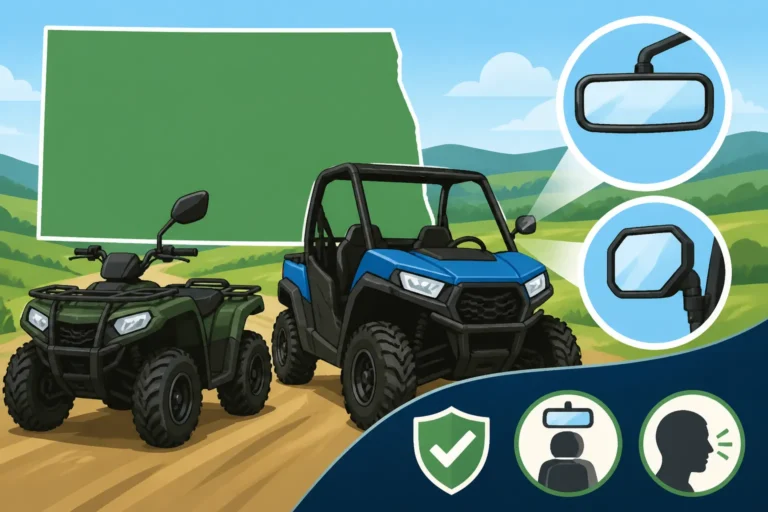
Beyond lighting, two other crucial pieces of equipment that often get overlooked are mirrors and a horn. North Dakota law stipulates specific requirements for these items for OHVs operating on public roads. You need at least one rear-view mirror, mounted to the left or center of the vehicle, that provides a clear and unobstructed view of the highway to the rear for at least 200 feet. This is invaluable for situational awareness, letting you keep an eye on traffic behind you, especially before making turns or changing lanes. Many riders opt for a mirror on each side for maximum visibility.
Additionally, your OHV must have a horn capable of emitting sound audible from at least 200 feet away. This isn't just for startling wildlife; it's a vital safety tool for alerting other drivers or pedestrians to your presence. Whether it's to avoid a potential collision or simply to signal your approach on a blind corner, a working horn is non-negotiable for road safety. Ensuring you meet [North Dakota Mirror and Horn Requirements] will help you avoid citations and significantly improve your safety.
Navigating North Dakota Roads: What You Need to Know
Understanding the specific equipment requirements is just the first step. Knowing where and how you can legally ride your OHV on North Dakota's diverse road system is equally important. The rules can vary depending on the type of road, and ignorance of the law is never an excuse.
Understanding Different Road Classifications
North Dakota has a variety of road classifications, and the rules for OHV operation can differ significantly between them.
- Gravel Roads: Many [North Dakota Gravel Roads Open to Registered Machines] are accessible to registered OHVs, often serving as critical connectors between properties or access to recreational areas. However, even on gravel, you're still sharing the road with other vehicles, and all equipment requirements, including functional brake lights, apply. You're typically expected to drive on the far right side of the road and obey all traffic laws.
- Paved Roads: Access to paved roads is often more restricted. While some [North Dakota Paved Roads Posted at 55] mph might be open to OHVs meeting specific criteria (like being able to maintain a certain speed), interstates and other controlled-access highways are almost universally off-limits. You'll need to pay close attention to posted speed limits and be aware that other drivers might not anticipate an OHV.
- Section Lines and Township Roads: [North Dakota Rules for Riding a Section Line] and [North Dakota Rules for Riding a Township Road] often allow OHV access, but these can be subject to local ordinances. These are often less-traveled routes, but the same basic rules of the road and equipment requirements still apply. It's always a good idea to check with local county or township authorities if you're unsure about a specific route.
The key takeaway here is that you can't assume all roads are open, and you must always operate your machine as if it were any other vehicle on the road, observing speed limits, traffic signs, and all relevant safety precautions.
Penalties for Non-Compliance
Let's be direct: riding an OHV on a public road without the legally required equipment, including functional brake lights, can lead to penalties. At a minimum, you're likely looking at a citation and a fine. While the exact cost can vary, [North Dakota Fine Increase in 2025] indicates a trend toward stricter enforcement and potentially higher costs for violations. Beyond the immediate fine, repeated offenses or more serious violations could lead to your OHV being impounded, or even more severe legal consequences. It's not a risk worth taking. The cost of properly outfitting your machine with the necessary safety equipment pales in comparison to the potential fines and hassle of a traffic stop and citation.
Getting Pulled Over: What to Expect
If an officer pulls you over while you're riding your OHV on a public road, it's important to remain calm and cooperative, just as you would in any other vehicle. Have your registration, proof of insurance, and any necessary permits (like a [North Dakota Non-Resident OHV Permit] if you're visiting) readily available. The officer will likely conduct an equipment check, and if your brake lights (or other required lighting, mirrors, or horn) are not functioning or not present, you will likely receive a citation. They might also check for [North Dakota Insurance Requirements at Registration] and verify your eligibility to operate an OHV on the road, especially if you're a younger rider and subject to [North Dakota Helmet Law for Riders Under 18] or safety certificate requirements. Being polite and respectful can sometimes make a difference in how the situation plays out, but ultimately, the law is the law, and if your machine isn't compliant, you'll be held accountable.
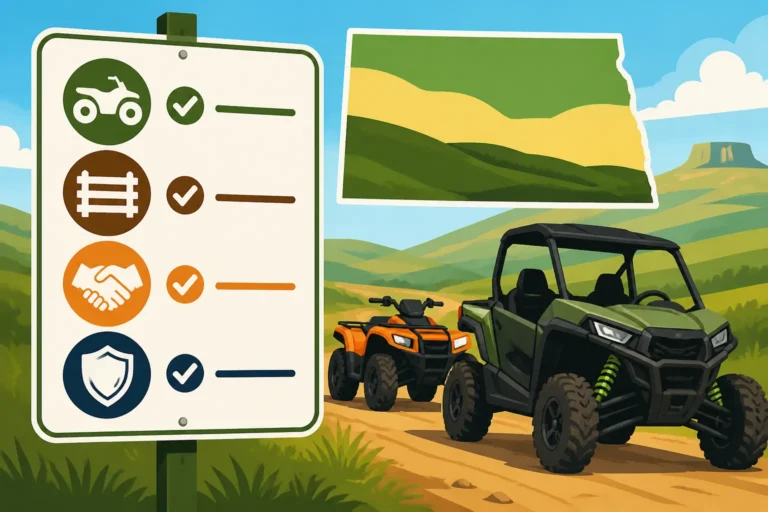
North Dakota OHV Road Lighting Requirements
| Requirement | Description | Legal Standard | Best Practice |
|---|---|---|---|
| Brake Lights | Red light(s) illuminating upon brake application. | Visible from at least 100 ft (day), several hundred ft (night) to the rear. | Bright, clearly visible LED units, regularly tested. |
| Headlamps | White light(s) projecting forward. | Visible from at least 300 ft to the front. | Bright, focused beams that meet DOT standards. |
| Taillamps | Red light(s) projecting rearward when headlamps are on. | Visible from at least 300 ft to the rear. | Integrated with brake lights, highly visible. |
| Turn Signals | Amber or red lights indicating intended turns. | Visible from front and rear when activated. | Front amber, rear red/amber, clearly flashing. |
| Rearview Mirror | Mirror providing clear view of traffic behind. | At least one, left or center, view of 200 ft to the rear. | Two mirrors (one on each side) for maximum visibility. |
| Horn | Audible device to warn others. | Capable of emitting sound audible from at least 200 ft. | Loud, functional, easily accessible. |
| Reflectors | Passive reflective devices. | Required on rear and sides for enhanced visibility, especially at night. | Clean, securely mounted, and strategically placed. |
Disclaimer
This article is for general informational purposes only and does not constitute professional advice. Laws, prices and regulations vary by location and change over time. Consult a qualified professional for guidance on your specific situation.