North Dakota Class III Machines at 65 mph Roads
Navigating North Dakota's expansive landscape on your ATV or UTV can be an incredible experience, but understanding where you can legally ride, especially on public roads, often feels like deciphering a complex puzzle. Many riders with larger, more capable machines – what North Dakota calls Class III Off-Highway Vehicles – wonder if their powerful side-by-sides can truly keep up with highway traffic. This comprehensive guide is here to untangle the specific rules for operating your North Dakota Class III machine on roads posted at 65 mph, offering clarity and practical advice for staying on the right side of the law while enjoying your ride.
Defining North Dakota's Class III OHV
Before we dive into road speeds, it's essential to understand exactly what North Dakota considers a Class III Off-Highway Vehicle. The state has distinct classifications for OHVs, and these categories directly impact where and how you can ride, particularly on public roads. Frustration often comes from misinterpreting these classifications, so let's clear the air.
What Makes a Machine Class III
A Class III machine in North Dakota is generally defined by specific characteristics that set it apart from its smaller counterparts. Typically, these are your modern side-by-sides or UTVs – vehicles designed for multiple passengers and often equipped with a steering wheel instead of handlebars. The key statutory distinctions often revolve around weight, width, and seating. For instance, these machines often exceed the weight and width limits of Class I and II machines, and they are almost universally designed with a steering wheel and often bucket or bench seating. They’re built to be robust, carry more gear or passengers, and handle a variety of tasks, from farm work to recreational trail riding. [North Dakota Class III Machines Under 8,000 Pounds] details some of the specifics here.
Many riders invest in aftermarket accessories, perhaps from a brand like SuperATV, to enhance their UTV's capabilities, adding things like heavy-duty axles or lift kits. While these modifications can improve off-road performance, it’s crucial to remember that they might also affect how your machine aligns with state regulations if the modifications alter the vehicle's fundamental dimensions or characteristics as defined by law. Always ensure any upgrades still allow your vehicle to meet the spirit of the Class III definition, especially if you plan on road use.
Common Class III Machine Examples
When we talk about Class III machines, we're primarily looking at the broad category of UTVs and side-by-sides. Think of popular models from manufacturers that offer multi-passenger seating and often come standard with a roll cage and automotive-style controls. These machines are increasingly common on farms, ranches, and recreational areas across North Dakota, used for everything from hauling feed to accessing remote hunting spots.
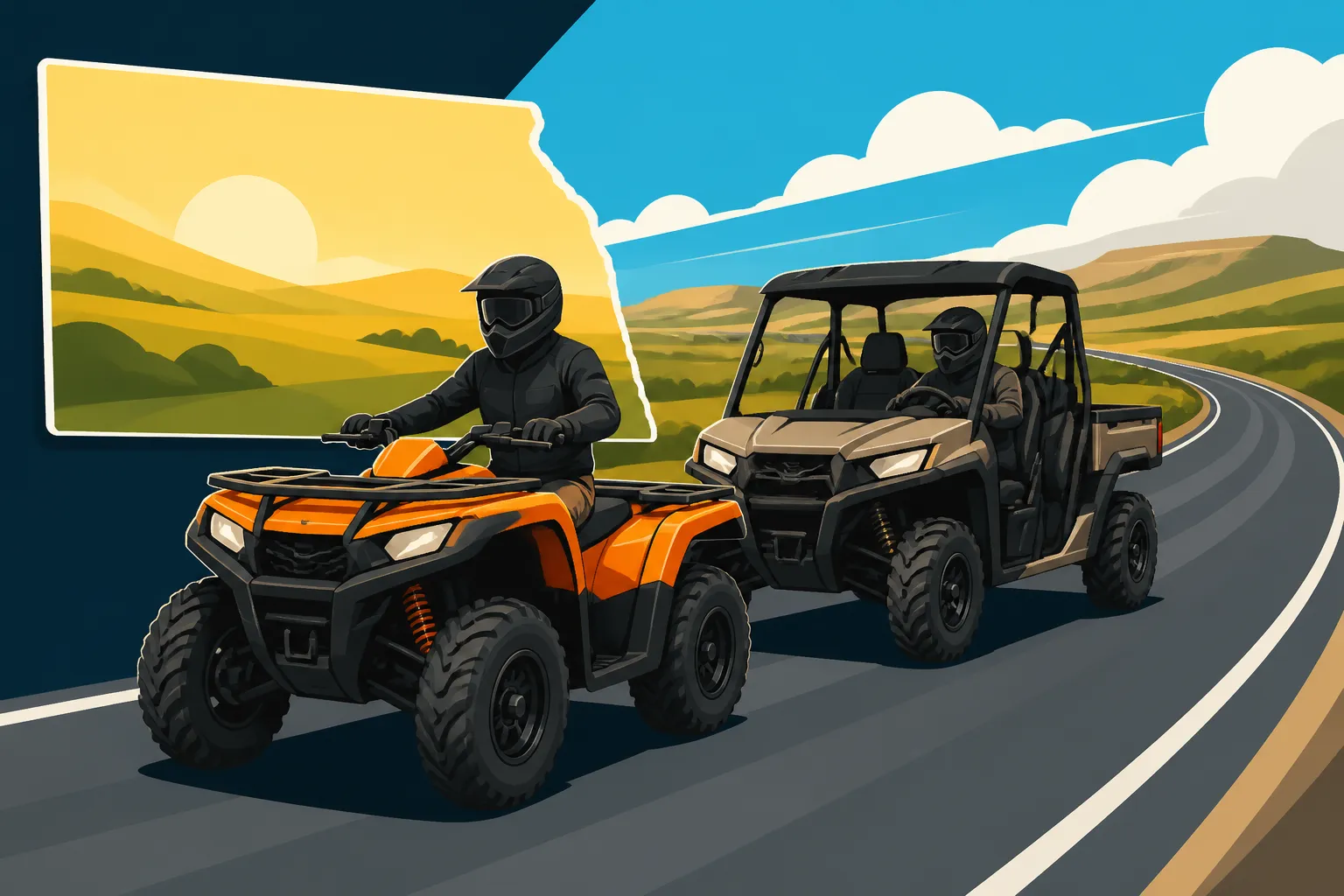
Unlike an ATV (which typically falls under Class I) or some older three-wheelers, a Class III machine offers a different driving experience, closer to a compact car in terms of controls and passenger comfort. This design difference is part of why the state has different rules for them when it comes to road access and speed limits. If you've been wondering if your four-seat recreational UTV qualifies for those higher-speed roads, chances are it's a Class III, and this guide will be especially relevant to you.
Key Differences from Class I and II
The distinctions between the OHV classes are not arbitrary; they are the foundation of North Dakota's regulations regarding road access. Class I machines are generally defined as ATVs (all-terrain vehicles) designed to be straddled, often with a maximum width and dry weight limit. Class II machines are typically wider, heavier vehicles, like some specialized ATVs or utility vehicles, that might still have handlebars but exceed Class I limits. [North Dakota Class II Width and Weight Limits] gives more insight into that category.
The critical differentiator for Class III machines, especially concerning road use, is their inherent stability, enclosed passenger compartments (often with seatbelts), and steering wheel control. These features are generally perceived to make them safer and more predictable in a road environment compared to a straddle-seat ATV. This allows the state to grant them greater road access, including the higher speed limits we're discussing. Without these distinctions, every OHV would be lumped into one category, leading to either overly restrictive rules for UTVs or dangerously permissive rules for smaller, less stable ATVs on public roads.
The 65 MPH Road Rule for Class III Machines
This is where the rubber meets the road, quite literally, for many North Dakota UTV owners. The ability for Class III machines to travel on roads posted at 65 mph is a significant advantage, opening up a much wider network of routes for riders. However, it's not a free-for-all; specific conditions and requirements must be met.
Where 65 MPH Roads Are Found
When North Dakota law talks about roads posted at 65 mph, it's typically referring to certain state highways, larger county roads, or other designated thoroughfares where the speed limit is clearly marked. You won't find 65 mph limits on every backroad or township path. These are generally well-maintained, paved or aggregate-surfaced roads designed for higher vehicle speeds. It’s important to understand that North Dakota Class III Machines at 65 mph Roads specifically refers to posted limits; you can't just assume a road is 65 mph capable if it's not explicitly marked.
Riders often express relief when they learn their UTV can handle these routes, as it can dramatically cut down travel time between trails or from home to a favorite fishing spot. Imagine being able to take your side-by-side from your lake cabin on a designated state highway to access a different recreational area, rather than having to load it onto a trailer every time. This flexibility is a game-changer for many, allowing them to truly integrate their OHV into their lifestyle.
Specific Equipment Requirements for Road Use
Just because your machine can go 65 mph doesn't mean it's automatically road-legal at that speed. North Dakota mandates certain equipment to ensure safety and compliance for any OHV operating on public roads, especially at higher speeds. These requirements are non-negotiable and are often where riders get caught out.
You'll need a proper mirror system, offering a clear view to the rear – often a rearview mirror and at least one side mirror. A functional horn is also mandatory, audible from a certain distance. Crucially, your machine must be equipped with a speedometer that indicates speed in miles per hour. Lighting is also vital: headlamps visible from a specific distance, brake lights, and often turn signals are required. [North Dakota Mirror and Horn Requirements] and [North Dakota Headlamp Distance Standards] cover some of these in detail.
For many UTV owners, especially those with machines primarily designed for off-road use, these road-specific components might not be standard. This is where researching and installing aftermarket kits becomes important. Companies like SuperATV offer a range of street-legal kits that bundle many of these necessary items, making it easier to convert an off-road-focused UTV into a road-compliant vehicle. It's a common frustration to buy a powerful machine only to find you need to add several hundred dollars in accessories just to ride it to the gas station legally, but it's a necessary step for safety and compliance.
Why Class III Gets This Special Provision
The legislative intent behind allowing Class III machines on 65 mph roads is rooted in their design and capability. Unlike a typical ATV (Class I), which can be less stable at higher speeds and less visible in traffic, a UTV or side-by-side often provides a more car-like experience. They have a wider stance, a lower center of gravity (compared to many lifted trucks), and multi-point seatbelts, all contributing to increased stability and passenger safety on paved surfaces.
Furthermore, many Class III machines are built with engines capable of easily reaching and sustaining 65 mph, meaning they won't impede traffic flow significantly on these roads. The state recognizes that these machines are often used for practical purposes that require traveling longer distances and at higher speeds, such as reaching remote agricultural fields or connecting segments of recreational trails. This provision balances the utility of these machines with the safety of general public road use, acknowledging their enhanced design over other OHV classes. It's about recognizing that a modern UTV is a very different beast from a vintage three-wheeler.
| Feature | Class I OHV (ATV) | Class II OHV (Wider/Heavier ATV/UTV) | Class III OHV (Side-by-Side/UTV) |
|---|---|---|---|
| Steering | Handlebars | Handlebars | Steering Wheel |
| Seating | Straddle seat (single rider or tandem) | Straddle seat or limited bench | Bucket or bench seating (multiple passengers) |
| Typical Width | Up to 50 inches (approx.) | Up to 65 inches (approx.) | Often exceeding 65 inches |
| Dry Weight | Varies, generally lighter | Varies, often heavier than Class I | Often heavier, designed for multiple passengers/cargo |
| Road Speed Cap | Often 30-35 mph on designated roads | Often 30-35 mph on designated roads | 65 mph on designated roads (with equipment) |
| Primary Use | Recreational, light utility | Recreational, heavier utility | Recreational, heavy utility, farm, ranch, touring |
| Road Equipment | Specific lighting, mirrors, horn (if allowed) | Specific lighting, mirrors, horn (if allowed) | Full street-legal kit required for 65 mph roads |
Essential Conditions for Legally Riding on 65 MPH Roads
It's not enough to simply own a Class III machine with the right equipment; several other administrative and personal conditions must be met to legally operate your OHV on North Dakota's 65 mph roads. Overlooking any of these can lead to fines, citations, or worse, an unsafe situation on the road.
Registration, Titling, and Insurance
First and foremost, your Class III OHV must be properly registered and titled with the North Dakota Department of Transportation. This isn't just a suggestion; it's the law. Registration confirms your machine is on the books and helps fund trail development and safety programs. [Titling an ATV in North Dakota] provides comprehensive details on this process, which applies equally to UTVs. You'll also need to ensure your registration is current, as [When a North Dakota OHV Registration Expires] explains the two-year cycle.
Beyond that, you absolutely need insurance. North Dakota law requires liability insurance for OHVs operating on public lands and roads. Just like a car, if you're involved in an accident, you need to be able to cover damages. The minimum liability limits are generally comparable to those for automobiles, such as 25/50/25 (meaning $25,000 for bodily injury per person, $50,000 for bodily injury per accident, and $25,000 for property damage). Many riders opt for additional coverage, like comprehensive or collision, especially given the cost of modern UTVs. [North Dakota Insurance Requirements at Registration] emphasizes the importance of having this squared away before you hit the pavement.
Rider Age and Licensing
Operating any vehicle on a public road in North Dakota, even an OHV, comes with age and licensing requirements. For Class III machines on 65 mph roads, the rules typically align with those for operating a motor vehicle. This means the operator must hold a valid driver's license. You can't just hand the keys to your teenager with a safety certificate; they need to be licensed to drive a car.
This contrasts with some off-road scenarios or riding on private land, where age restrictions might be different or less stringent. The logic here is clear: operating a heavy, powerful machine at 65 mph on a public road requires the same level of judgment, training, and legal accountability as driving any other vehicle. It's a critical safety measure, preventing inexperienced or unlicensed individuals from putting themselves and others at risk in high-speed traffic. [Do You Need a License for an ATV in North Dakota?] covers the broader context, but for Class III on 65 mph roads, assume you need that regular driver's license.
Observing Posted Signs and Local Ordinances
Even with a fully compliant Class III machine, current registration, and a valid driver's license, you cannot simply assume all 65 mph roads are open to you. North Dakota's state laws provide the baseline, but local jurisdictions (counties and cities) often have the authority to impose additional restrictions or prohibitions on OHV use within their boundaries.
This means that a state highway with a 65 mph limit that passes through a city might suddenly become off-limits or have reduced speed limits for OHVs as you enter city limits. [North Dakota County and City ATV Ordinances] highlights the complexities here. It’s absolutely vital to pay attention to posted signs – they are your primary guide on the road. Look for signs explicitly permitting or restricting OHV access. If in doubt, it’s always best to check with the local sheriff’s office or city hall before you ride. Nothing ruins a great day of riding faster than an unexpected citation because you missed a small, but crucial, local ordinance sign.
Navigating Higher Speed Roads Safely
Riding an OHV on a 65 mph road is a different experience than hitting the trails or cruising on a gravel road. Safety becomes paramount, and riders need to adjust their mindset and practices to account for faster traffic, larger vehicles, and potentially less forgiving road surfaces.
Visibility and Safety Gear
On roads with speeds up to 65 mph, your visibility to other drivers is your first line of defense. OHVs, even larger Class III machines, are often smaller than the trucks and cars they share the road with. Brightly colored clothing, especially high-visibility vests or jackets, can make a huge difference, particularly in low light conditions or inclement weather.
While North Dakota's helmet law typically applies to riders under 18, wearing a DOT-approved helmet for all riders, regardless of age, is a highly recommended safety practice when operating on higher-speed roads. [North Dakota Helmet Law for Riders Under 18] outlines the legal requirement, but personal safety goes beyond the law. Imagine a minor incident at 65 mph – a helmet could be the difference between a minor bump and a life-altering injury. Gloves, eye protection, and sturdy footwear are also crucial to protect against road debris and offer better control. Don’t skimp on safety gear; it's an investment in your well-being.
Understanding Traffic Flow and Defensive Riding
Sharing 65 mph roads with cars, semi-trucks, and other fast-moving vehicles requires a defensive riding strategy. You need to be constantly aware of your surroundings, checking mirrors frequently, and anticipating the actions of other drivers. Because OHVs accelerate and brake differently than traditional vehicles, maintaining a generous following distance is crucial.
Don't assume other drivers see you, especially when changing lanes or making turns. Always use your turn signals well in advance, and make eye contact if possible. Be mindful of blind spots for larger vehicles. Remember, while you have the legal right to be on these roads, you are often the smaller, less visible vehicle, making you more vulnerable. Riding predictably, staying in your lane, and avoiding sudden maneuvers will significantly increase your safety margin. This isn't the time for aggressive riding; it's about being a cautious, considerate, and predictable road user.
Mechanical Readiness for Road Speeds
Taking your OHV onto a 65 mph road puts different stresses on the machine than typical off-road use. Your tires, brakes, suspension, and engine components need to be in top condition. Worn tires designed primarily for mud or rock crawling might not provide optimal grip or wear evenly on pavement at sustained higher speeds. [What Non-Highway Tires Means] underscores the importance of choosing the right rubber.
Before any road excursion, perform a thorough pre-ride inspection. Check tire pressure, brake fluid levels, and ensure your lights, horn, and speedometer are all functioning correctly. If you've made modifications, like lift kits or suspension upgrades (perhaps with components from SuperATV), ensure they are professionally installed and suitable for high-speed road use. An off-road suspension designed for slow articulation might feel unstable at highway speeds. Regular maintenance, including oil changes and belt inspections, becomes even more critical when subjecting your machine to sustained road operation. A breakdown at 65 mph on a busy highway is a much more dangerous situation than one on a quiet trail.
Restrictions and Limitations on Road Use
While North Dakota offers considerable freedom for Class III machines on 65 mph roads, it's not an unlimited privilege. There are significant restrictions and limitations that riders absolutely must be aware of to avoid legal trouble and maintain safety. Ignorance of these rules is not a defense.
Interstates and Controlled-Access Highways
One of the most common misconceptions is that if a road is posted at 65 mph (or even 75 mph in some areas), an OHV can automatically ride on it. This is almost never the case for interstates or any road designated as a controlled-access highway. [North Dakota Interstates Are Never Open] to OHVs, regardless of their class or speed capability. These roads are designed for high-speed, limited-access travel, and OHVs are explicitly excluded for safety reasons due to their size, visibility, and differing performance characteristics.
Controlled-access highways are typically identified by features like limited entry/exit points, grade separations (bridges over other roads), and the absence of intersections. Think of I-94 or I-29 in North Dakota. Even if your Class III machine can technically reach and sustain these speeds, the law prohibits you from using these specific types of roadways. Attempting to do so can result in significant fines and severe penalties, as you'd be creating a dangerous situation for yourself and other motorists.
Ditch Riding Rules Remain
North Dakota is famous for its ditch riding allowances, a unique aspect of OHV law in the state. However, the ability to ride on 65 mph roads for Class III machines does not nullify or supersede the ditch riding rules. The two are distinct forms of operation. If you are operating your Class III machine on the roadway itself, you are subject to road rules. If you then decide to transition into the ditch, you must follow the specific regulations governing ditch riding.
For instance, ditch riding is generally restricted to the ditch bottom or back-slope and is subject to rules regarding obstructions, adjacent land use, and specific county ordinances. You can't simply weave back and forth between the roadway and the ditch at 65 mph. The laws are specific about where you can ride in the ditch and at what speeds. [North Dakota Ditch Riding: The Legal Right Explained] provides thorough details, but the key takeaway here is that you're either on the road, following road rules, or in the ditch, following ditch rules, and the two sets of regulations aren't interchangeable on the fly.
Local Restrictions and Exceptions
As mentioned earlier, local control is a significant factor in North Dakota OHV regulations. While state law provides the broad framework, counties and cities have the authority to enact their own ordinances that can further restrict or even prohibit OHV use on roads within their corporate limits. This is often a source of frustration for riders who travel long distances only to find an unexpected ban.
For example, a county might have a blanket prohibition on OHV use on all county roads, even those with higher speed limits, or a city might restrict OHV travel to specific routes or during certain hours. While [North Dakota Cities Cannot Require Local Registration], they can certainly limit where and when you can ride. This means that a state highway that permits 65 mph Class III OHV travel might pass directly through a city or county that has stricter rules. Before embarking on a long journey that involves riding through different jurisdictions, it's a very good idea to [Checking With Local Law Enforcement First] to avoid any surprises. A quick phone call can save you a lot of hassle.
Disclaimer
This article is for general informational purposes only and does not constitute professional advice. Laws, prices and regulations vary by location and change over time. Consult a qualified professional for guidance on your specific situation.