Why the Non-Resident Permit Runs January to December
A North Dakota trip booked for late summer can raise an easy-to-miss question: does a non-resident OHV permit last a year from purchase, or does it expire with the calendar year? It follows the calendar year. Knowing that helps you time a purchase, understand what the permit covers, and avoid assuming that a home-state registration changes North Dakota’s rules.
Why the permit follows the calendar year
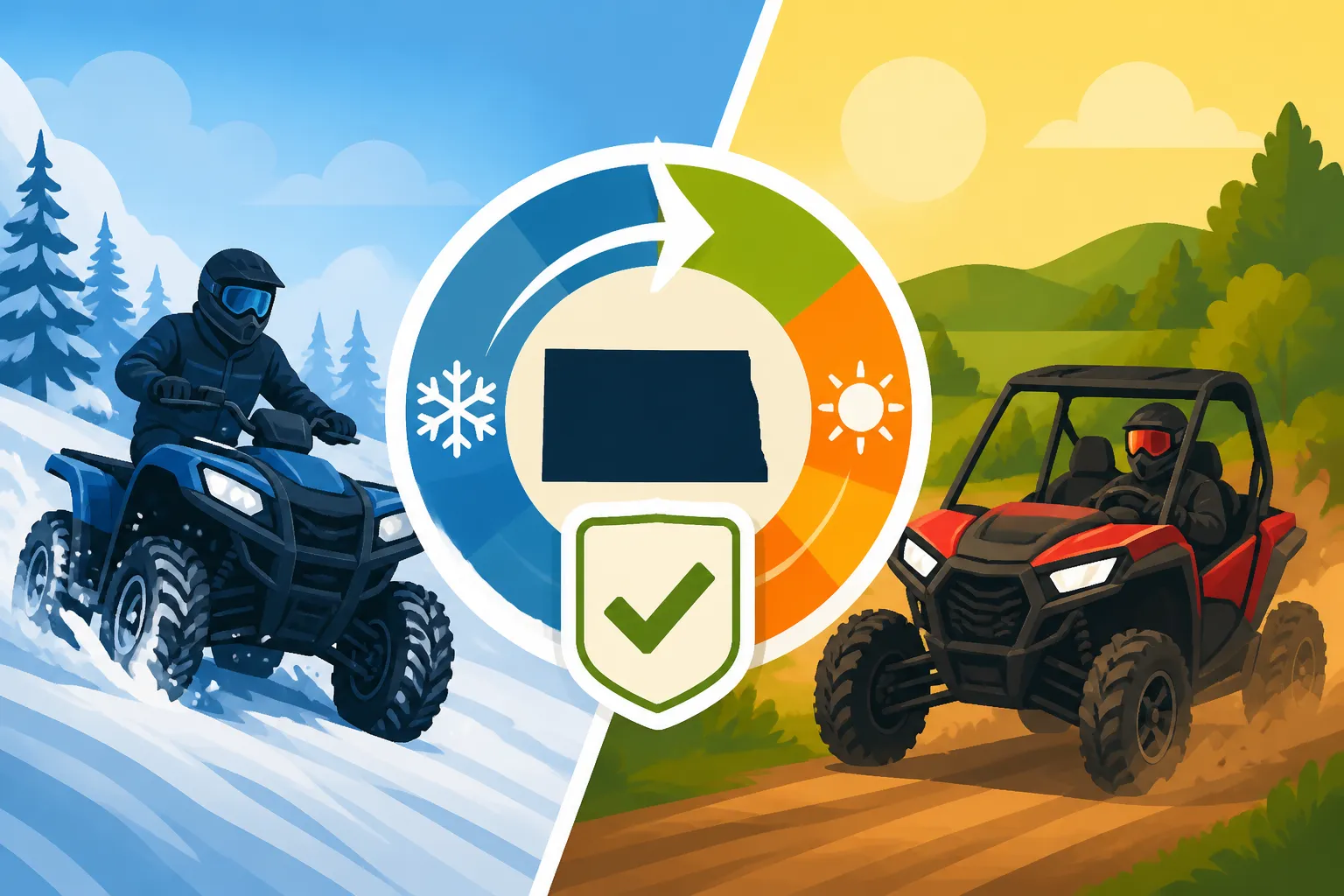
North Dakota’s non-resident OHV permit uses a fixed calendar-year cycle: it runs from January 1 through December 31. Its expiration date is not based on the day you buy it. A permit purchased late in the year therefore does not carry over for a full year after purchase.
That fixed schedule is the practical answer to “why.” The permit is organized around a calendar-year validity period, which gives riders and sellers a predictable start and end date. It is not a rolling annual pass. The date you pay matters less than the year shown for the permit and its stated expiration.
The schedule can feel inconvenient if you travel near the end of the year. Someone buying a permit in the fall should not assume it will remain valid until the following fall. Instead, check the expiration printed or displayed for the permit before relying on it for a later trip.
| When you buy the permit | What to expect |
|---|---|
| Early in the calendar year | The permit is valid for the remainder of that calendar year, subject to its terms |
| Midway through the calendar year | The permit does not reset its expiration based on the purchase date |
| Near the end of the calendar year | The permit may have only a short period left before it expires |
| In a new calendar year | Check the current permit requirement and obtain the permit for that year if needed |
This calendar-year structure is separate from a North Dakota resident’s registration cycle. A visitor’s permit and a machine’s home-state registration are not interchangeable documents, and neither should be assumed to extend the other’s validity. For an overview of the visitor requirement, see North Dakota’s Non-Resident OHV Permit.
The calendar-year schedule also does not mean every non-resident must buy a permit for every short visit. North Dakota has a separate rule for some out-of-state machines and temporary operation. How that rule applies depends on the machine and the length and circumstances of its use, so check North Dakota’s 30-Day Out-of-State Rule before deciding that a permit is unnecessary.
What the permit does and does not cover
A non-resident permit is a North Dakota requirement for qualifying visiting OHVs. It does not turn every piece of public land into an open riding area, and it does not give permission to ride wherever you find a track. The permit addresses a paperwork requirement; land access and riding rules remain separate questions.
A home-state registration is not automatic reciprocity
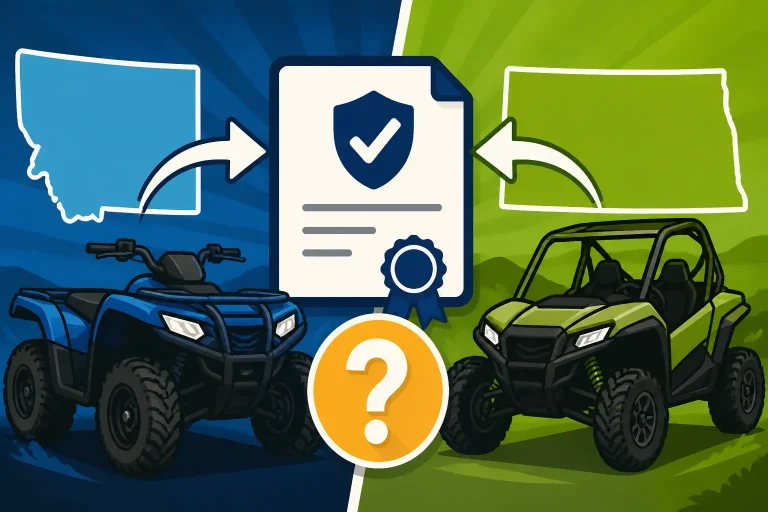
Do not assume that a registration, sticker, or permit from your home state replaces North Dakota’s non-resident permit. North Dakota does not offer blanket reciprocity with every state. A document that makes your machine legal to operate at home may still leave you with a North Dakota requirement when you visit.
The details can depend on the type of machine, where it is registered, and how long it will be operated in North Dakota. Check North Dakota Has No Reciprocity With Any State and the relevant temporary-use rule rather than relying on a seller’s assurance or a friend’s experience with a different machine.
It also helps to keep the permit physically or digitally accessible in the way the state’s current instructions allow. Carry any supporting registration documents, too. If an officer or land manager asks to see proof, having the correct paperwork ready is easier than trying to explain it from memory.
A permit is not a trail sticker
The word “permit” can sound like permission to ride on a particular trail, but that is not what to assume. A permit does not override posted closures, property boundaries, local restrictions, or the rules for a specific riding area. Some places may have their own access conditions or seasonal closures.
Before leaving home, identify where you plan to ride and verify that OHVs are allowed there. Trail status can change with weather, maintenance, or land-management decisions. The distinction is explained in Why a Permit Is Not a Trail Sticker.
This separation matters in North Dakota because a machine may be properly registered or permitted and still be in a place where riding is prohibited. Check both the paperwork requirement and the access rules for your destination. If you are heading to a state park, also verify whether a separate park entrance permit is needed for the vehicle carrying the OHV. The OHV permit and a park entrance permit serve different purposes.
Planning a visit around the expiration date
The calendar-year cycle is easiest to manage if you check the permit before loading the machine. Do not wait until you arrive at a trailhead to find out that a permit has expired or that your home-state document is not enough.
For a trip early in the year
If your trip takes place early in the calendar year, confirm that you have the permit for the current year and that it applies to the machine you plan to ride. A permit from the previous year should not be treated as current simply because it was purchased recently in the prior season.
If you are traveling with more than one machine, check the requirements for each one. A permit for one OHV should not be assumed to cover another machine in the trailer. See North Dakota Permit for a Visiting Machine for the machine-specific question.
For a trip late in the year
For a fall or winter visit, focus on the printed expiration date rather than the date of purchase. If you plan to return after the year changes, check whether you will need a new permit for that later trip. Do not plan on a late-season purchase carrying forward automatically.
Also confirm that the riding area is open and suitable for the conditions. Snow, wet ground, or seasonal closures can affect where you can ride, even while your paperwork is valid. A permit’s calendar-year dates are not a promise that a trail or riding area will be open throughout that period.
For a visit that crosses December 31
A trip that begins in one year and continues into the next deserves extra attention. The permit’s end date may fall during the trip, so check what is required for operation after the calendar turns. If you are traveling with a machine registered elsewhere, verify whether any temporary-use rule applies and whether it covers the full period you intend to ride.
The practical checklist below helps avoid mixing up separate requirements:
- Identify the machine’s home-state registration or other status.
- Check whether North Dakota’s temporary-use rule applies to your machine and visit.
- Confirm whether a non-resident permit is required for the planned riding.
- Check the permit’s expiration date, especially for a trip near year-end.
- Confirm that the riding area is open to OHVs and review any local access rules.
- Keep the required paperwork available while you ride.
The official permit channel is the best place to confirm current application steps, availability, and terms. Online purchasing may be convenient before travel, but make sure the permit is issued for the correct machine and calendar year. Buying a Permit Online Before You Travel covers the planning side of that process.
Common misunderstandings about the January-to-December cycle
The fixed schedule leads to a few recurring assumptions. Clearing them up makes it easier to budget and avoid relying on the wrong document.
“I bought it recently, so it must last a full year.” Not under a calendar-year system. Check the permit’s stated expiration rather than counting twelve months from the purchase date.
“My home state registered the machine, so North Dakota has to accept that registration.” Do not assume that. North Dakota’s requirements for non-resident machines are separate, and the state does not provide blanket reciprocity with every jurisdiction.
“The permit means I can ride any public trail.” No. The permit requirement and land access are separate. You still need to confirm that riding is allowed at the specific location and that there are no closures or additional conditions.
“One permit covers every machine in my trailer.” Check the terms for the machine you intend to operate. Do not assume a document assigned to one OHV automatically applies to a second one.
“A short visit always means I can skip the permit.” A temporary-use rule may apply in some circumstances, but it has conditions. Confirm those conditions before traveling rather than treating the length of the trip alone as a complete answer.
For the expiration detail itself, consult North Dakota Permit Expiration Date. Because permit instructions and requirements can change, confirm the current terms with the official state source before buying or riding.
Disclaimer
This article is for general informational purposes only and does not constitute professional advice. Laws, prices and regulations vary by location and change over time. Consult a qualified professional for guidance on your specific situation.