North Dakota Reciprocity With Montana
A Montana registration or decal does not automatically give an ATV or UTV permission to ride in North Dakota. The key is separating reciprocity from North Dakota’s limited rule for out-of-state machines, then checking whether your trip, paperwork, and riding location require a visitor permit. Here’s how Montana riders can sort that out before unloading.
Does North Dakota Have Reciprocity With Montana?
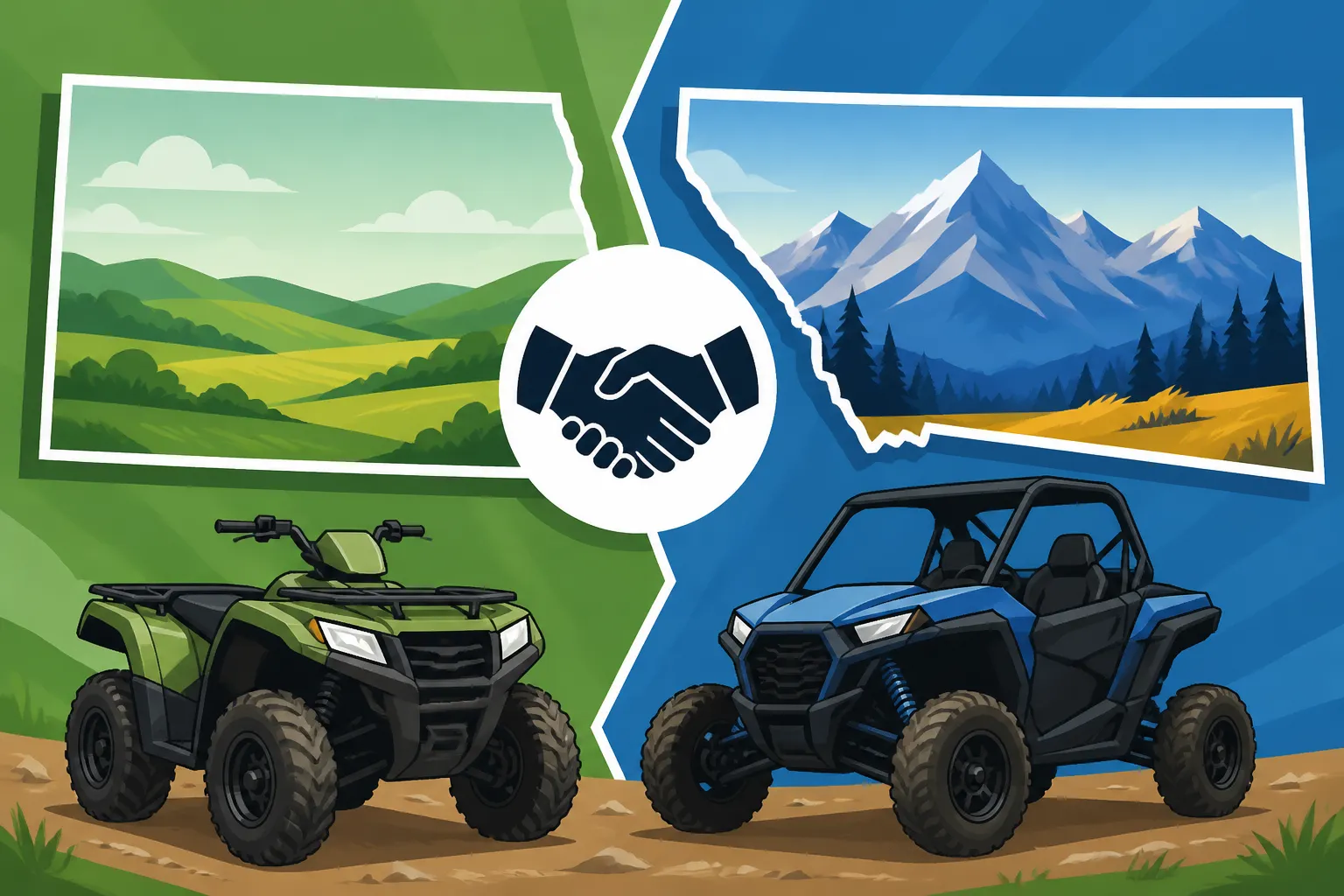
No. North Dakota does not have an OHV registration reciprocity agreement with Montana. A Montana registration, permit, or decal should not be treated as a substitute for a North Dakota requirement. The same general point applies to other states; see North Dakota Has No Reciprocity With Any State.
That answer does not necessarily mean every Montana visitor needs to buy a North Dakota permit for even a short visit. Reciprocity and a limited out-of-state operating allowance are separate things. North Dakota has a rule for certain machines registered in another state that allows a limited period of operation before additional North Dakota paperwork is required. The period is generally described as 30 consecutive days, but the machine and circumstances must qualify. Review North Dakota’s 30-Day Out-of-State Rule before relying on it.
In practice, ask two questions:
- Is the machine properly registered or otherwise documented in Montana?
- Will it remain in North Dakota beyond the out-of-state period, or does it fail to qualify for that allowance?
If your machine qualifies and your visit stays within the allowed period, you may not need the same visitor permit required in other circumstances. If it does not qualify, or you will keep riding after the allowance ends, you may need a North Dakota non-resident OHV permit. The exact paperwork depends on the machine and its status, so don’t assume a Montana sticker alone settles the question.
| Your situation | What to check before riding |
|---|---|
| Short visit with a machine currently registered in Montana | Whether the machine qualifies for North Dakota’s limited out-of-state period |
| Visit lasting beyond the out-of-state period | Whether a North Dakota non-resident permit or registration is required |
| Machine has no current Montana registration | Whether a North Dakota visitor permit is required before operation |
| Machine is used only on private property | Whether the location and use qualify for an exemption |
| Rider is under 16 | Whether North Dakota safety-certificate and supervision rules apply |
| Riding in a state park or on a managed trail | Whether separate access rules, closures, or permits apply |
The table is a starting point, not a substitute for checking the rule that fits your machine. A machine that is titled but not currently registered, for example, may not be treated the same way as one with valid current registration. Likewise, a North Dakota permit does not itself prove ownership or replace required title and registration documents.
For the visitor-permit rules and how the permit works, see North Dakota’s Non-Resident OHV Permit and North Dakota Permits for Visiting Riders. For the broader distinction between a permit and a registration, North Dakota Registration Versus a Non-Resident Permit can help prevent the two from being mixed up.
How the 30-Day Rule Affects a Montana Visit
The out-of-state allowance matters most for people planning longer stays, returning for repeated trips, or leaving a machine at a North Dakota property. It is not the same thing as reciprocity: it is a limited rule for qualifying out-of-state machines. When the allowed period has run, the Montana paperwork does not create an ongoing exemption.
“Thirty consecutive days” is an important detail. Don’t assume that days reset simply because you stop riding for a weekend, take the machine back to a trailer, or move between riding locations. If you are planning a stay near the limit, confirm how the rule applies to your specific schedule with the appropriate North Dakota office before you ride.
A useful planning approach is:
- Check the machine’s current status. Make sure you have its valid Montana registration or other required ownership and registration documents. Keep them with the machine or readily available.
- Work out the dates. Note when the machine will first be operated in North Dakota and how long it will remain there. If it has already been in the state, include that time when asking about the rule.
- Confirm what applies to your machine. Ask whether it qualifies for the out-of-state allowance or needs a North Dakota non-resident permit. Do not rely only on a seller’s, friend’s, or online discussion’s description of the rule.
- Get any required permit before riding. If the allowance does not cover your circumstances, arrange the permit before operating the machine.
- Keep proof available. Carry the permit and registration documents, and make sure any required decal or other proof is displayed as directed.
The out-of-state allowance is especially easy to misunderstand when a Montana rider keeps a machine at a cabin, family property, or seasonal residence. A machine that stays in North Dakota and is used over multiple visits may eventually cross the relevant time threshold even if its owner is not there every day. For a longer-term move or extended stay, read North Dakota Registration for a New Resident and confirm the steps that apply to your circumstances.
Also consider whether the machine itself is covered by the rule. Vehicle categories, registration status, and where the machine is operated can matter. A side-by-side, youth quad, tracked machine, or homemade machine may raise paperwork questions that are not answered by a general statement about Montana reciprocity. If you have a less common machine, ask about its classification rather than assuming that the rules for a standard ATV apply. North Dakota’s Class I, II and III Machines explains how North Dakota classifies OHVs.
Visitor Permits, Trails, and Other Rules
If your Montana machine needs a North Dakota non-resident permit, treat it as a requirement for the machine—not a general pass that covers every vehicle in your group. Check whether each OHV needs its own permit, how the permit must be displayed, and how long it is valid. Permit requirements and purchasing options can change, so confirm current details through the North Dakota Parks and Recreation Department before traveling.
A visitor permit is also not a universal trail-access pass. It addresses a state OHV permit requirement; it does not guarantee that a particular trail is open, remove a state park entrance requirement, or give permission to ride on private land. Check the rules for your destination separately. For example, North Dakota OHV areas may have width restrictions, closures after wet weather, or designated routes that do not allow every type of machine. North Dakota OHV Trails: All Four Riding Areas is a helpful starting point for planning where to ride.
Montana riders should also keep these distinctions in mind:
- Registration and title are different from a visitor permit. A permit does not establish ownership or take the place of required title or registration paperwork.
- Public land and private land have different access rules. A permit does not authorize entry onto land where riding is prohibited or where you lack permission.
- State parks may have separate requirements. Check park entrance rules and local riding restrictions in addition to OHV paperwork.
- A road or ditch is not automatically an approved OHV route. North Dakota’s operating rules depend on the road type, location, signs, and other conditions. Start with North Dakota ATV Road Rules by Surface Type and check the rules for the exact area you plan to ride.
- An out-of-state document does not waive safety requirements. A youth rider may be subject to North Dakota’s age, supervision, and safety-certificate rules even when the machine is registered in Montana.
Age rules deserve a separate check if a child will ride. Don’t assume a Montana safety card automatically counts in North Dakota, and don’t assume the permit for the machine covers the rider’s training requirements. North Dakota’s rules can distinguish the machine’s paperwork from the rider’s qualifications. Review Whether a Safety Certificate From Another State Counts and North Dakota Rules for Riders Under 16 before bringing a young rider.
The safest way to plan a destination is to check both the legal paperwork and the land manager’s access information. A valid North Dakota permit will not open a closed trail, allow cross-country travel where it is prohibited, or replace landowner permission. For rides on public land, verify the route and any temporary closures close to your travel date.
A Practical Checklist for Montana Riders
Before leaving Montana, gather the machine’s registration and ownership documents, identify where you intend to ride, and confirm the trip dates. Then check the North Dakota requirement that applies to that exact machine. If you are unsure whether the 30-day allowance covers your situation, ask the state agency rather than interpreting the rule from the length of your vacation.
Use this checklist:
- Confirm the machine’s paperwork. Check that its Montana registration is current and that the identifying information on your documents matches the machine.
- Confirm the time limit. Work out whether your plans fall within North Dakota’s limited allowance for qualifying out-of-state machines.
- Ask about a North Dakota permit. If the machine does not qualify for the allowance, or you will exceed it, find out which permit or registration step is required.
- Check display instructions. If you obtain a permit, follow the directions for displaying its decal or carrying proof.
- Check each rider’s requirements. Pay particular attention to riders under 16 and to whether an out-of-state safety certificate is accepted.
- Confirm access at the destination. Check the trail, park, or land manager’s current rules, including closures and vehicle limits.
- Keep documents accessible. Carry registration and permit proof while riding, and make sure another person in your group knows where it is.
If a North Dakota office gives you guidance about an unusual machine or a long stay, keep a record of the instructions and the details you provided. That can help avoid confusion later, especially if the machine has no standard registration, has been stored in North Dakota, or is being used by someone other than its owner.
A quick call or official check before departure can save a wasted trip, but it is worth checking again if your plans change. A short visit can become an extended stay, a destination trail can close after rain, or a child’s riding plans can raise a separate certificate question. Treat the Montana registration as useful documentation—not as proof that every North Dakota requirement has been met.
Disclaimer
This article is for general informational purposes only and does not constitute professional advice. Laws, prices and regulations vary by location and change over time. Consult a qualified professional for guidance on your specific situation.