North Dakota Park Permits at $7 a Day
A $7 daily park permit can be easy to mistake for permission to ride an ATV or UTV. In North Dakota, park entry and off-highway vehicle requirements are separate questions. Here’s how to understand the daily permit, when to check for other requirements, and how to plan a visit without assuming one pass covers everything.
What the $7 daily park permit is for
North Dakota’s $7-a-day park permit is an entrance permit for a vehicle visiting a state park. It is different from an ATV or UTV registration, and it does not, by itself, authorize riding an off-highway vehicle within the park.
That distinction matters when you’re hauling a machine. A truck and trailer may need a park entrance permit to enter the park, while the ATV or UTV may have its own registration or permit requirements. Whether the machine can be ridden there is a separate question governed by park rules and the places where riding is specifically allowed.
Think of the daily permit as addressing the vehicle’s entry to the park, not as a general pass for every activity or vehicle you bring. The entrance fee may apply even if your main reason for visiting is to unload a machine, camp, or meet a group. The permit also shouldn’t be treated as a substitute for checking the specific park’s current access rules.
The listed daily rate is $7. Fees and terms can change, so confirm the current charge and how it applies before you travel. North Dakota’s state park permit information is a useful starting point; for a broader explanation of entrance permits, see North Dakota State Park Entrance Permits.
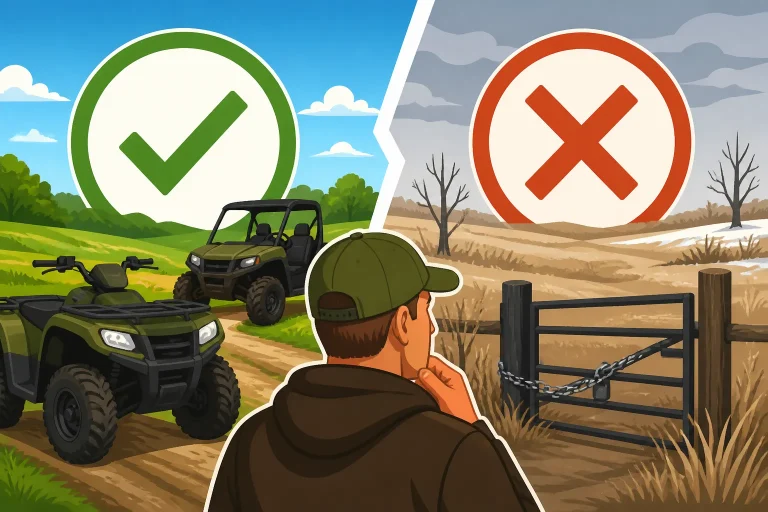
A park permit is usually relevant when you drive into a state park in a vehicle. It is not a permit to ride anywhere in North Dakota, and it does not automatically open trails or public land to motorized use. Before you load up, check both questions:
- What does the vehicle need to enter the park?
- Where, if anywhere, may the ATV or UTV be ridden?
Keeping those questions separate can prevent an expensive or frustrating mix-up at the entrance.
When the daily permit may apply
The practical starting point is the vehicle you’re taking into the park. If you drive a car, truck, or other vehicle into a state park, check whether the daily entrance permit applies to that visit. The ATV or UTV’s presence in the vehicle or on a trailer doesn’t automatically turn the park entrance permit into an OHV permit.
If your group arrives in more than one road vehicle, don’t assume a single daily permit covers the whole group. Ask the park how its current rules apply to each vehicle and to vehicles with trailers. The same caution applies if you leave and re-enter, switch vehicles, or arrive at a park office when the entrance booth is unattended: confirm the current terms rather than relying on someone else’s pass or an old receipt.
A daily permit can make sense for a one-day visit, a short stop, or a trip where you don’t expect to return often. If you expect several park visits, compare the daily option with the annual permit. The listed annual option is $35, but its current coverage, eligible vehicles, and conditions should be confirmed before purchase. The price alone won’t tell you whether a pass fits your plans. See North Dakota Annual Park Permits at $35 for more on that option.
Questions to settle before you arrive
Park access details can matter as much as the fee. Before setting out, check:
- Whether the park requires an entrance permit for your vehicle.
- How the permit is charged when you arrive with a trailer or multiple vehicles.
- Whether you can buy the permit before arrival or need to purchase it at the park.
- Whether the pass is valid for the dates and vehicles in your plans.
- Whether your intended riding area is open and allows your type of machine.
- Whether trail conditions, weather, or temporary closures affect access.
These checks are especially useful if your route includes more than one park. A permit that covers one visit or vehicle may not answer the entrance requirements for the rest of your trip. Likewise, a park being open to visitors doesn’t mean its roads or grounds are open to ATV or UTV riding.
If you’re visiting for a trail ride, identify the actual riding destination first. The park entrance may be where you park or camp, but the permitted trail could be elsewhere, or riding may not be allowed at that park. [North Dakota Park Rules for OHVs] explains why park access and OHV access shouldn’t be treated as interchangeable.
A park entrance permit is not an OHV permit
North Dakota has several requirements that can sound similar because they involve permits, registrations, or access to public places. They serve different purposes. Paying a state park entrance fee doesn’t register a machine, and registering a machine doesn’t pay a park entrance fee.
| Requirement | What it generally addresses | What it does not establish |
|---|---|---|
| Daily state park entrance permit | Entry to a state park by a vehicle, under the park’s current terms | Permission to ride an ATV or UTV in the park |
| OHV registration | Registration requirements for a machine used in North Dakota | Admission to a state park |
| Non-resident OHV permit | A permit requirement that may apply to a visiting rider or machine | Park entrance or permission to ride on every public land |
| Park-specific riding rule | Whether motorized riding is allowed in a particular place | Registration, insurance, or other rider requirements |
A North Dakota-registered machine may still need a separate park entrance permit for the road vehicle bringing it into a park. Conversely, paying for the truck’s park entrance doesn’t necessarily satisfy the ATV or UTV’s registration or visitor permit requirements.
Visitors from outside the state should be particularly careful not to assume that a home-state sticker or registration is enough for every North Dakota situation. The applicable visitor rules depend on the machine and the stay. Check North Dakota’s Non-Resident OHV Permit and North Dakota Registration Versus a Non-Resident Permit if you’re bringing a machine across the state line.
Also check where the machine may be ridden. North Dakota’s state parks are not automatically OHV riding areas. A trail or play area may be managed separately, have its own restrictions, or require a different route to reach it. For a sense of the dedicated riding options, start with North Dakota OHV Trails: All Four Riding Areas. Then confirm the current rules and status for the specific destination.
What the permit does not promise
A daily entrance permit does not promise:
- That an ATV or UTV can be ridden on park roads, trails, campground roads, or other park property.
- That a trail is open to the public or suitable for your machine’s width.
- That a trail is open on the day you visit.
- That you’ve met registration, visitor permit, insurance, safety, or equipment requirements.
- That the same entrance arrangement applies at every park or for every vehicle in your group.
Those points aren’t technicalities. A park may welcome vehicle visitors while limiting motorized use to designated locations—or not allowing recreational OHV riding at all. Do not use the entrance permit as evidence that a riding route is legal. Check the park’s posted rules and ask staff if anything is unclear.
Choosing a daily permit or annual pass
The daily permit is a straightforward option if you’re making a one-off visit and the current rules fit your trip. An annual permit may be worth comparing if you expect to enter state parks repeatedly. The listed annual price is $35, compared with the $7 daily rate, but the best choice depends on the pass’s current terms and how your visits are counted.
Before choosing, work through the questions below:
- How many visits are you planning? Count likely park entries, not just riding days. A stop at a park may still be a visit for entrance-permit purposes.
- How many vehicles will enter? If family members or riding partners drive separately, check whether each vehicle needs its own permit.
- Will you use multiple parks? Verify whether the annual option covers your planned destinations and whether any park has an exception or additional requirement.
- Are you eligible for a special pass? Some discounts or passes may depend on eligibility and have their own conditions. For details, see North Dakota Veteran Park Permit Discounts.
- Is your trip mainly about riding? If so, first confirm that the riding area is open and legal for your machine. An entrance pass isn’t a riding pass.
A simple comparison helps:
| Trip pattern | Option to investigate | Main thing to verify |
|---|---|---|
| One visit to a state park | Daily entrance permit | Current rate and how it applies to your vehicle |
| Several park visits | Annual entrance permit | Eligible vehicles, parks, and validity conditions |
| Riding at a designated OHV area | Park permit plus applicable OHV requirements | Riding access, machine status, and any separate visitor permit |
| Visiting with several vehicles | Permit for each vehicle as required by current rules | Whether one purchase covers anything beyond the vehicle it is assigned to |
Don’t choose based on the assumption that an annual pass covers every person, vehicle, or activity. Confirm the actual terms with the park or the state park permit information before buying. If you’re unsure which pass matches a mixed trip—such as camping at a state park and riding at a separate area—ask about the entrance portion and riding portion separately.
Planning a park visit with an ATV or UTV
For a smooth trip, organize the paperwork and access checks before you start towing. This is more useful than trying to sort out different permits at a busy entrance or trailhead.
A practical pre-trip process
- Choose the riding destination. Identify the specific trail or OHV area, not just the state park you’ll visit. Make sure it allows motorized riding and is open to your machine.
- Check the park entrance requirement. Confirm whether a daily vehicle permit is needed and what the current fee and purchase process are.
- Check the machine’s requirements. Determine whether North Dakota registration or a non-resident permit applies. Don’t assume the park pass covers this.
- Verify route and parking details. Find out whether you can park a truck and trailer where you intend, and whether your vehicle can reach the trailhead under current conditions.
- Review closures and restrictions. Weather, trail conditions, maintenance, or park-specific rules may affect access. Check again shortly before leaving.
- Carry proof of what you purchased. Keep relevant receipts or permit information accessible, and follow any display or presentation instructions that come with the permit.
If you plan to ride at a state park, make the most direct check possible: ask whether ATV or UTV riding is allowed at that particular park, and if so, where. Avoid relying on an old forum post, a map that doesn’t show current closures, or a general statement that a park is “open.” Park visitor access and machine access are not the same thing.
If the trip includes a dedicated OHV trail, review the trail’s current conditions separately from the park entrance permit. A fee paid for one part of the outing doesn’t guarantee the trail is open, and a trail opening doesn’t determine whether your hauling vehicle needs an entrance permit.
Common trip scenarios
A truck and trailer enter a state park to camp. Check the park’s current entrance permit rules for the truck. The ATV on the trailer still has its own registration or visitor-permit questions, and its use in the park depends on park rules.
A visitor drives through a park to reach a ride. Don’t assume the vehicle entrance permit or a non-resident OHV permit covers both needs. Confirm the park’s entrance requirements and the machine’s North Dakota requirements separately.
Several riders arrive in separate trucks. Ask whether each road vehicle needs its own entrance permit. Each machine may also have separate registration or permit obligations.
You buy an annual pass because you plan to visit often. Check which vehicles and park visits it covers, and whether the pass needs to be displayed or shown in a particular way. Don’t assume it covers another driver’s vehicle unless the terms say so.
The park is open, but the trail is closed. Treat the closure as controlling for the trail. A valid entrance permit does not override a closure or authorize riding outside a designated area.
Keep the two costs in separate buckets
For budgeting, list park access and machine requirements separately. The park permit is tied to entrance under the park’s rules. Registration or a visitor OHV permit is tied to the machine and rider requirements. Trail or activity costs may be separate again.
That simple separation helps when comparing a short visit with repeat trips. It also makes it easier to ask a precise question when you contact the park: “What does my truck need to enter?” is clearer than “What permit do I need for my ATV?” If riding access is the concern, ask that as a second question.
Frequently Asked Questions
Does the $7 daily park permit let me ride my ATV or UTV?
No. It is a park entrance permit, not authorization to ride an OHV. Check the park’s rules and the designated riding area, if one is available.
Do I need a park permit if my ATV is on a trailer?
The relevant question is whether the road vehicle entering the park needs an entrance permit under the park’s current rules. The machine’s presence on the trailer does not make the entrance permit an OHV permit. Confirm the details with the park.
Is an annual park permit the same as ATV registration?
No. A park permit addresses park entrance under its terms. ATV or UTV registration and visitor-permit requirements are separate. See Park Entrance Versus Trail Access for more on the distinction.
Should I confirm the fee before I go?
Yes. The listed daily rate is $7, but fees and conditions can change. Check current park information before travel, especially if you’re bringing multiple vehicles or combining a park visit with an OHV ride.
Disclaimer
This article is for general informational purposes only and does not constitute professional advice. Laws, prices and regulations vary by location and change over time. Consult a qualified professional for guidance on your specific situation.