North Dakota Safety Course Cost
North Dakota ATV and UTV safety course cost is usually less of a burden than riders expect: state training is generally offered without tuition. The bigger budgeting question is what else you may need to pay for, such as travel to a class, riding equipment, registration, or a visitor permit. Here’s how to separate the course cost from those other expenses.
What the North Dakota safety course costs
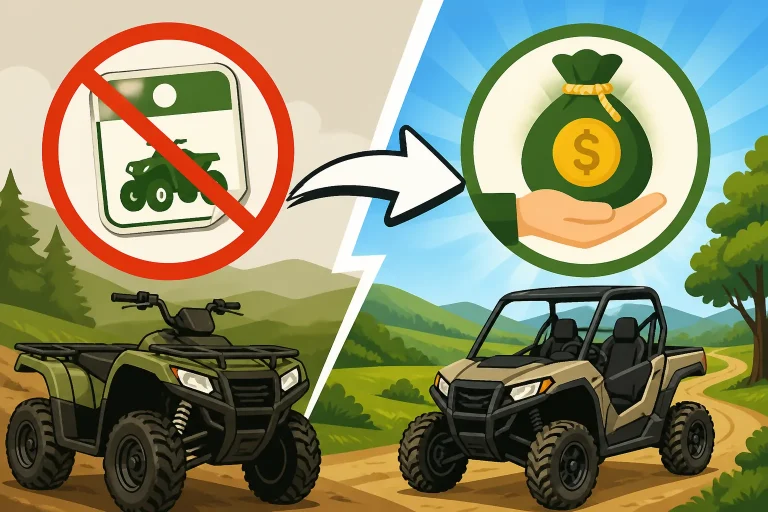
North Dakota’s off-highway vehicle safety training is generally offered without a tuition charge. That means taking the state course itself should not require paying a course fee. Still, check the current course information before enrolling: class availability, delivery options, and any administrative details can change.
It also helps to distinguish the training from the costs of getting a machine ready to ride. A safety certificate is proof that a rider completed training; it is not a registration, trail-access permit, or substitute for any other document required for the machine or the rider. Those separate requirements may involve charges.
| Expense | What it covers | Is it the course fee? |
|---|---|---|
| State safety training | Instruction and the required course assessment, depending on the course format | Generally no tuition |
| Travel to a classroom | Fuel, meals, or lodging for an in-person class | No |
| Riding gear | Items such as a properly fitted helmet or protective clothing | No |
| Machine registration | Registration requirements that apply to the OHV | No |
| Visitor permit | A permit that may apply to a nonresident rider or machine | No |
| Park entrance permit | Vehicle access to a state park, where applicable | No |
The course’s no-tuition status does not mean a riding trip is cost-free. If a class is not offered nearby, traveling to an in-person session can be the largest expense associated with training. Riders taking an online course may avoid that trip, but should still check whether their chosen course meets North Dakota’s requirements and how completion is documented.
For an overview of who may need training, see North Dakota OHV Safety Certificates at Age 12. The age rules matter because a course may be available to a broader group than the group legally required to carry a certificate. Don’t assume that every rider must take it, or that a younger child can complete it before the program’s minimum age.
Ask what “free” includes
Before registering for a course, check the course listing for any conditions that could affect your budget. Confirm whether the class is online or in person, whether there is a scheduled assessment, and what proof of completion you will receive. If you are signing up through a course platform, make sure it is the option recognized for North Dakota rather than a similarly named course for another state.
If the course page does not make the cost or certificate process clear, contact the organization offering it before you begin. The useful questions are straightforward:
- Is there a tuition or enrollment charge?
- Is the course accepted for North Dakota OHV safety certification?
- Does the course have an online option, or must the rider attend in person?
- Is there a separate charge for a card, certificate, or replacement document?
- How will the rider or parent confirm that completion has been recorded?
These questions can prevent an avoidable expense: paying for a course that does not satisfy the state requirement, or traveling to a class when an accepted online option is available. For delivery formats, see [North Dakota Safety Course Online] and North Dakota Classroom Safety Classes.
Who may need the course and certificate
A rider’s age is central to figuring out whether training is required. North Dakota has age-related OHV safety training rules, and riders under 16 are the group families should pay particular attention to. The exact requirement can depend on the rider’s circumstances and where the machine is being operated, so check the current state guidance rather than relying on a general rule of thumb.
The course’s minimum enrollment age is another issue. A child might be subject to a safety requirement but still be too young to enroll in a particular course. The state’s course age floor is covered in North Dakota Safety Course Minimum Age. If a child is near the minimum age, verify eligibility before paying for travel or arranging a class date.
Some exceptions may apply in specific settings, such as riding on a parent’s land. An exception to the certificate requirement does not automatically mean a child can ride any machine, in any location, or without supervision. Review North Dakota Riders on a Parent’s Land and confirm how the rule applies to the actual land and riding situation.
Training, certificate, and riding permission are different
These three things are easy to confuse:
- Training is the course instruction and assessment.
- A safety certificate documents successful completion when a certificate is required.
- Permission to ride depends on the machine, location, registration or permit rules, and any age or supervision restrictions.
Completing a course does not, by itself, make every place open to riding. Nor does a certificate replace a machine’s registration or a visitor permit. Before heading out, check both the rider requirements and the rules for the intended riding area.
If a rider has already completed training but cannot locate the proof, use North Dakota Safety Certificate Lookup or follow the state’s current instructions for confirming a certificate. A parent or guardian should keep a copy of the completion record and make sure the rider knows when it must be carried or shown.
Other costs that can come with riding
The course may have no tuition, but the machine and riding location can bring separate costs. These are not charges for safety training, and not every rider will face all of them.
Registration and trail access
North Dakota residents should check whether their machine must be registered and what the registration covers. Registration is separate from safety training. The related topics North Dakota Has No Trail Permit for Residents and North Dakota Registration and Trail Access explain how to think about resident registration and access without treating a safety certificate as a trail pass.
Nonresidents should check the permit rules before traveling. North Dakota’s visitor requirements are distinct from its safety-course requirements, and a home-state sticker may not settle every question about riding in North Dakota. Start with North Dakota Non-Resident Permit Cost and North Dakota Permits for Visiting Riders, then confirm current requirements for the rider, machine, and planned location.
A permit may be required even when a rider has completed safety training. The reverse is also true: having a permit does not necessarily satisfy a safety-certificate requirement. Check each item on its own.
Getting to class and outfitting the rider
An in-person class can mean fuel, travel time, and possibly a meal or overnight stay. Families may also need to coordinate transportation for a young rider. If those costs are a concern, check whether an approved online course is available before committing to a classroom date.
Riding equipment is another separate budget item. A properly fitting helmet and other protective gear are not course tuition, but they are part of preparing to ride safely. Gear costs vary by item, fit, and quality, so compare options based on suitability and condition rather than assuming the lowest-cost item will be appropriate.
Some families also buy printed study materials or replacement equipment. Before spending money on materials, check what the course actually provides and what the rider needs to complete it. The state course may include the required learning content, so optional guides or accessories should not be confused with mandatory course costs.
Park and trip expenses
A state park entrance permit, camping, fuel, food, and machine maintenance are trip expenses, not training expenses. Which ones apply depends on where you ride and how you travel. A rider taking a free course at home may still incur costs later to reach a riding area.
When comparing a nearby class with an online option, include the whole trip cost rather than just the advertised course price. A classroom session with no tuition may still take more money and time if it requires a long drive. On the other hand, an in-person class may suit a rider who learns better with direct instruction or needs help with the material.
How to confirm the current cost before enrolling
Course information and permit rules can change, so verify details with the state agency responsible for the program before making plans. Use an official state course or safety-training page, and make sure you are looking at off-highway vehicle training for North Dakota—not a snowmobile course, a general driver course, or training for another state.
Use this checklist:
- Confirm the course is recognized in North Dakota. Check the provider and course description against the state’s current safety-training information.
- Check the rider’s age and eligibility. Review the minimum age, enrollment conditions, and any rules for minors.
- Confirm the full course cost. Ask whether tuition, enrollment, assessment, certificate issuance, or replacement documentation carries a charge.
- Choose the format. Compare online availability with classroom dates, location, and travel requirements.
- Find out how completion is recorded. Ask whether the rider receives a certificate, how to retrieve it, and whether it must be carried.
- Check separate riding requirements. Verify registration, nonresident permits, park access, and location rules independently.
- Keep the confirmation. Save the course completion information and any official guidance you relied on.
If the state page and a course provider appear to give different information, ask the state program office to clarify before paying or enrolling. A provider’s general statement that a course is “accepted” may not answer whether it satisfies North Dakota’s specific requirement for a particular age or situation.
For a family with several young riders, check each rider’s eligibility rather than assuming one child’s course result answers the question for everyone. Keep each certificate or completion record separately, and confirm whether each person needs an individual record. If you plan to ride in another state later, do not assume North Dakota training automatically meets that state’s rules; ask the destination state what it accepts.
The practical takeaway is simple: budget for the course as a generally no-tuition requirement, then separately account for travel, gear, registration, and permits that apply to your ride. Verify current details before enrolling, especially if the rider is close to the course’s minimum age or will be riding as a visitor.
Disclaimer
This article is for general informational purposes only and does not constitute professional advice. Laws, prices and regulations vary by location and change over time. Consult a qualified professional for guidance on your specific situation.