When a North Dakota County Bans OHV Riding
It's incredibly frustrating when you've planned a fantastic weekend ride across North Dakota, only to hear whispers that certain counties or even small towns might have different rules for your ATV or UTV than the state law. You've done your due diligence, gotten your machine registered, perhaps even read up on the statewide ditch riding rules, but then the local question pops up and throws a wrench into your plans. This guide is here to untangle that local complexity, explaining exactly what authority North Dakota counties and cities have over off-highway vehicle (OHV) riding and how you can avoid accidentally breaking a local rule.
Understanding Local Authority: Can Counties Really Ban OHV Riding?
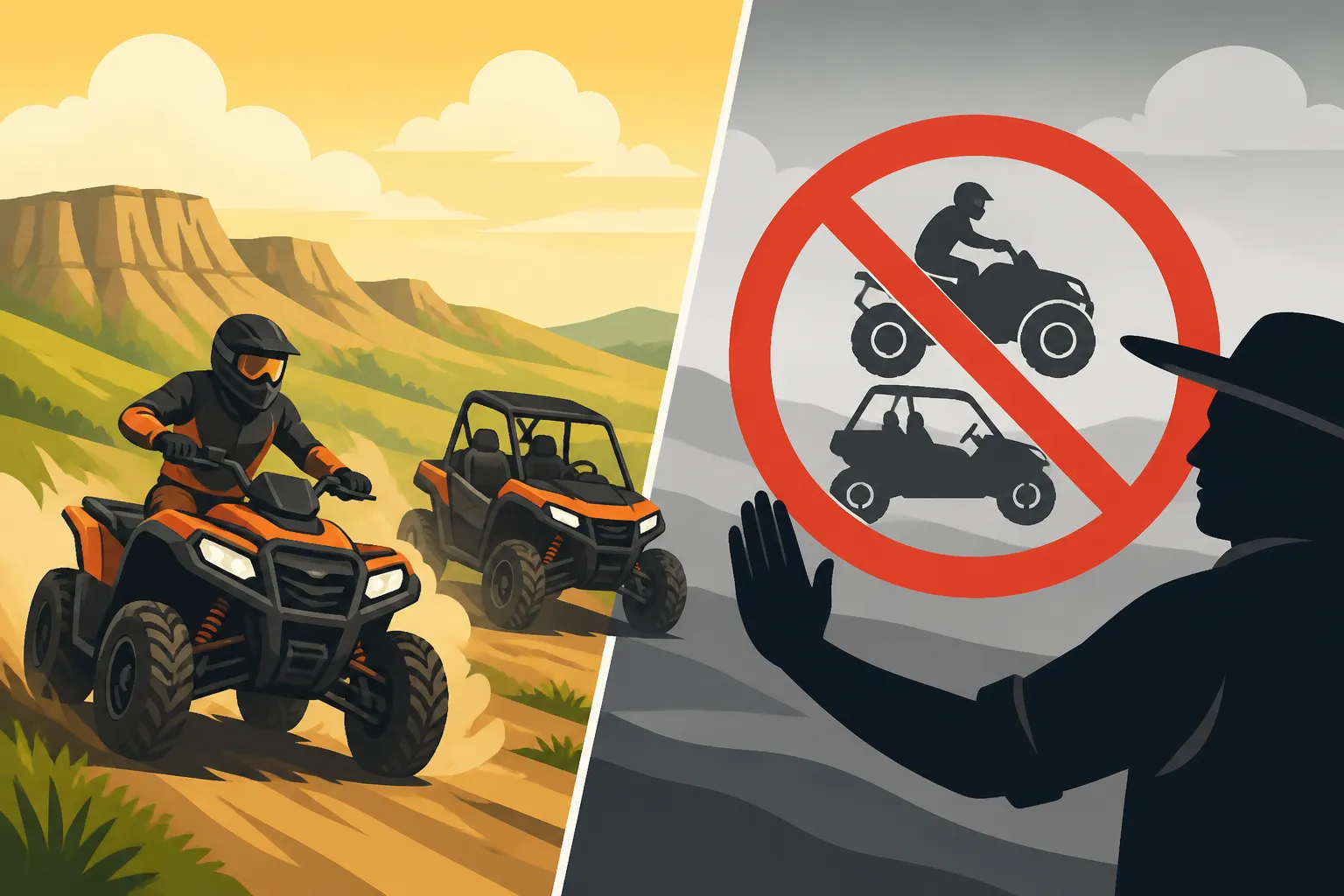
It’s easy to assume that if something is legal statewide, it's legal everywhere. But when it comes to off-highway vehicles, North Dakota allows for a certain degree of local control, which can certainly make things feel confusing. While the state provides a broad framework for OHV operation, counties and cities aren't entirely powerless to set their own, often more restrictive, rules. This isn't about outright banning your registered machine from existence, but rather regulating where and when it can be operated within their specific jurisdictions. Think of it less like a statewide ban and more like an extra layer of rules you need to be aware of.
The North Dakota State Law Framework
North Dakota's state laws provide the baseline for OHV registration, equipment, and general operation. They dictate things like where you can legally ride in ditches, on gravel roads, or even certain paved roads, provided your machine meets specific criteria, such as a minimum engine size for road use. For example, the state outlines general provisions for [North Dakota Ditch Riding: The Legal Right Explained] and specifies what's required for road-legal operation, like mirrors and horns, as detailed in [North Dakota Equipment Required on a Roadway]. These state laws are designed to create consistency across the vast expanses of the prairie.
However, the state law also includes provisions that acknowledge the unique needs and concerns of local communities. It doesn't grant unfettered permission for local governments to simply outlaw OHVs entirely, but it does allow them to implement ordinances that address local public safety, environmental concerns, or nuisance issues. This is why you can't just assume that because you can ride your ATV on a gravel road in one county, you can do so freely in every other county without checking. The state sets the general boundaries, but local entities can draw smaller, more detailed lines within those boundaries.
Where City and County Powers Intersect (and Diverge)
This is where it really gets tricky for riders. Both counties and cities in North Dakota possess the authority to enact ordinances concerning OHVs, but their jurisdictions and the scope of their powers differ. A county typically has jurisdiction over unincorporated areas—the vast stretches of rural land, smaller settlements, and county roads that aren't within the boundaries of an organized city or town. Cities, on the other hand, have authority within their corporate limits, which includes their streets, parks, and other public areas. This means you could potentially face one set of rules on a county road outside a city, and an entirely different set of rules once you enter that city's limits.
For example, a county might pass an ordinance restricting OHV use on certain county-maintained roads during specific times of the year, perhaps due to heavy farm traffic or environmental concerns. Meanwhile, a city within that same county might have an ordinance prohibiting OHVs on all city streets, only allowing them for specific purposes like snow removal or emergency services, or restricting hours of operation to mitigate noise. It’s a patchwork, and while state law prohibits cities from requiring their own local OHV registration stickers, as explained in [North Dakota Cities Cannot Require Local Registration], they certainly can regulate where and when you ride. Understanding this distinction is key to navigating the local landscape without a citation.
Common Restrictions You Might Encounter at the County Level
While a full-blown, blanket ban on all OHV riding by an entire county is rare and would likely face legal challenges, counties and cities do implement a variety of more specific restrictions. These often stem from very real local concerns, whether it's managing traffic flow, protecting natural resources, or simply ensuring peace and quiet for residents. Being aware of the types of restrictions you might run into can help you anticipate and research what's allowed before you load up your rig.
Time-Based Bans and Seasonal Limitations
One of the most common forms of local regulation involves limiting when OHVs can be operated. This might manifest as time-of-day restrictions, such as ordinances that prohibit riding after dark or before certain morning hours, particularly in residential or mixed-use areas where noise is a concern. Imagine you’re riding your SuperATV with a group, having a great time, and suddenly you hit a small town where an ordinance dictates all OHV activity must cease by 9 PM. It's an abrupt stop to the fun, and ignorance won't be an excuse for a law enforcement officer.
Seasonal limitations are also prevalent, especially in areas with sensitive ecosystems or during periods of high agricultural activity. A county might temporarily close certain roads or ditch access to OHVs during spring thaw, to prevent damage to soft shoulders and muddy terrain, or during harvest season when large farm equipment dominates rural roads. Conversely, some areas might open up specific routes only during certain seasons, perhaps in winter for snow-related activities. These seasonal changes mean that what was perfectly legal last month might be off-limits today, making it crucial to check local conditions.
Specific Road Closures and Designated Areas
Beyond time and season, local governments can designate specific roads or areas where OHV operation is restricted or entirely prohibited. This could be due to safety concerns on heavily trafficked roads, the presence of schools or hospitals, or to protect sensitive natural habitats. You might find signs indicating that an otherwise accessible road is closed to OHVs past a certain point, or that a particular section line is off-limits. These aren't always major highways; sometimes they are quiet backroads or even unmarked paths that local authorities have decided require protection or specialized use rules.
For example, a county might determine that a particular stretch of county road leading to a popular lake or park experiences too much conflict between OHVs, cars, and pedestrians, leading them to close that specific segment to OHV traffic. Similarly, some cities might prohibit OHV use within city parks or on certain boulevards, reserving them for non-motorized recreation. If you’re planning a route that crosses multiple jurisdictions, you need to be especially vigilant about these specific closures. [North Dakota Rules for Riding a Gravel Road] and [North Dakota Rules for Riding a Paved Road] cover state-level rules, but local ordinances can override or add to these.
Addressing Noise and Nuisance Concerns
This is often a primary driver for local OHV ordinances. While modern OHVs from manufacturers like SuperATV are designed to meet certain noise standards, continuous or excessively loud operation can still be a major source of complaint for residents. Counties and cities have a legitimate interest in maintaining public peace and order, and they often use their ordinance-making power to address noise and nuisance issues specifically related to OHVs. This could involve stricter muffler requirements than state law, as mentioned in [North Dakota Muffler Requirements], or simply prohibiting riding in residential zones during evening hours.
An ordinance might specify a maximum decibel level for machines operating within certain areas, or it might ban "reckless operation" which is then locally defined to include things like spinning tires excessively or creating unnecessary engine noise. These types of rules can be particularly subjective and depend heavily on local enforcement and public complaints. If you're riding a machine that's on the louder side, or if you plan to spend time in or near populated areas, it's wise to be extra mindful of your noise output. Violations can lead to fines, and repeated issues can even spur stricter regulations in the future.
How to Find Out About Local OHV Bans in North Dakota
So, you're planning a ride, and you've heard whispers about local restrictions. How do you actually get reliable information? This isn't always as straightforward as it sounds, as there isn't one single, comprehensive statewide database of all county and city OHV ordinances. It requires a bit of proactive research, but taking the time to do it upfront can save you a lot of headache (and potential fines) down the road.
Starting with Your County Sheriff's Office
The most direct and reliable first step for understanding county-level restrictions is to contact the county sheriff's office or the county auditor's office in the area where you plan to ride. These are the folks who enforce the laws, and they'll usually be familiar with local ordinances impacting OHVs. Don't be shy about calling them up! A quick phone call can often clarify exactly what's permitted and what's not on county roads, ditches, and other unincorporated areas. They can also often point you to where the county's official ordinances are published, which might be on the county's website.
When you call, be specific about your intentions: "I'm planning to ride my ATV on county roads and ditches near [specific town/landmark] next weekend. Are there any specific county ordinances I should be aware of regarding OHV operation in that area?" This helps them give you the most accurate information. They might even provide a general overview of [North Dakota County and City ATV Ordinances]. Remember, talking to a local officer beforehand is always a good idea, as highlighted in [Checking With Local Law Enforcement First].
Checking Local City Ordinances
If your ride will take you through or near any incorporated towns or cities, you'll need to look into their specific ordinances. Every city in North Dakota has the power to create its own local laws, and OHV regulations are often part of their municipal code. This is usually accessible through the city clerk's office or, increasingly, on the city's official website. Look for sections related to "motorized vehicles," "traffic," or "recreation."
Cities often have tighter restrictions than counties, especially regarding street access, speed limits, and hours of operation. You might find a town where OHVs are completely prohibited on paved streets except for direct access to a residence or for specific utility work. Other cities might allow them only on designated routes. For instance, while statewide rules might permit riding on certain paved roads, a city could ban it entirely within its limits. A quick search for "[City Name] OHV ordinance" or calling the city clerk can usually get you the information you need.
The Importance of Landowner Permission
Beyond public roads and trails, remember that private land is a whole different ballgame. Even if there are no county or city ordinances prohibiting OHV use in an area, you always need explicit permission from the landowner to ride on private property. This applies whether you're crossing a field, using a private access road, or even just turning around on someone's land. Trespassing is a serious offense, and local law enforcement will respond to landowner complaints.
Many landowners in North Dakota utilize [North Dakota Posted Land Rules for Riders] to clearly mark their property, but even if land isn't posted, you cannot assume permission. Always seek out the owner, introduce yourself, and get clear permission, ideally in writing, especially if you plan to ride repeatedly. This shows respect and helps foster good relationships between riders and the community. Never assume that just because an area is un-fenced or looks abandoned, it's open for public riding.
| Jurisdiction Type | Primary Authority Over | Common Restrictions | How to Check |
|---|---|---|---|
| State of North Dakota | Registration, General Equipment, Statewide Road/Ditch Rules, Licensing | Minimum Engine Size for Roads, Helmet Laws (Under 18), Mirror/Horn/Light Requirements, Ditch Riding Rules | ND DOT, ND Parks & Recreation Websites |
| County Government | Unincorporated areas, County roads, Non-city public land | Seasonal Closures, Time-of-Day Bans, Specific Road Prohibitions, Noise Ordinances | County Sheriff's Office, County Auditor, County Website |
| City/Municipal Government | Incorporated city limits, City streets, City parks | Full Street Bans, Restricted Hours, Speed Limits, Designated Routes Only, Parking Rules | City Clerk's Office, City Website, Local Police Dept. |
| Private Landowner | All private property | Access Permissions, Specific Use Rules (e.g., no hunting), Noise/Time Restrictions | Direct Contact with Landowner (always required) |
Navigating Restricted Areas and Avoiding Penalties
Once you’ve done your homework and understand the lay of the land—both literally and legally—the next step is to ensure you navigate these areas safely and in compliance with all rules. Getting caught off-guard by a local ordinance can lead to fines, a damaged reputation for riders, and even impoundment of your machine.
Equipment Considerations for Compliance
Sometimes, local ordinances might have slightly different or stricter equipment requirements than what's mandated statewide. For example, while the state requires a mirror, a city ordinance might specify the exact size or placement. Similarly, some communities might have lower noise limits for mufflers than the general state guidelines. If you've modified your machine, say with an aftermarket exhaust system, you need to be particularly aware of these local variations. Even if your SuperATV machine meets state standards, it might still exceed a stricter local decibel limit.
Before heading out, review your machine's setup. Do your headlights and taillights meet specified illumination distances for night riding, especially if a local ordinance defines "night" differently? Is your horn audible from the required distance, as noted in [North Dakota Mirror and Horn Requirements]? While it's rare for local governments to mandate completely unique equipment, they can certainly enforce existing rules more stringently or interpret them with less flexibility. Making sure your machine is in top-notch, compliant condition is always a smart move.
The Consequences of Riding Where You Shouldn't
Ignoring local OHV ordinances can lead to a range of penalties, from warnings to significant fines and even legal action. A basic violation, such as riding in a prohibited area or outside of permitted hours, might result in a citation with a fine. These fines can vary widely depending on the local jurisdiction and the severity of the offense. Repeated offenses or more serious infractions, like reckless operation, could escalate to a Class B Misdemeanor in North Dakota, as explained in [What a Class B Misdemeanor Means in North Dakota], which carries higher fines and potentially even jail time.
Beyond financial penalties, there's the inconvenience and potential for your machine to be impounded. Having your OHV towed and stored not only incurs direct costs but also throws a huge wrench into your riding plans. Furthermore, a history of non-compliance by riders can lead local communities to implement even stricter bans, limiting access for everyone. It's in every rider's best interest to be respectful of local laws and community concerns. By being informed and adhering to both state and local rules, you help preserve riding opportunities for all OHV enthusiasts in North Dakota.
Disclaimer
This article is for general informational purposes only and does not constitute professional advice. Laws, prices and regulations vary by location and change over time. Consult a qualified professional for guidance on your specific situation.