North Dakota’s 60-Inch Trail Width Cap
A 60-inch trail limit can turn an exciting North Dakota ride into a frustrating trip back to the trailer if your machine is too wide. The key is knowing which riding area has the restriction, measuring your ATV or UTV at its widest point, and checking route rules before you unload. This guide explains how to plan around the cap without guessing.
What North Dakota’s 60-inch trail width cap means
A trail limit is not the same as a statewide vehicle rule
The 60-inch cap is associated with riding routes at Pembina Gorge, near Walhalla. It is a trail-access restriction: a machine wider than the posted maximum may not fit through the trail’s gates or be permitted on that route. That does not mean every North Dakota trail or public riding area uses the same limit.
This distinction matters if you are comparing your machine’s legal classification with a trail’s access rules. A UTV can be properly registered and still be too wide for a particular trail. Conversely, a machine that fits a 60-inch route is not automatically allowed everywhere; local trail rules, closures, registration requirements, and land-access rules still apply. For an overview of how width limits differ among riding areas, see [North Dakota Trails With Width Limits].
Think of it like a campground entrance: having a road-legal vehicle does not guarantee that every road or gate can accommodate it. Before a trip, identify the specific riding area and confirm its current posted restrictions. Pembina Gorge’s limit should not be treated as a universal North Dakota standard.
The physical gate is a useful check, not the whole rule
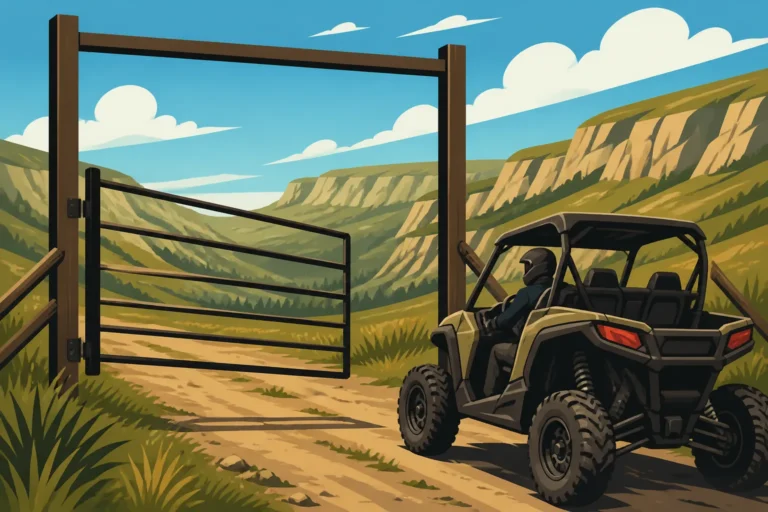
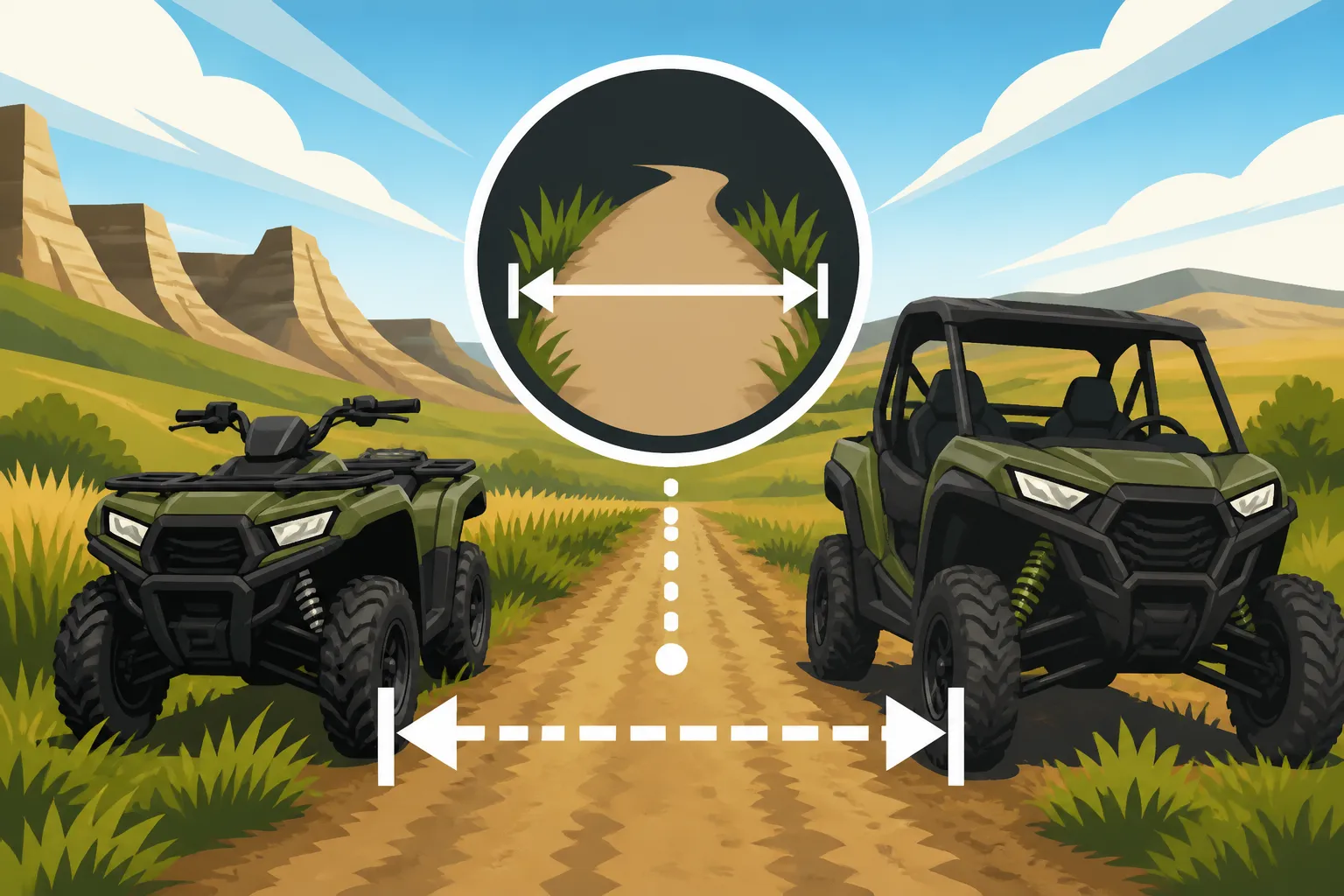
A narrow entrance or gate can make the limit feel very concrete. At Pembina Gorge, the 60-inch gate is a visible reminder that a wider machine may not be able to enter the trail system. But squeezing through an opening is not the same as being authorized to ride the route. Follow the posted requirement, not just what your tires appear to clear.
The entrance is also only one part of the ride. A machine that passes a gate might still be awkward or unsafe on a narrow trail, especially when the route bends between trees, runs along a slope, or narrows around an obstacle. If you are unsure whether your machine qualifies, ask the riding-area staff or manager before unloading rather than treating the gate as a test.
For a closer look at the entrance itself and how riders should think about it, read [The 60-Inch Gate at Pembina Gorge]. If your planned trip includes Pembina Gorge, also check [Pembina Gorge: North Dakota's OHV Trail Park] for the broader riding-area context.
How to tell whether your ATV or UTV fits
Measure the machine at its widest point
Do not rely only on the width listed in a sales brochure or on a model name. Accessories, wheel changes, fender flares, and other modifications can make the machine wider than its original specifications. Measure the machine you will actually take riding, with its current setup.
Park it on level ground and identify the widest point from one side to the other. Depending on the machine, that may be the tires, wheels, bodywork, or an installed accessory. Use a tape measure and have someone help hold it straight across the widest points. Record the measurement so you do not have to rely on memory when planning a later trip.
If your measurement is close to the limit, leave room for uncertainty. A tape measure can shift, tires may sit differently when loaded, and an accessory may project farther than expected. A machine that is right at the threshold deserves a careful check against the riding area’s stated rule. Avoid assuming that a small difference will be overlooked.
Include the equipment you plan to ride with
A machine’s width can change after you add equipment. Wider tires or wheels, wheel spacers, aftermarket fenders, and some installed accessories may extend beyond the stock body. Even when an accessory is removable, the relevant question is how wide the machine is in the configuration you intend to use on the trail.
Make a simple pre-trip measurement checklist:
- Set the machine up as you plan to ride it.
- Check the full width at the tires and any other protruding parts.
- Compare the widest measurement with the route’s posted limit.
- Recheck after changing tires, wheels, or accessories.
- Keep a note or photo of the measurement for trip planning.
A common source of confusion is mixing up a machine’s published width with its trail-ready width. If a brochure says the vehicle is under the cap but aftermarket parts extend beyond that figure, the modified machine may no longer qualify. For route-specific details, [North Dakota's 60-Inch Trail Width Cap] is best considered alongside the riding area’s own current rules.
| What to check | Why it matters | Practical step |
|---|---|---|
| Published vehicle width | A useful starting point, but it may describe the stock machine | Compare it with your actual setup |
| Tires and wheels | They may be wider than the body | Measure across the widest tire or wheel points |
| Added accessories | Some equipment projects beyond the vehicle | Include installed parts in your measurement |
| Trail signage and rules | Limits can apply to a specific area or route | Confirm the rule with the riding-area manager |
| Changes since your last trip | New tires or parts can change width | Measure again after modifications |
Choosing a machine and route for Pembina Gorge
Match the riding area to the machine you already own
If you have a narrow ATV or UTV that meets the posted cap, Pembina Gorge may be a suitable place to plan a ride, subject to all other access rules. If you own a wider side-by-side, do not assume that a different line through the gate or a short detour will make it acceptable. Confirm whether the machine is eligible before you make the drive.
This is especially important for riders traveling with a group. One wide vehicle can change the plan for everyone, particularly if the group has booked lodging, arranged a trailer convoy, or driven several hours to reach the trailhead. Ask each rider to check the width of their own machine instead of relying on the group’s smallest vehicle as a reference point.
A wider vehicle may still have other suitable places to ride, but those locations have their own rules and limitations. Compare the allowed vehicle width, trail surface, route length, and parking setup before choosing a destination. [North Dakota Trails That Allow Side-by-Sides] can help you think through the search, while [North Dakota's 60-Inch Trail Width Cap] keeps the Pembina Gorge restriction in focus.
Consider width alongside the kind of ride you want
Width is only one part of whether a trail fits your plans. Ask whether the route is intended for your type of machine, how technical the riding is, and whether everyone in your group is comfortable with the terrain. A narrow trail can feel very different from an open play area, even when both allow machines of similar width.
At Pembina Gorge, the trail network is a destination rather than a reason to rush through a checklist. A narrow machine may have access where a wider UTV does not, but that does not mean every route will suit every rider. If you are bringing children or newer riders, choose a manageable pace and make sure the group understands trail etiquette before setting off.
Use maps and area information to plan, but confirm details that could affect access before your trip. onX Offroad can be useful as a planning aid when you want to review routes and organize a ride, but a mapping app should not replace posted rules or direct confirmation from the riding area. A mapped line does not guarantee that a route is open or that your machine meets its restrictions.
Plan the trip before you leave home
Confirm access, closures, and trail conditions
A route that was open on your last visit may not be open on your next one. Weather, trail maintenance, and other local conditions can affect access. Before loading the trailer, check the latest information from the riding area and ask about any closures or limitations that could change your plan.
This is particularly useful after heavy rain. Narrow trails can be more difficult when the ground is soft, and turning around may be awkward if the route is confined. If the trail is closed or conditions are not suitable, waiting is better than leaving deep ruts or creating a recovery problem. For broader guidance, see [North Dakota Trail Closures After Rain] and [North Dakota Trails Closed by Wet Weather].
Make the call before the group departs, not when everyone is already at the entrance. A quick check can prevent a long, disappointing drive and help you decide whether to postpone, select another area, or bring a different machine. If you use onX Offroad to save or review routes, pair that planning with a direct check of the riding area’s current access information.
Sort out the practical details for a group ride
A width restriction affects more than vehicle choice. It can influence trailer loading, who rides together, where the group meets, and whether everyone can follow the same route. Ask participants to share their machine’s measured width in advance. If a vehicle may be over the limit, resolve that before the trip rather than at the trailhead.
For a group with mixed experience, agree on a few basics before riding: who leads, who brings a first-aid kit, where the group will stop, and what to do if someone needs to turn back. On a narrow route, following distance and predictable riding matter. A rider who stops suddenly can leave the person behind with little room to maneuver.
Check the logistics around the trailhead, too. Confirm whether your trailer can be parked where you plan to unload, and give yourself enough time to make adjustments without blocking other visitors. [North Dakota Trailhead Parking Limits] offers additional planning context, and [North Dakota Group Ride Planning] is useful when several machines and riders are involved.
Ride narrow trails carefully and avoid common mistakes
Give yourself room to steer and stop
Even if a machine meets the posted width restriction, narrow trails call for a measured riding style. Keep a pace that lets you respond to turns, soft ground, branches, and other trail users. Do not assume there will always be space to pull aside or turn around quickly.
If you meet another rider on a tight section, communicate calmly and avoid making sudden moves toward the trail edge. On uneven or sloped ground, the edge may be softer or less stable than it looks. Wait for a safe place to pass, and use a spotter when visibility is limited and the situation allows one.
A narrow trail can also magnify fatigue. Riders may grip the controls more tightly or constantly correct their steering when they are worried about brushing trees or dropping a wheel off the track. Take breaks, stay attentive, and do not ride faster than the sightline allows. A machine that fits the trail still needs enough room and control to travel it safely.
Avoid these easy-to-make planning mistakes
The first mistake is treating a manufacturer’s listed width as a guarantee of access. The second is assuming that if a vehicle fits through the entrance, it automatically meets the trail rule. The third is taking an unverified shortcut around a gate or restriction. Each can leave riders with a costly or unsafe problem, and none is worth saving a few minutes of pre-trip checking.
Another common mistake is confusing a width limit with an invitation to modify the machine at the trailhead. Removing a part or changing the setup under pressure can create new safety or equipment issues. Make sure the machine is properly configured before travel, and do not make an improvised change just to try to qualify.
Finally, remember that width is not the only requirement. Registration, permits, land access, seasonal closures, and any other posted conditions still matter. If you are new to the area, review [North Dakota Registration and Trail Access] and the relevant riding-area information before heading out. A little preparation makes it much easier to enjoy the ride once you arrive.
Disclaimer
This article is for general informational purposes only and does not constitute professional advice. Laws, prices and regulations vary by location and change over time. Consult a qualified professional for guidance on your specific situation.