The 60-Inch Gate at Pembina Gorge
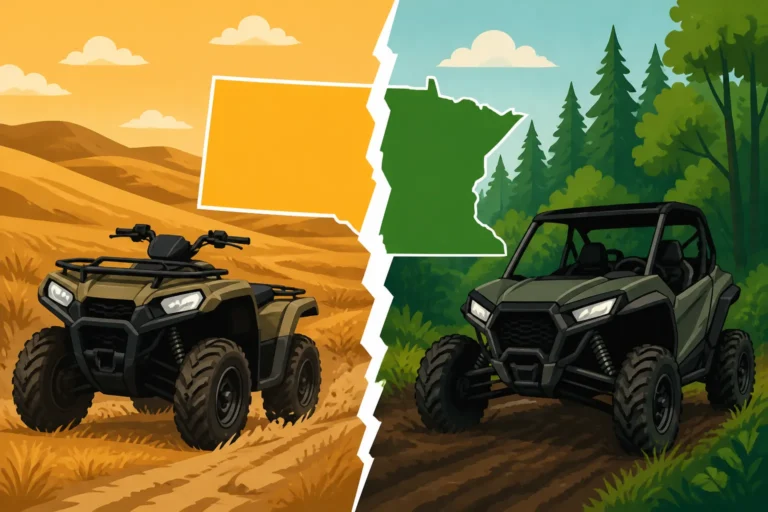
A machine that looks narrow in the driveway can be a poor fit for Pembina Gorge once you count its tires, bodywork, and accessories. The 60-inch gate is a practical access limit, not a suggestion to squeeze through. This guide explains how to check your ATV or UTV’s width, plan a suitable ride near Walhalla, and avoid arriving with a machine that cannot use the trail system.
What the 60-inch gate means at Pembina Gorge
The limit is about your machine’s width
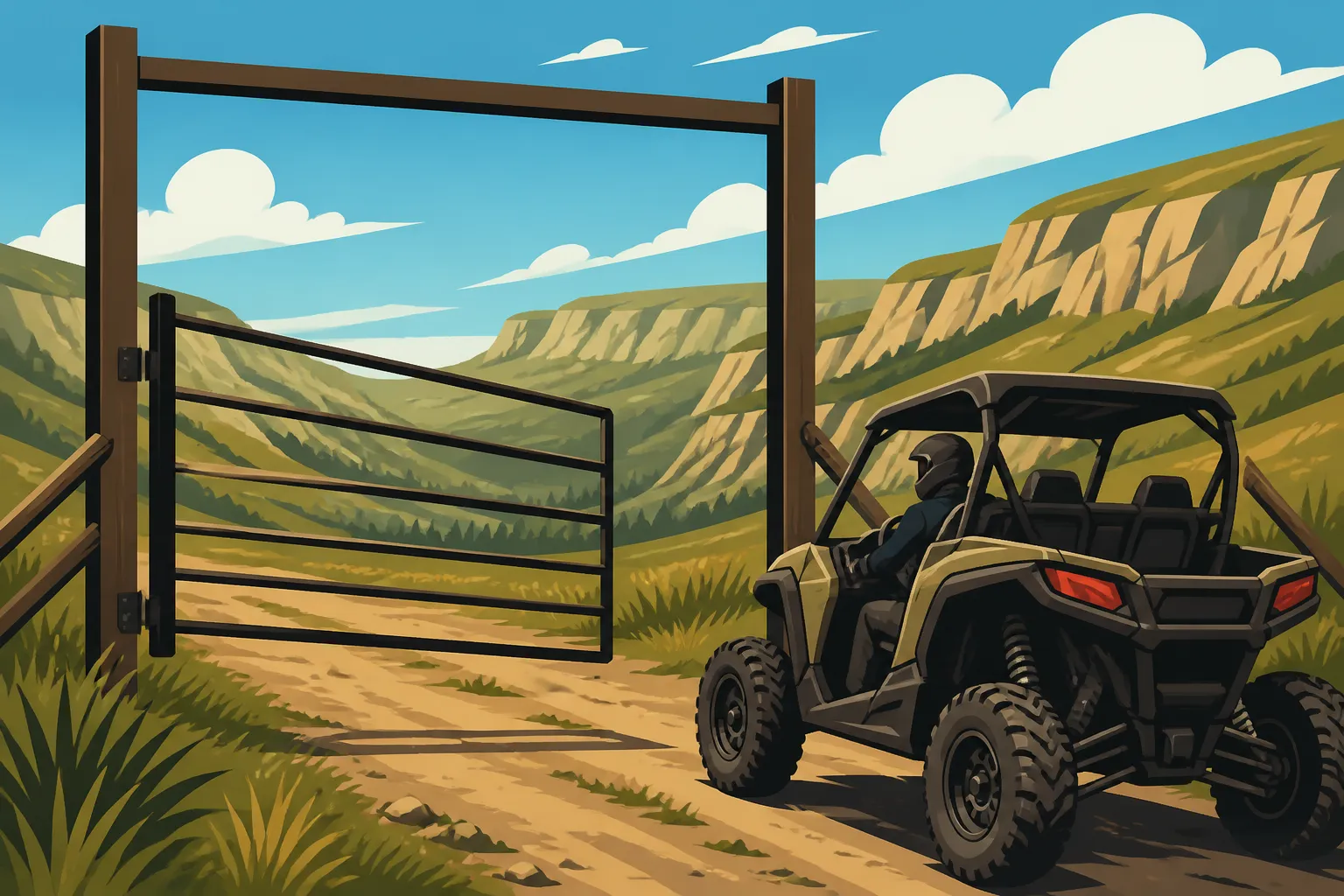
Pembina Gorge’s 60-inch gate is an important check for riders planning to use the area’s OHV trails. In practical terms, a machine wider than the allowed limit should not be taken through the gate or onto trails with that restriction. A gate is not a challenge to maneuver around: do not force a machine through, bypass a barrier, or ride outside the designated route to avoid it.
The first step is to find your ATV or UTV’s published width specification. Check the owner’s manual or the manufacturer’s specifications for the exact model and configuration. A machine marketed as a “compact” side-by-side is not necessarily narrow enough, and two trims of a similar model can have different dimensions.
It’s also worth checking what the posted rule means for your particular setup. Aftermarket wheels, tires, fender extensions, bumpers, and other accessories may affect the machine’s widest point. If your machine is close to the limit, contact the park for clarification before making the drive. A little checking at home is far less frustrating than discovering at the trailhead that your rig cannot enter.
For more context on machine and trail restrictions, see [North Dakota's 60-Inch Trail Width Cap] and [North Dakota Trails With Width Limits].
Measure the machine you will actually bring
Do not rely on a guess based on how the machine looks from the driver’s seat. Use a tape measure to check the widest points from side to side, including anything that protrudes beyond the body. If you have a removable accessory that changes the width, measure with it installed and decide whether you are willing to remove it before the ride.
Ask a friend to help hold the tape level and read the measurement. Measure on flat ground, with the tires set up as they will be for the trip. If your machine’s width is close to 60 inches, confirm the park’s interpretation of the limit rather than assuming a small difference will be overlooked. A measurement that feels “about right” can be hard to judge in a parking area, especially when other riders are waiting.
Keep the specification and your own measurement handy when you plan the trip. If you’re comparing vehicles before buying, include trail access in the decision, not just passenger capacity, cargo space, or engine size. A wider UTV may be a great fit for other riding areas but still be unsuitable for a route with a strict width restriction. The guide [North Dakota Trails That Allow Side-by-Sides] can help you think through that distinction.
Check your ATV or UTV before you leave
Confirm the model, trim, and accessories
A model name alone may not tell you whether a vehicle will fit. Record the full model and trim, then compare the manufacturer’s listed width with your machine as it is currently equipped. If you bought the machine used, the previous owner may have changed the wheels, tires, or body accessories, so the original specification might not match what is in your garage.
Here is a simple pre-trip check:
- Find the width listed for your exact model and trim.
- Measure the machine at its widest point with its current equipment installed.
- Compare that measurement with the posted restriction.
- Contact the park if the measurement is close or if it is unclear how an accessory is counted.
- Confirm that the trails you plan to use are open and appropriate for your vehicle.
Be especially careful when a measurement is near the limit. Tires can bulge beyond the fenders, and accessories can make a machine wider than its factory specification. Do not treat a measurement from a sales listing as proof that a modified vehicle meets the restriction.
If the width of your machine rules out Pembina Gorge, that does not mean you need to give up on a North Dakota ride. Look for an area whose posted width rules suit your vehicle, and verify access conditions before traveling. [North Dakota Trails That Allow Side-by-Sides] is a useful next read when you are comparing possible destinations.
Use maps as planning tools, not permission
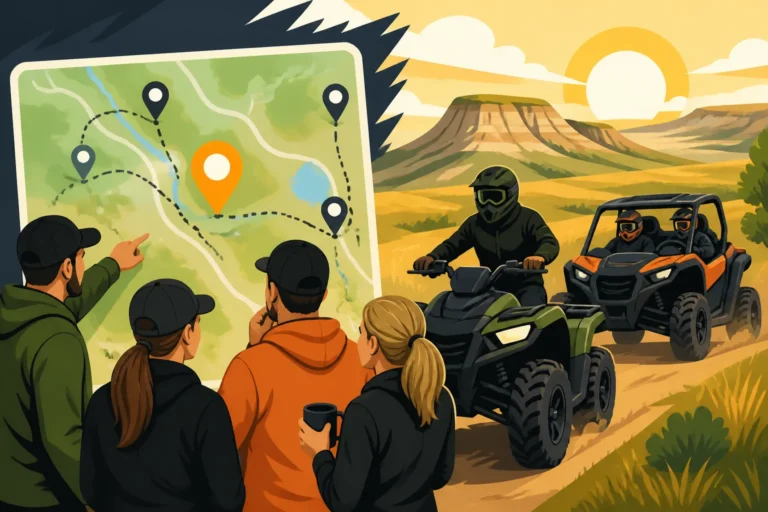
A map app can help you understand where a riding area is, how to reach the trailhead, and what routes may be nearby. Riders may use onX Offroad to help with trip planning, but a mapped line does not override a gate, sign, closure, or posted trail restriction. Treat the physical signs and the park’s official guidance as the authority for access.
Before you go, check the route you intend to ride and make sure it belongs to the riding area—not a nearby road, private property, or an unmarked track that only appears connected on a map. This matters in a place like Pembina Gorge, where the surrounding landscape can make a route look inviting even when it is not an approved OHV trail.
Download or save the information you need before leaving reliable service. A phone map can be helpful, but it is not a substitute for reading signs at the trailhead or knowing your return route. Keep your device protected, bring a backup way to navigate, and make sure everyone in your group knows where to regroup if riders become separated.
For local trail context, start with [Pembina Gorge: North Dakota's OHV Trail Park] and [Pembina Gorge's 16 Miles in North Dakota]. For current access questions, use [Checking Pembina Gorge Trail Status by Phone] before you set out.
| Before the ride | What to check | Why it matters |
|---|---|---|
| Machine width | Exact model specification and actual widest point | Accessories or changes may make the machine wider than expected |
| Gate restriction | Posted limit and park guidance if your measurement is close | Avoid arriving with a vehicle that cannot enter |
| Trail access | Signs, closures, and routes designated for OHVs | A map line does not guarantee legal access |
| Weather and conditions | Park status and recent closure information | Wet or damaged trails may be closed |
| Group plan | Meeting point, navigation, and turnaround plan | Riders can become separated or lose service |
Plan a ride that fits Pembina Gorge
Choose a route with your machine in mind
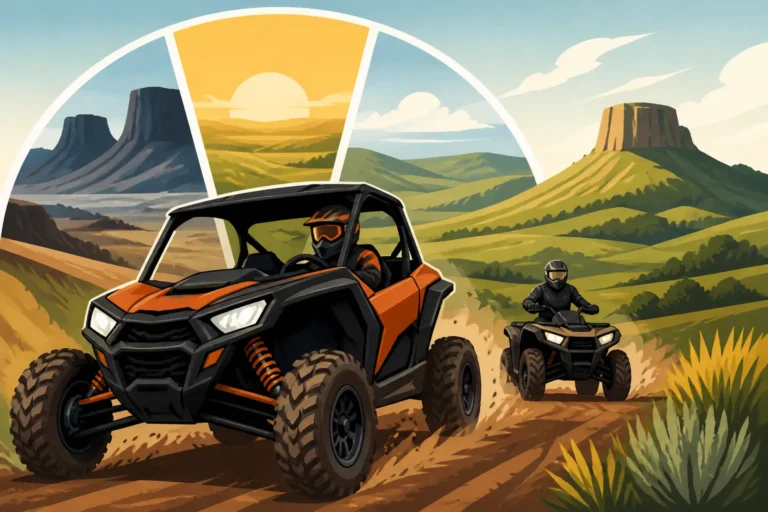
Pembina Gorge, near Walhalla in northeastern North Dakota, offers a distinctive landscape compared with the state’s open prairie routes. The wooded terrain, elevation changes, and designated riding routes make it a popular destination for OHV riders. The gate restriction is one part of planning: choose a trail that fits your vehicle, ability, and group rather than assuming every route is suitable for every machine.
The Lady Slipper and Blazing Star loops are useful routes to research as you plan. Review their descriptions and posted restrictions before deciding which one is right for your group. A narrower ATV may have different options from a wider side-by-side, and a new rider may prefer a route that feels manageable over one chosen only for mileage or scenery. Learn more in [Lady Slipper Loop and Who It Suits] and [Blazing Star Loop and Who It Suits].
Think about the riders as well as the vehicle. A route that works for an experienced driver may feel demanding for someone new to uneven or winding terrain. Talk through the plan before unloading, agree on a comfortable pace, and avoid pressuring the least-experienced rider to keep up. If a route or trail condition feels wrong, turning around is a sensible choice, not a failed outing.
Check conditions and respect closures
Trail conditions can change after rain, and a route that was rideable on a previous visit may be muddy, rutted, or closed on the day you arrive. Follow closure notices and do not ride around a barrier to reach a trail. Besides risking damage, bypassing a closure can create problems for other riders and land managers.
Pembina Gorge’s terrain can be especially unforgiving when wet. Tires may lose traction, machines can dig deep ruts, and a short muddy section can become a recovery problem. Check [Pembina Gorge Closing After Rain] before your trip and be willing to change plans if conditions are poor. If the ground is soft, waiting for it to dry is often kinder to the trail and easier on your machine.
Pack for a day outdoors, not just for the ride itself. Bring water, basic repair and recovery supplies suited to your vehicle, and clothing for changing wind and temperature. Keep your group together, give other riders room, and stop only in places where you are not blocking the route. [North Dakota Trail Etiquette Locals Expect] offers additional guidance on sharing riding areas responsibly.
Avoid common gate and trailhead mistakes
Do not force a questionable fit
A common mistake is to drive a long distance and only then measure the vehicle. Another is to assume that if the tires fit between the sides of a gate, the full machine is acceptable. The restriction applies to the machine and the posted access rules; squeezing through a narrow opening is not a way to prove that a vehicle qualifies.
Do not remove a safety-related part or make a last-minute modification that could create a hazard just to reduce width. If an accessory is removable and the park confirms that removing it would make the vehicle compliant, make the change safely before riding and secure the part in your trailer or tow vehicle. If you cannot get a clear answer, choose a different riding area rather than gambling on access.
The same caution applies to parking and unloading. Follow trailhead signs, use designated parking areas, and make sure a trailer or truck is not blocking other visitors. If the lot is busy, wait for a safe place to unload rather than staging on a road or in an unauthorized area. [North Dakota Trailhead Parking Limits] is helpful for thinking through parking restrictions before you arrive.
Make a backup plan for the group
If your group includes several machines, check each one separately. One narrow ATV does not make a wider UTV eligible, and a group should not assume that everyone can take the same route just because the vehicles are similar. Compare specifications, discuss the gate restriction in advance, and agree on what the group will do if a machine is not allowed through.
A practical backup plan might mean choosing a different riding area, splitting the group only when it is safe and permitted, or leaving a noncompliant machine at home. Do not leave someone stranded at the trailhead without a safe plan for the day. Make the decision before departure, when it is easier to adjust transportation and expectations.
Most importantly, let the gate do its job. Measure carefully, follow posted guidance, check conditions, and choose routes that suit your machine. That preparation helps protect Pembina Gorge’s trails and turns the trip into what you came for: a relaxed ride through one of North Dakota’s distinctive riding areas.
Disclaimer
This article is for general informational purposes only and does not constitute professional advice. Laws, prices and regulations vary by location and change over time. Consult a qualified professional for guidance on your specific situation.