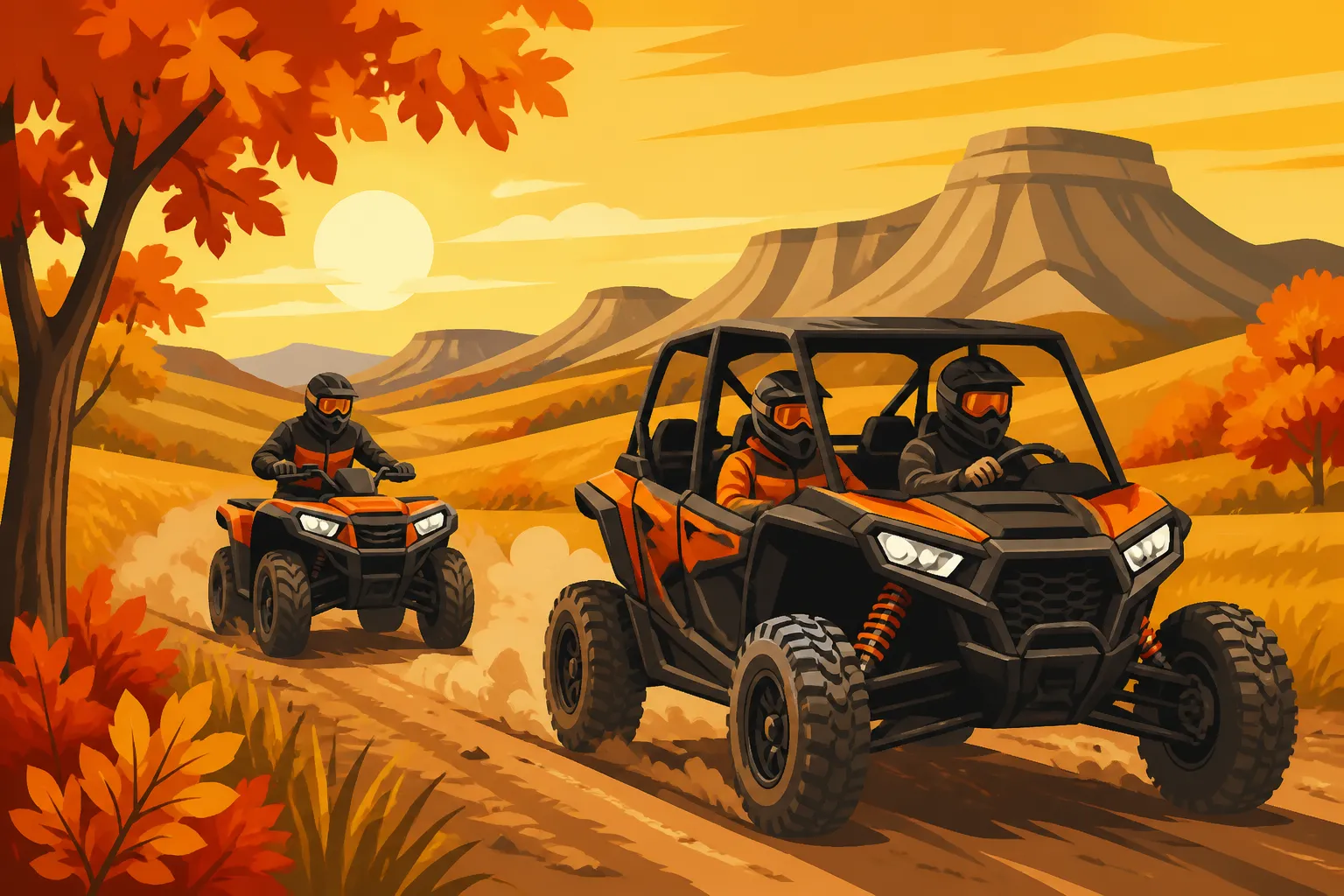
North Dakota Riding in Fall
North Dakota fall riding can be a beautiful mix of crisp air, quieter trails, and golden prairie—but a sunny afternoon can turn cold, windy, or muddy surprisingly fast. This guide helps you choose a riding area, prepare for changing conditions, plan around shorter daylight and hunting season, and avoid the common mistake of assuming a trail is open just because it was rideable last weekend.
Choose a fall riding area that fits the day
Fall conditions vary across North Dakota. A wooded trail near Walhalla can feel very different from an open route along the Missouri River or a grassland road where wind and dust have nowhere to hide. Think about the kind of ride you want, how far you’re willing to travel, and what the forecast could mean for the surface.
Compare North Dakota riding areas
| Riding area | What fall riders may appreciate | What to check before leaving |
|---|---|---|
| Pembina Gorge | A wooded setting and designated OHV trail riding in the state park area | Trail status after rain, current access rules, and parking or camping information |
| Roughrider OHV Trail | A longer ride along the Missouri River corridor between Fort Abraham Lincoln and Fort Rice | Trail and trailhead conditions, access points, and whether the full route is suitable for your group |
| Turtle Mountain | A different landscape from the open prairie, with riding near Bottineau | Current trail access, shared-use expectations, and conditions at the entrance you plan to use |
| Kimball Bottoms | Open riding near the Missouri River south of Bismarck | River conditions, flooding, soft sand, and any access changes |
| Dakota Prairie Grasslands | Routes that can make for a scenic fall tour by motor vehicle | The current motor vehicle use map; riding is limited to routes open to motor vehicles |
For a broader look at where to ride, start with [North Dakota OHV Trails: All Four Riding Areas]. For a more focused trip, read [Pembina Gorge: North Dakota's OHV Trail Park], [Riding North Dakota's 22-Mile Roughrider OHV Trail], [Turtle Mountain Riding in North Dakota], or [Kimball Bottoms: North Dakota's Open Play Area]. Each area has its own access details, so don’t treat a route description or an old trip report as proof that every trail is open today.
Match the destination to the weather
If the forecast calls for recent rain, prioritize a route where you can confirm conditions before driving out. Clay and gumbo can become slick and rutted, and the surface may stay soft after the sky clears. A trail that looks firm at the entrance can turn into a difficult recovery situation farther in. Check for closures and local updates rather than testing the ground with your machine.
On dry, windy days, an open route may be more exposed than you expect. Prairie wind can make an otherwise easy ride tiring, especially if you’re riding into it for a long stretch. In the Badlands or grassland country, a route that looks short on a map may also feel remote if you need to turn around, repair a tire, or wait for a slower rider. [North Dakota Prairie Wind and Long Rides] offers more planning ideas for exposed rides.
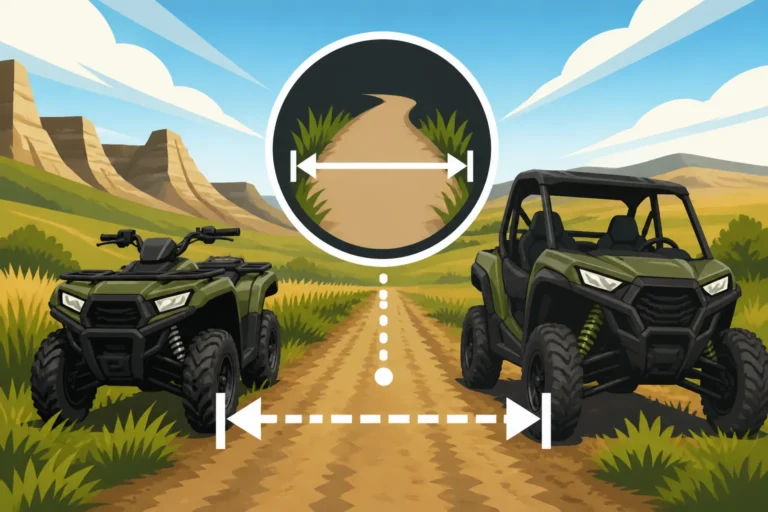
A fall destination is only a good choice if the group’s machines and riders are suited to it. Before heading to a trail with narrow sections or gates, confirm width limits and trail rules for your ATV or UTV. If your group includes new riders, children, or people who prefer a slower pace, choose a route with clear access points and a simple turnaround plan.
Plan for shorter days and fast-changing weather
Fall riding rewards a little extra preparation. Cool mornings can warm up by midday, then drop again when the sun goes down. Add wind, blowing dust, or a sudden shower, and the gear that felt comfortable in the truck may not be enough on the trail.
Dress for the ride, not the parking lot
Use layers you can adjust without unpacking your whole machine. A base layer that moves moisture away from your skin, an insulating layer, and a wind-resistant outer layer are more useful than one bulky coat. Gloves matter, too: cold fingers make it harder to operate controls and can turn a fun ride into an uncomfortable one quickly.
Pack a dry layer in a sealed bag. If you get caught in a shower or have to work on a machine, having something warm and dry to change into can make a real difference. Bring eye protection suitable for dust and debris, and keep a neck covering or similar wind protection handy for exposed stretches. A helmet and other required protective equipment should fit properly and be in good condition; fall temperatures are not a reason to ride without them.
Don’t forget that the vehicle may feel colder than the air. A UTV with a windshield and cab can offer some shelter, but it still needs clothing and emergency supplies for a stop or breakdown. An ATV rider is more exposed to wind and rain, so plan layers accordingly. Keep an extra pair of gloves and warm socks in a dry bag, especially on longer rides.
Set a turnaround time before you start
Daylight disappears earlier as fall progresses, and it’s easy to lose track of time when the trail is enjoyable. Pick a turnaround time that leaves a comfortable margin for getting back, loading up, and handling an unexpected delay. Don’t plan a route that only works if every rider keeps the same pace and nothing goes wrong.
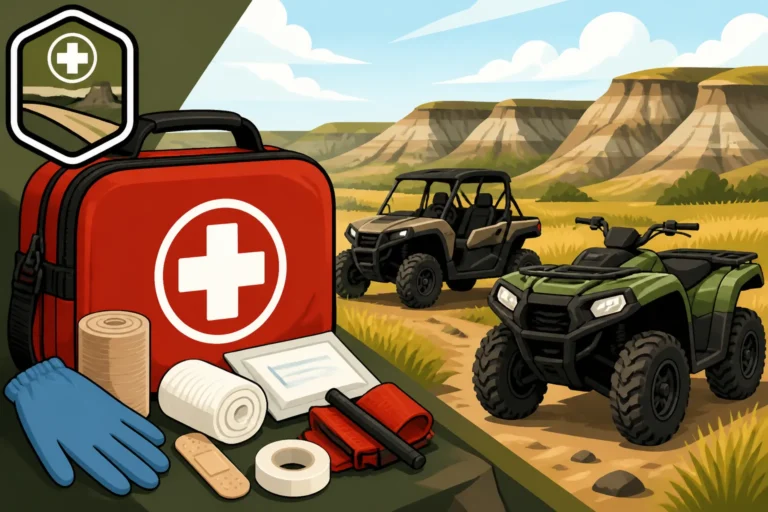
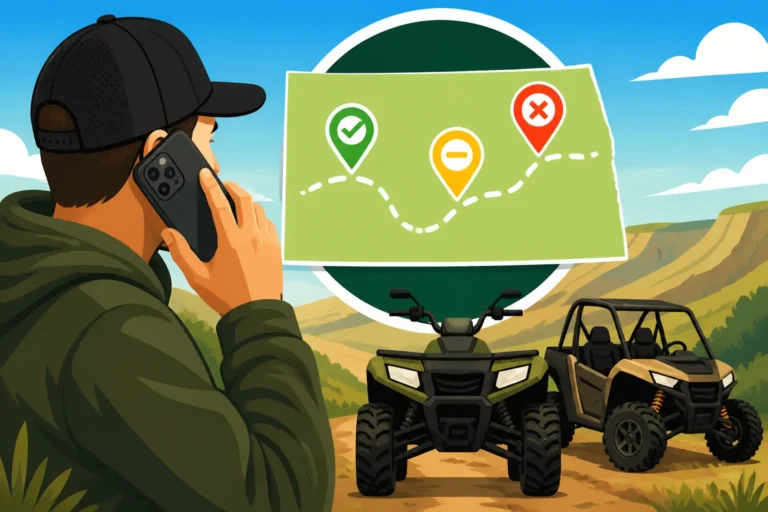
Tell someone who isn’t riding where you’re going and when you expect to return. If your plans change, send an update when you have service. Cell coverage can be unreliable in remote areas, so don’t make a phone your only backup. Carry a charged phone, a paper map or saved map data, and a basic first-aid kit. Mapping tools such as onX Offroad can help you review and save a planned route before you lose service, but use official land and trail information to confirm where riding is allowed.
A simple pre-ride check can prevent avoidable problems:
- Check the forecast for the riding area, not just your home town.
- Confirm trail status and access conditions with the managing agency or local contact.
- Save your intended route and identify a reasonable turnaround point.
- Tell someone your plan and expected return time.
- Pack warm layers, water, food, basic tools, and recovery supplies.
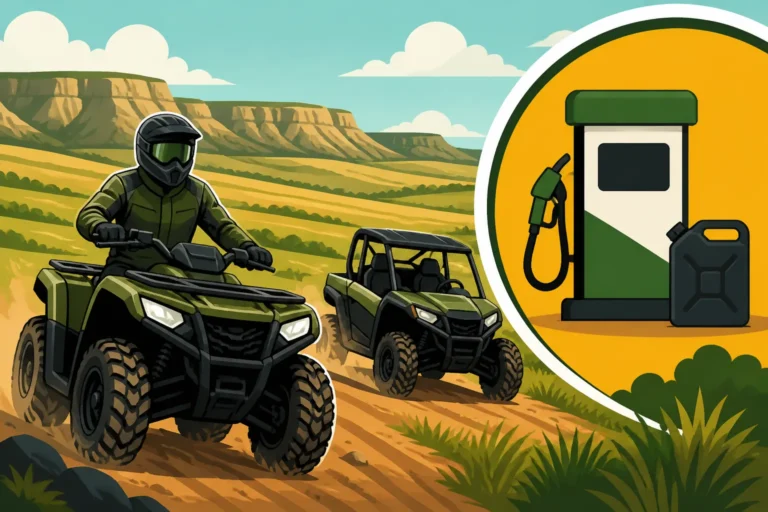
- Confirm your machine is fueled, tires are in good condition, and lights work.
For route preparation, [North Dakota OHV Trail Map Downloads] can help you locate maps to review in advance. You can also use onX Offroad to organize a route and keep a record of your plan; don’t rely on a phone app alone for permission, current closures, or the legal status of a route.
Check trail conditions and access before you haul
One of the most frustrating fall-riding surprises is arriving at a trailhead after a long drive only to find that the route is closed, too wet, or affected by a local access change. Conditions can shift quickly, and a trail that was open on your last visit may not be suitable after a storm or flooding.
Treat wet-weather closures seriously
Soft ground is not just a traction issue. Tires can cut deep ruts, damage trail surfaces, and make later repairs harder. Trying to power through mud may also leave you stuck farther from the trailhead, where recovery can be more complicated. If a site posts a closure or advises riders to stay off after rain, respect it rather than looking for a workaround.
The same caution applies when water levels affect riding areas near the Missouri River. At places such as Kimball Bottoms, river conditions can alter access and change what looks rideable. Don’t assume that a familiar route or staging spot is unchanged. Check for current local information before you unload.
A useful fall habit is to have a backup destination. If your first choice is closed or too wet, you can switch plans instead of feeling pressured to ride somewhere unsuitable. Keep the alternative legal and confirmed, and avoid assuming that a nearby public-looking road or open field permits OHV use. [North Dakota Trail Closures After Rain] and [North Dakota Riding After Heavy Rain] cover why checking conditions matters.
Confirm what is open, not just what is visible on a map
A mapped line does not automatically mean a legal OHV route. On grasslands, use the current motor vehicle use map and stay on routes designated for motor vehicles. Cross-country travel may be prohibited, and gates, cattle guards, and posted signs are there for a reason. On other public or private land, access rules may differ from one parcel or trail system to the next.
Use onX Offroad as a planning aid if it helps you keep route information organized, but check the official source responsible for the trail or land. App information can be useful for orientation; it should not replace current agency notices, posted signs, or landowner permission. If a route is unclear, choose a confirmed alternative instead of guessing.
Fall also overlaps with hunting season, which means you may encounter hunters, trucks, trailers, and people using the same landscape for a different purpose. Give other users room, slow down near parking and access points, and stay on authorized routes. Before riding in an area where access may involve private land, verify the permission requirements and posting information. [North Dakota Hunting Season and Trail Access] is a helpful companion for planning around seasonal use.
Ride thoughtfully through North Dakota fall conditions
The best fall rides are not always the longest ones. A shorter loop with reliable access, a clear return route, and room to adjust for weather may be a better choice than an ambitious trip that leaves little daylight for delays.
Prepare the machine for cold, dust, and mud
Before the trip, check the items that are easy to overlook when the machine has been sitting between rides. Inspect tires for cuts or low pressure, test the lights, and make sure brakes and controls respond as expected. Check the owner’s manual for routine maintenance guidance, especially if the machine has seen dusty summer riding or hard use.
Bring a tool kit suited to your machine, a tire repair option, and a tow strap or other recovery gear appropriate to the group. Keep recovery equipment accessible rather than buried under camping gear. If you ride with a group, agree on who is carrying what before leaving the trailhead. Two riders bringing the same small tool while nobody carries a tow strap is a common, avoidable planning gap.
Gumbo and wet clay are easier to deal with before they dry hard. If conditions allow, clean the machine after the ride and inspect underneath for packed debris. Follow the riding area’s rules for washing and avoid allowing mud or sediment to run into sensitive areas. A quick post-ride check can also reveal loose hardware or damage before the next outing.
Share the trail and leave room for changing plans
Fall routes can bring together OHV riders, hikers, hunters, equestrians, and local land users. Slow down where sightlines are short, give others space, and avoid throwing dust or mud toward people. Keep noise under control and follow posted speed or access rules. If visibility drops in blowing dust, fog, or early darkness, reduce speed and consider ending the ride rather than pushing on.
Before you head out, make sure the machine’s registration or permit situation is in order for the rider and location. Requirements can differ for residents, visitors, and particular machine types. If you’re bringing a machine from out of state, review [North Dakota's Non-Resident OHV Permit] and confirm which rules apply to your circumstances. For residents, [North Dakota ATV Registration Renewal] is a useful reference when checking paperwork before the season’s final rides.
A mapping app such as onX Offroad can help you keep the group oriented and make it easier to follow a planned route, but good trail etiquette still comes down to judgment: obey signs, respect closures, and turn around when conditions are no longer safe or appropriate. For more practical guidance on sharing access and minimizing conflict, see [North Dakota Trail Etiquette Locals Expect].
Disclaimer
This article is for general informational purposes only and does not constitute professional advice. Laws, prices and regulations vary by location and change over time. Consult a qualified professional for guidance on your specific situation.