North Dakota Rules for a Visiting South Dakota Rider
Heading out on an off-road adventure from South Dakota into North Dakota with your trusty ATV or UTV can be incredibly exciting, but the paperwork and rules often feel like a tangled mess that could derail your whole trip. Many riders assume that because their machine is properly registered and titled back home in South Dakota, they're automatically good to go for any amount of time in a neighboring state. Unfortunately, that's not always the case, and understanding North Dakota's specific requirements for visiting riders is crucial to avoid fines and ensure a smooth, enjoyable experience. This guide will cut through the confusion and explain exactly what you, as a South Dakota rider, need to know before you hit the trails or ditches in the Peace Garden State.
Understanding North Dakota's Non-Resident OHV Permit System
It's easy to assume that if your ATV or UTV is street legal or registered in South Dakota, you can just roll into North Dakota and keep riding. While North Dakota is generally welcoming to off-highway vehicle enthusiasts, it has a specific system for out-of-state visitors that you absolutely need to understand. Overlooking these rules can quickly turn a fun weekend into a frustrating encounter with local law enforcement.
The 30-Day Exemption Rule for Visitors
North Dakota offers a bit of a grace period for those just passing through or enjoying a short trip. If your ATV, UTV, or dirt bike is already legally registered in South Dakota, you generally don't need a North Dakota non-resident permit for the first 30 consecutive days of your visit. This is fantastic news for those weekend warriors or folks enjoying a quick hunting trip. You can enjoy the vast prairies and unique riding opportunities without immediately diving into more paperwork. The intent here is to accommodate casual visitors, not those setting up a longer stay or treating North Dakota as a semi-permanent riding spot.
However, that "30 consecutive days" part is key. It's not 30 days spread out over a year, but rather 30 days in a row. If you arrive on June 1st and leave on June 20th, you're within the exemption. But if you come back for another week in July, that's a new 30-day clock, not an addition to the previous one. It's designed to be fair but also to ensure that machines used extensively in the state eventually contribute to the local system. Remember, even during this exemption, you still need to adhere to all of North Dakota's safety and riding laws. Just because you skip the permit doesn't mean you skip the rules of the road or trail.
When a North Dakota Non-Resident Permit Becomes Necessary
Once you cross that 30-day threshold, or if you plan to stay longer than that from the get-go, your South Dakota registration alone won't cut it anymore. At this point, you'll need to acquire a North Dakota Non-Resident OHV Permit. This is where many riders get tripped up, thinking their home state's registration grants indefinite access. North Dakota sees it differently; if you're going to be using their public lands and facilities for an extended period, they want you to be part of their system. This permit is an annual fee and helps support the state's OHV programs and trail maintenance, which benefits everyone who rides there.
The permit runs from January 1st to December 31st, regardless of when you purchase it. So, if you buy it in October, it's still only good until the end of that calendar year. This is important to factor into your plans and budget, especially if you anticipate visiting late in the season. You're not paying for 12 months from purchase date, but for the remainder of the current calendar year. This permit allows you to ride on designated OHV trails and in areas where OHV use is permitted, subject to all local rules and regulations. It's your ticket to extended adventure in North Dakota. You might also want to consult [North Dakota Permit for a Visiting Machine] for further details.
How to Obtain a North Dakota Non-Resident Permit
Getting your hands on a non-resident permit is fairly straightforward, designed to be accessible for visitors. You've got a few options, making it pretty convenient no matter where you're coming from or where you are in the state. No one wants to spend half their vacation wrestling with bureaucracy, and thankfully, North Dakota's system is pretty user-friendly.
The easiest way for many is to purchase the permit online through the North Dakota Game and Fish Department website. You can do this before you even leave South Dakota, giving you peace of mind that you're legal as soon as you cross the border. Alternatively, you can pick one up in person at any North Dakota State Park office. This is a great option if you're planning to visit a state park anyway, perhaps [Pembina Gorge: North Dakota's OHV Trail Park], or if you realize you'll be staying longer than 30 days while you're already in the state. Some authorized vendors, like certain dealerships, may also sell them. The cost for the non-resident permit is usually quite reasonable, especially when you consider it opens up more riding opportunities. Just make sure you display the permit decal clearly on your machine as instructed, often on the left-rear fender or a visible spot on your UTV.
Here’s a quick overview of permit essentials:
| Feature | Details |
|---|---|
| Purpose | Allows out-of-state OHVs to ride in North Dakota beyond the initial 30-day exemption. |
| Validity Period | January 1st to December 31st of the year purchased. Not prorated. |
| Purchase Locations | Online via ND Game and Fish, North Dakota State Park offices, some authorized dealers. |
| Cost | Check the ND Game and Fish website for current pricing. |
| Required For | Any non-resident OHV used in North Dakota for more than 30 consecutive days. |
| Display | Decal must be visibly affixed to the OHV (e.g., left-rear fender, prominent UTV location). |
| Exemptions | First 30 consecutive days if registered in home state; specific track racing exceptions. |
Specific Considerations for South Dakota OHV Riders
South Dakota and North Dakota share a border and a love for the outdoors, but their specific OHV laws have distinct differences that can catch visiting riders off guard. It's never safe to assume that what's legal at home is legal just across the state line. Understanding these nuances is vital for a hassle-free trip.
North Dakota's Lack of Reciprocity with Other States
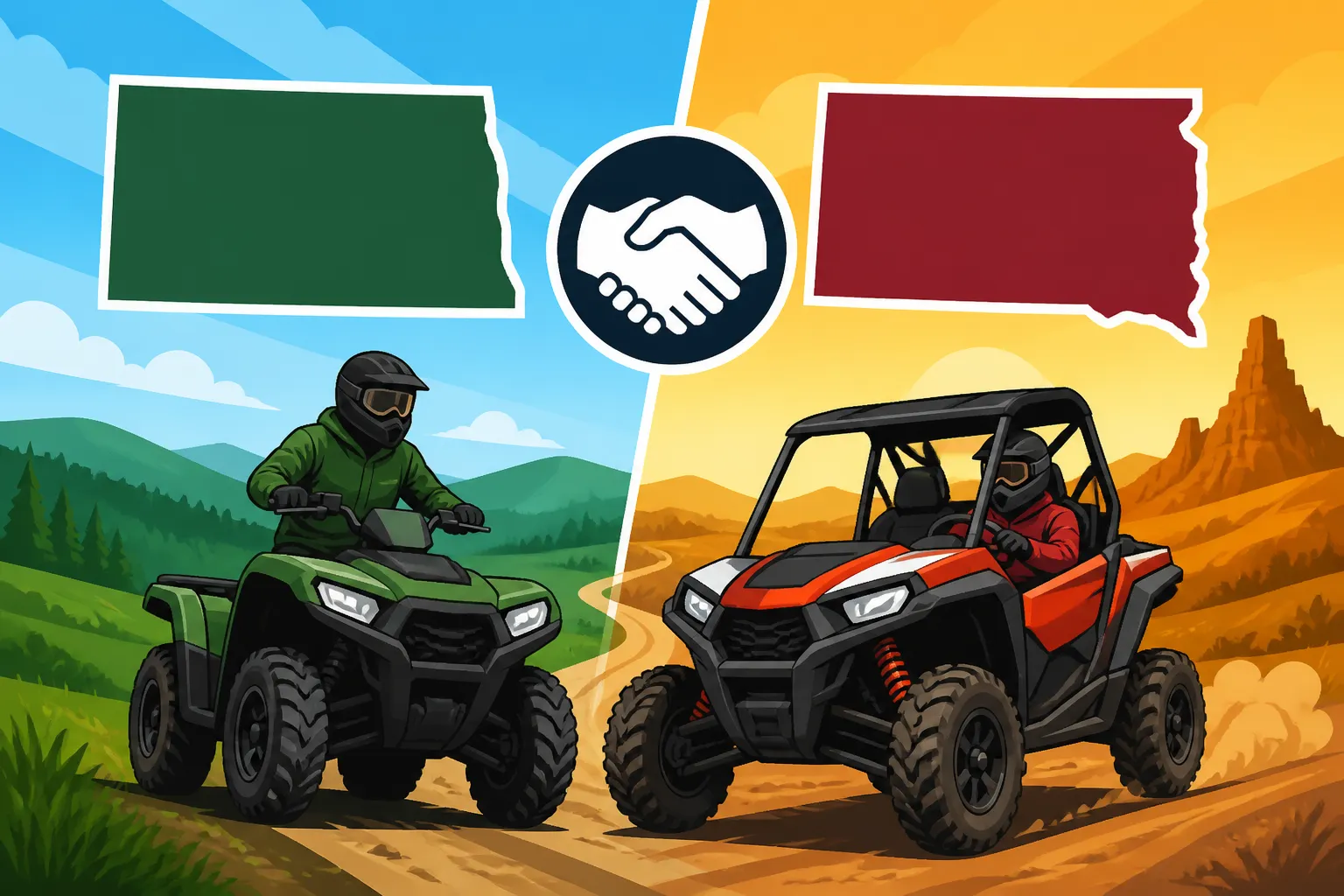
This is perhaps the biggest misconception for many out-of-state riders, especially those from neighboring states like South Dakota. North Dakota does not have a formal reciprocity agreement with South Dakota or any other state when it comes to OHV registration. What does this mean in plain language? It means your valid South Dakota ATV or UTV registration is recognized for that initial 30-day grace period, but it doesn't grant you the same long-term riding privileges as a North Dakota registered machine. After that 30-day mark, you need a North Dakota non-resident permit.
It's a common frustration to hear, "But my machine is street legal in South Dakota!" and while that's great for South Dakota, North Dakota has its own unique set of rules for road use and trail access. You simply can't transplant your home state's entire rulebook. This is why getting familiar with North Dakota's specific laws is so important, regardless of how robust your South Dakota registration or title might be. It’s not a slight against South Dakota; it’s simply how North Dakota manages its own OHV program. For more on this, check out [North Dakota Has No Reciprocity With Any State].
Key Differences in OHV Laws: South Dakota vs. North Dakota
While both states are generally friendly to OHV recreation, their legal frameworks have some notable distinctions. For instance, North Dakota places a strong emphasis on its [North Dakota's Two-Year OHV Registration] system for residents, which includes a trail tax that directly funds trail development. While South Dakota also has registration, the specifics of fees, renewal cycles, and how funds are allocated may differ.
Road use is another big one. North Dakota has some very specific rules about where and how you can ride an OHV on public roads, including requirements like a minimum engine size of 350cc for road use, and equipment like mirrors, horns, and proper lighting. If your South Dakota machine is used to more liberal road-riding laws, you'll need to pay close attention to North Dakota's requirements. Even things like helmet laws for youth riders might have different age cutoffs. For example, North Dakota requires helmets for riders under 18, which might be different than what you're used to in South Dakota. Always carry proof of ownership and your South Dakota registration, even if you’re only visiting for a short while. Think of it as crossing a state line in a car; different states have different traffic laws, and OHVs are no different.
Bringing Your South Dakota-Titled Machine to North Dakota
When you trailer your South Dakota-titled ATV or UTV into North Dakota, you should always have your current registration and title documents readily accessible. These prove ownership and that your machine is legally registered in your home state, which is what the initial 30-day exemption relies upon. It’s also wise to have your driver's license or permit with you, as well as any OHV safety certificates if you are a younger rider. For youth riders, it might be beneficial to review [North Dakota Safety Certificates at Age 12] before your trip.
If you plan on staying longer than 30 days and will be acquiring a North Dakota non-resident permit, you generally won't need to involve your South Dakota title in the North Dakota permitting process. The non-resident permit is specifically for out-of-state machines that retain their home-state title and registration but need temporary access privileges in North Dakota. You aren't permanently registering or titling your machine in North Dakota, so things like VIN inspections are typically not required unless there are unusual circumstances, such as suspected theft or a very long-term, non-resident residency situation which would then trigger North Dakota's full registration process. Just make sure your South Dakota registration is current and valid.
Where You Can (And Cannot) Ride Your OHV in North Dakota
North Dakota offers a diverse landscape for off-roading, but knowing where you can legally ride is paramount. The state has a unique approach to OHV access, mixing designated trails with extensive opportunities on other public thoroughfares. Don't assume all open land is fair game; trespassing is a serious offense, and ignorance of local laws is no excuse.
Ditch Riding: North Dakota's Unique "Trail System"
For many North Dakota residents, the "ditch" is the unofficial trail system. This might sound strange if you’re not from the prairie, but it's a legal and very common practice. North Dakota law generally allows OHVs to be ridden in the road ditches and back-slopes along most public roads, with some critical exceptions. This means those wide-open spaces alongside county roads, township roads, and even some state highways can be legitimate places to ride. Imagine cruising alongside endless fields, a truly unique experience.
However, this isn't a free-for-all. [North Dakota Ditch Riding: The Legal Right Explained] covers this in detail, but here are the key takeaways: you must ride as far to the right as practicable, parallel to the roadway, and generally not on the paved shoulder or within the "inslope" (the immediate incline next to the pavement). Interstates are strictly off-limits, and certain highly populated areas or areas with specific local ordinances may restrict ditch riding. Always be aware of private land boundaries, which are often marked by fences or signs. Respecting private property is non-negotiable. If you're tackling these ditches, especially after a rain, you might want to consider some rugged tires or suspension components from a brand like SuperATV to handle the varying terrain and potential mud. Ditch riding can be surprisingly challenging, so having reliable gear is essential.
Designated OHV Trails and Public Lands
While ditch riding is a significant part of the North Dakota OHV scene, the state also boasts some excellent dedicated trail systems. These are typically managed by the North Dakota Parks and Recreation Department or other land management agencies. Places like [Pembina Gorge: North Dakota's OHV Trail Park] in the northeastern part of the state, the Roughrider OHV Trail near the Missouri River, and the trails in Turtle Mountain State Forest offer more traditional trail experiences with varied terrain, from wooded paths to rolling hills. These designated trails often have width restrictions, so if you're bringing a wider side-by-side, always check the specific trail rules beforehand. For example, Pembina Gorge has a 60-inch width limit on many of its trails.
Beyond these specific parks, some Bureau of Land Management (BLM) and U.S. Forest Service lands (like parts of the Little Missouri National Grassland) may have designated routes open to OHVs. It is absolutely crucial to consult current Motor Vehicle Use Maps (MVUMs) for these federal lands, as cross-country travel is typically prohibited, and OHV use is restricted to marked routes only. Always check local trail conditions and closures, especially during wet weather or fire danger, by calling the managing agency or checking their websites. These trails are generally well-maintained and offer incredible scenic beauty, a stark contrast to the open ditches.
Road Riding Rules and Machine Requirements
North Dakota has specific regulations for making an OHV street legal and riding it on public roads. It's not as simple as slapping a license plate on your quad. Your South Dakota-registered machine needs to meet North Dakota's stringent requirements if you plan to use it on roads beyond just crossing. [North Dakota ATV Road Rules by Surface Type] breaks this down, but generally, to be considered road-legal, your OHV must:
- Have a motor of at least 350 cubic centimeters. This can be a sticking point for many sport quads or smaller utility models.
- Be capable of traveling at least 30 mph.
- Be equipped with at least one headlamp (visible from 300 feet), at least one tail lamp, and brake lights.
- Have a speedometer in miles per hour.
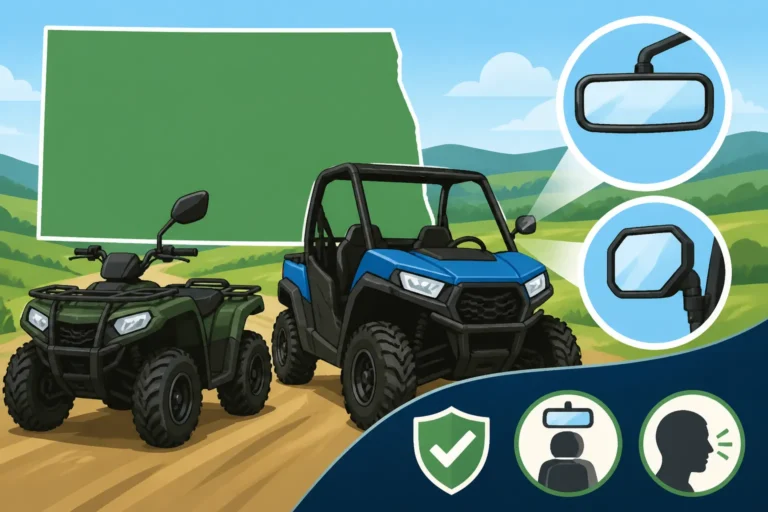
- Be equipped with at least one mirror that provides a clear view of the roadway to the rear for at least 200 feet, and it must have a minimum reflective surface of 10 square inches.
- Have a horn audible from 200 feet.
- Be equipped with a muffler that is in good working order and constant operation to prevent excessive or unusual noise.
Even with all this equipment, OHVs are generally restricted to roads with a posted speed limit of 55 mph or less. Class III machines (like many UTVs) have a slightly broader allowance, often permitted on roads up to 65 mph. Paved roads are often off-limits unless specifically designated, but gravel and unpaved township roads are usually fair game if your machine meets the requirements. Always verify local city and county ordinances, as some areas may have additional restrictions. Equipping your UTV with a full set of street-legal accessories from SuperATV, such as mirrors, turn signals, and a horn kit, will certainly help ensure compliance if you plan extensive road use.
Essential Gear, Safety, and Local Etiquette for Visiting Riders
Safety is paramount, no matter where you ride, but especially when you're visiting a new area with unfamiliar terrain and different rules. Being prepared isn't just about avoiding tickets; it's about staying safe and ensuring a good experience for everyone.
Safety Certificates and Helmet Requirements
For riders under 16 years of age in North Dakota, an OHV safety certificate is required when operating on public lands or public roadways. This is important to note if you're bringing younger riders from South Dakota. Even if your child has a permit or certificate from your home state, North Dakota does not recognize reciprocity for these safety certificates. Therefore, a visiting South Dakota rider under 16 would need to complete a North Dakota-approved safety course to ride legally on public land or roads. However, there are exceptions for riding on private land with the owner's permission or during organized sporting events.
When it comes to helmets, North Dakota law requires all OHV operators and passengers under the age of 18 to wear a helmet that meets U.S. DOT safety standards. This is a non-negotiable safety rule designed to protect young riders. Even if you're over 18, wearing a helmet is always a smart choice, especially when navigating unfamiliar terrain or the unpredictable conditions of prairie riding. It’s better to be safe than sorry, and a good quality helmet is your first line of defense against head injuries. [North Dakota Helmet Law for Riders Under 18] explains this further.
Insurance and Liability on North Dakota Lands
While North Dakota does not explicitly mandate liability insurance for all OHV operation on public lands, it is always, always highly recommended. Riding an OHV, especially on public roads or shared trails, carries inherent risks. Accidents can happen, and if you're found at fault for property damage or personal injury to another party, you could be facing substantial financial liability. Many homeowners' insurance policies may offer some limited coverage for OHV use on your own property, but rarely extend to public lands or roads.
Consider adding specific OHV insurance to your existing policy or purchasing a standalone policy. Minimum liability coverage of 25/50/25 (meaning $25,000 for bodily injury per person, $50,000 for bodily injury per accident, and $25,000 for property damage) is a good starting point and often what is required if you finance a machine. If you plan to ride on private land, ensure you have explicit, preferably written, permission from the landowner, and understand any liability waivers they may require. This protects both you and the landowner.
Preparing Your Machine for North Dakota Conditions
North Dakota's landscape is beautiful but can be demanding on your machine. The prairie often means wide-open spaces, which can lead to dusty conditions in dry weather. This dust can quickly clog air filters and impact engine performance, so make sure your air filter is clean and consider carrying a spare. In contrast, after a good rain, North Dakota's "gumbo" mud is legendary—it's thick, sticky, and can pack into every crevice of your machine, making it feel like you're riding a tank. Good mud tires are a godsend in these conditions.
Consider outfitting your machine with essential accessories like a winch, especially if you plan on exploring more remote areas or riding in gumbo mud. A sturdy tow strap, a basic toolkit, tire repair kit, and a first-aid kit are also smart additions. Because you'll be covering vast distances in open country, always carry enough fuel, water, and emergency food. Cell service can be spotty in some remote areas, so a paper map, GPS device, or satellite communication tool is not a bad idea. For durable components that can withstand North Dakota's diverse and sometimes harsh terrain, looking into heavy-duty axles, A-arms, or even a lift kit from SuperATV could give your machine the extra edge it needs to perform reliably on your adventure. Being prepared ensures your trip to North Dakota is memorable for all the right reasons.
Disclaimer
This article is for general informational purposes only and does not constitute professional advice. Laws, prices and regulations vary by location and change over time. Consult a qualified professional for guidance on your specific situation.