North Dakota Counties With Riding Restrictions
You've got your off-highway vehicle (OHV) ready for adventure, maybe a powerful ATV or a versatile UTV, and the vast, open landscapes of North Dakota are calling your name. But before you load up and head out, a nagging question might pop into your head: can I actually ride this thing here? It's a frustrating reality for many riders that what's legal on a state level might be completely restricted by a county or even a city ordinance, leaving you scratching your head and wondering where you can legally enjoy your machine. This guide aims to clear up that confusion by walking you through the complexities of local riding restrictions in North Dakota, empowering you to hit the trails or ditches with confidence and compliance.
Understanding North Dakota's Layered OHV Laws
Navigating the rules for riding your ATV or UTV in North Dakota can feel like trying to solve a puzzle with missing pieces. You might be familiar with the statewide regulations, but many riders often overlook the fact that local jurisdictions—counties and cities—have the power to add their own layers of restrictions. This can lead to a lot of headaches, accidental violations, and sometimes, even fines, simply because the rules change depending on where you are. It’s not enough to know what the state says; you really need to drill down into the local nuances.
State vs. Local Authority: The Baseline and Beyond
North Dakota state law provides a foundational framework for OHV operation, covering things like registration, titling, and general rules for road and ditch riding. For example, the state clearly defines when and how you can operate an OHV on certain roadways or within the ditch right-of-way. You might know that [North Dakota Ditch Riding: The Legal Right Explained] allows for certain ditch use, or understand the general [North Dakota Rules for Riding a Gravel Road]. This state-level information is crucial, it’s your starting point.
However, the state also grants counties and incorporated cities the authority to enact their own ordinances that can further restrict or even prohibit OHV use within their specific boundaries. This means a blanket "yes, you can ride here" or "no, you can't" often isn't the full story. A county might decide that while state law permits ditch riding, their local conditions or public safety concerns warrant a stricter approach, perhaps limiting hours of operation or banning OHVs from specific county roads altogether. These local rules are legally binding and supersede the general state allowance if they are more restrictive.
The Importance of Local Ordinances
Ignoring local ordinances is like playing a game without knowing all the rules – you’re bound to make a mistake. What might be perfectly legal in one county could land you a citation just across the county line. This isn't just about avoiding a ticket; it's about being a responsible rider and respecting the communities you're passing through. Local residents and landowners have a vested interest in how OHVs are operated in their area, and their local governments respond to those concerns.
Imagine planning a weekend ride through a new part of the state, eager to explore the scenery. You’ve checked all the state requirements, your machine is registered, and you feel prepared. But unbeknownst to you, the specific township roads you planned to use are off-limits to OHVs by a local ordinance. Suddenly, your fun outing turns into a stressful encounter with local law enforcement. That’s why understanding and researching these local rules before you ever leave your driveway is not just recommended, it's essential for a smooth and enjoyable ride.
Identifying Counties with Specific ATV/UTV Riding Restrictions
It's a common misconception that if an OHV is registered and plated, it's free to roam wherever the state allows. However, some North Dakota counties have indeed implemented specific ordinances that either restrict or entirely prohibit ATV and UTV riding on certain public lands or roadways within their jurisdiction. These restrictions aren't always uniform; they can vary widely, from outright bans on all county roads to limitations on specific types of machines or times of day. This is why a thorough understanding of the specific area you plan to ride in is critical.
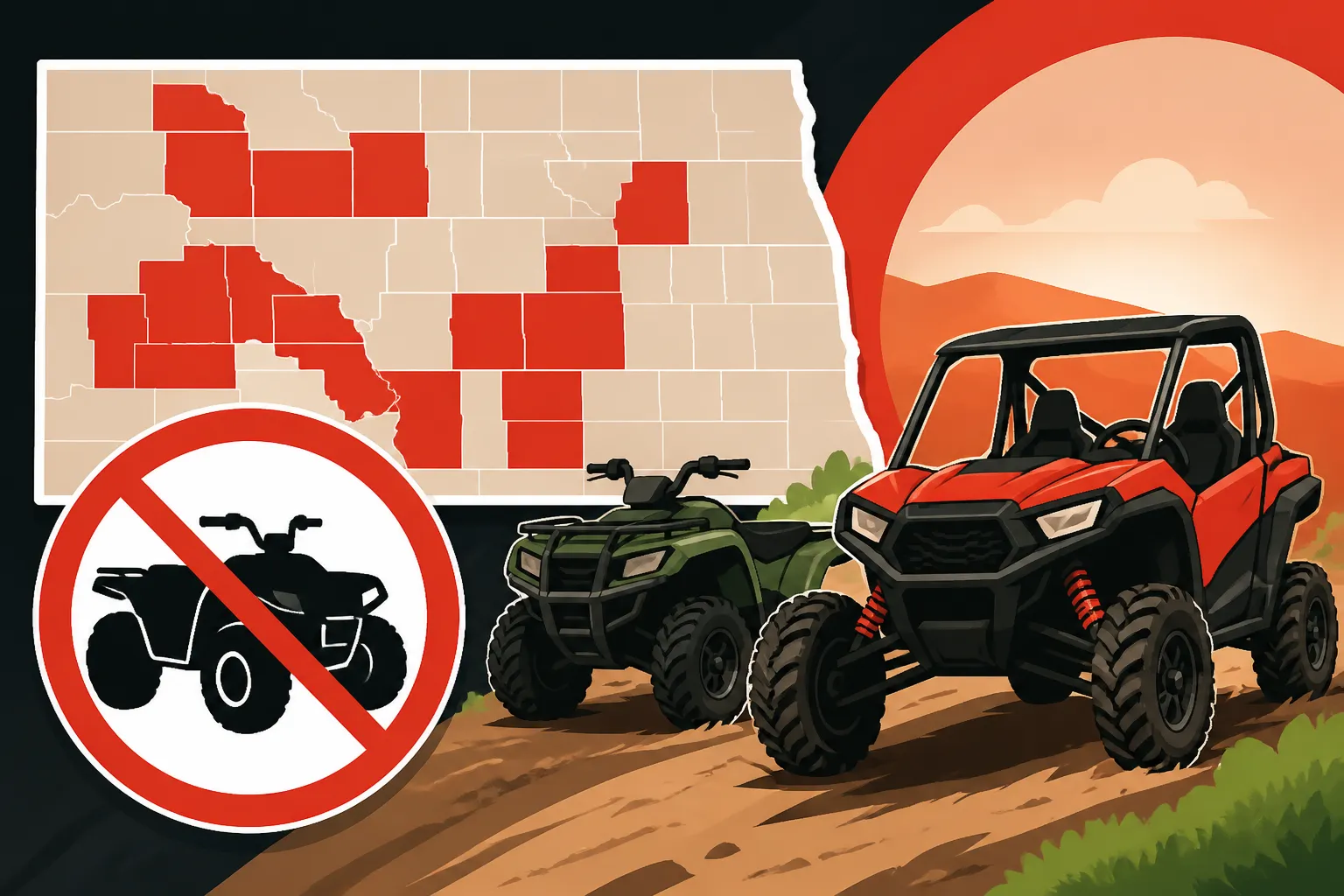
Counties with Known Bans or Major Limitations
While it's impossible to provide a definitive, always up-to-date list of every single county with specific OHV restrictions (as these ordinances can change over time), it's important to recognize that such limitations exist. Some counties, often those with higher population densities, unique environmental concerns, or particular agricultural interests, may have chosen to enact more stringent regulations than the state baseline. These stricter rules might apply to county roads, township roads, or even certain rights-of-way that state law might otherwise permit. For instance, a county might declare all paved county roads off-limits to OHVs, even if [North Dakota Rules for Riding a Paved Road] would generally allow it under certain conditions.
In these areas, OHV access might be limited to designated trails or private property with explicit landowner permission. It's not uncommon for counties to restrict OHV use near residential zones, schools, or environmentally sensitive areas to mitigate noise, dust, and potential safety hazards. The key takeaway here is that you cannot assume universal access across all county lands just because your machine is registered. Always be prepared for the possibility that the county you're visiting has a different set of rules than what you're used to back home.
Common Types of County-Level Restrictions
County ordinances can be quite creative in their approach to OHV regulation. Beyond outright bans, you might encounter a variety of specific rules designed to address local concerns. Here are some common types of county-level restrictions you might run into:
- Road Type Restrictions: A county might allow OHV use on gravel or unimproved roads but prohibit it entirely on paved county highways. This is a common way for local governments to balance recreational access with road preservation and safety concerns.
- Time of Day Limitations: Some counties or townships might restrict OHV operation during certain hours, such as late at night or early morning, to address noise complaints from residents. Imagine you're out enjoying a ride, and suddenly the sun starts to set, and you realize you've just entered a county where [North Dakota Rules for Riding After Dark] are further tightened by local decree.
- Seasonal Bans: While North Dakota's OHV trails generally have no season, a county might impose seasonal bans on certain roads or areas, especially during wet periods to prevent road damage or during specific agricultural seasons when heavy farm equipment is prevalent.
- Machine Class Restrictions: Although the state defines different OHV classes, a county could potentially limit access based on machine size, weight, or even engine displacement on certain roads.
- Designated Route Mandates: Instead of allowing general ditch or road access, a county might only permit OHVs on specifically designated routes or trails, funneling riders to areas deemed suitable for OHV traffic.
- Noise Ordinances: Beyond state muffler requirements, some counties may have stricter noise limits, especially in areas closer to residential developments.
These examples highlight why a general understanding of North Dakota's state laws is only part of the equation. Each county has the autonomy to tailor regulations to its unique landscape and community needs, making it imperative for riders to investigate local rules thoroughly.
How to Research Local OHV Ordinances Before You Ride
The thought of delving into local government paperwork might not be as exciting as riding your UTV, but it's a crucial step to avoid an unexpected encounter with a county sheriff or an unfortunate fine. Ignoring local ordinances can quickly turn a fun day of riding into a costly headache. Taking a little time to do your homework upfront can save you a lot of trouble and ensure you’re always riding within the bounds of the law, no matter where you are in North Dakota.
Checking with Local Law Enforcement
One of the most direct and often most reliable ways to get current information on local OHV restrictions is to contact the local law enforcement agency. If you're planning to ride in a specific county, a quick call to the County Sheriff's office is your best bet. For areas within city limits, the city police department would be the appropriate contact. When you call, be prepared to state exactly where you intend to ride—specific road names, townships, or areas—and ask about any ordinances regarding ATV or UTV use. Don’t just ask "Can I ride my ATV in your county?" but rather, "Are there any specific restrictions for ATV use on gravel roads in X township?"
This approach is highly recommended because law enforcement officers are on the front lines and are directly responsible for enforcing these rules. They can often provide immediate, practical advice and direct you to the exact ordinance if one exists. Sometimes, they might even have maps or brochures detailing permissible riding areas. Remember, their goal is public safety and compliance, so approaching them proactively shows responsibility and a willingness to cooperate. In many cases, this aligns with the advice to always be [Checking With Local Law Enforcement First].
Consulting County and City Websites
Most counties and cities in North Dakota maintain official websites where they publish their codified ordinances and resolutions. While it might take a bit of searching, these online resources are an excellent place to find detailed legal text. Look for sections typically titled "Ordinances," "Code of Ordinances," "Resolutions," or "County/City Clerk." Within these sections, you'll need to search for keywords like "ATV," "UTV," "off-highway vehicle," "motorized recreation," or "vehicle operation."
Navigating these sites can sometimes be a little clunky, but perseverance pays off. Pay close attention to effective dates of ordinances, as rules can change. If you find something ambiguous, make a note of it and follow up with a call to the county clerk's office or sheriff's department for clarification. Remember that what you’re looking for might not be neatly categorized under "OHV," but rather embedded within broader traffic or public land use regulations. This due diligence is crucial, especially since [North Dakota Cities Cannot Require Local Registration] but can still impose significant operational restrictions.
Local OHV Clubs and Rider Groups
Never underestimate the power of community knowledge! Local ATV and UTV clubs or online rider groups are invaluable resources for up-to-date information on riding conditions and local regulations. These groups often consist of experienced riders who live in the area, are familiar with the local ordinances, and frequently interact with local authorities or land managers. They can share firsthand experiences, point you to specific trails or legal ditch routes, and even warn you about areas that are frequently patrolled or have strict enforcement.
Joining a local club or participating in online forums can provide insights that are hard to find elsewhere. Many clubs also have designated contacts who liaise with local governments, giving them unique access to information about proposed changes or upcoming restrictions. A quick search on social media or dedicated OHV forums for North Dakota-specific groups could connect you with a wealth of local knowledge, helping you navigate the patchwork of regulations and find the best places to ride safely and legally.
Navigating Permitted Riding Areas in Restrictive Counties
Even if a North Dakota county has strict rules regarding OHV use on its public roads or ditches, that doesn't necessarily mean all riding is off-limits. Many counties, even those with broad restrictions, often make provisions for designated riding areas or special circumstances. Understanding these exceptions and alternatives is key to maximizing your riding opportunities without falling afoul of local laws. It's about being resourceful and knowing where to look for sanctioned fun.
Designated Trails and Private Land
In counties with tight regulations on public road or ditch riding, your best bet for legal OHV use often lies with designated off-highway vehicle trails or private land. North Dakota boasts a growing network of official OHV trails, such as those found in [North Dakota OHV Trails: All Four Riding Areas]. These trails are specifically designed and managed for OHV recreation, making them a safe and legal option, regardless of surrounding county ordinances. The key is to ensure your machine meets the specific requirements of that trail system, such as width limits or spark arrestor mandates.
Another excellent option, and one that overrides most public land restrictions, is riding on private property with the express permission of the landowner. This is often the most straightforward way to enjoy your machine without worrying about complex local ordinances. However, remember that "permission" means explicit, ideally written, consent. Simply assuming it's okay because a gate is open could lead to a trespass charge. Always adhere to [North Dakota Posted Land Rules for Riders] and get clear permission before entering private land. Some landowners even appreciate OHV riders for tasks like checking fences or herding livestock.
Special Event Permits
Sometimes, even in highly restrictive areas, there are opportunities for organized OHV events. These could include poker runs, charity rides, or off-road races. Organizers of such events typically work directly with local county commissions, city councils, and law enforcement agencies to secure special permits. These permits grant temporary exceptions to standing ordinances, allowing OHVs to operate on specific routes or in certain areas for the duration of the event.
Participating in an organized event can be a fantastic way to ride trails or roads that are otherwise off-limits to individual riders. It also provides a structured, often safer, environment with designated routes, first aid, and support. If you're passionate about expanding riding opportunities in a restrictive county, consider connecting with local OHV advocacy groups or even proposing an organized event yourself. Just be aware that securing such permits involves significant planning, coordination, and adherence to specific safety and environmental guidelines.
Before you head out, here's a quick reference to help you understand where different types of regulations typically originate:
| Regulation Type | Authority | Common Examples | Where to Research |
|---|---|---|---|
| Registration & Titling | State (NDDOT) | OHV registration fees, title requirements, excise tax | NDDOT website, Motor Vehicle branches |
| General Road/Ditch Use | State (NDCC) | Statewide rules for ditch riding, speed limits on certain roads, equipment requirements for road use | North Dakota Century Code (NDCC), NDDOT website |
| County-Specific Restrictions | County Commission | Bans on specific county roads, time-of-day limits in unincorporated areas, noise ordinances | County Sheriff's office, County Clerk's website |
| City-Specific Restrictions | City Council | Bans within city limits, restrictions on city streets, residential area noise limits, speed limits | City Police Department, City Clerk's website |
| Designated Trail Rules | State Parks, Federal Agencies, Private | Width limits on trails, specific operating hours, spark arrester requirements, permit fees | Trailhead signage, specific agency websites (e.g., ND Parks & Rec) |
| Private Land Access | Landowner | Express permission required, specific rules set by owner | Direct communication with landowner |
Remember that staying informed is your best defense against accidental violations. While the state sets the broad strokes, the local details often define your actual riding experience. Take the time to understand the rules of the road, ditch, or trail, and you'll ensure many enjoyable and legal rides across the diverse landscapes of North Dakota. For more specific local information, remember to check resources like [North Dakota ATV Road Rules by County]. Whether you’re preparing for a short afternoon ride or a longer excursion, knowing the lay of the legal land will ensure your adventures are fun and frustration-free. Even if you're upgrading your rig, ensure your new parts from a brand like SuperATV comply with any local regulations on mirrors, horns, or lighting, so you don't run into issues. Happy riding!
Disclaimer
This article is for general informational purposes only and does not constitute professional advice. Laws, prices and regulations vary by location and change over time. Consult a qualified professional for guidance on your specific situation.