Frozen Water and North Dakota Riders
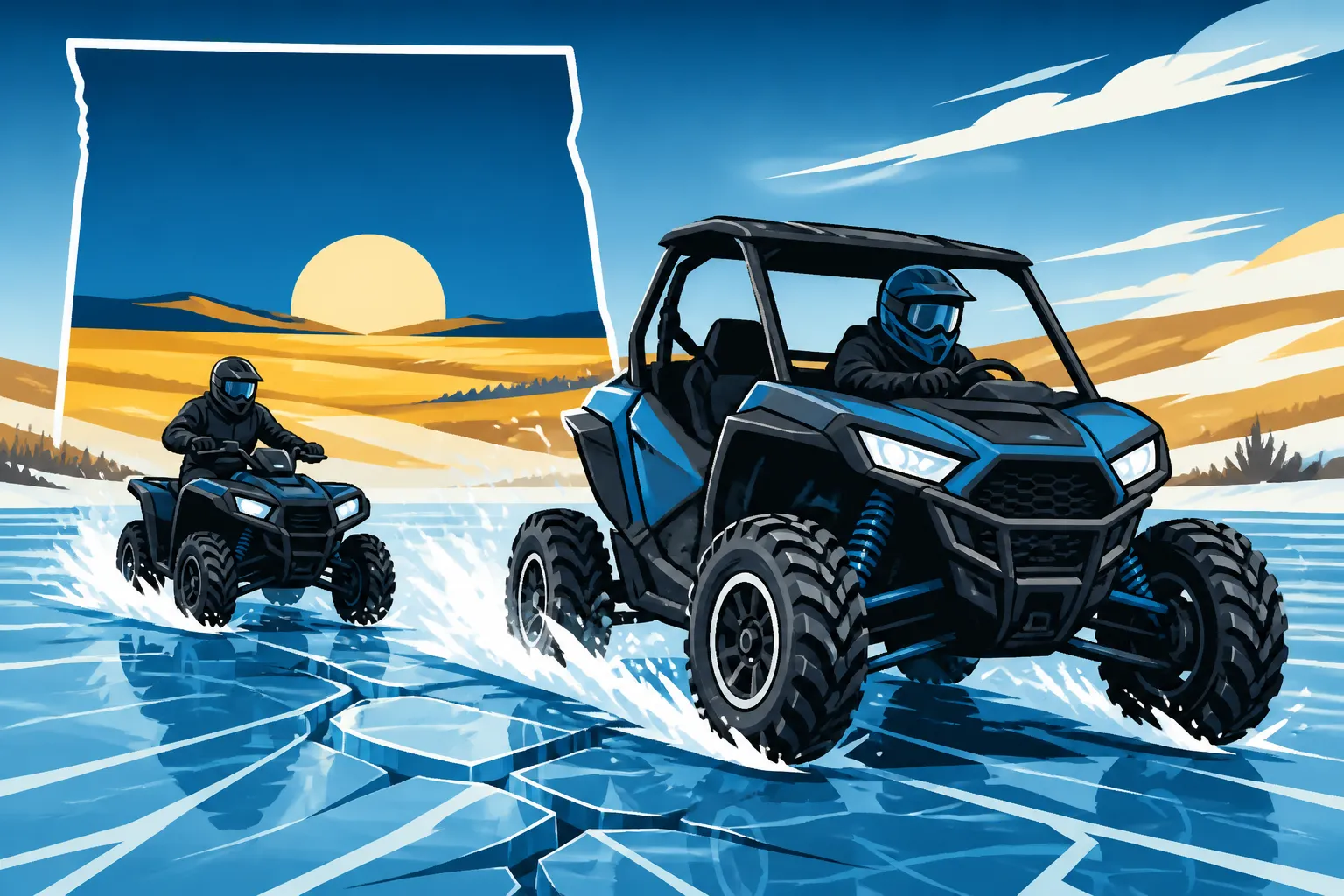
The frozen lakes and rivers of North Dakota can look like an open invitation for ATV and UTV riders, offering vast, flat expanses for recreation, or a shortcut to a prime ice fishing spot or hunting blind. However, this seemingly endless playground comes with serious, often unseen dangers that can turn a day of fun into a life-threatening situation. This guide will walk you through the essential considerations, legal nuances, and critical safety measures you absolutely must know before even thinking about taking your off-highway vehicle onto North Dakota's frozen waters.
The Allure and the Alarms of Frozen Water Riding
There's a unique draw to heading out onto the ice in North Dakota. The crisp winter air, the wide-open views, and the sheer exhilaration of navigating a landscape transformed by winter are truly unforgettable. But beneath that alluring white surface lies a world of unpredictable hazards that demand respect and careful preparation.
Why the Ice Calls to North Dakota Riders
For many, the appeal of frozen water riding isn't just about the thrill. It’s deeply practical. Imagine being able to drive your UTV right out to your ice house, loaded with gear, skipping the laborious haul across heavy snow. Hunters might find that frozen sloughs and riverbeds offer easier access to remote hunting grounds than slogging through deep drifts. Then there's the pure sport of it – the sensation of gliding across a vast, smooth expanse, perhaps even with a [North Dakota Riding Season Month by Month] in mind. It feels like an expansion of the normal riding season, opening up new terrain that’s inaccessible the rest of the year. This freedom is powerful, almost intoxicating, and it's easy to see why the temptation is so strong for so many riders to venture out.
The Hidden Dangers Beneath the Surface
While the ice offers convenience and adventure, it also hides profound dangers. The most obvious, of course, is falling through. This isn't just about getting your machine wet; it’s about instant immersion in frigid water, leading to cold water shock, hypothermia, and potential drowning. Even if you manage to escape the water, your heavy ATV or UTV will likely be lost. Beyond the ice itself, hazards include hidden pressure ridges, cracks, slush pockets under snow cover, and areas where currents or springs thin the ice from below. These aren't always visible, especially if snow has recently fallen, creating a false sense of security. The landscape might look uniform, but the ice quality can change drastically within a few feet, turning a solid path into a deadly trap in an instant.
North Dakota's Legal Stance on Frozen Water Riding
Navigating the legalities of riding on frozen water in North Dakota can feel a bit like wading through slush – it’s not always clear cut. While there aren't many laws explicitly saying "thou shalt not ride an OHV on ice" in every circumstance, there are plenty of general principles and regulations that apply, alongside strong recommendations for safety and responsible conduct.
Public vs. Private Frozen Waterways
A key distinction when considering riding on frozen water is whether you're on a public waterway (like a large lake or river) or private property (like a pond on private land). On public waterways, general North Dakota OHV laws still apply. This means your machine needs to be properly registered and titled. If you’re not sure about your machine, ask yourself, [Do You Need to Register an ATV in North Dakota?] and consider what it would cost, as covered in [North Dakota OHV Registration Cost]. Just like on land, you are expected to operate your machine responsibly, which includes avoiding reckless driving and impaired operation. Remember, [North Dakota DUI Rules for OHV Riders] are just as strict on the ice as they are on a trail or road.
When it comes to private land, the rules shift somewhat. If the frozen body of water is entirely contained within private property, the landowner's permission is paramount. Without it, you could be trespassing, which is a serious concern, as detailed in [North Dakota Trespass Law for Riders]. Even if you have permission, the landowner might set their own rules about safety or acceptable use. Always get explicit permission and discuss any concerns about ice safety with the property owner.
What the Law Says (and Doesn't Say Explicitly)
North Dakota law doesn't typically have specific statutes solely dedicated to "ice riding." Instead, existing regulations for off-highway vehicles, public safety, and reckless endangerment come into play. For instance, while there's no minimum ice thickness legally mandated for OHV use on public waters, operating on demonstrably unsafe ice could be considered reckless endangerment if it puts others at risk or requires emergency services to intervene. Similarly, [North Dakota Accident Reporting for an OHV] requirements would still apply if an incident occurs, whether on land or ice.
The lack of explicit laws doesn't grant a free pass; rather, it places a higher burden of responsibility on the rider. Law enforcement, game wardens, and emergency services will always prioritize public safety. If you're observed operating an OHV on ice that is clearly unsafe, or in a manner that creates a public hazard, you could face citations under general reckless operation statutes. This also extends to carrying required safety equipment. While North Dakota doesn't generally require OHV insurance for private land riding, it is often recommended, and [North Dakota Insurance Requirements at Registration] cover public land use. When a peace officer performs [North Dakota Equipment Checks at a Stop], they're looking for things like proper registration, required lighting for night riding, and safe operation. These checks can happen anywhere OHVs are legally operated, including public ice.
Essential Safety Protocols for Ice Riding
Riding on frozen water is an inherently risky activity, and while it can be done, it demands an almost obsessive commitment to safety. You can't just assume the ice is safe because it's cold outside. Every single trip onto the ice requires a thorough assessment and adherence to strict safety protocols.
Ice Thickness: The Golden Rule (and its Nuances)
This is the absolute cornerstone of ice safety: know the ice thickness. There are general guidelines for what ice thickness can support different weights, but these are minimums and assume clear, solid, newly formed ice. Older ice, ice that has thawed and refrozen, or ice with snow cover can be significantly weaker, even at the same measured thickness. Always remember: "thick enough" for one person might be catastrophic for an ATV or UTV.
Here’s a general guideline for clear, solid ice (always verify with multiple measurements):
| Activity / Vehicle Type | Recommended Minimum Clear Ice Thickness |
|---|---|
| Ice fishing / Walking | 4 inches |
| Snowmobile / ATV | 5-7 inches |
| Small car / UTV | 8-12 inches |
| Medium pickup truck | 12-15 inches |
Important Caveat: These are minimums for clear, solid ice. Slushy ice, white ice (from frozen snow), or ice that has thawed and refrozen can be half as strong as clear ice. You must carry an ice chisel or auger and check thickness frequently as you go, especially in new areas or near shorelines, inlets, and outlets. Never rely on someone else’s tracks; conditions can change in minutes. Also, be aware of natural springs or currents, often found near points or river channels, which can create dangerously thin spots, even on a generally thick lake.
Preparing Your Machine and Yourself
Preparation is key, and it goes beyond just filling the tank. For your machine, equip it with appropriate tires for ice and snow, such as those designed for traction on slick surfaces. Consider adding a strong, reliable winch, perhaps from a brand like SuperATV, which could be a lifesaver if you get stuck in slush or need to pull someone else out. Ensure your lights are fully functional, especially if you plan any riding near dusk or in low visibility conditions – a broken headlamp can quickly become a major problem when visibility is already limited.
For yourself and any passengers, dress in layers. Hypothermia is a silent killer, and staying warm and dry is critical. Invest in a flotation suit or a life jacket worn over your outer clothing. This is not optional; it could save your life if you go through the ice. Carry ice picks (worn around your neck or in an easily accessible pocket) for self-rescue, a rope for throwing, and a fully charged cell phone (in a waterproof bag). A small, waterproof emergency kit with a fire starter, first aid supplies, and a signaling device is also highly recommended. If you're riding with a minor, remember that [North Dakota Helmet Law for Riders Under 18] still applies, and a properly fitted DOT-approved helmet is non-negotiable for anyone. Always inform someone of your planned route and expected return time.
Navigating Unknowns and Changing Conditions
Even with the best preparation, conditions can change rapidly on the ice. Heavy snowfall can insulate the ice, preventing it from thickening, or create dangerous slush pockets underneath. Strong winds can shift snow, exposing previously hidden weak spots or creating drifts that obscure your path. Always start by driving slowly and methodically, checking the ice every few feet in unfamiliar territory. Look for visual cues: dark spots often indicate thinner ice, while pressure ridges (where ice sheets buckle) are extremely dangerous and should be given a wide berth.
If you hear cracking noises, stop immediately. If the cracking continues or you see water seeping through cracks, slowly and carefully turn around and retreat the way you came, distributing your weight as much as possible. Avoid traveling in a straight line; instead, take a slightly curved path back. Never follow directly in the tracks of another vehicle, as this can weaken the ice further. Riding in groups can add a layer of safety, but each machine should travel at a safe distance from the others, allowing enough space for the ice to bear each individual's weight without compounding stress. Using an app to check [North Dakota Trail Status by App and Phone] won't help you with lake ice conditions, so rely on your own judgement and testing.
Practical Considerations and Responsible Riding
Riding on frozen water isn't just about personal safety; it's also about respecting the environment and other users of the frozen landscape, like ice anglers, snowmobilers, and even cross-country skiers. Responsible operation ensures that these shared natural resources remain accessible and safe for everyone.
The "How-To" of Safe Ice Entry and Exit
Getting onto and off the ice safely is crucial. Don't just pick a random spot. Look for established access points used by other ice users, as these areas are often firmer and better maintained. However, even these can be tricky. The ice near shore can be significantly thinner due to melting and refreezing, or changes in water level. Always test the ice aggressively at the entry point. Drive slowly onto the ice, checking behind you for stability. If you feel any instability, back off immediately.
When driving on the ice, maintain a moderate, consistent speed. Avoid sudden stops, starts, or sharp turns, as these can stress the ice. If you're carrying passengers, ensure they are seated properly and aware of the risks. Keep a watchful eye for slush zones, which can be covered by snow and act like quicksand for your machine. If you hit slush, try to maintain momentum through it, but if you start to sink, abandon the machine quickly and move to solid ice. Having a shovel and a strong tow strap, perhaps a heavy-duty one from SuperATV, can be invaluable if you get bogged down in slush near the shore.
What to Do in an Emergency
If, despite all precautions, you or your machine goes through the ice, immediate and calm action is vital. For self-rescue, if you're wearing a flotation suit or life jacket, it will keep you buoyant. Use the ice picks you’re wearing to claw your way onto the solid ice, kicking your legs vigorously to propel yourself. Once out, roll or crawl away from the hole to distribute your weight, rather than standing up. Seek warmth and dry clothes immediately.
If someone else goes through, resist the urge to rush directly to them. This could put you through the ice too. Instead, stay low, extend a rope, branch, or even a jump rope from your emergency kit to them, and pull them out while maintaining a safe distance. Call for emergency services immediately, even if the person is rescued, as cold water exposure requires medical attention. Remember that in North Dakota, if you’re involved in an OHV accident that results in injury, death, or property damage above a certain amount, [North Dakota Accident Reporting for an OHV] is required.
Protecting the Environment and Your Reputation
As riders, we're guests in these natural environments, even in winter. When riding on frozen water, it's critical to minimize your impact. Avoid disturbing wildlife, especially in areas where animals might be wintering or nesting. Don't leave any trash, broken equipment, or anything else behind. What goes out on the ice must come back off with you.
Being a responsible rider also extends to your interactions with others. Maintain safe speeds and distances from ice shacks, anglers, and other recreational users. Their peace and quiet, or their safety, should not be compromised by your presence. Following these practices not only helps preserve North Dakota's beautiful natural resources but also ensures a positive reputation for the OHV community, helping to maintain access for all of us in the long run.
Disclaimer
This article is for general informational purposes only and does not constitute professional advice. Laws, prices and regulations vary by location and change over time. Consult a qualified professional for guidance on your specific situation.