Why the Director Cannot Close the Ditch
For many off-highway vehicle (OHV) enthusiasts in North Dakota, the open expanse of ditches and section lines represents a unique and cherished riding landscape. However, there's often a lingering question in the back of riders' minds: can these vital arteries for off-road recreation be suddenly closed off? This guide dives deep into North Dakota's nuanced laws to explain why the Director of the Department of Transportation actually has limited power to prohibit ditch riding, offering clarity and peace of mind for those who enjoy traversing the prairie landscape.
Understanding North Dakota's Ditch Riding Laws
The idea that a single state official could simply declare all ditches off-limits for OHVs often causes a lot of anxiety and confusion among riders. Thankfully, North Dakota's legal framework for ditch riding is quite specific, placing significant limitations on such broad authority. It’s not a matter of one person’s decision but rather a set of established statutes designed to balance public access with safety and property rights. Understanding these foundational laws is key to appreciating why the director's power is not absolute.
The Legal Right to Ride Ditch Bottoms and Back-Slopes
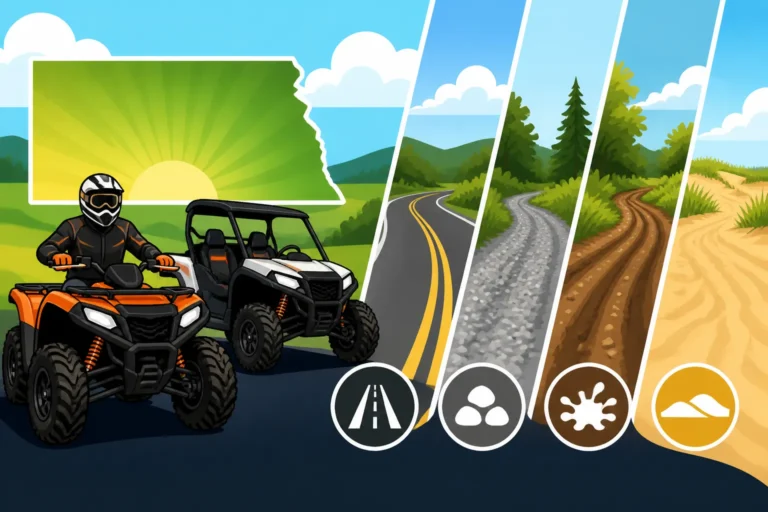
North Dakota is one of those unique states where ditch riding isn't just tolerated; it's explicitly allowed by state law, under specific conditions. This legal right is a cornerstone of the OHV culture here, providing extensive access across the state's vast network of roads. You're generally permitted to operate your ATV or UTV in the ditch bottom and along the back-slope of public highways. This means those areas adjacent to the roadway, but separate from the traffic lanes and immediate shoulder, are often open for your enjoyment. It’s a practical solution for connecting trails, accessing hunting land, or simply enjoying a long prairie ride.
However, this isn't a free-for-all. The law carves out this allowance with specific definitions and limitations. For instance, the terrain must be suitable for safe operation, and riders are always expected to operate their machines responsibly, exercising caution for themselves and others. It's not about reckless abandon, but rather a recognized form of travel that acknowledges the unique characteristics of North Dakota's landscape. Many riders rely on this access, often equipping their machines with durable components like those from SuperATV to handle the varied conditions encountered in these areas. For a deeper dive into the specifics, check out [North Dakota Ditch Riding: The Legal Right Explained].
What Constitutes a "Ditch" in North Dakota Law
When we talk about "the ditch" in North Dakota, it's not just a casual term; it has a specific legal meaning that's crucial for riders to understand. The law defines the areas where OHVs are generally allowed as the "ditch bottoms" and "back-slopes" of public highways. These are distinct from other parts of the roadway right-of-way. Imagine a typical rural road: you have the paved or gravel surface for vehicles, then usually a shoulder, and then the slope descending into the ditch, followed by the flat bottom of the ditch, and finally the back-slope rising away from the road, leading up to private property or fence lines.
The critical distinction here is that the "inslope" (the part of the ditch closest to the road, usually descending from the shoulder) and the "shoulder" itself are generally not considered legal riding areas. The intent of the law is to keep OHV traffic separated from motor vehicle traffic as much as possible, minimizing potential conflicts and safety hazards. Understanding this geographical definition is paramount. Riding on the shoulder or inslope could lead to a citation, even if you’re technically in the ditch right-of-way. This careful delineation is part of why the Director cannot unilaterally close all ditches – the law specifically grants this right to certain sections. Further clarification on these distinctions can be found in [Riding North Dakota's Ditch Bottom and Back-Slope].
The Role of the Director of Transportation
The Director of the North Dakota Department of Transportation (NDDOT) certainly holds significant authority over the state's highway system, overseeing everything from road construction to traffic regulations. However, their power regarding OHV access to ditches is not absolute, and it's constrained by the very statutes that define ditch riding. The law doesn't grant the Director a blanket authority to prohibit OHV operation in ditches statewide. Instead, the NDDOT's role is primarily to regulate the highways themselves and to ensure safety on the traveled portion of the road.
While the Director can implement rules regarding traffic flow, safety devices, and the maintenance of the right-of-way, these powers are limited when it comes to the specific allowance for OHVs in ditch bottoms and back-slopes. The intent of the legislature was to permit this type of off-road activity. Any move to prohibit it would likely require legislative action to change the underlying statutes, not merely an administrative directive from the Director. This is a critical point: the right to ride in ditches stems from state law, making it much harder for any single official to simply revoke it. The NDDOT's responsibilities include ensuring clear signage for roads and regulating how things like speed limits apply, but these generally don't extend to a wholesale ban on designated ditch riding areas.
Distinguishing State vs. Local Control
While state law outlines the general permissibility of ditch riding, it's essential to understand that local governments—counties and cities—also have a voice in regulating OHV use within their jurisdictions. This layered approach means that what might be legal in one rural county could have specific restrictions once you enter a city limit. This creates a patchwork of rules that riders must navigate, adding another layer of complexity beyond just state-level directives.
How Counties and Cities Can Restrict Riding
Even though state law permits ditch riding, counties and cities are granted certain powers to enact their own ordinances that can further restrict or even prohibit OHV operation within their specific boundaries. This local control often comes from concerns about public safety, noise complaints, or property damage within more populated areas. For example, a county board might vote to close certain county roads or their adjacent ditches to OHV traffic, or a city council might ban OHVs entirely within city limits, including their ditches, except for specific access points or events.
These local restrictions, however, must generally be more restrictive than state law, not simply contradictory. They can't usually override the state's permission without a strong, clearly articulated local rationale, such as public safety concerns in densely populated areas. It's crucial for riders to understand that while the state allows ditch riding, local rules can create exceptions. This is why always checking with local law enforcement or county offices before you ride in an unfamiliar area is a smart move. For more on this, you might find [North Dakota County and City ATV Ordinances] useful.
The Limits of Local Ordinances
Just as the Director of the NDDOT has limitations, so do local governments. A city or county cannot simply ban all OHV activity on a whim. Their ordinances must be reasonable, non-discriminatory, and typically rooted in legitimate public safety or welfare concerns. For instance, a small, rural township would likely struggle to legally justify a complete ban on ditch riding across all its roads if there's no demonstrable safety issue, whereas a bustling city center could easily defend a ban on OHV use on its busy streets and adjacent areas.
Furthermore, local ordinances cannot typically impose additional registration requirements beyond what the state mandates. For example, a city cannot require you to purchase a special "city OHV permit" or decal if your machine is already properly registered with the state. Their power lies in regulating where and when you can ride, not in creating additional bureaucratic hurdles for ownership. If you encounter a local rule that seems overly broad or contradictory to state law, it's worth investigating its legal basis. While local entities have a say, their power is not unlimited and must operate within the framework of state law.
Specific Restrictions and Prohibited Areas
While North Dakota is quite generous with its ditch riding allowances, it's absolutely critical to understand where those allowances end. Not every part of the ditch system is open, and certain types of roads are explicitly off-limits. Disregarding these specific restrictions isn't just a minor infraction; it can lead to significant penalties, endanger yourself and others, and erode the goodwill that allows for ditch riding in the first place. This section will clarify the boundaries that riders must respect.
Inslopes, Shoulders, and Controlled-Access Highways
This is where many riders get into trouble. As mentioned earlier, while ditch bottoms and back-slopes are generally open, the "inslope" and "shoulder" of a highway are typically off-limits for OHV operation. The inslope is the part of the ditch that slopes directly down from the road shoulder towards the ditch bottom. The shoulder is the paved or graveled area immediately adjacent to the traveled lane of the road. These areas are considered too close to active vehicle traffic and are typically not safe for OHV use. Think of them as extensions of the road itself, designed for emergency stops or disabled vehicles, not recreational riding.
Another major exclusion is any "controlled-access highway," such as interstates or major four-lane divided highways. These are designed for high-speed traffic with limited entry and exit points, and OHVs are strictly prohibited on them, including their ditches, shoulders, and rights-of-way. The speeds involved and the design of these roadways make OHV operation incredibly dangerous and illegal. Always assume that if a road is an interstate or a major controlled-access freeway, your OHV does not belong anywhere near the main travel lanes or their immediate surroundings. You can find more details on these forbidden zones in [North Dakota Inslopes and Shoulders Are Closed].
Obstructions and Transitory Operation
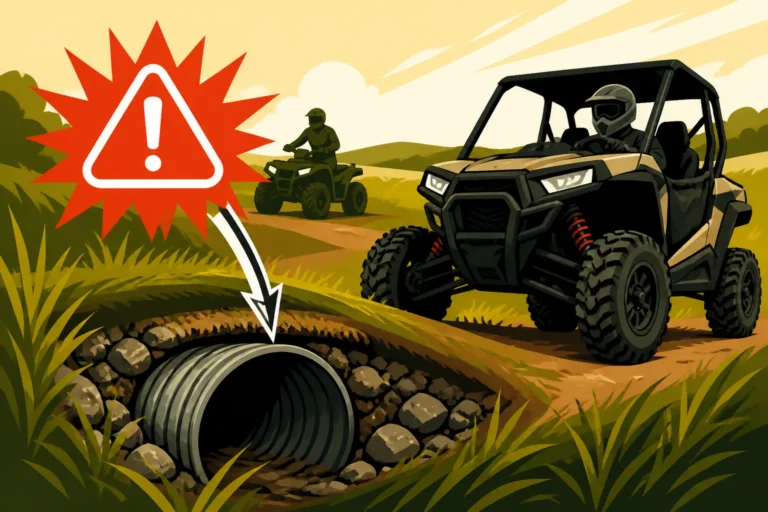
Life on the prairie isn't always smooth sailing, and ditches often present natural or man-made obstructions. Whether it's a culvert, a utility pole, a patch of deep water, or a temporary construction zone, you will encounter things that make continued travel in the ditch bottom or back-slope impossible. North Dakota law accounts for this with what's called "transitory operation." This means you are generally allowed to briefly deviate from the ditch bottom or back-slope to go around an obstruction.
However, "transitory" is the key word here. It's not an excuse to ride on the shoulder or inslope for extended periods. You must only traverse the minimum necessary distance to safely pass the obstruction and then immediately return to the legal riding area (ditch bottom or back-slope). This provision is a practical recognition of real-world riding conditions, but it's not a loophole for general use of prohibited areas. For instance, if you're trying to clear a deep mud pit, perhaps a winch or some high-clearance components from SuperATV might help, but leaving the ditch entirely to bypass it for a quarter-mile on the shoulder would be a violation.
Posted Land and Private Property
One of the most critical aspects of North Dakota's OHV laws, and particularly relevant to ditch riding, is the strict adherence to private property rights. While ditches adjacent to public roads are generally open, the land beyond the back-slope is almost always private property. This means you cannot simply ride out of the ditch and onto a farmer's field, pasture, or shelterbelt without explicit permission from the landowner. [North Dakota Posted Land Rules for Riders] are very clear on this. Even if a field appears uncultivated or unfenced, it is still private land, and riding on it without permission constitutes trespassing.
North Dakota has strong laws regarding "posted land," which refers to private property where the landowner has clearly indicated that trespassing is prohibited through signs, fences, or electronic posting systems. Even if land isn't explicitly posted, it's still private, and you still need permission. The law protects landowners from unauthorized vehicle entry, and ignoring these boundaries can lead to significant fines, impoundment of your machine, or even a Class B misdemeanor charge. Always be aware of your surroundings and respect property lines. If in doubt, stay in the clearly defined ditch bottom or back-slope. You can find out more about what a Class B misdemeanor means in [What a Class B Misdemeanor Means in North Dakota].
Enforcement, Penalties, and Rider Responsibilities
Riding OHVs in North Dakota's ditches is a privilege supported by law, but it comes with significant responsibilities. Ignorance of the law is never an excuse, and law enforcement officers are tasked with ensuring compliance for everyone's safety. Understanding the potential consequences of violations and ensuring your machine meets all necessary requirements are vital for a trouble-free riding experience.
Common Violations and Fines
Operating an OHV in North Dakota, whether in a ditch, on a designated trail, or on private property, means adhering to a specific set of rules. Common violations that riders might face when operating in ditches or on public roads include:
- Riding in prohibited areas: This means venturing onto the shoulder, inslope, or into controlled-access highway rights-of-way.
- Operating an unregistered machine: Even in ditches, your OHV needs to be properly registered with the state, unless specifically exempt. For information on this, see [North Dakota Penalties for Riding Unregistered].
- Lack of required equipment: If you're riding on public roads or in ditches, your machine must meet certain equipment standards.
- Trespassing on private land: This is a serious offense that can lead to significant penalties.
- Operating under the influence: Just like a car, it's illegal and extremely dangerous to operate an OHV while impaired.
- Excessive speed or reckless operation: Even in ditches, safety and responsible operation are paramount.
Penalties for these violations can range from monetary fines to more serious charges, including impoundment of your machine or even a misdemeanor charge for repeat or severe offenses. The cost of a basic OHV violation can add up quickly with fines and potential court costs. Law enforcement officers are well within their rights to stop you and ask to see your registration, proof of insurance, and safety certificate if applicable. [What an Officer Can Ask to See] details these interactions.
Equipment Requirements for Road-Legal Ditch Riding
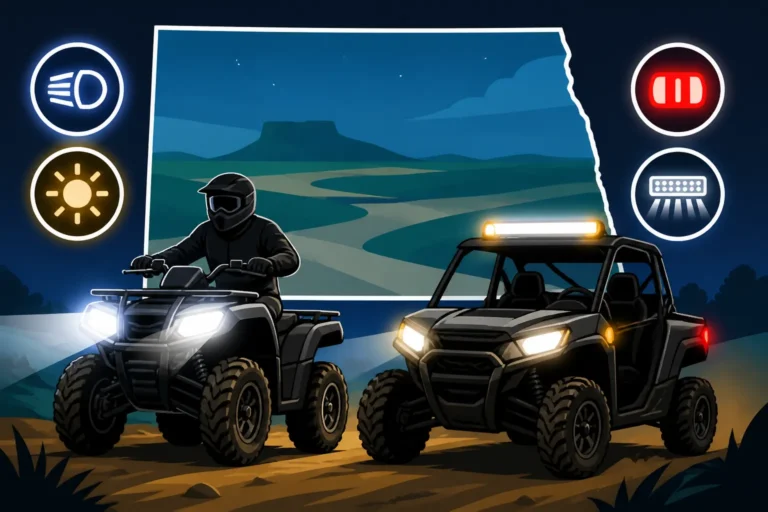
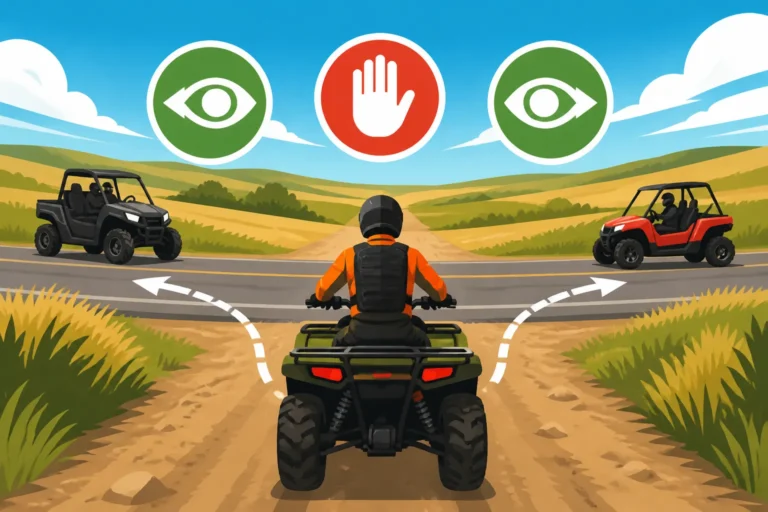
If you intend to use North Dakota's ditches as a form of transportation, particularly if you're connecting segments via designated road crossings or legal road travel, your OHV needs to meet certain equipment standards to be considered "road-legal" for these specific purposes. This isn't just about safety; it's about making sure your machine is visible and controllable in an environment where you might encounter other vehicles or pedestrians.
Generally, for any form of road interaction (even brief crossings or legal ditch use), your OHV might need:
- Headlights and taillights: These are crucial, especially if you're riding around dawn, dusk, or in low visibility.
- Brakes: Functioning brakes are non-negotiable for safe operation.
- Muffler: Noise regulations apply, so an effective muffler is required.
- Rearview mirror: A mirror providing a clear view to the rear is typically a must. Many riders opt for aftermarket mirrors from brands like SuperATV for better visibility and durability.
- Horn: An audible warning device is often required.
- Speedometer: Some regulations require a speedometer to ensure you're aware of your speed.
It's important to remember that these requirements can vary slightly depending on the specific context of your riding (e.g., crossing a road vs. legal travel on a gravel road). Always ensure your machine is in good working order and equipped for the conditions and legal requirements of your intended ride. For a full breakdown, review [North Dakota Equipment Required on a Roadway].
The Importance of Knowing Local Rules
While state law provides the broad strokes for OHV operation, the nuances often lie in local ordinances. This is perhaps the single most overlooked aspect of responsible OHV riding in North Dakota. A route that is perfectly legal through a rural township might become illegal the moment you cross into the jurisdiction of an adjacent county or an incorporated city. This can be incredibly frustrating for riders who assume a consistent set of rules across the state.
To avoid unwelcome surprises and potential citations, it's highly recommended to do your homework before riding in an unfamiliar area. This means:
- Checking county websites: Many counties post their OHV ordinances online.
- Contacting local sheriff's departments or city police: A quick phone call can save you a lot of trouble.
- Consulting local riders or OHV clubs: They often have the most current information about specific local restrictions.
Ignoring local rules not only puts you at risk of fines but can also create friction with local residents and authorities, potentially leading to further restrictions on OHV access. Being a responsible rider means respecting all levels of the law, from state statutes down to local city ordinances. By taking the time to understand these localized rules, you contribute to a positive perception of OHV riding and help ensure continued access for everyone.
| Feature / Area | State Law (General) | Local Ordinances (County/City) | Implications for Riders |
|---|---|---|---|
| Ditch Bottoms | Generally permitted for OHVs | Can be restricted or prohibited in specific areas (e.g., city limits) | Check local rules; assume open unless posted/restricted. |
| Back-Slopes | Generally permitted for OHVs | Can be restricted or prohibited in specific areas | Similar to ditch bottoms; local rules are key. |
| Inslopes/Shoulders | Generally prohibited for OHVs | Usually aligned with state prohibition, may have specific exemptions | Avoid these areas unless crossing an obstruction (transitory). |
| Controlled Access | Strictly prohibited (Interstates, major freeways) | Aligned with state prohibition | Never ride on or near these highways. |
| Private Land | Prohibited without landowner permission | Aligned with state prohibition | Always get written permission; respect posted land. |
| Registration | Required by state law | Cannot impose additional registration requirements | Ensure state registration is current. |
| Equipment | Specified requirements for road use | Can add further requirements (e.g., specific lighting) | Verify your OHV meets state and any local equipment standards. |
Disclaimer
This article is for general informational purposes only and does not constitute professional advice. Laws, prices and regulations vary by location and change over time. Consult a qualified professional for guidance on your specific situation.