North Dakota Posted Land Rules for Riders
Riding an ATV or UTV across North Dakota's vast landscapes offers unparalleled freedom, but it also comes with a significant responsibility: understanding and respecting private property. One of the most common pitfalls for riders, especially those new to the state or exploring unfamiliar territory, is unknowingly trespassing on "posted land." This guide will meticulously break down North Dakota's posted land rules, helping you navigate public and private boundaries with confidence and ensure your adventures stay legal and respectful.
Understanding "Posted Land" in North Dakota
When you're out exploring North Dakota's beautiful countryside on your ATV or UTV, the concept of "posted land" is incredibly important. It's not just a suggestion; it's a legal designation that dictates where you can and cannot ride. Ignoring these rules, even accidentally, can lead to serious consequences, from fines to legal action by landowners. For any responsible rider, understanding what posted land means is the first step toward enjoying North Dakota's outdoor recreation opportunities without hassle.
The Legal Definition of Posted Land
In North Dakota, "posted land" isn't just a casual term; it has a very specific legal definition under state law. Essentially, land is considered "posted" when the owner has taken clear steps to prohibit entry without permission. This isn't just about hunting, it applies to all recreational activities, including riding your off-highway vehicle (OHV). The law dictates how land must be marked to be legally considered posted, and these methods are designed to be clear and unambiguous to anyone encountering them.
Specifically, the law requires signs to be placed at regular intervals along the property boundary, or at all corners and normal ingress/egress points. These signs must be easily visible and state that entry is prohibited. It's not enough for a landowner to just say their land is private; they must visibly mark it according to the statute. This legal framework protects both the landowner's right to control their property and the public's right to know where they can and cannot go. Riders need to be acutely aware of these markers to avoid any unintentional legal issues.
Historically, this meant physical signs with bold lettering, but North Dakota has also embraced modern solutions, which we'll discuss further down. The crucial takeaway is that "posted" means the landowner has made a deliberate, legally recognized effort to restrict access. If you see such markers, consider that area off-limits unless you have explicit permission.
Why Landowners Post Their Property
Landowners choose to post their property for a variety of very valid reasons, and it's rarely done out of spite for recreationists. Often, it's about protecting their livelihood, ensuring safety, or simply maintaining privacy. For instance, a farmer might post their fields to prevent crop damage from vehicles or foot traffic, which can lead to significant financial losses. Livestock owners post land to keep animals safe from disturbances or to prevent the spread of disease from unknown visitors.
Beyond agriculture, landowners often have safety concerns. Uncontrolled OHV traffic, especially in areas with hidden hazards or active operations, poses a risk to both riders and property. Posting helps manage this risk. Furthermore, many landowners simply want to enjoy the peace and quiet of their own property without unexpected visitors. It's a fundamental right of property ownership to control who enters, and posting is the legal means to exercise that right. Respecting these reasons, even if they sometimes limit riding opportunities, fosters better relationships between riders and the landowning community.
The Impact on OHV Access
The existence of posted land has a direct and significant impact on where OHV riders can legally go in North Dakota. Unlike some states with extensive public trail systems, much of North Dakota's landscape is privately owned. This means that if an area is posted, it's immediately off-limits unless you've secured permission. This reality often limits large, continuous riding areas and forces riders to be much more strategic about their routes. You might find a promising trail suddenly dead-ending at a fence line adorned with "No Trespassing" signs, requiring a complete change of plans.
For riders, this necessitates careful planning and often requires staying on designated public rights-of-way like ditches or section lines, which have their own specific rules. [North Dakota Ditch Riding: The Legal Right Explained] is a good resource for understanding those nuances. It also emphasizes the importance of checking maps, talking to locals, and perhaps even contacting landowners ahead of time. Simply put, posted land means you cannot assume access; you must verify it. This is a crucial distinction for a state where many traditional "trails" are informal routes that cross private holdings.
Identifying Posted Land
Knowing what posted land is is one thing, but actually identifying it when you're out riding is another challenge entirely. North Dakota landowners use various methods to mark their property, and riders need to be vigilant and informed to recognize them. Missing a sign, whether physical or digital, is not a valid excuse for trespassing. Being proactive in identifying these boundaries is a mark of a responsible rider.
Traditional Physical Signs
The most recognizable form of posted land in North Dakota is through traditional physical signs. These are typically bright, often yellow or orange, and clearly state "No Trespassing," "No Hunting," or "Private Property." The law requires these signs to be placed at all corners of the property and at intervals of not more than 880 yards (half a mile) along the property boundaries. They must be conspicuously placed so that they are visible from any direction of approach. [North Dakota Posted Sign Spacing at 880 Yards] details this requirement.
Beyond the signs, physical barriers like fences, gates, or even distinct changes in land use (like a cultivated field next to undeveloped pasture) can also signal private ownership. While a fence alone might not legally "post" land, it's a strong indicator that you should proceed with caution and assume private ownership. Riders should always be on the lookout for these visual cues, especially when transitioning between public access points and potentially private areas. When in doubt, it's always best to err on the side of caution and assume the land is private until you can confirm otherwise.
Electronic Posting and Digital Tools
North Dakota has also embraced modern technology to aid landowners in marking their property, introducing the concept of "electronic posting." This is a game-changer for OHV riders who rely on GPS and mapping apps. [North Dakota Electronic Posting and Riders] explores this in depth. Landowners can register their property as electronically posted with the North Dakota Game and Fish Department. Once registered, their land appears as private and restricted on the department's official website and through various hunting and recreational mapping apps.
For riders using apps like OuterSpatial, OnX Hunt, or other GPS-enabled mapping tools, this means you can see property boundaries and posting status right on your screen. It's a fantastic tool for proactive planning, allowing you to scout routes that avoid private land altogether. However, it's crucial to remember that technology isn't foolproof. Always cross-reference with physical signs if available, and ensure your maps are updated. Sometimes, an app might not be perfectly current, or satellite imagery could be old. Still, electronic posting is an invaluable resource for navigating the complex patchwork of North Dakota's land ownership.
Recognizing Unmarked Private Land
Here's where it gets tricky for riders: not all private land is formally "posted" with signs or registered electronically. A landowner might own property but simply not have gone through the official posting process. This doesn't mean it's public land; it simply means it might not carry the same legal weight regarding criminal trespass if unmarked. However, it is still private property, and riding on it without permission is still a civil trespass, and in some cases, could still lead to charges.
How do you recognize unmarked private land? Experience and local knowledge play a big role. Look for property lines like fencelines (even if not marked with signs), cultivated fields, or obvious homesteads. If you're on a section line or ditch that feels like it's taking you into someone's backyard, it probably is. [North Dakota Trespass Law for Riders] clarifies this distinction. Always consult maps, even if the land isn't explicitly shown as "posted" via electronic means. If a map shows a parcel of land as privately owned, you should treat it as such, regardless of the lack of physical signs. When in doubt, turn around, find another route, or seek permission from the landowner. The goal is to be a responsible and respectful member of the OHV community.
The Ramifications of Trespassing
Trespassing on posted land in North Dakota is not a minor infraction; it carries significant legal, financial, and personal consequences for OHV riders. Many riders mistakenly believe that if they "didn't see a sign" or "didn't cause any damage," they'll just get a warning. This is a dangerous assumption that can lead to a lot of grief. Understanding the potential repercussions is key to avoiding them altogether.
Legal Penalties and Fines
In North Dakota, criminal trespass, which includes riding an OHV on posted land without permission, is typically classified as a Class B misdemeanor. This isn't just a slap on the wrist; a Class B misdemeanor can carry serious penalties. While specific fines can vary, they often involve significant monetary costs. [A Basic OHV Violation Now Costs $50] covers general violations, but trespassing is more serious. For criminal trespass, you could face fines well into the hundreds or even thousands of dollars, plus court costs.
Beyond fines, a Class B misdemeanor can result in up to 30 days in jail, though this is less common for a first-time, non-damaging OHV trespass incident. However, repeated offenses or instances where damage occurred or the trespass was defiant can escalate the severity. The legal process itself—attending court, potentially needing legal counsel—is also a major headache that no one wants to deal with when all they wanted was a fun ride. It's a steep price to pay for what might seem like a shortcut or a momentary lapse in judgment.
Civil Liabilities and Landowner Rights
Even if you manage to avoid criminal charges, riding on private land without permission can open you up to civil liabilities. A landowner has the right to sue you for damages caused to their property, even if those damages seem minor. This could include damage to fences, crops, or even just the compaction of soil. If your OHV causes ruts in a field or leaves trash behind, the landowner could pursue you for the cost of repair or cleanup.
Furthermore, North Dakota law grants landowners significant rights in protecting their property. They can, for instance, request law enforcement to remove trespassers. While generally not allowed to use force or threaten with weapons, they are within their rights to document your presence, take photos, and use that information to press charges or pursue civil action. [North Dakota Landowner Permission Forms] highlights the importance of documented consent. The landowner's pursuit of civil damages can sometimes be more financially devastating than a criminal fine, as it's designed to make them whole for any losses incurred due to your actions.
Damage to Your Riding Privileges
Beyond the immediate legal and financial consequences, trespassing can have long-term negative impacts on your ability to enjoy OHV riding in North Dakota. A conviction for criminal trespass goes on your record, which could affect future opportunities. More broadly, irresponsible riding behavior, such as trespassing, erodes trust between landowners and the OHV community. When a landowner has a bad experience with trespassers, they are less likely to grant permission to other riders in the future, even those who ask politely.
This creates a ripple effect, reducing available riding areas for everyone. Local communities and even state agencies rely on good relationships with landowners to maintain access and develop new opportunities. When the actions of a few individuals damage these relationships, it hurts the entire community. It also makes it harder for reputable organizations and businesses, like SuperATV who promote responsible riding and offer gear for safe trail use, to advocate for expanded access. Your actions have consequences that extend far beyond your immediate ride.
Seeking Permission to Ride
The best way to avoid any issues with posted land is simple: get permission. It might seem like an extra step, but it's a fundamental aspect of responsible OHV riding in North Dakota. Building relationships with landowners and respecting their property rights not only keeps you legal but can also open up unique riding opportunities that aren't available to the general public.
Direct Contact with Landowners
The most straightforward way to get permission is to directly contact the landowner. This might sound intimidating, but many North Dakota landowners are reasonable people who appreciate being asked. Start by trying to identify who owns the land you're interested in. County assessor's offices often have public records online that can help you find owner names and contact information. If you're out riding and see a farmstead or house near the land, a polite knock on the door can sometimes work wonders.
When you approach a landowner, be respectful, polite, and clear about your intentions. Explain what you want to do (e.g., "I'd like to ride my side-by-side down this section line to access the public land beyond, would that be okay?"). Offer to share your contact information and respect their decision, whether it's a yes or a no. Even if they decline, thank them for their time. A positive interaction, even without permission, can leave a good impression for future encounters. Remember, you're an ambassador for the entire OHV community.
Obtaining Written Permission
While verbal permission is often given and accepted, getting written permission is always the safest and most recommended approach. It eliminates any potential misunderstandings about the scope, duration, or specific areas where you're allowed to ride. A simple written note, signed by the landowner, stating who has permission, for what activity, and for how long, can save you a lot of grief if questioned by law enforcement or another landowner. [North Dakota Landowner Permission Forms] emphasizes this best practice.
What should written permission include?
- Landowner's Name and Contact Info: Clear identification of who granted permission.
- Rider's Name and Contact Info: Clear identification of who received permission.
- Date(s) of Permission: Specify if it's for a single day, a season, or a specific period.
- Location: Clearly describe the land parcel, perhaps with a map reference or legal description.
- Activity: State that you have permission for OHV riding.
- Specific Conditions: Any rules the landowner has (e.g., "stay on existing trails," "no night riding," "close all gates").
Carry this written permission with you whenever you're riding on private land. It acts as your legal safeguard and demonstrates your commitment to responsible recreation.
Building Relationships with Local Landowners
The most successful long-term strategy for accessing private land isn't just about getting one-off permissions; it's about building positive, ongoing relationships with local landowners. This takes time and effort, but the rewards can be significant. When you've established a reputation as a responsible, respectful rider who cleans up after themselves and adheres to agreed-upon rules, landowners are much more likely to trust you and grant access.
How do you build these relationships?
- Always Ask: Never assume access, even if you've ridden there before or know the owner. Always reconfirm.
- Follow the Rules: Adhere strictly to any conditions set by the landowner. If they say no riding after dark, don't ride after dark.
- Offer Help: Sometimes, a landowner might appreciate an offer to help with a task, like moving a fallen branch or checking a fence line.
- Share Information: Let them know if you notice anything unusual on their property, like a downed fence or suspicious activity.
- Respect Their Privacy: Don't abuse their generosity by bringing large groups without asking, or by treating their land as a public park.
These actions show mutual respect and often lead to lasting access and a better overall community for OHV enthusiasts. By being a good neighbor, you're not just helping yourself, you're helping preserve riding opportunities for others.
Navigating Public vs. Private Land Boundaries
One of the biggest challenges for OHV riders in North Dakota is deciphering where public access ends and private property begins. The landscape is a mosaic of different ownerships, and boundaries aren't always clear, especially in rural areas. Successfully navigating these lines is paramount to staying legal and respectful.
Ditch Riding and Section Line Access
North Dakota is somewhat unique in its allowance for [North Dakota Ditch Riding: The Legal Right Explained]. Generally, the uncultivated portions of public road rights-of-way, including ditches and section lines, are open for OHV use, provided you follow specific state and local regulations. This can be a huge benefit for riders, offering routes that connect parcels of land or provide access to more remote areas. However, this right of passage comes with strict caveats.
You must remain within the ditch bottom or back-slope of the public right-of-way, and cannot cross into the cultivated fields or private property beyond the ditch. The "inslope" and "shoulder" of the road are generally considered part of the roadway and are off-limits for continuous OHV travel. It's a fine line to walk, literally. Furthermore, section lines, which are typically one-mile intervals separating land parcels, often have public access easements, but these too can be tricky. Some section lines are maintained roads, others are merely conceptual lines across fields. Always be sure you are on a legally accessible section line and not just cutting across someone's property. Local ordinances can also impose further restrictions on ditch riding, so always check with the county or township first.
Understanding Easements and Rights-of-Way
Beyond the general ditch and section line access, some private land may have specific easements or rights-of-way that allow public or specific access. An easement grants a particular right to use another's land for a specific purpose, such as a utility company needing access to power lines, or a neighboring landowner needing a path to their property. Sometimes, these easements might allow for recreational access, but this is rare and usually needs to be explicitly confirmed.
It's important not to confuse a general field road or track on private land with a public right-of-way. Just because a path looks well-traveled doesn't mean it's public. Most easements are for very specific, limited purposes and do not automatically grant OHV riding privileges. Always verify the nature of an easement. Researching property records or consulting with county officials can help clarify these often-complex legal arrangements. Assuming an easement grants you access without explicit confirmation is a common mistake that can lead to trespassing.
Using Maps and GPS for Clarity
In today's world, technology is your best friend when it comes to navigating public and private land boundaries. Utilize mapping apps and GPS devices that overlay property lines onto satellite imagery. As mentioned before, tools that show electronic posting are invaluable. [North Dakota OHV Trail Map Downloads] can be a starting point for official trails, but for off-trail exploration, detailed property maps are essential.
Before you head out, meticulously plan your route using these tools. Look for green (public) areas and red (private/posted) areas, and identify potential points where public access routes might cross or abut private land. Pay attention to the names of landowners and if possible, cross-reference them with county records. Consider downloading offline maps, as cell service can be spotty in remote parts of North Dakota. Even with the best maps, remain vigilant. GPS can have a margin of error, and real-world conditions (like new fences) might not be reflected on the map. Carry a paper map as a backup, and always keep an eye out for physical signs, especially when entering new terrain. Products like those from SuperATV often include mapping-friendly accessories or gear that can help secure your devices for easy viewing on the trail.
Ethical Riding and Respecting Property
Beyond the legal requirements, ethical riding practices are fundamental to the long-term sustainability of OHV recreation in North Dakota. Respecting property, both public and private, and the environment is not just good manners; it's a vital part of being a responsible outdoor enthusiast. Our actions impact not only our own access but the perception and opportunities for all riders.
The "Tread Lightly!" Principles
The "Tread Lightly!" program offers a fantastic set of guidelines for responsible outdoor recreation, and they apply perfectly to OHV riding in North Dakota. Embracing these principles helps ensure that the land remains enjoyable for everyone, now and in the future.
Here are the core "Tread Lightly!" principles and how they relate to riding on or near posted land:
- Travel Responsibly: Stick to existing roads and trails. Avoid creating new ones, especially on private property. If you're on a designated trail, stay on it. If you're on a public right-of-way, stay within its legal boundaries. Do not travel cross-country on grasslands or other sensitive areas. [North Dakota Cross-Country Travel Is Banned] in many areas, particularly grasslands.
- Respect the Rights of Others: This is crucial for posted land. Respect private property, landowners, other recreationists (hunters, hikers), and local communities. Understand that not everyone appreciates OHVs, and behaving respectfully helps mitigate conflict.
- Educate Yourself: Learn about the areas where you plan to ride. Understand local laws, land ownership, and any specific environmental concerns. This guide is a great start!
- Avoid Sensitive Areas: Stay away from wetlands, riverbanks, active agricultural fields, and historical sites. These areas are easily damaged by OHVs and are often privately owned or protected.
- Do Your Part: Pack out everything you pack in. Secure your trash. Leave the area cleaner than you found it. Report illegal activities, and consider volunteering for trail maintenance or cleanup efforts.
By following these principles, you contribute positively to the OHV community and help preserve access.
Gates, Fences, and Livestock Etiquette
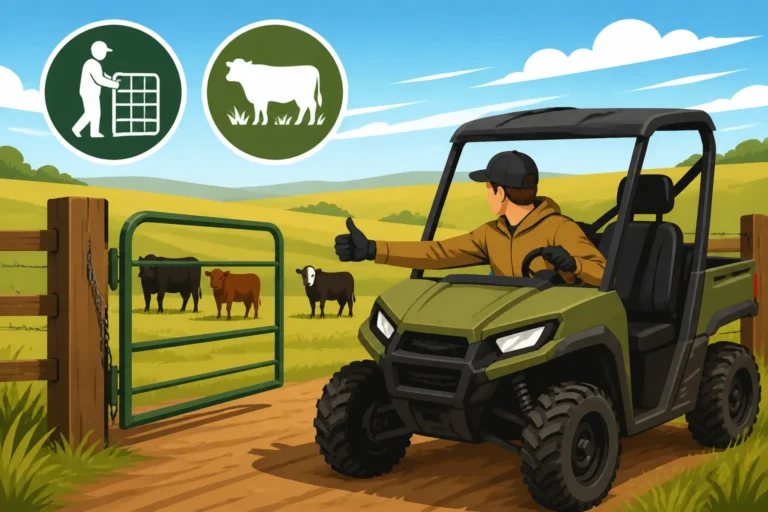
North Dakota is a state with a strong agricultural heritage, meaning you will frequently encounter gates, fences, and livestock. How you interact with these elements is a critical test of your respect for private property. The golden rule is simple: leave gates as you found them. If a gate is closed, close it behind you. If it's open, leave it open (though be cautious if it seems like it should be closed). This might seem like common sense, but it's often overlooked.
Riding through open gates into private pastures or fields without permission is a direct form of trespass. If you encounter livestock, give them a wide berth. Do not harass, chase, or disturb cattle, horses, or any other animals. Remember that animals can be unpredictable, and spooking them could lead to injury to you, the animals, or damage to property. Drive slowly and quietly through areas with livestock. Never cut fences or ride around them to bypass an obstacle; this is highly damaging and a clear act of trespass.
Leaving No Trace Behind
The "Leave No Trace" philosophy is closely related to "Tread Lightly!" and is vital for maintaining access and good relationships. When riding, your goal should be to leave no evidence that you were ever there, other than tire tracks on an approved trail. This means:
- Pack It In, Pack It Out: All trash, no matter how small, needs to leave with you. This includes bottle caps, snack wrappers, and especially any broken machine parts.
- Minimize Impact: Avoid excessive mud-slinging or creating deep ruts, especially in wet conditions. [North Dakota Gumbo Mud and What It Does] can be challenging, but riding responsibly is key. Products from SuperATV are known for their durability and accessories that help minimize trail impact, such as winches for self-recovery rather than widening a trail to get unstuck.
- Respect Vegetation: Don't ride through delicate vegetation, crops, or areas prone to erosion. Stay on established, hardened surfaces where possible.
- Avoid Disturbing Wildlife: Keep a respectful distance from any wildlife you encounter.
- No Campfires (Unless Permitted): If you stop to take a break, be mindful of fire danger, especially in dry conditions. Only have fires in designated areas.
By adhering to these ethical principles, you demonstrate that OHV riders are responsible stewards of the land, helping to ensure that the beautiful landscapes of North Dakota remain open and accessible for future generations of riders.
Disclaimer
This article is for general informational purposes only and does not constitute professional advice. Laws, prices and regulations vary by location and change over time. Consult a qualified professional for guidance on your specific situation.