Storing a Machine Out of State
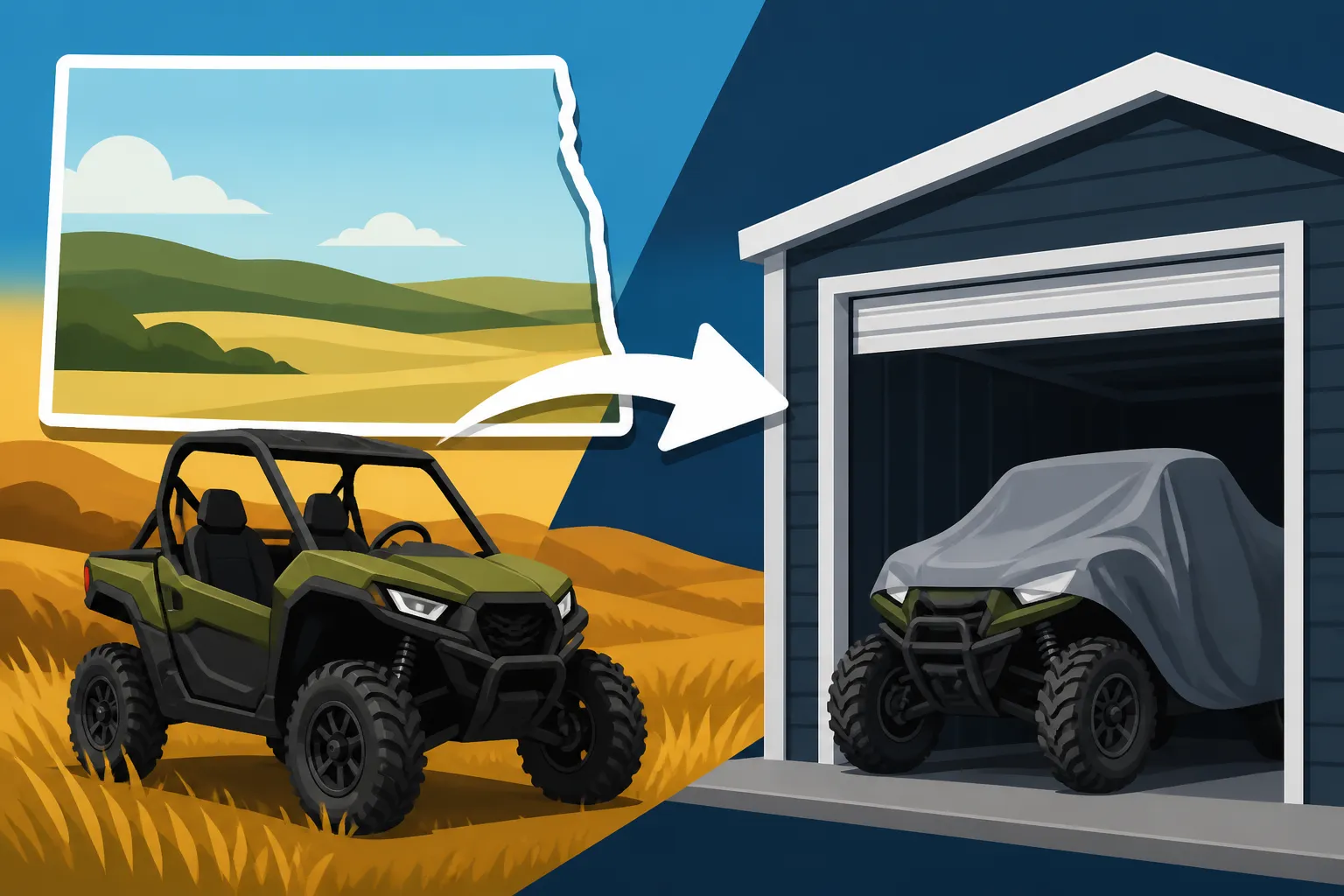
It's a familiar scenario for many North Dakota ATV and UTV owners: you've got your machine, you love hitting the trails or using it for work, but then life happens, and your off-highway vehicle (OHV) ends up residing outside the Peace Garden State for an extended period. This can leave you scratching your head, wondering if you still need to keep up with your North Dakota registration and how to navigate the paperwork maze when your quad or side-by-side isn't physically in the state. This guide aims to clear up that confusion, helping you understand North Dakota's rules for out-of-state storage, what to consider in your temporary home state, and how to keep everything above board.
Why Your OHV Might Be Stored Outside North Dakota
Life in North Dakota, while wonderful, often comes with seasons or situations that lead people to temporarily (or even permanently) relocate their beloved ATVs and UTVs. It’s not always about finding greener pastures for riding; sometimes it’s purely practical.
Seasonal Stays or "Snowbird" Scenarios
For many, the allure of warmer climates during North Dakota's long winters is too strong to resist. If you're heading south to Arizona, Florida, or Texas for a few months, you might decide to take your ATV or UTV with you. Perhaps you have family with ample storage space, or you found a great deal on a storage unit near some fantastic winter riding trails. In this case, your machine isn't just vacationing with you; it's living there for half the year, even if its "home state" registration is North Dakota. This extended absence can definitely raise questions about where its primary registration should be.
Military Service, College, or Temporary Work Relocation
Another common reason an OHV finds itself far from North Dakota is due to military deployment, a college student moving for studies, or a temporary job assignment. Service members often have their vehicles shipped to wherever they are stationed, and a deployment could mean years away. College students might bring their machines to campus if permitted, for weekend recreation or simply because they don't have suitable storage back home. Similarly, if your job takes you to, say, Minnesota for a year-long project, bringing your UTV could make sense for local recreation or even simply for convenience if you intend to move back. These aren't just short trips; these are genuine, albeit temporary, relocations for your machine.
Proximity to Better Riding Opportunities
Let's be honest, while North Dakota has some great riding spots like Pembina Gorge, sometimes the grass (or the mud) looks greener elsewhere. Many riders enjoy venturing to neighboring states like Minnesota, Montana, or South Dakota, which might have more extensive trail systems or different terrain. If you regularly spend weekends in a specific area of a neighboring state, it might become more convenient (and sometimes cheaper) to simply store your machine there. You might have a cabin, a friend with a large garage, or even a self-storage unit that's closer to the trails you frequent most, making your North Dakota OHV a "resident" of another state for much of its active life.
Shared Ownership or Family Storage
Sometimes, the decision isn't even yours alone. If you co-own an ATV with a family member who lives out of state, or if a relative offers free storage in their spacious barn in, say, Nebraska, it can be a tempting offer. This can save you money on storage fees and provide a secure location, but it also means your machine is operating under the watchful eyes of another state's regulations, complicating your North Dakota registration status. These scenarios, while practical, all lead back to the fundamental question: what does North Dakota expect of you when your OHV isn't physically present within its borders?
Understanding North Dakota's Registration Stance on Out-of-State Storage
This is where things can get a little tricky, and it's essential to dissect North Dakota's approach to OHV registration, especially when your machine is spending a lot of time elsewhere. The core principle revolves around where the machine is "primarily operated."
The "Primarily Operated" Concept
North Dakota law generally requires that an OHV be registered in North Dakota if it is "primarily operated" within the state. This is a common phrase in vehicle registration laws across the country. The challenge, of course, is defining "primarily." Is it where you use it most frequently? Where it spends the most days? Where you, the owner, reside? For a North Dakota resident who owns an OHV, if that machine is physically located and used in North Dakota for the majority of the year, then a [North Dakota's Two-Year OHV Registration] is unequivocally required.
However, if your OHV is stored out of state for an extended period, and perhaps even ridden in that other state more often than in North Dakota, the question arises: is it still "primarily operated" in North Dakota? If you're a snowbird who spends six months a year in Arizona, and your OHV is with you, you're likely using it more in Arizona during those months. If you only bring it back to North Dakota for a few weeks in the summer, it might be argued that its primary operation has shifted. This can be a gray area, but generally, North Dakota still expects its residents to register their OHVs in the state if they intend to return and use them on public land or trails within North Dakota. The registration is tied to the owner's residency and the machine's intended use within the state's public access system.
The 30-Day Rule: A Visitor's Exemption, Not a Resident's Loophole
Many people get confused by North Dakota's "30-day rule," which states that an out-of-state registered OHV can be operated in North Dakota for up to 30 consecutive days without requiring North Dakota registration. This is a common [North Dakota's 30-Day Out-of-State Rule] designed to accommodate visitors.
However, it's crucial to understand that this rule applies to non-residents visiting North Dakota with their properly registered machines from their home state. It is not a mechanism for a North Dakota resident to avoid registering their OHV in North Dakota simply because it spent 31 days in Minnesota. If you are a North Dakota resident, North Dakota considers your OHV a North Dakota machine, and if you plan to use it on public land or trails in North Dakota, it needs North Dakota registration, regardless of how long it's been stored elsewhere. Trying to operate your OHV in North Dakota as a "visitor" when you are a resident, just because it was stored out of state, could lead to [North Dakota Penalties for Riding Unregistered].
Intent to Return and Maintaining North Dakota Registration
The key factor for North Dakota residents storing their OHVs out of state is their intent. If you intend to bring your machine back to North Dakota and ride it here on public lands, then maintaining your North Dakota registration is generally the safest and most compliant approach. Think of it this way: your ATV or UTV's "home base" for registration purposes is tied to your primary residency. If you still live in North Dakota, even if your machine is temporarily elsewhere, it's considered a North Dakota machine in terms of its administrative status.
The cost of [North Dakota OHV Registration Cost] is relatively low, and it ensures that when you do bring your machine back for some prime [North Dakota Riding Season Month by Month] action, you're already legal to hit the public trails and ditches. Waiting until you're about to bring it back to renew a lapsed registration can be a hassle, so it's often easier to just keep up with the [North Dakota ATV Registration Renewal] every two years.
Navigating the Other State's Rules and Your Insurance
When your North Dakota-registered OHV is spending time out of state, you're not just dealing with North Dakota's laws; you also need to consider the regulations of the state where your machine is physically located. This includes everything from their registration requirements to your insurance coverage.
Other State's Registration Requirements: To Register or Not to Register?
This is a critical point that can vary wildly. The state where your OHV is stored might have its own set of rules, especially if you intend to ride it there. Some states have a "use" rule, meaning if you operate the OHV on their public lands, trails, or designated areas, it needs to be registered or permitted in that state, even if it's already registered elsewhere. Others might have a resident requirement, meaning if you've established residency there (even temporary), your vehicles might need to be registered there.
For instance, if you're storing your North Dakota UTV in Montana and planning to ride its vast trail system, you'll need to check Montana's OHV permit or registration requirements for non-residents. Many states offer a [North Dakota Non-Resident OHV Permit] equivalent for visiting machines. It's often separate from your North Dakota registration and allows you legal access to their trail systems. It's crucial to research the specific state's rules, as failing to comply can result in fines or impoundment. Don't assume your North Dakota registration is a golden ticket everywhere else.
Insurance Implications: Is Your OHV Still Covered?
Your North Dakota OHV insurance policy might be designed primarily for use within North Dakota. While many policies offer some level of coverage across state lines, it's absolutely vital to confirm this with your insurance provider. You need to ask:
- Does my policy cover theft or damage while the OHV is stored in [Other State]?
- Am I covered for liability if I operate the OHV on public lands in [Other State]?
- Are there any specific exclusions or limitations when the machine is outside North Dakota?
Some insurance companies might require you to notify them if the primary storage location changes, especially for an extended period. They might adjust your premium or advise on additional coverage needed for the new location. It's much better to have this conversation upfront than to find out you're not covered after an incident. This is part of fulfilling your [North Dakota Insurance Requirements at Registration] but also extending that vigilance to your new storage location.
Security, Maintenance, and Legal Documentation
When your OHV is stored out of state, particularly if it's far from your primary residence, consider the practicalities:
- Security: Ensure the storage location is secure. Is it a locked garage, a fenced facility, or an open lot? What are the local crime rates? If you're using a storage unit, make sure it has robust security features.
- Maintenance: If you're not there regularly, who will check on the machine? Will the battery be on a tender? Will tires be properly inflated? Will it be winterized if needed? Long-term storage requires diligence to prevent issues.
- Legal Documents: Keep all your important documents organized and accessible. This includes your North Dakota registration card, proof of insurance, and title. If you're leaving the machine with a friend or family member, consider having a written agreement, even a simple one, outlining responsibilities. Websites like LawDepot offer templates for personal property agreements that can spell out who is responsible for maintenance, insurance deductibles, or even a bill of sale if the arrangement changes. Using a service like LawDepot for such an agreement can help prevent misunderstandings down the road.
Practical Strategies for Long-Term Out-of-State OHV Storage
Managing an OHV that's stored outside North Dakota requires a proactive approach. By taking a few practical steps, you can ensure compliance, protect your investment, and be ready to ride whenever and wherever you choose.
Keeping Your North Dakota Registration Current
Even if your OHV spends most of its time out of state, if you are a North Dakota resident and intend to bring it back to the state for use on public lands or trails, it's generally best practice to keep its North Dakota registration active. This means renewing it every two years, as North Dakota operates on a [North Dakota's Two-Year Registration Cycle]. You can typically handle renewals online or by mail, making it easy to maintain status even from a distance. The modest fee covers the state registration and the dedicated [North Dakota's Off-Highway Trail Tax], contributing to the very trails you might someday ride.
Keeping your registration current avoids the hassle of dealing with expired paperwork when you eventually transport your machine back to North Dakota. It also prevents any potential issues if you were to sell the machine and the buyer wanted to ensure a clear chain of registration.
Understanding Temporary Permits in the Storage State
If you plan on riding your OHV in the state where it's stored, nearly every state will require some form of permit or registration, regardless of your North Dakota tags. This is usually a non-resident permit, often annual, that grants you legal access to their trail systems. These permits are usually much less expensive than full registration and are specifically designed for visitors. For example, if you're storing your ATV near Duluth, Minnesota, and want to ride the Iron Range trails, you'd likely need to purchase a Minnesota non-resident OHV trail sticker. Always check the specific Department of Natural Resources (DNR) or equivalent agency website for the state in question.
When a Temporary Storage Becomes a Permanent Move
What if your out-of-state storage situation becomes permanent? If you physically move your primary residence from North Dakota to another state, then your OHV should generally be registered in your new home state. This means transferring the title and registration to that state, much like you would if you were going through [North Dakota Registration for a New Resident]. This process typically involves paying any applicable taxes or fees in the new state and surrendering your North Dakota registration. Make sure you understand the new state's timeline for registering newly acquired residency vehicles to avoid penalties.
Selling Your OHV While It's Out of State
Selling an OHV that's registered in North Dakota but physically located in another state can add a layer of complexity. The key is clear documentation. You'll need your North Dakota title to transfer ownership. A well-drafted bill of sale is crucial, especially if the buyer is in the state where the machine is stored. A template from a reputable source like LawDepot for a [North Dakota Bill of Sale Form SFN 2888] can ensure all necessary details are covered, protecting both you and the buyer. This document should clearly state the location of the sale and acknowledge the North Dakota registration. The buyer would then typically register the machine in their home state, which might be the state where the machine is currently located.
Agreements for Shared Use or Storage
If you're storing your OHV with friends or family, or if there's any scenario where someone else might be using it, having a written agreement is a smart move. This isn't about distrust; it's about clarity and protecting everyone involved. A simple personal property agreement can outline:
- Who is responsible for maintenance while stored.
- Who covers insurance deductibles if damage occurs.
- Conditions under which the machine can be used by others.
- How expenses, like fuel or repairs, are handled.
Again, resources like LawDepot can provide templates for such agreements. While it might seem overly formal for family, these agreements prevent misunderstandings and provide a clear reference point should any issues arise. They can be particularly useful if you need to provide a [North Dakota Statement of Ownership Form SFN 2903] for unique circumstances, ensuring all parties are on the same page about the machine's status and responsibilities.
| Scenario | North Dakota Registration Status | Other State Requirements | Insurance Check | Recommended Action |
|---|---|---|---|---|
| Temporary Storage, No Use | Keep Active | None (if not used on public land) | Verify storage coverage | Maintain ND registration, secure storage. |
| Temporary Storage, Riding | Keep Active | Non-resident permit/registration required | Verify liability & physical damage coverage | Maintain ND registration, get other state permit. |
| Permanent Move Out of ND | Cancel/Let Expire | Register in new state | Update to new state's policy | Transfer title & registration to new state. |
| Selling While Out of ND | Keep Active until sold | N/A (buyer's responsibility to register) | Ensure coverage until sale is complete | Use a clear bill of sale (e.g., from LawDepot). |
By thinking ahead and understanding the requirements of both North Dakota and your OHV's temporary home state, you can ensure a smooth, worry-free experience for years to come.
Disclaimer
This article is for general informational purposes only and does not constitute professional advice. Laws, prices and regulations vary by location and change over time. Consult a qualified professional for guidance on your specific situation.