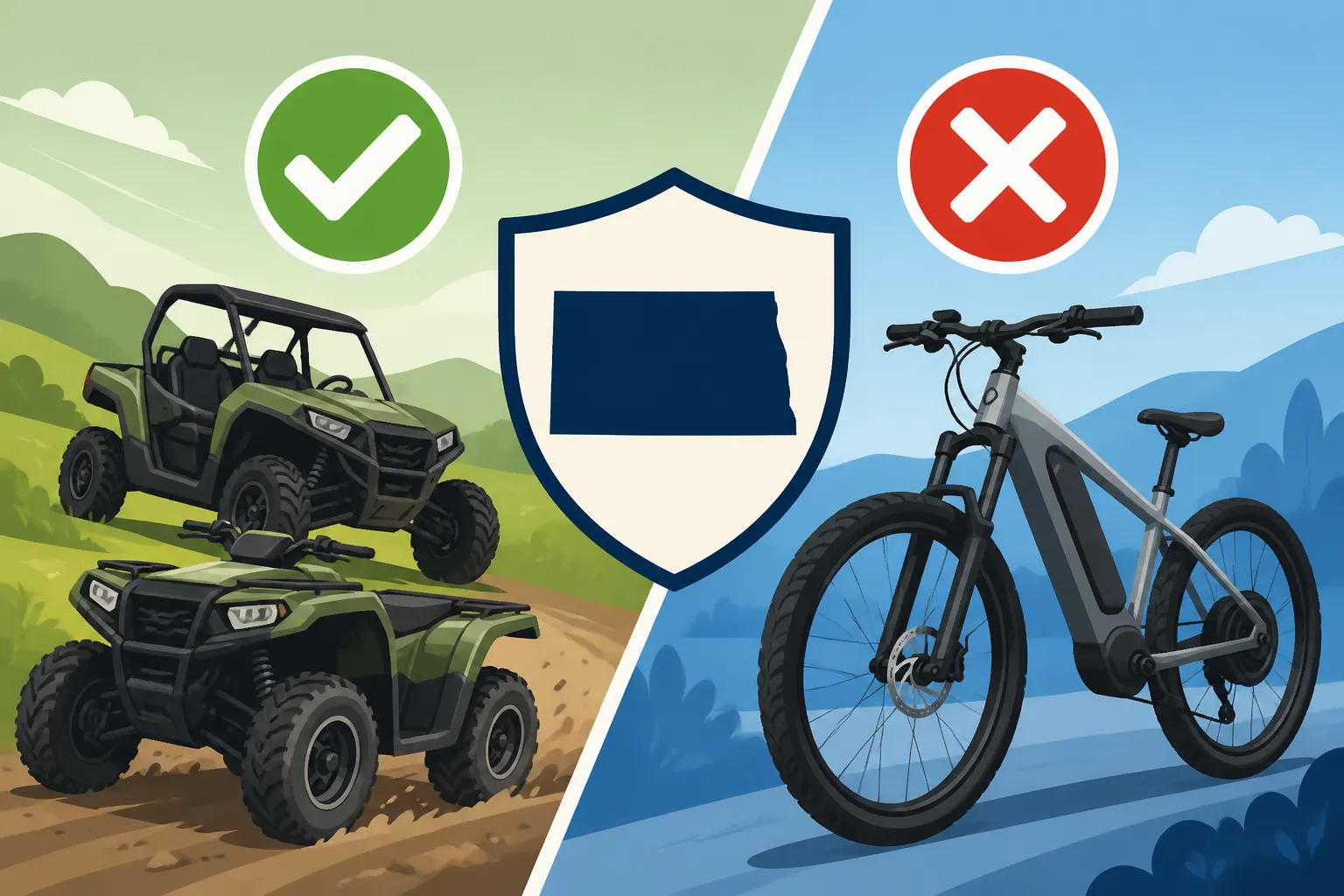
Why North Dakota Excludes E-Bikes From the OHV Definition
It can be incredibly confusing when you see various types of motorized recreational vehicles out and about, especially when trying to understand what’s allowed where. Many people assume anything with a motor that’s not a car must be an off-highway vehicle (OHV), but North Dakota law draws some very specific lines. This guide will clarify why electric bicycles (e-bikes) are distinctly separated from traditional OHVs in the eyes of North Dakota statutes, and what that means for riders.
Defining Off-Highway Vehicles in North Dakota: What Counts and What Doesn't
When we talk about off-highway vehicles in North Dakota, the state has a pretty clear definition of what falls into this category. It’s not just any machine that can go off-road; it’s about specific design and intent. This distinction is crucial because it dictates everything from registration requirements to where you can legally ride. Understanding this foundational definition helps explain why e-bikes stand apart.
What Makes an OHV an OHV?
North Dakota statutes are quite precise. Generally, an OHV is defined as a motor vehicle that is designed to travel on land and is steered by a handlebar or a steering wheel, and which is intended for off-highway use. This usually includes those familiar machines like all-terrain vehicles (ATVs), utility vehicles (UTVs or side-by-sides), and dirt bikes. Think about the [North Dakota's Class I, II and III Machines] – these are all explicitly categorized as OHVs based on their characteristics like width, weight, and seating. These machines are built for rugged terrain, often have higher ground clearance, aggressive tires, and powerful engines designed for pushing through mud, climbing hills, and navigating unpaved trails. The law looks at their primary design and purpose, which is almost exclusively recreational or utility use off paved roads. This design intent immediately sets them apart from vehicles primarily designed for paved road travel, even if they sometimes venture onto dirt roads.
The North Dakota Law's Intent
The intent behind North Dakota's OHV laws is multifaceted. Primarily, it's about regulating these powerful machines for safety, environmental protection, and ensuring fair access to public lands. The state wants to make sure that riders are operating safe equipment, paying their share for trail maintenance through registration fees, and understanding the rules of the road (or trail, as it were). For instance, an ATV needs to be registered, and that registration often includes a [North Dakota's Off-Highway Trail Tax], which helps fund the very trails OHVs use. This regulatory framework is tailored to the specific nature and impact of these vehicles. Their weight, speed, and potential for ground disturbance mean they need a different set of rules than, say, a bicycle. The state's definitions also help avoid confusion with other types of vehicles, like farm machinery or even snowmobiles, which have their own distinct classifications and regulations. By clearly defining what constitutes an OHV, North Dakota creates a consistent legal framework for enforcement and resource management.
The Unique Legal Classification of Electric Bicycles in North Dakota
So, if traditional ATVs and UTVs are clearly OHVs, where do electric bicycles fit in? This is where the confusion often comes in, because e-bikes do have motors. However, North Dakota law (like many other states) has carved out a specific niche for them that places them outside the traditional OHV definition, largely due to their design and how their motors function.
Pedal Power and Motor Assistance
The fundamental difference lies in the role of the motor and the necessity of pedal power. An e-bike, by definition, is still a bicycle. It's designed to be human-powered, with an electric motor providing assistance rather than primary propulsion. This means you generally have to be pedaling for the motor to engage, or the motor only provides assistance up to a certain speed. This is a stark contrast to an ATV or dirt bike, where the engine is the sole source of propulsion, and the machine operates independently of any human pedaling effort. In North Dakota, e-bikes are typically defined by classes that reflect this motor assistance model:
- Class 1: Provides assistance only when the rider is pedaling, and ceases to assist when speed reaches 20 mph.
- Class 2: Equipped with a motor that can propel the bicycle without pedaling, but only up to 20 mph.
- Class 3: Provides assistance only when the rider is pedaling, and ceases to assist when speed reaches 28 mph. These also typically require a speedometer.
Because of this pedal-assist nature, e-bikes are often grouped with traditional bicycles in terms of trail access and road use, rather than with OHVs. This legislative choice reflects an understanding that while they have motors, their impact and operational characteristics are closer to a regular bicycle. If you're documenting any agreements related to riding on shared trails or private land, even for e-bikes, having a clear understanding of your state's laws can be important, and resources like LawDepot can help you draft liability waivers or usage agreements.
Speed and Power Limitations
Another critical factor in separating e-bikes from OHVs is their inherent speed and power limitations. As noted with the class definitions above, e-bike motors are designed to cut off or cease assisting at relatively low speeds (20 or 28 mph). Their motors are typically much smaller and less powerful than those found in even the lightest dirt bike or ATV. These limitations are intentionally built into e-bike design to keep them within a safety profile more akin to traditional bicycles.
Compare this to even a small [North Dakota Class I Machines Defined], which can easily exceed these speeds and typically has much greater torque and horsepower, designed for sustained off-road performance. The regulatory framework for OHVs assumes a higher level of power, speed, and potential for environmental impact, necessitating more stringent rules, including mandatory registration, specific equipment requirements, and designated riding areas. The lower power output and speed of e-bikes mean they typically don't require the same level of regulation or specialized trail infrastructure, hence their exclusion from the OHV definition. This allows them to coexist with traditional bicycles in many areas without creating the same kind of safety or environmental concerns that an unregistered, high-powered ATV might pose.
Navigating Riding Rules: Where E-Bikes (and OHVs) Can Go
The distinct classification of e-bikes from OHVs in North Dakota has significant practical consequences, primarily affecting where you can legally ride each type of machine. Misunderstanding these differences can lead to anything from a simple misunderstanding with a landowner to a costly citation. It's vital for riders of both e-bikes and OHVs to know their allowed domains.
Public Lands and Designated Trails
For traditional OHVs like ATVs and UTVs, access to public lands and trails is highly regulated. North Dakota has specific OHV riding areas, such as Pembina Gorge and the Roughrider OHV Trail. These areas are explicitly designed, maintained, and often signed for motorized off-road use. If you own an ATV, you absolutely need to know about [North Dakota OHV Trails: All Four Riding Areas] and understand that your machine must be registered. You'll often see clear signage indicating "Motorized Vehicles Permitted" or "OHV Trail." Attempting to ride an OHV on a trail not designated for motorized use, such as a hiking-only path or a non-motorized mountain bike trail, is generally prohibited and can result in fines and environmental damage. The state often manages these areas to mitigate erosion and protect wildlife, which requires specific construction and management practices tailored to OHV impact.
E-bikes, however, often enjoy much broader access. Because they are legally considered bicycles with assistance, they are frequently permitted on trails where regular bicycles are allowed. This can include many multi-use trails, paved paths, and even some non-motorized dirt trails in state parks or national forests, assuming local rules don't specifically prohibit them. You might even find that [E-Bikes on Grassland Trails] are allowed in some areas where traditional OHVs are restricted to specific roads. It's crucial to always check the local rules for any specific trail or park you plan to visit, as regulations can vary. What's allowed in one county or state park might not be allowed in another. Don't just assume; look for signage or check the land management agency's website. Using a reliable source for information or even generating a custom legal document for specific access rights, should you need one, could involve tools like those offered by LawDepot.
Private Property and Permissions
When it comes to private property, the rules simplify somewhat, but the distinction between e-bikes and OHVs is still important for liability and permission. On your own private land, you generally have the freedom to ride whatever you want, as long as it's safe and doesn't create a nuisance for neighbors. However, if you plan to ride an OHV or e-bike on someone else's private land, you absolutely must have their explicit permission. This is where clarity is paramount.
For OHVs, landowners are often more cautious due to the potential for property damage, noise, or liability risks associated with powerful machines. They might require specific insurance or want a formal agreement. For e-bikes, while less impactful, permission is still necessary. Many landowners are simply unaware of the distinction, so it's good practice to explain that an e-bike is more like a bicycle than a dirt bike. Having a clear discussion and perhaps even a written agreement, which you can draft with resources like LawDepot, can prevent misunderstandings. Remember that [North Dakota Posted Land Rules for Riders] apply to all users, regardless of vehicle type. If land is posted, you need permission, period. Trespassing, whether on an ATV or an e-bike, is still trespassing, and it can sour relationships with rural landowners who are often very generous if asked respectfully. Knowing [North Dakota Trespass Law for Riders] can save you a lot of headache and potentially a fine.
Beyond Classification: The Impact on Safety, Etiquette, and Future Riding
The legal distinction between e-bikes and OHVs in North Dakota isn't just about technical definitions; it has real-world implications for everyone sharing trails and roads. It touches on safety, rider etiquette, and how we preserve access for different types of recreation in the future. Ignoring these nuances can lead to conflicts and even threaten riding opportunities for all.
Safety Considerations for Mixed-Use Areas
When e-bikes are allowed on multi-use trails alongside traditional bicycles, runners, and hikers, safety becomes a primary concern. While e-bikes are designed to be less impactful than OHVs, their higher potential speeds compared to traditional bikes can still create hazards. A fast-moving e-bike rider encountering a pedestrian or a child on a regular bicycle can lead to accidents. This is why respectful riding, maintaining appropriate speeds, and announcing your presence are crucial. Similarly, if an OHV were to mistakenly access such a trail, the safety risks would be exponentially higher due to its greater weight, speed, and potential for causing serious injury.
Conversely, imagine an e-bike rider mistakenly venturing onto a fast-paced OHV trail. They would be at a severe disadvantage, potentially creating a dangerous situation for themselves and for the OHV riders not expecting a slower, less protected machine. The distinct classification helps guide riders to the appropriate environments for their machines, inherently improving safety for all users. It emphasizes that while both are recreational, their operational characteristics demand different environments and different safety protocols.
Trail Etiquette and User Harmony
The differing classifications also highlight the need for specific trail etiquette to foster harmony among various user groups. For OHV riders, it means staying on designated trails, respecting speed limits, and yielding to other motorized and non-motorized users where appropriate (though encounters between OHVs and non-motorized users on shared trails are less common in North Dakota, given the separate trail systems). It also means being mindful of noise and dust, especially when passing rural residences or other recreationalists. Learning about [North Dakota Posted Land Rules for Riders] is part of being a responsible OHV user, ensuring you only ride where you are permitted.
For e-bike riders, etiquette often mirrors that of traditional cyclists: ride predictably, be courteous, control your speed, and yield to slower traffic (which might mean everyone else if you're on an e-bike). The presence of a motor, even for assistance, sometimes creates resentment among traditional cyclists or hikers who feel that e-bikes don't belong on "non-motorized" trails. Therefore, e-bike riders have an added responsibility to demonstrate that their machines can coexist peacefully by riding responsibly and respecting the spirit of non-motorized areas. This respect helps prevent calls for tighter restrictions that could impact all trail users. If you're a landowner thinking about trail access, a simple written agreement from LawDepot specifying usage terms could help manage expectations and minimize potential conflicts.
Future Riding Opportunities
The clear distinction between e-bikes and OHVs also plays a critical role in the future of riding opportunities in North Dakota. As e-bike technology evolves and their popularity grows, land managers and policymakers need clear definitions to make informed decisions about trail access. If e-bikes were lumped in with OHVs, it might mean they would be confined to the more limited OHV trail system, or face the same registration and equipment requirements, which would dramatically change their accessibility and appeal.
By treating e-bikes separately, North Dakota allows for a more nuanced approach, potentially opening up new avenues for recreational cycling while still protecting the designated OHV trails for their intended use. This proactive approach helps to avoid confusion, minimize conflicts between different user groups, and ensure that diverse outdoor recreation opportunities can flourish in the state. As a rider, staying informed about these classifications and advocating for responsible use within your vehicle's designated category is key to preserving and expanding access for everyone.
Disclaimer
This article is for general informational purposes only and does not constitute professional advice. Laws, prices and regulations vary by location and change over time. Consult a qualified professional for guidance on your specific situation.