Liability Limits of 25/50/25
Many North Dakota ATV and UTV enthusiasts hit the trails or gravel roads without fully grasping their liability insurance, often hearing numbers like "25/50/25" thrown around and assuming it's simply a box to check. The truth is, understanding these minimums and what they actually cover – or don't cover – is crucial for protecting your finances and peace of mind. This guide will demystify North Dakota's minimum liability requirements for off-highway vehicles (OHVs) and help you understand how to truly safeguard yourself and your riding adventures.
Decoding North Dakota's Minimum OHV Liability Insurance: The 25/50/25 Rule
When you hear about minimum liability insurance for vehicles in North Dakota, whether it's for your family sedan or your trusty ATV, the numbers 25/50/25 are often cited. For many riders, this can feel like a bit of a riddle, a set of figures that insurance companies and state agencies toss around without much explanation. Let's break down exactly what these numbers mean in the context of your off-highway vehicle, because knowing is truly half the battle when it comes to protecting yourself.
Understanding Bodily Injury Limits Per Person
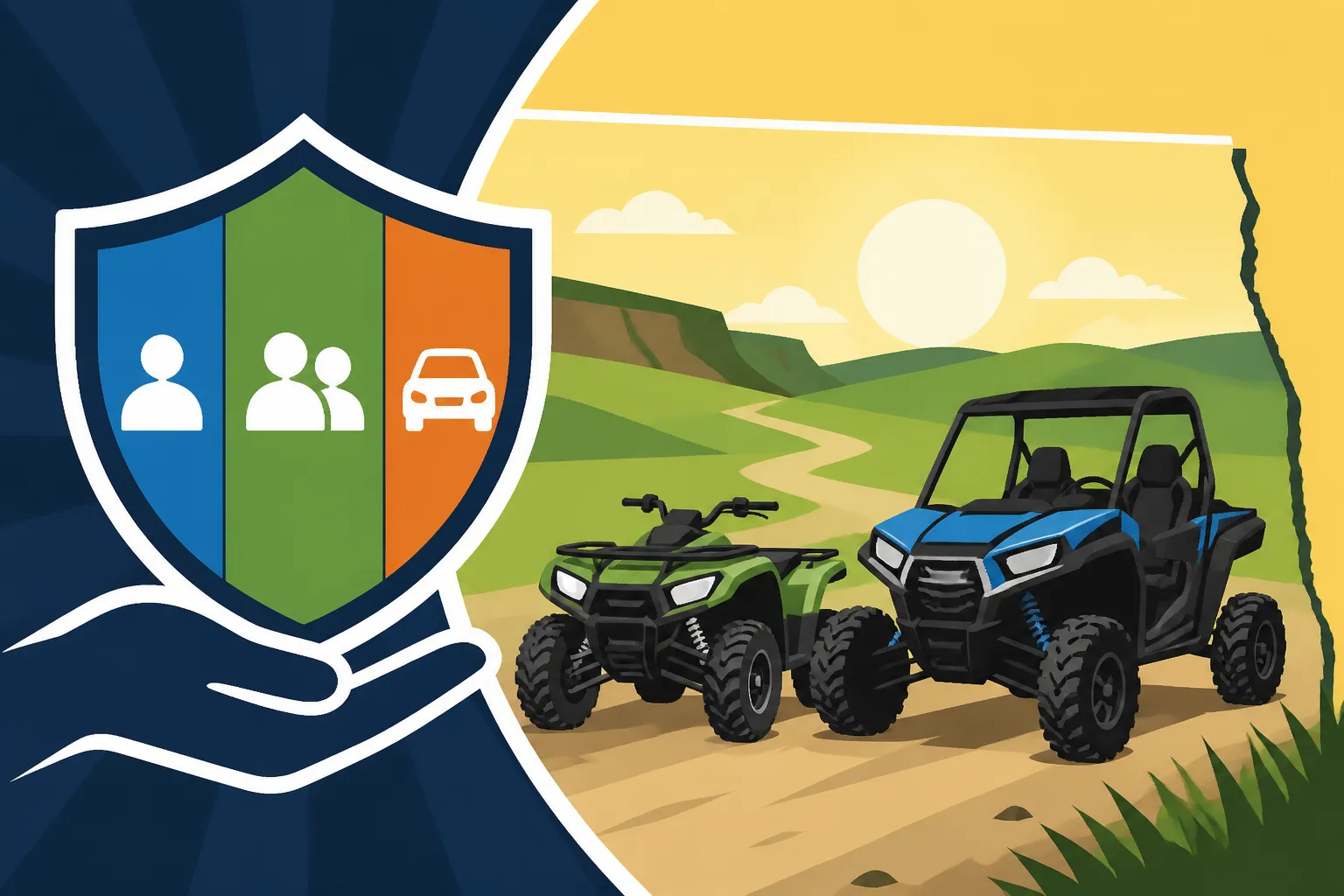
The "25" in "25/50/25" refers to $25,000, and this first number specifically addresses bodily injury liability per person. This means that if you're involved in an accident with your ATV or UTV and you are found to be at fault, your insurance company will pay up to $25,000 for the medical expenses, lost wages, pain and suffering, or other damages incurred by a single injured person. Think of it as the maximum payout for one individual who isn't you or a passenger on your machine.
Imagine you're cruising a section line near Bismarck and, due to a moment's inattention, you veer into a ditch, hitting a pedestrian who was walking their dog. If that person requires emergency medical attention, extensive physical therapy, and misses weeks of work, their total damages could easily climb. Your insurance policy would cover up to $25,000 for that individual's costs. Anything beyond that $25,000 would typically become your personal financial responsibility. This is where the grim reality can set in for many riders – medical bills, especially after an accident, can quickly soar past this seemingly high number.
Understanding Bodily Injury Limits Per Accident
The "50" in "25/50/25" stands for $50,000, and this is the maximum amount your insurance will pay for all bodily injuries in a single accident, regardless of how many people are injured. This limit applies even if multiple people are hurt and their individual damages exceed the per-person limit. So, while your policy might pay $25,000 to one person, it won't pay more than $50,000 total for everyone injured in that one incident.
Let's go back to our example. What if, instead of one pedestrian, you had an unfortunate incident where two people were injured? Perhaps you're riding a gravel road outside Fargo and accidentally cause a collision with another OHV carrying a driver and a passenger. If both of those individuals sustain injuries, your insurance would cover a maximum of $25,000 for each person, but the total payout for both combined could not exceed $50,000. If one person's injuries total $30,000 and the other's are $25,000, your policy would pay $25,000 to the first person and $25,000 to the second, hitting the $50,000 cap. The remaining $5,000 for the first person's injuries would still be your responsibility. This collective cap is why it's so important to consider how many people could potentially be involved in an accident. You can find more details on general requirements in [North Dakota Insurance Requirements at Registration].
Understanding Property Damage Limits
Finally, the last "25" in "25/50/25" refers to $25,000 for property damage liability. This component of your policy covers the cost of damage to someone else's property if you are at fault in an accident. This could be another vehicle, a fence line, a mailbox, a building, or even agricultural equipment. This $25,000 is the maximum your insurance company will pay to repair or replace damaged property.
Imagine you're navigating a difficult turn on a county road near Grand Forks, and you misjudge it, colliding with a farmer's newly installed gate and fence. The gate is twisted, and several sections of fence are destroyed. The cost to repair or replace this damage, including labor and materials, is covered up to $25,000. What if, instead, you swerved to avoid an obstacle and ended up driving into someone's parked truck, causing significant body damage? Vehicles are expensive to repair, and even minor collisions can result in thousands of dollars in damage. If the repairs exceed your $25,000 property damage limit, you'd be responsible for the difference out of pocket. Many new trucks or even older, well-maintained vehicles can easily incur repair costs far exceeding this amount.
Why Meeting Minimums Isn't Always Enough for North Dakota Riders
While North Dakota mandates these "25/50/25" minimum liability limits for OHVs operating on public roadways, simply checking that box might leave you severely exposed. The real world is often far more expensive and complex than these minimum figures suggest. Relying solely on the state-mandated minimums can lead to significant financial hardship if you're ever involved in a serious accident.
The True Cost of an Accident Can Soar Past Minimums
Let's be blunt: $25,000 for a single person's medical expenses is often woefully inadequate in today's healthcare landscape. A broken bone, a concussion, or even a moderate injury requiring an ambulance ride, emergency room visit, diagnostics, and follow-up care can quickly consume that $25,000, and then some. Physical therapy alone after a serious injury can run into tens of thousands of dollars. If an injury requires surgery, a lengthy hospital stay, or results in permanent disability, the costs can easily reach hundreds of thousands, if not millions, of dollars. The same goes for the $50,000 per accident limit; if you injure multiple people, that cap can vanish in a heartbeat.
Consider a scenario where you're riding your UTV on a permitted [North Dakota Gravel Roads Open to Registered Machines] and you misjudge a blind corner, colliding with a local family in their pickup truck. They might have a parent and two children, all of whom sustain injuries requiring hospital care. If one child has a serious head injury and the other has a broken leg, and the parent suffers whiplash, their combined medical bills could easily exceed $50,000 within days. Any costs beyond that limit become a direct debt for you, potentially leading to lawsuits, wage garnishments, and even the loss of personal assets.
Protecting Your Personal Assets
When your insurance coverage runs out, your personal assets are typically the next line of defense against claims. This means your savings, your home equity, future earnings, and other valuable possessions could be on the line. A significant judgment against you after an accident could mean selling your property, liquidating retirement funds, or entering into long-term payment plans to cover the damages. This isn't a theoretical risk; it's a very real consequence for individuals who are underinsured.
For many North Dakota families, their home represents their largest asset. Imagine having worked hard for years to pay off a mortgage or build up equity, only for it to be jeopardized by an accident where your ATV insurance limits were too low. This is why many experienced riders and financial advisors advocate for carrying higher liability limits, often $100,000/$300,000/$50,000 or even higher, depending on their assets and risk tolerance. It's about protecting everything you've worked for, not just meeting a bare minimum requirement. Discussions on this are common in [North Dakota Insurance Minimums for Riders].
The Role of Uninsured/Underinsured Motorist Coverage
While the 25/50/25 limits protect others if you are at fault, what about protecting yourself if the other rider is at fault and either has no insurance or insufficient insurance? This is where uninsured/underinsured motorist (UM/UIM) coverage comes into play, and it's something often overlooked, especially in areas where OHV use is prevalent but insurance enforcement might be less stringent than for road vehicles.
UM/UIM coverage is designed to cover your medical expenses and property damage if you're hit by another driver who is at fault and either doesn't have insurance or whose insurance limits are too low to cover your damages. In North Dakota, unfortunately, not everyone follows the rules, and you might encounter another rider operating without any coverage at all. Without UM/UIM coverage, if an uninsured rider causes an accident that injures you and damages your UTV, you could be left to cover your own medical bills and repair costs. This crucial protection can be the difference between a financial crisis and simply filing a claim. When you're talking with an agent about [North Dakota ATV Insurance Cost Per Year], always ask about UM/UIM.
Navigating Your North Dakota OHV Insurance Options and What to Look For
Beyond the mandatory liability minimums, there's a whole world of insurance options available for your North Dakota ATV or UTV. Understanding these choices and tailoring your policy to your specific riding habits and machine can provide a much more robust safety net. It’s not just about what the state requires you to have, but what truly makes sense for your protection.
Beyond Liability: Comprehensive and Collision Coverage
While liability covers damage you cause to others, comprehensive and collision coverage protect your machine. These are often optional but highly recommended, especially if your OHV is new, valuable, or financed.
Collision Coverage: This pays for damages to your ATV or UTV resulting from a collision with another vehicle or object, regardless of who is at fault. If you accidentally hit a tree while navigating a tricky path in [Pembina Gorge: North Dakota's OHV Trail Park] or roll your side-by-side in a ditch, collision coverage would help cover the repair or replacement costs, minus your deductible. This is incredibly valuable because OHV repairs, especially for newer models, can be very expensive due to specialized parts and labor.
Comprehensive Coverage: This protects your OHV from non-collision-related damages. Think of things like theft, vandalism, fire, natural disasters (like hail storms common on the prairie), or hitting an animal. If your UTV is stolen from your garage or vandalized while parked at a trailhead, comprehensive coverage would kick in. This is particularly important for those who store their machines in sheds or garages, where theft is always a concern. You can read more about this in [North Dakota Comprehensive Coverage for a Quad] and [North Dakota Theft Coverage in a Shed].
Additional Coverage Options for Peace of Mind
Many insurance providers offer a range of additional coverages that can be tailored to the unique risks associated with OHV riding in North Dakota:
- Accessory Coverage: If you've invested in aftermarket parts, winches, plows, custom wheels, or other accessories, your standard policy might not cover their full value. Accessory coverage can ensure these investments are protected.
- Medical Payments (MedPay): This coverage pays for reasonable medical expenses for you and your passengers, regardless of fault, up to a specified limit. It can be a great supplement to your health insurance, especially if you have a high deductible or want quick access to funds for immediate care after an accident.
- Roadside Assistance/Towing: Given how easily an OHV can break down in a remote location, especially on a long ride on the [North Dakota Grassland Roads Open to OHVs], this coverage can be a lifesaver. It covers the cost of towing your disabled machine to the nearest repair shop.
- Rental Reimbursement: If your OHV is being repaired due to a covered loss, this can help cover the cost of a rental OHV, if available, or alternative transportation.
When Legal Documents Intersect with Liability
While insurance handles the financial fallout, legal documents play a critical role in preventing disputes and clarifying responsibilities, especially when it comes to borrowing, lending, or selling machines, or even riding on private land. For instance, if you're selling your ATV, a comprehensive [North Dakota Bill of Sale Form SFN 2888] is essential. For private sales, some individuals use legal document services like LawDepot to ensure they have professional-grade forms that clearly outline the terms of the sale, the as-is condition, and transfer of ownership. This can prevent misunderstandings or future claims if the new owner tries to hold you liable for issues post-sale.
Similarly, if you plan to ride on someone else's property, even with permission, having a clear [North Dakota Landowner Permission Forms] or even a liability waiver for guests can be prudent. While perhaps not strictly for OHV, LawDepot offers templates for liability waivers and other agreements that could be adapted. This ensures that everyone understands the risks involved and helps limit your personal liability if someone is injured on your property or while using your machine. Thinking ahead with proper documentation, alongside robust insurance, forms a comprehensive shield.
Real-World Scenarios: Protecting Yourself and Others on North Dakota Trails and Roads
Understanding the nuts and bolts of 25/50/25 liability is one thing, but seeing how it plays out in various real-world situations can truly drive home the importance of adequate coverage and responsible riding. From navigating public access areas to interacting with landowners, every ride carries potential risks.
Riding Public Roads and Designated Trails
North Dakota has specific rules about where OHVs can and cannot operate, including ditches, section lines, and certain paved or gravel roads. If you're riding your registered OHV on a permitted section of a [North Dakota Gravel Roads Open to Registered Machines], you're expected to have at least the minimum 25/50/25 liability coverage. What happens if you get into an accident?
Consider a scenario where you're riding your UTV on a designated county road near Williston, following all local ordinances. Another vehicle, perhaps a car, pulls out from a driveway unexpectedly, and you collide. If it's determined that you were at fault for, say, excessive speed for conditions, your liability insurance would cover the damages to the car and any injuries to its occupants. If the car is a late-model sedan, $25,000 in property damage might barely cover a bumper and fender repair, leaving you on the hook for the rest. This is why understanding [North Dakota ATV Road Rules by Surface Type] is vital, not just for legality, but for risk management.
Conversely, what if the car driver was at fault? Their auto insurance would cover your damages. But if they only had minimum limits, and your UTV is a high-end model that sustained $35,000 in damage, your uninsured/underinsured motorist property damage coverage (if you have it) would cover the difference. This highlights the interconnectedness of various coverages.
Accidents on Private Land or Unofficial Routes
While state law mandates insurance for public road use, what about private land? North Dakota landowners can grant permission for OHV use on their property, but this doesn't absolve you of responsibility for your actions. If you're riding on a friend's farm near Minot and accidentally damage their barn or cause an injury to another rider, your personal liability still comes into play. While the state might not require insurance for private land use, your personal liability coverage from your OHV policy will generally extend to cover accidents that occur there, protecting you financially.
This is also where clear agreements with landowners become paramount. Before you embark on a ride, it's wise to discuss expectations and permissions. Some landowners might even require a formal [North Dakota Landowner Permission Forms]. For situations requiring a formal agreement, template services like LawDepot can provide helpful starting points for drafting documents that clarify access, liability, and responsibilities, adding an extra layer of protection for both you and the landowner. It’s all about preventing future headaches.
Navigating Incidents: From Minor Scrapes to Major Crashes
No one wants to think about it, but accidents happen. From a minor fender-bender on a busy trail to a more serious collision, how you respond can impact your liability. Always stop, assess the situation, and if anyone is injured, seek medical help immediately. Exchange information with all parties involved, including names, contact details, and insurance information. Take photos of the scene, damages, and any relevant conditions.
If law enforcement is called, cooperate fully. An official accident report can be crucial for insurance claims. Remember that in North Dakota, [North Dakota Accident Reporting for an OHV] has specific requirements. If you're involved in an incident where alcohol or drugs are suspected, remember that [North Dakota DUI Rules for OHV Riders] carry serious penalties, just as they do for operating a road vehicle. Knowing what to do in the immediate aftermath can help streamline the claims process and protect your interests, regardless of whether you carry the basic 25/50/25 or much higher limits. The goal is to be prepared for the unexpected, so your adventure doesn't turn into a financial catastrophe.
| Component | What it Covers | Minimum Limit (North Dakota) | What it Actually Means |
|---|---|---|---|
| 25 (Bodily Injury) | Injury/death of one person you injure in an accident. | $25,000 | Your insurance pays up to $25,000 for one person's medical bills, lost wages, etc., if you're at fault. Anything beyond this is out of your pocket. |
| 50 (Bodily Injury) | Total injury/death for all people you injure in a single accident. | $50,000 | If multiple people are injured, your insurance pays a maximum of $50,000 total across all injured parties. This includes the per-person limit, so no single person gets more than $25,000. |
| 25 (Property Damage) | Damage to other people's property (vehicles, fences, etc.) you cause. | $25,000 | Your insurance pays up to $25,000 to repair or replace property you damage. Modern vehicle repairs or significant property damage can easily exceed this, leaving you to pay the difference. |
| UM/UIM (Optional, but Recommended) | Your injuries/damages if an uninsured/underinsured driver is at fault. | Varies | Protects you if the at-fault party has no insurance or too little. Covers medical and property damage for you and your passengers. A critical safeguard in practice. |
| Collision (Optional) | Damage to your OHV from a collision (e.g., hitting a tree). | Varies | Covers your machine's repair/replacement costs if you hit something, regardless of fault. Essential for protecting your investment in the OHV. |
| Comprehensive (Optional) | Damage to your OHV from non-collision events (theft, fire, hail). | Varies | Covers your machine for things like theft, vandalism, or acts of nature. Particularly important for preventing losses from unexpected events. |
Disclaimer
This article is for general informational purposes only and does not constitute professional advice. Laws, prices and regulations vary by location and change over time. Consult a qualified professional for guidance on your specific situation.