North Dakota Excise Tax on a Gifted Machine
It's such a generous gesture to pass on your well-loved ATV or UTV to a family member or a close friend. You picture them enjoying the open trails, just like you have, and you might naturally assume that since no money is changing hands, there's no tax implication. But if you're gifting that off-highway vehicle (OHV) in North Dakota, you might be in for a surprise when it comes to the state's excise tax. This guide will walk you through exactly how North Dakota views gifted machines, the taxes you can expect, and how to navigate the transfer process smoothly.
The Basics of North Dakota's Excise Tax on OHVs
When you're dealing with vehicles, whether they're cars, trucks, or rugged off-highway machines, the state of North Dakota has a system for ensuring a certain amount of revenue is collected on their transfer of ownership. This isn't about penalizing generosity, but rather about a consistent application of tax law.
Understanding the 5 Percent Motor Vehicle Excise Tax
In North Dakota, when you purchase an off-highway vehicle, you're typically looking at a motor vehicle excise tax. This isn't your everyday sales tax; it's a specific tax on the privilege of buying and titling a motor vehicle. Currently, this tax sits at 5 percent of the purchase price. So, if you bought a shiny new side-by-side for adventure or a sturdy ATV for farm work, you would pay this 5 percent based on what you shelled out to the dealer or the private seller. It's a fundamental part of the cost of ownership, paid when the machine is first titled in your name in the state. You can learn more about this general application in [North Dakota's 5 Percent Motor Vehicle Excise Tax].
This excise tax is applied to the "purchase price" of the vehicle. For most transactions, where there's a clear exchange of money, determining that price is straightforward. The challenge arises when there isn't a stated purchase price, or when the stated price is zero, as is often the case with a gift. The state still needs a fair value to apply that 5 percent to, and that's where things can get a little nuanced. It's not about what you didn't pay, but about what the machine is worth.
Why Gifting an OHV Isn't Automatically Tax-Free
This is where many people hit a snag. The idea of a "gift" often carries the assumption of being free from financial obligations, especially taxes. However, when it comes to a titled item like an ATV or UTV, North Dakota generally doesn't see a gifted transfer as a free pass on the excise tax. The state's position is that a transfer of ownership of a valuable asset, regardless of whether money exchanged hands, still warrants the assessment of excise tax.
Think of it this way: if you received a brand-new, top-of-the-line UTV as a gift, and it had a market value of, say, $20,000, the state would still want its 5 percent share of that value. If it were truly tax-exempt, it would create an enormous loophole where anyone could claim their new machine was a "gift" and avoid paying their fair share, completely undermining the purpose of the excise tax. So, while your intent is purely generous, the state looks at the asset's value. This means that even if you're passing down an older, well-used quad, there's still a value attached to it that the state will want to tax. It's crucial to understand this upfront to avoid surprises.
How North Dakota Assesses a Gifted OHV
Since there's no actual sales price for a gifted machine, North Dakota has a specific way of figuring out what that 5 percent excise tax should be based on. They're not just going to take your word for it, nor should they, to keep things fair across the board.
Determining "Fair Market Value"
The key phrase here is "fair market value." This isn't an arbitrary number; it's what the state believes a willing buyer would pay, and a willing seller would accept, for that particular ATV or UTV under normal circumstances. For a gifted machine, North Dakota will assess the excise tax based on this fair market value. So, even though you might have just handed over the keys, the state will assign a dollar amount to that transaction for tax purposes.
There are a few ways this fair market value can be determined. Often, they'll rely on industry standard valuation guides, like those published by NADA (National Automobile Dealers Association). These guides provide average retail and wholesale values for different makes, models, and years of OHVs, taking into account mileage or hours and general condition. If your machine is quite old or unique and doesn't appear in standard guides, the state might request other forms of proof. One common method is to get a professional appraisal from a licensed North Dakota OHV dealer. This gives the state a verifiable, expert opinion on what your specific machine is worth. Alternatively, they might look at comparable sales data for similar machines in your area, though this is usually more challenging for an individual to provide. Regardless, the burden of proving a reasonable fair market value often falls on the person receiving the gift. Having solid documentation for this value is absolutely critical to a smooth transfer. You can explore how professional valuations play a role in [Proving Fair Market Value With a Dealer Appraisal].
The Importance of Documentation in a Gifted Transfer
When you're transferring ownership of a gifted OHV, even without a cash exchange, documentation is paramount. You can't just hand over the keys and expect the state to understand the situation. The recipient will need specific paperwork to prove how they acquired the machine and to establish its value for tax assessment.
One essential document is a Bill of Sale, even if the "sale price" is listed as "gift," "$0," or "one dollar and other good and valuable consideration." This document formally establishes the transfer of ownership. It should include details about the donor and recipient, the OHV's VIN, make, model, and year, and clearly state that it's a gift. While a cash exchange might be absent, the legal act of transferring property still needs a record. Another crucial piece of paperwork, especially for an OHV that might not have a formal title yet (like an older dirt bike or a machine brought from a state that doesn't title OHVs), is a [North Dakota Statement of Ownership Form SFN 2903]. This form helps establish the chain of ownership. You can easily find templates for a Bill of Sale or a Gift Affidavit online through services like LawDepot, which can help ensure all the necessary legal language is included for a smooth transfer. Having these documents ready and properly filled out will significantly expedite the process at the motor vehicle branch. The Bill of Sale is discussed in detail in [North Dakota Bill of Sale Form SFN 2888].
The Process for Titling a Gifted OHV in North Dakota
So, you've received a gifted OHV and understand that excise tax based on fair market value is likely due. Now, what's the actual process to get that machine legally titled in your name so you can hit the trails or get to work?
Steps for the Recipient
The process for titling a gifted OHV in North Dakota closely mirrors that of a purchased one, with the main difference being how the value for excise tax is determined. It's a series of steps that requires attention to detail and a visit to your local motor vehicle branch.
First, you'll need all the necessary documents. This includes the existing title for the OHV (if one exists), your Bill of Sale (even if it states "gift" or "$0"), and potentially a Statement of Ownership or a written appraisal if the state requires it to establish fair market value. Make sure the previous owner has properly signed off on the title, if applicable, in the designated seller's section. Next, you'll fill out the [What the Title Application SFN 2872 Asks For]. This form is critical and requires accurate information about the OHV and yourself. Take your time and ensure every field is correctly completed. You'll then gather all these documents and head to a North Dakota motor vehicle branch. When you present your paperwork, you'll inform the clerk that the OHV was a gift. They will then assess the fair market value based on their internal guides or your provided appraisal. Based on this value, they will calculate the 5 percent excise tax. You will also need to pay the [North Dakota Title Fee of $5], which is a fixed, separate charge from the excise tax. Once all fees are paid and paperwork submitted, the branch will process your application, and you'll eventually receive a new title in your name. Remember, this step is also where you'll register the machine, which usually happens concurrently. You can find more specific details on the physical process of going to the office in [Registering at a Motor Vehicle Branch].
Potential Pitfalls and How to Avoid Them
Even with the best intentions, transferring a gifted OHV can have its share of headaches if you're not careful. Knowing the common pitfalls can help you steer clear of them.
One of the biggest mistakes people make is trying to undervalue the machine. They might put an artificially low "sale price" on the Bill of Sale, hoping to reduce the excise tax. North Dakota motor vehicle clerks are trained to spot these discrepancies. If the value seems unusually low for the make, model, and year, they will often refer to their valuation guides or require an appraisal. If they suspect deliberate undervaluation, it could lead to delays, additional scrutiny, and even penalties. Always be honest about the fair market value. Another common issue is incomplete or incorrect paperwork. Missing signatures, incorrect VINs, or not having a proper Bill of Sale (even for a gift) can bring the process to a screeching halt. Double-check everything before you go to the branch. Using a reliable template from a service like LawDepot for your Bill of Sale or Gift Affidavit can help ensure you don't miss any critical sections. If your application is particularly complex, or if the value is disputed, your paperwork might be sent to the [Bismarck Central Office Review] for further assessment, which can add significant time to the process. Be prepared for this possibility by having all your documentation in order. Understanding these potential roadblocks is key to a smooth and frustration-free transfer of a North Dakota Excise Tax on a Gifted Machine.
When a Gifted OHV Might Actually Be Tax-Exempt (Rare Cases)
While the general rule is that a gifted OHV in North Dakota is subject to excise tax based on fair market value, there are extremely rare and specific circumstances where a transfer might fall outside this rule. These are typically not related to the "gift" aspect itself but rather to the nature of the machine or its intended use.
Family Transfers vs. Unrelated Gifts
Many people assume that if they're gifting an ATV or UTV to a spouse, child, or parent, the excise tax might be waived. Unfortunately, in North Dakota, the relationship between the donor and the recipient generally does not exempt the transfer from excise tax. Whether it's a gift to a dear friend or a beloved family member, the state still sees it as a transfer of ownership of a valuable asset, and the 5 percent excise tax based on fair market value typically applies.
There might be very specific, limited scenarios, such as the transfer of ownership due to inheritance, that have different rules regarding how the tax is handled, but a simple gift between living family members usually falls under the standard excise tax assessment. It's not like some states that have specific exemptions for immediate family transfers. In North Dakota, the focus remains on the asset's value changing hands, regardless of the familial ties. While it feels like a personal exchange, the state views it through the lens of property transfer. For questions about inherited machines, you might look into [North Dakota Excise Tax on an Inherited Machine].
Other Exemptions That Don't Apply Here
It's helpful to understand that other types of OHV exemptions North Dakota offers generally don't apply to a standard gifted machine. These exemptions are usually tied to specific uses or ownership types, not to the manner of transfer (like gifting).
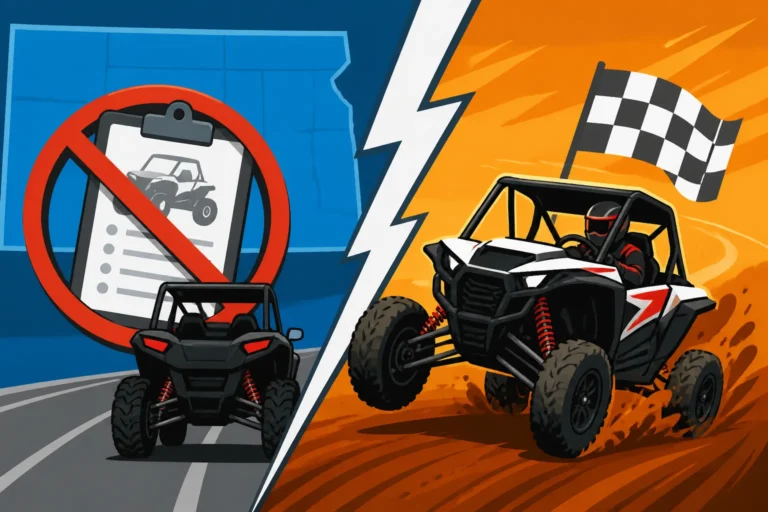
For example, machines used exclusively on private land you own, government-owned machines, or those used solely for organized track racing are often exempt from registration and titling requirements, and therefore may not incur excise tax. You can read more about these broader exemptions in [North Dakota Registration Exemptions Explained]. However, if you receive a gifted ATV that you intend to ride on public trails or public land, or simply use for general recreational purposes, these specific exemptions won't apply to you. The gifted machine, once in your hands, must meet all the standard requirements for registration and titling, including the excise tax, unless its future use genuinely falls into one of these very narrow exempt categories. The act of receiving it as a gift doesn't create a new exemption; it simply triggers the regular titling and tax process based on its fair market value and your intended use. For instance, if you received an ATV as a gift specifically for use on a track, then the [North Dakota Track Racing Exemption] might come into play, but that's about its function, not the gifting itself.
Table: Gifted OHV Excise Tax Overview
To help clarify the general rules surrounding gifted OHVs and excise tax in North Dakota, here's a quick overview of what you can typically expect:
| Aspect | Standard Purchased OHV | Gifted OHV (Most Cases) | Rare Exemptions (Gifted) |
|---|---|---|---|
| Excise Tax Rate | 5% of purchase price | 5% of assessed fair market value | Generally still 5% of fair market value, unless use-based |
| Taxable Base | Actual purchase price | Fair Market Value (e.g., NADA guide, dealer appraisal) | Fair Market Value, but rare use-based exemptions exist |
| Payment Trigger | At time of titling/registration | At time of titling/registration | N/A, as titling/registration might not be required |
| Required Documentation | Bill of Sale (price), Title (if applicable) | Bill of Sale (stating "gift"), Title (if applicable), Appraisal (if needed) | Proof of exempt use (e.g., private land, track use only) |
| Family Transfers | No specific tax exemption due to family relationship | No specific tax exemption due to family relationship | No, same rules apply as non-family gifts |
| Key Takeaway | Excise tax is standard on all ownership transfers | Excise tax almost always applies; value is the key factor | Exemption is typically based on use, not on gifting |
This table underscores that the "gift" aspect primarily changes how the taxable value is determined, not whether the tax is applied at all.
Disclaimer
This article is for general informational purposes only and does not constitute professional advice. Laws, prices and regulations vary by location and change over time. Consult a qualified professional for guidance on your specific situation.