Liability on Someone Else’s Land
Riding an ATV or UTV on someone else’s land raises two different questions: who is responsible if a rider gets hurt, and who pays if the machine damages property or injures another person? In North Dakota, permission, how the land is used, what insurance covers, and how the incident happened can all matter. Here’s how to think through those risks before the ride.
Permission and liability are separate issues
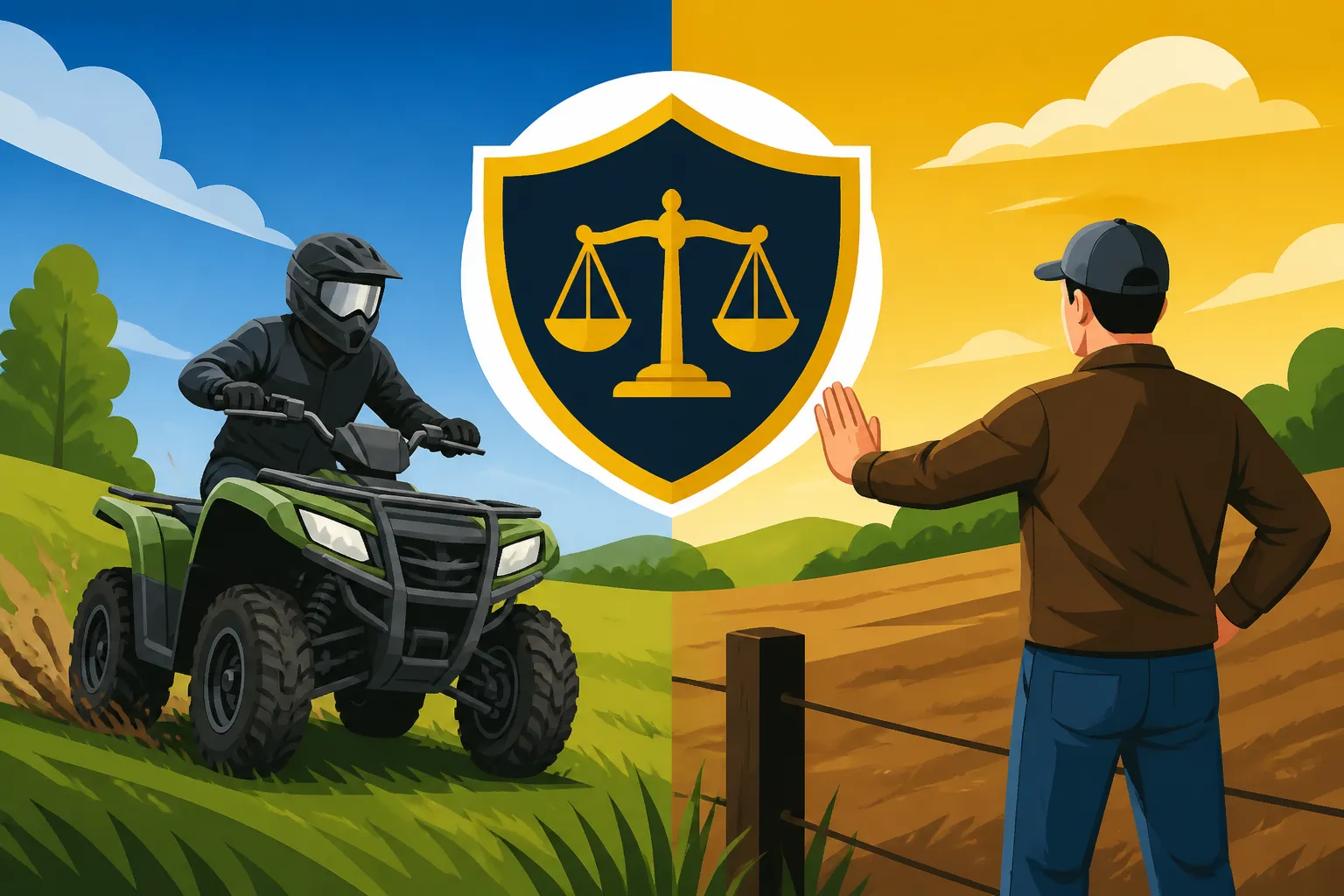
A landowner’s permission lets you ride on the property, but it is not an insurance policy and does not automatically decide who is responsible after an accident. A text message, written permission form, or verbal agreement can help show that you were allowed to be there. It does not necessarily excuse careless riding, cover damage, or waive every legal claim.
For riders, get permission from someone authorized to grant it before entering. Be clear about where you may ride, when you may visit, who is coming, and whether passengers are allowed. A landowner may approve access to one field or trail without allowing entry to the rest of the property. Ask about gates, livestock, crops, buildings, and any areas that are off limits.
A written record can prevent misunderstandings. North Dakota Landowner Permission Forms may help you organize permission details, while North Dakota Posted Land Permission covers the separate question of getting permission to enter posted land. Permission does not make every route safe or legal, so pay attention to signs and the landowner’s instructions. See North Dakota Posted Land Rules for Riders for more on posted-land considerations.
North Dakota’s recreational-use law may limit a landowner’s legal responsibility when land is made available for recreational use without charge. The protection is not a blanket guarantee that a landowner can never be sued. The circumstances, the landowner’s actions, whether a fee was charged, and the type of hazard involved can matter. The law also does not give a rider permission to enter. It is best to treat the statute as one part of the liability picture, not as a substitute for clear permission, safe conduct, or insurance.
For the rider, the central practical point is straightforward: you remain responsible for how you operate your machine. If careless driving causes a collision, injures another person, or damages a fence, vehicle, crop, or other property, permission to ride does not by itself erase that responsibility. The landowner may also have responsibilities in some situations, but you should not assume that the owner will pay for a rider’s medical bills or property damage.
Who may be responsible after an accident
Responsibility depends on what happened, where it happened, and what each person did. A rider may be responsible for injuries or damage caused by negligent operation. A landowner may face a claim if the facts support a legal duty and a failure to meet it. More than one person’s conduct may contribute to the same incident.
Examples help make the distinction clearer:
| Situation | Liability questions to consider |
|---|---|
| A rider loses control on a visible rut | Was the speed or maneuver appropriate, and did the rider take reasonable care? |
| A guest hits an unmarked hazard | Was the hazard known or unusually dangerous, and did anyone have a duty to warn or address it? |
| A machine damages a gate or fence | Who operated the machine, who owns the damaged property, and does insurance cover the loss? |
| A passenger is hurt after being carried on an unsuitable machine | Was the passenger permitted, was the machine designed for a passenger, and did the operator act carefully? |
| Several riders collide | What did each rider do, and how did each action contribute to the injury? |
These are examples, not automatic legal outcomes. An injury on private property does not, by itself, establish that the landowner is liable. Likewise, a signed permission form does not necessarily shield a rider from a claim if the rider caused harm.
The landowner’s role can matter. For example, an owner who invites riders onto a property may give directions about approved routes or warn them about a known hazard. Whether the owner had a legal duty in a particular situation depends on the facts and applicable law. A rider should not count on a landowner to inspect every route or identify every ordinary outdoor risk. Ask about conditions that may not be obvious, such as a recently dug trench, a damaged bridge, a hidden washout, or a section closed for farm work.
The rider’s choices matter too. High speed, impaired operation, riding beyond the agreed area, carrying an unauthorized passenger, or ignoring a warning can increase the chance of injury and complicate a later claim. North Dakota Rules for a Passenger can help you check the passenger issue before taking someone along.
A practical pre-ride conversation can reduce avoidable disputes. Ask whether the landowner knows of hazards, whether the route has changed, and what to do if a gate is closed or livestock are present. Do not assume an old route remains open or safe. If conditions look different from what you were told, stop and check rather than pushing ahead.
What insurance may and may not cover
Do not assume that a standard ATV or UTV policy covers every ride on another person’s land. Coverage depends on the policy’s wording, the machine, the use, the location, and the people involved. Some policies may include liability coverage for certain incidents; others may have exclusions or limits that matter on private property. A homeowner’s policy is not automatically a substitute for coverage on an off-highway vehicle.
Before riding, contact your insurer and describe the actual use: the machine type, whether you will ride on someone else’s land, whether you will carry passengers, and whether the property is used for farming, business, organized events, or paid access. Ask what liability coverage applies if you injure someone or damage property, and whether any exclusions or conditions could affect a claim. Do not rely on a general statement that you are “covered” without checking which risks it refers to.
Liability Coverage Off Your Own Land and North Dakota ATV Insurance Requirements provide related information about coverage and requirements. Those are distinct questions: a legal insurance requirement, where one applies, does not tell you the full scope of a particular policy. A policy can also have limits, deductibles, and exclusions that affect what it pays. Ask your insurer to explain the terms in writing if anything is unclear.
Landowners may also want to check their own insurance. If you are giving people permission to ride, ask your insurance agent how the property’s use affects your coverage. The answer may depend on whether guests ride occasionally, whether you charge a fee, whether the land is used for business, and whether an organized group is involved. Insurance a Landowner May Ask About is a useful related topic, but the landowner should confirm coverage directly with their insurer.
A landowner might ask riders for proof of insurance or ask them to sign a document describing conditions for access. These requests can help establish expectations, but paperwork should not be treated as a guarantee that a claim cannot arise. Read what you sign, keep a copy, and ask questions about any release or waiver you do not understand. If a landowner is hosting a large group, charging for access, or organizing an event, professional legal and insurance advice is especially sensible.
If you are the rider, consider what would happen if your machine causes a serious injury or expensive property damage. A policy’s liability limit may not match the full cost of a claim. Ask an insurance professional what protection is available and what limits are appropriate for your circumstances. Keep in mind that coverage for damage to your own machine is different from liability coverage for harm to other people or their property.
A safer process before and after the ride
A few steps before riding can make expectations clearer and help you respond sensibly if something goes wrong.
- Get permission from the right person. Confirm that the person granting access controls the land or has authority to allow riding. If the property has multiple owners or separate leased areas, clarify who can approve your route.
- Set boundaries and conditions. Agree on the approved route, access times, gates, passenger rules, group size, and any areas to avoid. Ask whether the landowner expects you to close gates or follow other property-specific instructions.
- Discuss hazards. Ask about changing ground conditions, equipment, livestock, water, farm operations, and known obstacles. Treat a landowner’s warning as a boundary, not a suggestion.
- Check your machine and insurance. Make sure the machine is suitable for the terrain and passengers, and verify coverage with your insurer. Registration or a permit does not grant permission to use private land or settle a liability question.
- Ride within your ability. Adjust speed to visibility and terrain, leave room between machines, and avoid alcohol or other impairment. Do not ride beyond the area or conditions the owner approved.
- Keep a record. Save written permission, the landowner’s contact information, and relevant insurance details. A short written exchange can help everyone remember what was agreed.
If an accident happens, first address immediate safety. Call emergency services when needed, move people away from further danger if it is safe to do so, and avoid disturbing the scene more than necessary. Exchange contact and insurance information with the people involved. Take photos of the scene, machine positions, visible damage, and relevant hazards when it is safe and appropriate. Get the landowner’s contact information and notify them promptly.
Be accurate when describing what happened. Avoid guessing about fault or making promises about payment at the scene. Report the incident to your insurer as soon as practical and follow its instructions. If a person is injured, substantial property damage occurred, or liability is disputed, consider getting advice from a qualified attorney. North Dakota Accident Reporting for an OHV covers reporting considerations that may apply to an off-highway vehicle incident.
Finally, do not confuse access rules with liability protection. Registration, permits, and reciprocity address whether a machine or rider meets particular operating requirements; they do not replace a landowner’s permission, insurance, or careful riding. Confirm what applies to your situation before the trip, especially if you are visiting from outside North Dakota or riding as part of an organized event.
Disclaimer
This article is for general informational purposes only and does not constitute professional advice. Laws, prices and regulations vary by location and change over time. Consult a qualified professional for guidance on your specific situation.