How the $61.25 Annual Pass Covers Two Vehicles
Planning North Dakota state park visits with an ATV or UTV can raise a simple but important question: does one annual pass cover the park entry for both your tow vehicle and your machine? The $61.25 annual pass is associated with two vehicles, but it is a park entrance pass—not an OHV registration or a general trail permit. Knowing what it covers helps you avoid buying the wrong authorization.
What the two-vehicle annual pass is for
The annual pass discussed here is for vehicle entry to North Dakota state parks. Its two-vehicle feature is useful if you visit in more than one vehicle, such as a truck that hauls your ATV and a separate vehicle used for another visit. The pass is about park access by vehicle, not permission to operate an ATV or UTV wherever you arrive.
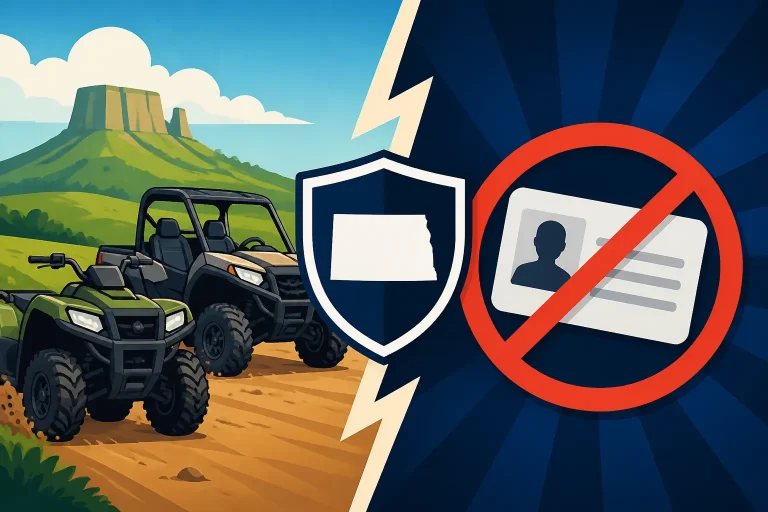
That distinction matters because a park entrance pass and an OHV authorization solve different problems. A pass may cover the vehicle-entry requirement at a state park, while the machine you ride may separately need registration or a permit. The rules depend on the machine, who owns it, and where it will be ridden.
| Authorization | What it generally addresses | What it does not replace |
|---|---|---|
| Annual state park pass | Vehicle entry to North Dakota state parks, subject to current pass terms | OHV registration, an OHV permit, or permission to ride a particular trail |
| North Dakota OHV registration | State registration requirements for qualifying machines | Park vehicle entry or landowner permission |
| Non-resident OHV permit | Permit requirements that may apply to visitors riding in North Dakota | State park vehicle entry or permission for a specific route |
| Landowner permission | Access to private land when permission is required | Registration, permits, or park entry |
The exact way the pass is issued and associated with its two vehicles matters. Before buying, check the current North Dakota Parks and Recreation Department instructions for whether you must identify both vehicles at purchase, whether the pass is tied to plates or another record, and what proof you need to display or carry. Do not assume that a pass can be moved freely between vehicles or shared among people without checking its terms.
For the broader cost and coverage picture, see North Dakota Annual Park Pass Value and North Dakota State Park Entrance Fees. Those topics help separate the park pass from costs related to the machine itself.
How two-vehicle coverage works in practice
Think of the pass as a park-entry benefit associated with two vehicles, not as two independent OHV permits. If your trip involves a truck and trailer, the park pass question is whether the vehicle entering the park is covered under the pass terms. The trailer and the ATV or UTV do not automatically become separately authorized for riding just because they are carried into the park.
The right way to apply the pass depends on how you use it:
- Identify the vehicles you expect to bring. If you regularly visit in a truck and sometimes arrive in a different vehicle, have the relevant vehicle information ready when you check the pass rules.
- Confirm how the pass links to those vehicles. Follow the current purchase instructions and enter the information requested. If the rules are unclear, ask the park office or the agency before relying on the pass.
- Keep the confirmation accessible. Save the receipt or other proof and follow instructions about displaying a permit or presenting it at entry.
- Check before changing vehicles. If you replace a vehicle, use a rental, borrow a family member’s vehicle, or want to add a third vehicle, ask whether the pass can be updated or whether another entry permit is needed.
- Check the park’s rules for your machine. A covered park entrance does not mean every trail, road, or open area is available to OHVs.
The two-vehicle feature can be convenient for households that use different vehicles for park trips. It may also be less useful if you routinely bring a third vehicle or if your trips involve a vehicle that is not listed or recognized under the pass terms. The key is not to infer coverage from the number of people or machines in your group. Confirm which vehicles are covered and how the park verifies that coverage.
The amount in the title, $61.25, is a price reference, not a guarantee that the same amount or terms will always apply. Park fees and pass rules can change. Check the official state park information before purchasing, especially if you are comparing an annual pass with repeated daily entry permits. The current terms should tell you the eligible vehicles, the pass period, how to show proof, and what happens if your vehicle information changes.
What the annual pass does not cover for ATV and UTV riders
The most common misunderstanding is to treat a park pass as a trail pass. It is not a substitute for the legal requirements that apply to the OHV itself. A registered North Dakota machine may still require park entry coverage for the vehicle that brings it into a state park. Conversely, an annual park pass does not register an unregistered machine.
North Dakota’s OHV rules depend on the machine’s classification and how it is used. If you are unsure whether your quad or side-by-side requires registration, start with Do You Need to Register an ATV in North Dakota?. For a machine that qualifies for North Dakota registration, North Dakota’s Two-Year OHV Registration explains the separate registration system.
Visitors should also distinguish an annual park pass from a non-resident OHV permit. A visiting rider may have a permit obligation based on the machine and intended riding, even if the vehicle bringing that machine into a park is covered by an annual entrance pass. The visitor rules are explained in North Dakota’s Non-Resident OHV Permit and North Dakota Non-Resident Permits Run January to December. Check current requirements before crossing into the state with a machine.
Nor does the pass itself authorize riding on any route inside a park. A park may have designated areas, trails, or roads, and access can be subject to closures or restrictions. The permission to enter by vehicle is not the same as permission to ride off-road. For that reason, confirm the specific park’s current OHV rules and trail status before unloading. The distinction between an entrance permit and riding authorization is also covered in Park Entrance Versus Trail Access.
Outside state parks, the rules can be different again. North Dakota does not treat every public road or piece of land as an OHV trail. Riders need to follow the rules for the land, route, and machine, and obtain permission where required. The park pass does not provide that permission.
Before you buy or head to the park
A short check before travel can prevent a pass mix-up at the entrance or an avoidable compliance problem on the ride.
- Verify the current price and pass period. Use official North Dakota state park information rather than relying on an old receipt, an online discussion, or the $61.25 amount alone.
- Read the two-vehicle conditions. Confirm exactly how the pass identifies the covered vehicles and whether you need to provide plate or vehicle details.
- Ask about unusual vehicle situations. Contact the park or agency if you plan to use a rental, a borrowed vehicle, a replacement vehicle, or a vehicle not listed when the pass was purchased.
- Keep park entry separate from OHV paperwork. Bring the documents or permits that apply to the machine as well as any proof required for park entry.
- Check trail access independently. Look at current park information for permitted riding areas, closures, and machine restrictions.
- Plan for other land rules. If your ride continues beyond the park, check the requirements for that land and route. A state park pass does not extend into neighboring private property or automatically authorize travel elsewhere.
If you are a North Dakota resident, do not assume you need a non-resident permit just because you are visiting a state park. If you are visiting from another state, do not assume that an annual park pass replaces the OHV permit rules. Those are separate questions, addressed in North Dakota Has No Trail Permit for Residents and the non-resident permit guidance.
The practical takeaway is simple: the $61.25 annual pass is about park vehicle entry and its two-vehicle coverage. Treat OHV registration, visitor permits, trail access, and landowner permission as separate checks. Confirm the current pass terms and the rules for your machine and destination before setting out.
Disclaimer
This article is for general informational purposes only and does not constitute professional advice. Laws, prices and regulations vary by location and change over time. Consult a qualified professional for guidance on your specific situation.