North Dakota Visitors From South Dakota
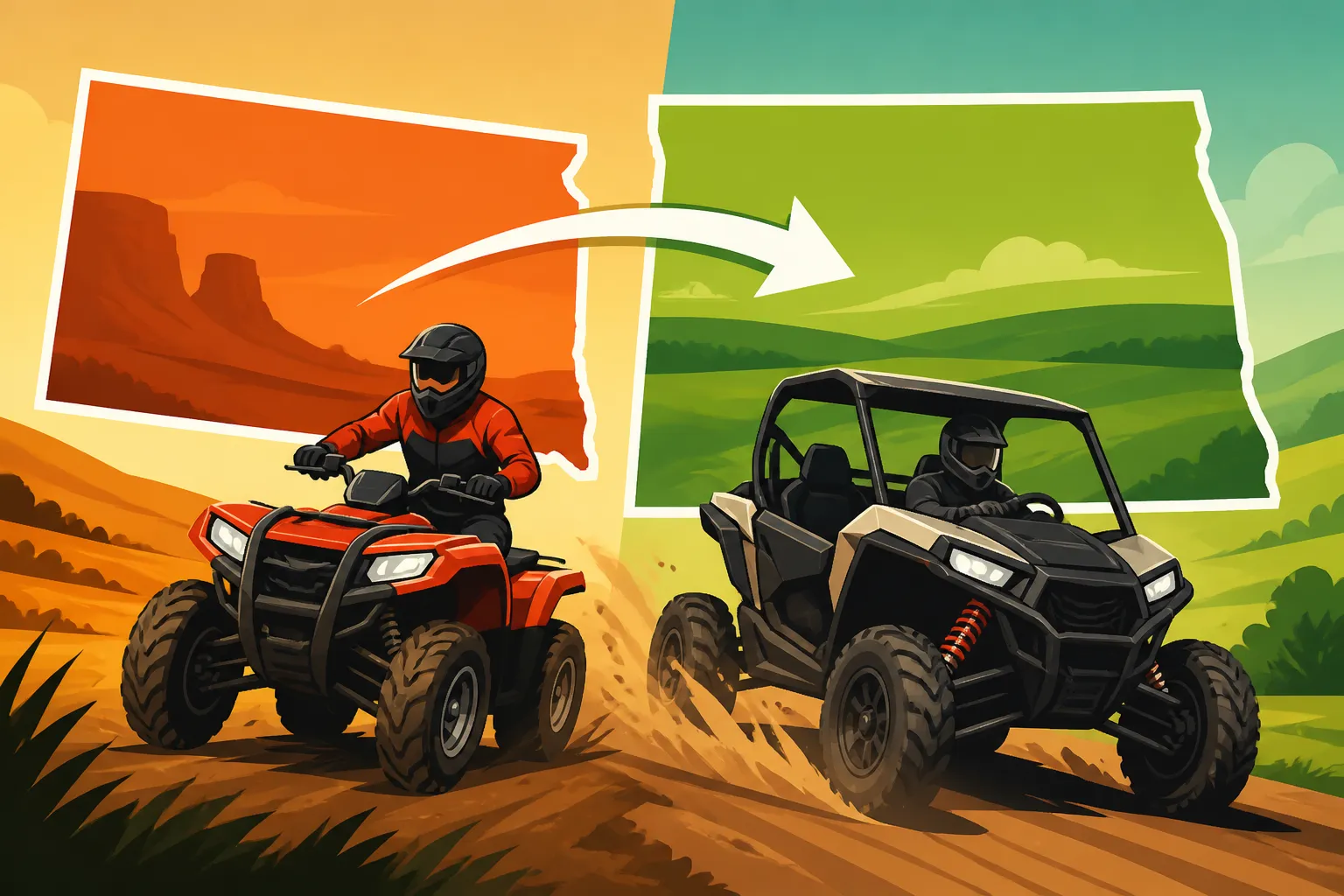
A South Dakota registration sticker may look official in North Dakota, but it does not necessarily cover the state’s separate visitor-permit requirement. Before you load an ATV or UTV, it helps to know which document applies, where it is needed, and what changes if your stay lasts longer than a short visit. Here’s how to sort out the paperwork before you ride.
What a South Dakota rider needs before riding in North Dakota
For most visitors bringing a South Dakota-registered ATV or UTV to ride in North Dakota, the practical rule is simple: plan to get a North Dakota nonresident OHV permit before riding on public riding areas. A South Dakota registration is useful proof that the machine is registered at home, but it does not automatically replace North Dakota’s visitor permit.
That distinction is easy to miss because registration and a visitor permit serve different purposes. Registration identifies the machine and establishes its registration status. The nonresident permit is North Dakota’s authorization for a visiting machine to be operated under the state’s OHV rules. Carrying one does not make the other unnecessary.
The state does not offer a general reciprocity arrangement that lets a South Dakota sticker stand in for North Dakota’s nonresident permit. The details are covered in North Dakota Has No Reciprocity With Any State. In practical terms, don’t assume that because your home-state registration is current, you can ride without taking another step.
Before you travel, check the current instructions for North Dakota’s Non-Resident OHV Permit. Verify that the permit applies to your machine and intended riding, how it must be displayed or carried, and where it can be obtained. The state provides permit information and purchase options, including online options; confirm that the process is available for your trip and that you have any required proof or confirmation with you.
Registration, permit, and access are separate questions
It helps to ask three questions rather than treating all paperwork as one thing:
- Is the machine properly registered or otherwise eligible to operate? Your South Dakota documents may establish its home-state registration. North Dakota’s requirements can depend on the machine and how long it remains in the state.
- Does the visitor need a North Dakota permit? A home-state registration does not, by itself, provide North Dakota reciprocity. Check the nonresident permit rule before riding.
- Is the place you want to ride open to your machine? A permit is not permission to use every road, trail, park, or parcel of land.
These questions matter whether you’re bringing a sport ATV, a utility quad, or a side-by-side. The state’s OHV categories and vehicle definitions can affect which requirements apply. If your machine’s size or configuration makes its category unclear, compare it with North Dakota’s Class I, II and III Machines before relying on a label used by a dealer or manufacturer.
A visitor permit also isn’t a replacement for a state park entrance permit, a landowner’s permission, or a site-specific requirement. It does not open land that is closed to OHVs, authorize riding on private property without consent, or override local restrictions. Think of it as one necessary piece of the trip paperwork, not an all-access pass.
A short visit is not the same as an exemption from every rule
Visitors often hear about a time limit for operating an out-of-state machine and conclude that they can skip every North Dakota requirement for a short trip. That is not a safe assumption. The state’s North Dakota’s 30-Day Out-of-State Rule and its nonresident permit requirement address different issues. A limited period during which an out-of-state registration may be recognized does not automatically mean a visitor can ride without the separate permit.
If you’re uncertain how the timing rule applies to your stay, ask the relevant North Dakota agency before unloading the machine. Be ready to explain when it arrived, whether it is currently registered in South Dakota, where you intend to ride, and whether the visit is temporary or part of a longer stay. Getting the answer before your first ride is much easier than trying to resolve a registration question at a trailhead.
How to get the right permit and carry proof
North Dakota makes nonresident permit information available through state channels. Before leaving South Dakota, use the official purchase instructions for North Dakota Permits for Visiting Riders and confirm the current process. Permit details, payment options, and display instructions can change, so don’t rely on an old receipt, a friend’s recollection, or an online discussion that may describe a previous season.
A few practical steps help prevent a paperwork problem from becoming a trip problem:
- Confirm the machine qualifies as an OHV. Use its configuration and intended operation, not just the name in a sales listing. If it is unusual, modified, tracked, or homemade, ask the agency what category and documentation apply.
- Check the machine’s South Dakota registration. Make sure it is current and that the identification information matches the machine. If the registration is not in the rider’s name, bring documentation that explains the relationship or permission to use it.
- Buy or arrange the North Dakota permit before riding. Follow the official instructions, including any direction about the permit’s effective period and placement.
- Save proof in more than one form. Keep the permit confirmation or receipt accessible on your phone and, where possible, retain a paper copy. If the permit must be displayed on the machine, follow the stated placement rule rather than storing it in a pocket.
- Keep the home-state documents with the machine. Carry the registration and any other required records so you can respond clearly if an officer asks to see them.
- Check the destination separately. Confirm trail status, access restrictions, and any park entrance requirements for the specific place you plan to ride.
The nonresident permit is generally tied to a calendar-year system rather than to the date of your vacation. Review North Dakota Non-Resident Permits Run January to December before you buy, especially if you are planning more than one visit or traveling near the end of the year. Do not assume that a permit bought for one trip automatically remains valid for a later calendar year.
North Dakota offers online purchasing information, but plan for practical details. A confirmation email can be hard to find when you have poor cell service, a dead phone battery, or wet gloves. Save it offline before you leave home. Keep a backup copy with your registration, and make sure the screen or paper copy is legible.
A basic waterproof document pouch can help keep papers together on a muddy or dusty ride; a powersports shop or Amazon may carry one. The pouch is only for protecting records, not a substitute for any required decal or display. If North Dakota instructs you to attach a permit to the machine, follow its placement directions.
Make sure the machine and rider both meet the rules
The permit is about the machine’s authority to operate as a visitor. It does not establish that every person in the group is qualified to ride it or that the machine is equipped for every route.
If a child or teenager will be operating, check North Dakota’s age and safety-training requirements before the trip. A South Dakota course card may or may not satisfy a North Dakota requirement in a particular situation, so verify rather than assuming that training from another state is automatically accepted. Start with North Dakota OHV Safety Certificates at Age 12 and confirm the rules that apply to the rider’s age and circumstances.
Also consider the machine itself. A vehicle that is permitted for an OHV trail may not meet requirements for a roadway or ditch. A helmet, lights, reflectors, mirrors, brakes, and other equipment can matter depending on where and when you ride. If you shop online for protective gear, including on Amazon, check the actual safety marking, fit, and manufacturer specifications instead of relying on a product title or a seller’s claim. A poorly fitting helmet is a bad trade for a convenient purchase.
The 30-day rule and longer stays
North Dakota’s 30-day rule is important for visitors, but it is not a blanket waiver. It concerns how long an out-of-state machine may be operated in North Dakota before state registration requirements may apply. It should not be read as “I have 30 days to ride without a permit,” or “my South Dakota registration gives me unlimited North Dakota use.”
For a short vacation, the sensible approach is to keep the South Dakota registration current, obtain the North Dakota nonresident permit required for your ride, and follow the state’s operating rules. If your machine is going to stay in North Dakota, or if your visit extends beyond the applicable out-of-state period, contact the appropriate agency about whether North Dakota registration is needed. The details are explained in Thirty Days and the Exemption Ends.
The distinction matters in real situations:
- A weekend trip: The machine is registered in South Dakota, you obtain the North Dakota nonresident permit, and you ride only where OHVs are allowed.
- A machine stored at a cabin: The fact that you return home between visits may not settle how the rule applies. Ask whether the machine’s time in North Dakota is counted by a specific period or by another measure.
- A long seasonal stay: A visitor who keeps the machine in North Dakota for an extended period should not rely on a short-stay exception. Ask whether North Dakota registration, title paperwork, or other requirements apply.
- A move to North Dakota: A person who becomes a resident should look into resident registration rules rather than continuing to treat the machine as a visitor’s vehicle.
Keep notes about when the machine entered the state if it will be stored there or used repeatedly. Save purchase and registration records, and keep the permit confirmation. If you contact an agency, write down the guidance and the office or person you spoke with. That record can help you follow up if your situation is unusual.
South Dakota registration is not a permanent substitute for North Dakota registration once the visitor’s situation changes. A machine may also need a title or additional ownership documents depending on its history and status. If you’ve moved or expect to stay, review North Dakota Registration for a New Resident rather than applying visitor assumptions to a new residency situation.
Special cases deserve a direct answer
Some machines do not fit a straightforward visitor example. A homemade machine, a machine with missing ownership papers, a vehicle bought recently, or a machine registered to someone other than the rider may need additional documentation. A South Dakota registration sticker alone may not answer questions about ownership, title, or the machine’s classification.
If your paperwork is incomplete, don’t wait until you reach North Dakota to find out whether it will be accepted. Start with the relevant state process for North Dakota Registration Without a Title or North Dakota Registration for a Homemade Machine, as applicable, and ask whether that process affects a visitor permit. A permit does not create proof of ownership, repair a missing title, or resolve a VIN discrepancy.
Similarly, don’t assume that a machine used only for farm work, kept on private land, or used in a special event falls under the same rules as a recreational visitor’s ATV. Different exemptions may apply, but the conditions matter. If you believe an exemption covers your machine, confirm it with the agency before treating it as a reason not to get a permit or registration.
Where the permit lets you ride and what it does not cover
A North Dakota nonresident permit addresses the visitor-permit requirement. It does not grant access to every public surface. The legal question of whether your machine has the necessary permit is separate from whether the route is open to OHV use.
North Dakota riding can involve state-managed trails, recreation areas, public roads where OHV operation is allowed under specific conditions, and private land where permission is required. A route that looks rideable on a map may be closed, seasonally restricted, posted, or managed for a different use. Check the site or land manager before setting out.
A permit also does not replace other permits that may apply to the trip. For example, a state park may have an entrance requirement separate from the OHV permit. The truck and trailer may have their own registration or park-access rules. A private campground may set its own policies. If you’re heading to a state park, confirm both the machine’s riding permission and any vehicle entrance requirements; they are separate questions.
For private land, get the owner’s permission before riding. A North Dakota OHV permit does not authorize crossing a field, using a farm approach, or following a fence line without consent. Posted signs, gates, and electronic posting can communicate restrictions. If you’re unsure whether the route crosses private property, stop and check rather than treating an open-looking track as public.
For state and federal public land, check the managing agency’s map and current notices. Access can vary by location, machine type, trail width, weather, and temporary closure. A visitor permit does not override those limits. Wet ground is especially important: riding when a trail is closed or too soft can damage the route and create problems for future users.
Before the trip, make a small route plan:
- Identify the specific riding area and its manager.
- Check whether ATVs, UTVs, or your machine’s width are allowed.
- Confirm whether trails are open and whether any temporary closures apply.
- Check for separate entrance, parking, or camping requirements.
- Save a map for offline use in case cell service drops.
- Keep a backup route in mind if weather or a closure changes your plans.
Use Amazon or another retailer only for the practical accessories that make the trip safer, such as a weather-resistant phone mount or a document pouch. A phone mount does not replace a paper or offline map, and online listings do not establish that a route is open. Check the land manager’s current information before you ride.
If you’re planning your first North Dakota trip, it can be useful to compare your permit paperwork against North Dakota Registration Versus a Non-Resident Permit. That distinction helps prevent a common mistake: treating a registration document, a visitor permit, and land access as if they were one authorization.
A South Dakota visitor’s pre-trip checklist
The simplest way to avoid an avoidable stop or a wasted day is to prepare the machine and the riders before departure. Work through this list while you still have access to your home records and reliable internet.
Documents and permits
- Confirm the South Dakota registration is current and matches the machine.
- Check North Dakota’s current nonresident permit instructions.
- Obtain the required permit before riding and follow any display instructions.
- Save the permit receipt or confirmation offline and keep a backup.
- Carry the machine’s registration and ownership documents.
- Ask the state directly about unusual cases such as a borrowed machine, missing title, or extended stay.
Machine and rider
- Confirm the machine’s North Dakota OHV category.
- Check that required safety equipment is present and works.
- Make sure helmets fit properly and meet applicable requirements.
- Check age and safety-training rules for any young rider.
- Carry basic tools and recovery gear suited to the route.
- Do not carry a passenger unless the machine was designed for one and the applicable rules allow it.
Route and land access
- Confirm that the riding area is open to your type and width of machine.
- Check for weather closures, seasonal limits, or local restrictions.
- Confirm any separate park entrance or camping requirements.
- Get landowner permission before riding on private property.
- Keep an offline map and a backup plan in case conditions change.
Most South Dakota visitors can make the trip straightforward by treating North Dakota’s visitor permit as a separate item, not as an extension of their home-state sticker. The home registration, North Dakota permit, rider requirements, and access rules each answer a different question. Check each one before unloading, and confirm current details with the appropriate official source if your machine or stay does not fit the ordinary short-visit situation.
Disclaimer
This article is for general informational purposes only and does not constitute professional advice. Laws, prices and regulations vary by location and change over time. Consult a qualified professional for guidance on your specific situation.