North Dakota Riding Areas With Wash Stations
A caked-up ATV is a nuisance to haul home, but finding a place to rinse it can be harder than finding a trail. In North Dakota, wash facilities are not guaranteed at every riding area, and a map pin may not tell you whether a wash bay is open or suitable for an OHV. This guide explains where to check, what to confirm, and how to leave mud responsibly.
What to know about OHV wash stations in North Dakota
A trailhead is not automatically a wash facility
North Dakota’s riding areas range from developed destinations to more basic trailheads and public-land routes. A campground may have restrooms, water access, or other amenities without having a machine wash bay. Likewise, a spot where you can park a trailer is not necessarily a place where you may wash an ATV or UTV.
Before building a ride plan around a wash station, confirm that the facility is intended for off-highway vehicles, available to day-use riders, and operating when you expect to arrive. Ask whether it has a hose, a designated drainage area, or rules about washing muddy machines. If you cannot confirm those details, plan as though you will need to transport the machine home without rinsing it.
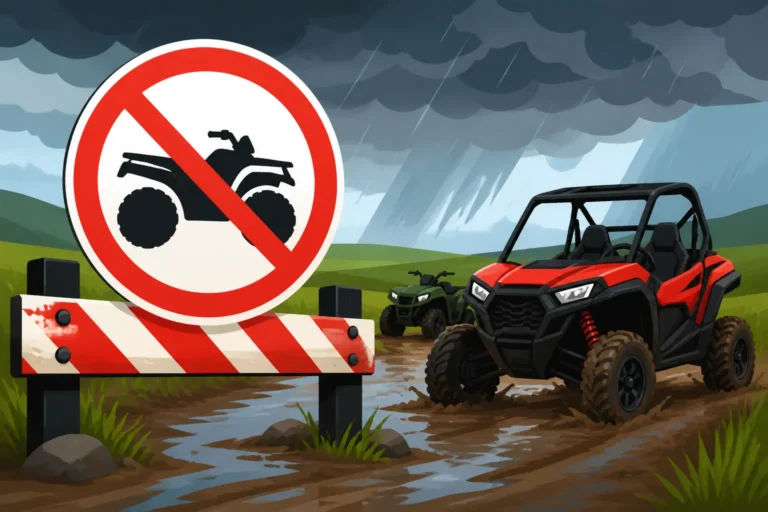
This matters especially after a wet ride. North Dakota gumbo can cling to fenders, footwells, tires, and the underside of a machine. A quick rinse in the wrong place can send mud into a parking lot, storm drain, wetland, or waterway. For more on handling that kind of sticky ground, see [North Dakota Gumbo Mud and What It Does] and [Tread Lightly on Wet Clay].
Use current facility information, not just a map symbol
A mapping app can help you locate a trailhead, campground, or nearby service, but it may not confirm whether a wash area is working or permitted for OHVs. If you use onX Offroad to plan your route, treat it as a navigation aid: check the route and access points, then verify facility details with the area manager or the business that operates the wash station.
When you call, be specific. “Do you have a wash station?” can lead to a vague answer if the person thinks you mean a place to wash a car. Ask: “Can a trail rider rinse an ATV or UTV here? Is there a designated wash bay, and is it open to day users?” Also ask whether you need to bring your own hose, whether there is a fee, and whether muddy vehicles are allowed in the wash area.
Keep a backup plan. A station may be closed, busy, or unsuitable for a machine that has just come off a muddy trail. A note in your phone with the nearest confirmed wash option, its hours, and an alternate route can prevent a frustrating search when you’re tired and ready to head home.
Choose a ride area for the ride first
It is tempting to pick a riding destination based on the promise of an easy cleanup. But a wash facility does not make an otherwise unsuitable route a good fit. Check trail conditions, width limits, access rules, parking, and the kind of riding your group wants to do. Start with [North Dakota OHV Trails: All Four Riding Areas] if you are comparing the state’s main riding destinations.
| Riding area | Nearby place to orient your plan | What to confirm before riding |
|---|---|---|
| Pembina Gorge | Walhalla | Trail status, width restrictions, parking, and whether any wash facility is available to riders |
| Roughrider OHV Trail | Fort Abraham Lincoln State Park and Fort Rice | Trail access, staging locations, current conditions, and nearby wash options |
| Turtle Mountain | Sjule Road area near Bottineau | Trail access, trailer parking, amenities, and a separate wash plan |
| Kimball Bottoms | South of Bismarck along the Missouri River | Access and ground conditions, parking, and whether a suitable wash option is operating nearby |
The table is a planning checklist, not a promise that a wash station is available at each location. Confirm the details before loading up.
Riding areas to check when planning a wash
Pembina Gorge near Walhalla
Pembina Gorge is a natural starting point for riders looking at northeastern North Dakota. It is a developed riding destination with designated OHV trails, but amenities and trail access can vary by location and conditions. If you are staying or staging nearby, ask the area operator directly whether an OHV wash facility is available to day riders. Do not assume that a campground or trailhead’s general amenities include a machine wash bay.
The terrain and weather should shape your cleanup plan. After rain, clay and mud can build up quickly, and a machine that looks manageable at the trailhead may carry a heavy coating by the time you return. Check for wet-weather closures and avoid riding when your tires are tearing up the trail. [Pembina Gorge Trail Closures After Rain] and [North Dakota Trails Closed by Wet Weather] can help you plan around conditions rather than trying to solve a wash problem after the ride.
If a dedicated wash option cannot be confirmed, bring a tarp or another way to keep loose dirt from falling into your trailer or vehicle. A soft brush can remove dry debris without wasting water. For an overview of the riding experience and access, see [Pembina Gorge: North Dakota's OHV Trail Park]. Then contact the facility before travelling if a wash station is essential to your plan.
Roughrider OHV Trail near Mandan and Fort Rice
The Roughrider OHV Trail follows a corridor between Fort Abraham Lincoln State Park and Fort Rice. Because riders may stage at different points along the route, it is important to ask about washing in relation to your actual trailhead—not merely whether a wash facility exists somewhere in the region. A service several miles away may be impractical if it requires backtracking with a muddy machine.
Before the trip, confirm the route’s current access and conditions, where you can park a trailer, and whether a nearby wash location accepts off-road vehicles. onX Offroad can be useful for reviewing route connections and keeping your staging location clear, but it should not replace permission or facility checks with the land manager. For route background, see [Roughrider OHV Trail's 22 Miles Along the Missouri River].
Plan for the possibility that the ride ends without a rinse. Carry straps and a tarp, and avoid loading a machine while thick mud is still dropping from the frame if you can safely brush or knock off loose material first. Be mindful of where that material lands. Mud and plant matter should not be washed into a ditch or stream just because it is convenient.
Turtle Mountain and Kimball Bottoms
Turtle Mountain, near Bottineau, and Kimball Bottoms, south of Bismarck, offer very different riding experiences. Neither should be treated as a guaranteed wash-station stop without checking current facilities directly. At Turtle Mountain, ask about the access point you intend to use and whether a wash option is available nearby. If you are trailering from Bottineau or another town, confirm that the wash location is open to trail users rather than only to customers of a particular service.
At Kimball Bottoms, conditions near the Missouri River can change the cleanup picture. Sand, wet ground, and changing water conditions may affect access, and a wash area near a river is not automatically an appropriate place to rinse a machine. Never wash mud, fuel residue, or cleaning products into the river or surrounding habitat. Check [Kimball Bottoms: North Dakota's Open Play Area] and [Flooding at Kimball Bottoms] as part of trip planning, and verify access before you go.
For either destination, put the wash stop into your return route before the ride begins. onX Offroad can help you keep track of your intended route and nearby access points, while a call to the responsible office or business can answer the practical question: can you actually wash an ATV or UTV there today?
How to verify a wash station before you travel
Ask the questions that prevent surprises
A quick call or message can save a long detour. Give the location and type of machine you are bringing, then confirm the details that affect your plan:
- Is there a designated wash station for ATVs or UTVs?
- Is it open to day users, or only to registered campers, customers, or members?
- Is the wash area currently operating?
- Is water available, or should you bring your own?
- Are there rules about mud, detergents, or washing near drainage areas?
- Is there a charge, reservation requirement, or limited access window?
- Where should a trailer be parked while the machine is being washed?
Write down the answer and the name of the place you contacted. If the reply is uncertain—“there’s a hose by the campground,” for example—ask whether riders are allowed to use it and where runoff goes. A hose is not necessarily an approved wash station.
Also check the route and facility status close to departure. Rain, maintenance, seasonal operations, or a change in access can affect both trails and amenities. If the wash facility is a must-have, identify a second option before you leave home rather than searching from the trailhead.
Plan around mud, water, and runoff
A wash station should provide more than a convenient spigot. The important question is where the water and material go afterward. Use designated wash areas and follow posted instructions. Avoid washing a machine on a riverbank, in a ditch, on a trail, or over a storm drain. Even plain water can carry sediment and residue into places where it does not belong.
Try to remove excess mud with a brush or scraper before using water, as long as doing so is safe and allowed. Pay particular attention to the underside, radiator area, suspension, and footwells, where packed mud can hide damage or affect performance. Use only products permitted by the facility; cleaners, oils, and fuel residue should never be rinsed into waterways or onto public land.
Do not create a mess in the parking area while waiting for a wash bay. Keep loose mud off shared surfaces, avoid blocking other trailers, and leave the station clean for the next rider. For general preparation and trail etiquette, [North Dakota Trail Etiquette Locals Expect] is a helpful companion read.
Build a no-wash backup into your transport plan
Sometimes a station is unavailable, or the closest option is not suitable. A practical backup starts before the ride: bring a tarp for the trailer floor, secure tie-downs, and a brush or compact scraper. Keep dirty gear separate from clean clothing and tools. If the machine is extremely muddy, check your trailer’s weight and loading conditions rather than assuming the mud is insignificant.
At home, wash only where runoff can be managed appropriately and where local rules allow it. Keep wash water away from storm drains, wells, wetlands, and surface water. If you live in an apartment or have no suitable place to clean a machine, call a local wash business and ask whether it accepts ATVs or UTVs. Confirm this directly; a car wash may prohibit off-road machines or may not be equipped for packed mud.
Cleaning is not just cosmetic. Removing mud makes it easier to spot loose fasteners, damaged boots, leaks, and debris caught around moving parts. If a muddy ride included deep water or unusually wet conditions, check the owner’s manual for the right inspection and service steps before the next outing.
A simple wash-station checklist for your ride
Before leaving home
Choose the riding area based on the trail experience and your group’s needs, then treat the wash station as a separate logistics question. Confirm the trail is open, check access and parking, and ask directly about any wash facility you plan to use. Use onX Offroad or another mapping tool to organize routes and staging points, but confirm rules and amenities with the responsible location.
Save the facility’s contact information and note its hours or access conditions. Decide what you will do if it is closed. A backup can be a second confirmed wash location or a plan to transport the machine on a tarp and clean it later where runoff can be controlled.
Before loading the machine to go home
Look over the machine and remove loose debris if it is safe to do so. Check that mud is not obstructing lights, covering the license or registration display, or interfering with straps and tie-down points. Secure the machine according to the trailer and vehicle instructions, and keep muddy gear contained.
If you stop at a wash station, follow its rules and leave the area tidy. If you cannot wash there, do not improvise by rinsing the machine beside a road, in a parking lot drain, or near a waterway. A little planning keeps your cleanup from becoming someone else’s problem—and helps protect the places you came to ride.
For trip planning beyond cleanup, see [North Dakota Trail Closures After Rain] and [North Dakota Trailhead Parking Limits]. Those details can matter just as much as finding a place to rinse off after the ride.
Disclaimer
This article is for general informational purposes only and does not constitute professional advice. Laws, prices and regulations vary by location and change over time. Consult a qualified professional for guidance on your specific situation.