North Dakota Cabins Near a Riding Area
Finding a cabin near a North Dakota riding area can make a weekend much easier, especially when you’re hauling machines, traveling with kids, or hoping to ride more than one day. The tricky part is that “near a trail” can still mean a drive to the trailhead, and lodging does not automatically provide legal riding access. Here’s how to choose a practical base and plan around the riding area.
Choose a cabin base around the kind of riding you want
North Dakota’s riding areas are spread across the state, and they offer different experiences. Before searching for cabins, choose the area that fits your group, your machine, and the kind of weekend you have in mind. A place that looks close on a map may still require a trailer trip to reach the legal trail entrance.
Pembina Gorge and Walhalla
Pembina Gorge is a natural choice for riders exploring the northeast. Walhalla is a useful town to search around when you want lodging within reach of the riding area, restaurants, fuel, and other trip basics. It can be a more convenient base than choosing a cabin based only on its distance from a trail line.
Check the exact route from a prospective cabin to the designated trailhead. A short distance as the crow flies may involve a longer drive on local roads, and you should not assume that a trail connects to a rental property or public road. The area’s terrain and trail conditions can also affect what a day of riding feels like. For a closer look at the area, start with [Pembina Gorge: North Dakota's OHV Trail Park] and [North Dakota's 60-Inch Trail Width Cap].
If you are planning around a particular loop, check whether the current route suits every machine in your group. Width, ground conditions, and trail closures can change what is practical. Rain is especially worth considering when you are making a lodging plan: a cabin can be comfortable on a wet weekend, but it cannot make a closed or unsuitable trail rideable. Review [Pembina Gorge Trail Closures After Rain] before setting your schedule.
Turtle Mountain and Bottineau
Bottineau is a sensible place to look when your plan centers on Turtle Mountain. Search by the town as well as by broad terms such as “cabin” or “vacation rental,” then compare the actual drive to the riding entrance. A cabin in the wider region may be a pleasant retreat, but its location could mean extra hauling each morning.
Turtle Mountain is not simply a place to ride wherever a machine can fit. Confirm which routes are open to OHVs and where riding is allowed. Shared-use areas can call for extra courtesy, particularly when you encounter horses or other trail users. [Turtle Mountain Riding in North Dakota] and [Turtle Mountain Shared With Horses] can help you think through the riding environment before you book.
For groups with different priorities, Bottineau may also work as a practical town base even if some people plan to ride less. Ask lodging hosts what they mean by “near the trails,” and request a drive time or route to the legal access point rather than relying on a vague listing description.
Roughrider OHV Trail and the Bismarck–Mandan area
For a central North Dakota ride, consider lodging around Bismarck or Mandan when your plan includes the Roughrider OHV Trail. The trail corridor links Fort Abraham Lincoln State Park and Fort Rice, so think about which end—or which part of the route—you expect to use. Staying in a larger town may make it easier to find groceries, supplies, and services, but it does not necessarily put you beside the trailhead.
Check the route between your lodging and your intended starting point, especially if you are towing a long trailer. Turning space, parking, and the time required to unload can matter as much as the distance to the trail. [Roughrider OHV Trail Links Fort Abraham Lincoln and Fort Rice] explains the corridor, while [North Dakota Trailheads With Trailer Parking] is useful when trailer access is a deciding factor.
The trail’s connection between places does not mean you can ride from a cabin to the trail on any road or across any land. If you need to trailer to the entrance, include that in your daily plan. For a multi-day trip, you may also want to choose lodging based on the portion of the trail your group most wants to experience.
Kimball Bottoms and south of Bismarck
Kimball Bottoms, south of Bismarck along the Missouri River, is another option to consider when you want to ride in the central part of the state. Search for lodging in the broader Bismarck–Mandan area, then verify the driving route to the riding area and where you can legally park and unload.
River conditions and local access can shape a visit, so don’t assume that a familiar spot will have the same conditions every time. Review [Kimball Bottoms: North Dakota's Open Play Area] and [Flooding at Kimball Bottoms] as part of your planning. If your trip depends on a specific access point, check its status close to departure and have a backup plan.
| Riding area | Useful lodging search base | What to confirm before booking |
|---|---|---|
| Pembina Gorge | Walhalla and nearby communities | Trailhead route, machine-width suitability, weather-related closures |
| Turtle Mountain | Bottineau and the surrounding area | Legal OHV access, route conditions, shared trail use |
| Roughrider OHV Trail | Bismarck or Mandan | Which trail end you’ll use, trailer parking, daily drive |
| Kimball Bottoms | Bismarck–Mandan area | Access conditions, legal parking, route to the riding area |
Check the cabin details that matter to OHV riders
A listing can look ideal in photos and still be a poor fit once you arrive with a truck, trailer, helmets, muddy boots, and several people who need to get ready at the same time. Ask practical questions before booking. Clear answers can prevent a frustrating arrival, especially when you reach the property after a long drive.
Confirm parking, trailer space, and unloading
Ask whether the property has space for your truck and trailer together, not just a driveway that fits a passenger vehicle. Confirm whether you can turn around without backing a long distance, whether the parking surface is firm, and whether there are restrictions on trailers. If more than one vehicle is coming, ask how many can be parked on site.
Also clarify whether machines can be unloaded or stored on the property. A listing may show a large yard without stating whether vehicles may be driven onto it. Don’t assume that a field, side drive, or neighboring lot is available for parking. Get permission from the host, and respect any rules about noise, gates, or vehicle movement.
If the cabin is remote, consider what happens if the trailer cannot be parked where you expected. A designated staging area or trailhead parking may be more suitable, but confirm the rules and available space before relying on it. [North Dakota Trailhead Parking Limits] can help you factor parking into the plan.
Ask about machine storage and property rules
Some hosts may allow machines to be stored in a garage or shed; others may not allow them indoors or on the property at all. Ask directly about secure storage, access hours, charging restrictions for any equipment, and whether fuel or maintenance work is prohibited. A lockable place to keep helmets and riding gear can be helpful, but it is not the same as permission to store an ATV or UTV.
Be just as careful about riding from the cabin. A private lane, farm road, field edge, or gravel road is not automatically an authorized OHV route. Ask the host whether there is a legal connection to the trail system, and verify the route independently before unloading. Landowner permission, where required, should be explicit; a rental reservation is not blanket permission to ride across neighboring land.
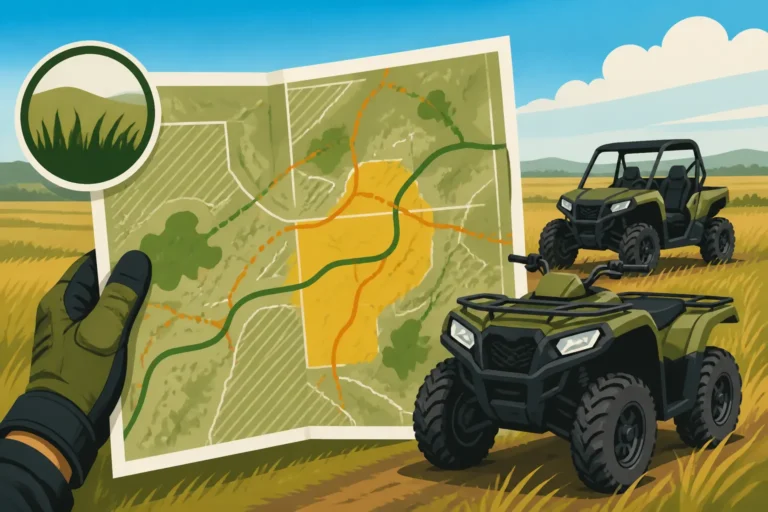
For route planning, an app such as onX Offroad can help you review mapped routes and nearby public-land information. Treat map layers as a planning aid, not a substitute for posted signs, official trail notices, or permission from a landowner. When a route is unclear, use the trailhead and access information provided by the managing agency.
Plan the ride from the lodging, not just the map pin
A good base reduces daily friction, but your itinerary should account for the full trip from the cabin to the riding area and back. That includes unloading, checking the machines, fueling, trail conditions, and any road travel required to reach the legal access point.
Map the route and verify access
Before booking, map the drive to the specific entrance or trailhead you intend to use. Check whether the route is suitable for your truck and trailer, and look for practical details such as road surface, turning room, and where you can leave the tow vehicle. A lodging listing’s mileage estimate usually does not answer those questions.
onX Offroad can be useful for comparing mapped riding areas and planning where to start, particularly when your group is unfamiliar with the region. Still, use official trail and land-management information to confirm that the route is open and permitted. If signage on the ground conflicts with a route shown in an app, follow the posted restrictions and stop to clarify access rather than guessing.
For grassland routes or public land outside a developed OHV trail area, take extra care to distinguish roads open to motor vehicles from cross-country travel. A line on a map does not mean a rider can leave the road and roam across the surrounding land. [North Dakota Grassland Motor Vehicle Use Maps] is a useful planning topic when your trip includes grassland roads.
Build a weather and backup plan
North Dakota weather can change the feel of a ride quickly. Wind, rain, heat, and blowing snow can affect comfort, visibility, and trail conditions. Ask whether the lodging has a covered place to dry gear, and bring layers that work for the forecast as well as the season. Muddy equipment and wet clothing are easier to manage when you know in advance where they can be cleaned or stored.
Keep a second activity or riding-area option in mind rather than tying the whole trip to a single route. If a trail closes after rain or access is affected by local conditions, you’ll have time to adjust instead of making a rushed decision at the trailhead. Check current trail status before leaving the cabin, and be willing to postpone riding when conditions make it unsafe or damaging.
If you use onX Offroad to prepare alternate routes, verify each one against the relevant official information. A backup route should be legally open, appropriate for your machine, and reachable with your group’s fuel range and experience—not merely visible on a screen.
Make the stay comfortable for the whole group
A riding weekend is easier when the cabin suits the people who are not riding every hour, too. Think about sleeping arrangements, meals, recovery time, and the practical needs of younger riders or guests who prefer a quieter day. The best choice is often the property that makes the whole trip run smoothly, not the one with the most dramatic view.
Match the lodging to your group
Before booking, confirm the number of beds, bathrooms, kitchen equipment, and rules for children or pets. If several riders are sharing the cabin, ask about places to leave muddy boots and wet outerwear. A clear entry area, washable floors, or a mudroom can be more valuable after a long day than decorative features that looked appealing in the listing.
Plan meals around where you’ll be riding. A cabin close to a town may make it easier to pick up groceries or replace forgotten supplies, while a more remote rental may require you to bring everything with you. Check what is actually provided—such as linens, cooking equipment, and basic cleaning supplies—rather than assuming every rental offers the same amenities.
If the group includes riders of different experience levels, consider how easily they can take a break or return to the cabin. Do not plan a route that leaves a less experienced rider feeling pressured to keep up. Talk through the day’s route and meeting points before starting, and carry the essentials your group needs if someone wants to stop early.
Respect the property and the community
A cabin near riding land may sit in a quiet rural community. Keep noise down when loading or unloading, particularly early in the morning or later in the evening. Follow the host’s instructions for parking, garbage, fires, and gates. Close gates only as directed, and never assume a farm track is open simply because another vehicle has used it.
Leave the property in the condition you agreed to, including cleaning mud from equipment only where the host permits it. Do not wash sediment into a storm drain, waterway, or unapproved area. If you need to make a repair, ask before doing work on the property, and take any waste, oil, or parts with you for proper disposal.
Finally, check the lodging’s cancellation and access policies before committing. A rental’s rules may not change when trail conditions do, so understand what happens if weather disrupts your riding plan. With a suitable base, confirmed access, and a backup plan, you can spend less of the weekend sorting out logistics and more of it enjoying the ride.
Disclaimer
This article is for general informational purposes only and does not constitute professional advice. Laws, prices and regulations vary by location and change over time. Consult a qualified professional for guidance on your specific situation.