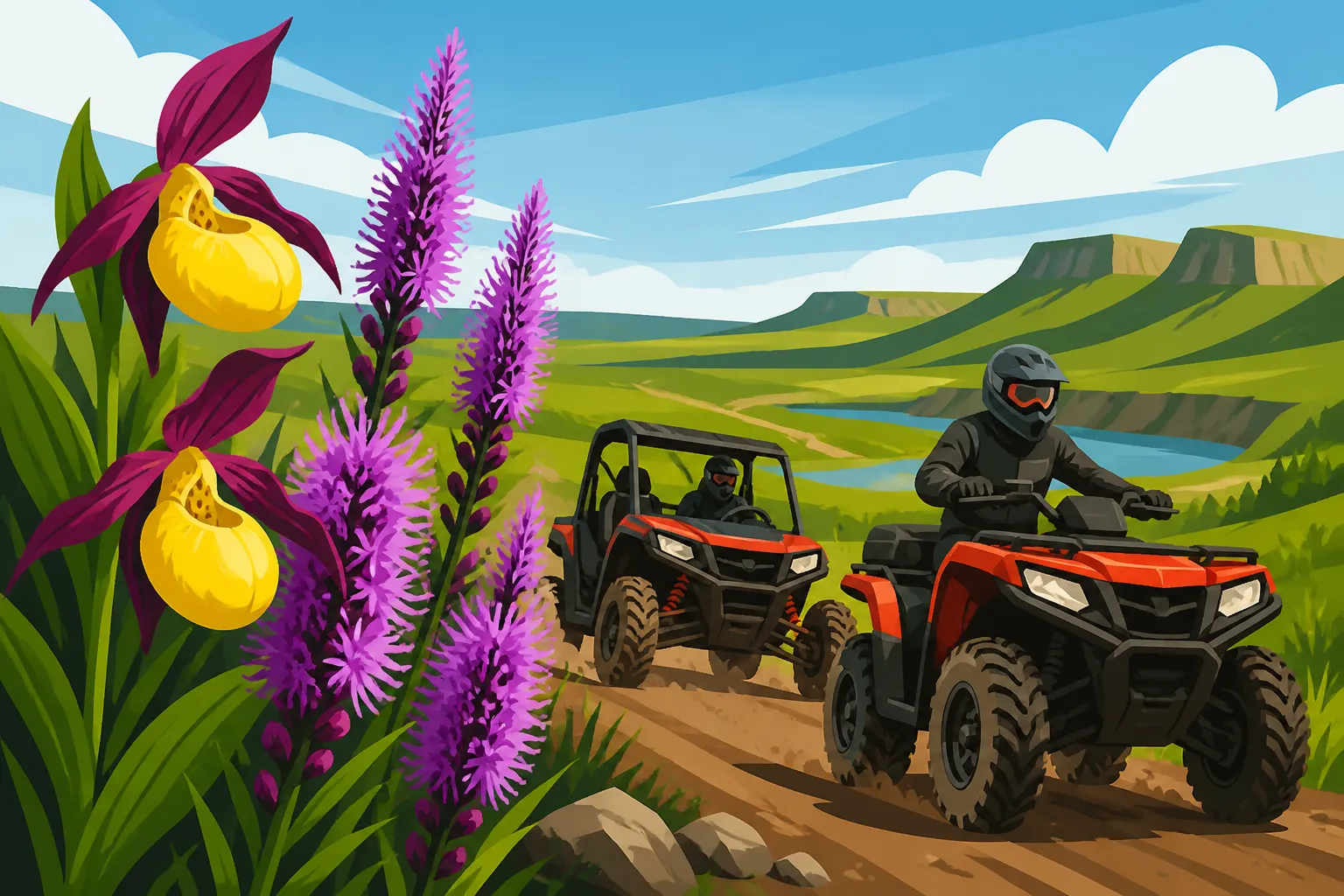
Lady Slipper and Blazing Star Loops
Lady Slipper and Blazing Star are two named riding loops at Pembina Gorge, a North Dakota destination where route choice, machine width, and changing trail conditions can shape the whole day. This guide explains how to compare the loops, prepare your ATV or UTV, check access before leaving, and plan a ride that fits your group without guessing at conditions on the ground.
Getting oriented at Pembina Gorge
Two named loops, one riding area
Lady Slipper and Blazing Star are part of the Pembina Gorge OHV trail system near Walhalla in northeastern North Dakota. They give riders named routes to plan around rather than requiring them to treat the area as one undifferentiated ride. That distinction is useful when a group has mixed experience, different machines, or only part of a day to explore.
A loop can make planning feel simpler because riders can think about a ride as a defined outing: where to start, how long the group wants to be out, and what pace feels comfortable. But a route name alone does not tell you how demanding the ride will be on the day you arrive. Recent rain, soft or rutted ground, vegetation, and a rider’s comfort level can all change how a trail feels.
Pembina Gorge is also a place where current local information matters. Before setting out, check trail status, posted signs, and any closures or access directions for the riding area. For broader orientation, [North Dakota OHV Trails: All Four Riding Areas] can help put Pembina Gorge in context with other places to ride in the state.
Why route choice deserves a little thought
It is tempting to pick a loop based on its name and head out. That can work when conditions are straightforward and everyone in the group knows what to expect. It is less comfortable when a newer rider is trying to keep up, a UTV is close to a width restriction, or the weather has made the surface unpredictable. A few minutes of planning can prevent the familiar mid-ride conversation: “Are we sure this is the right way?”
Start by matching the outing to the people you are bringing, not just the machine you own. A confident solo rider may be happy with a longer or more technical-feeling outing, while a family group may want an easy pace, frequent stops, and a route they can shorten if someone gets tired. If you are organizing for several households, agree on a simple turnaround plan before anyone unloads.
Also think about what “a good ride” means to your group. Some people want to explore and take their time; others want to cover ground. Neither approach is wrong, but they call for different expectations. If your group is new to the area, treat Lady Slipper and Blazing Star as options to verify against current maps and signs, rather than assuming their names alone reveal their difficulty or exact character.
Comparing Lady Slipper and Blazing Star
How to think about Lady Slipper
Lady Slipper is a named loop in the Pembina Gorge riding area, but riders should avoid treating the route name as a promise about difficulty, surface, or ride time. Those details can vary with conditions and may not be obvious from a brief online description. Use the current map and on-site information to understand how the route is laid out before committing your group.
A practical approach is to check three things before choosing it: whether the route is open, whether your machine fits the applicable restrictions, and whether the expected ride suits everyone with you. If a rider in your group is inexperienced, ask what the route looks like on the current map and whether there is a sensible way to turn around or shorten the outing. That is more reliable than deciding based on a photo or a secondhand comment from a different season.
Lady Slipper may be a good option for riders whose goals and equipment fit the route as it is currently posted. For a more focused discussion of matching the loop to a group, see [Lady Slipper Loop and Who It Suits]. Before you go, confirm the route information locally; the experience you have is shaped not only by the named loop but also by weather, maintenance, and any temporary closures.
How to think about Blazing Star
Blazing Star is another named loop at Pembina Gorge. As with Lady Slipper, it is best to use current maps and signs to judge whether it matches your machine and your group, rather than assuming one loop is automatically easier or harder. A route may feel different depending on the surface, recent weather, traffic, and the experience of the person behind the handlebars.
If your group is choosing between the two, compare the information available for both routes side by side. Look for the route’s position on the map, any posted width limits or warnings, and whether the group can comfortably complete the planned ride. If a rider is nervous about getting separated or struggling with an unfamiliar section, choose the outing that gives the group the clearest plan and the most confidence.
It can also help to set expectations before leaving the staging area. Agree that riders will keep a manageable pace, stop at safe places to regroup, and avoid pressuring anyone to continue if conditions or fatigue become an issue. For a route-specific planning discussion, [Blazing Star Loop and Who It Suits] is a useful companion topic. Treat it as a planning aid, then confirm the day’s actual route information before riding.
| Planning question | What to check | Why it matters |
|---|---|---|
| Which loop fits the group? | Current map, route information, and riders’ experience | A named route does not guarantee the same feel in every condition |
| Will the machine fit? | Width restrictions and posted signs | A machine that exceeds a limit may not be able to use a route |
| Is the route open? | Local status information and trailhead notices | Closures and changing conditions can affect access |
| How long should we plan? | Route details, group pace, and time for stops | Actual ride time depends on conditions and the slowest rider |
| What if the outing needs to change? | Turnaround options and a regrouping plan | A simple plan helps prevent confusion if someone is tired or uncomfortable |
Check access, width, and conditions before riding
Confirm machine fit before loading up
Machine width is one of the most important practical checks for a UTV rider planning Pembina Gorge. The riding area is associated with a 60-inch trail width cap, so do not rely on a sales description, a model name, or a guess based on how the machine looks. Confirm your machine’s actual width and check current signs and route information before making the trip. [North Dakota's 60-Inch Trail Width Cap] explains why this detail can affect route planning.
A machine may fit the general idea of an OHV trail but still be unsuitable for a particular route or access point. Accessories can also change the overall width. If you have added wider tires, wheel spacers, a plow, or other equipment, measure the machine in the configuration you plan to ride. The relevant question is not simply what the factory brochure says; it is whether your actual setup can pass the posted restriction safely and legally.
This is especially worth checking if several machines are traveling together. It is frustrating to discover at the trailhead that one UTV cannot proceed while the rest of the group can. If you are unsure, verify the trail’s current requirements before driving to the area. For general orientation on access and other riding locations, [Pembina Gorge: North Dakota's OHV Trail Park] provides broader context for the park and its trail system.
Read the ground and the day, not just the map
Conditions can change after rain, and a trail that seemed manageable during a dry visit may feel very different when the surface is wet. Clay and other soft ground can rut under tires, while mud can make steering and braking less predictable. Give the trail time to recover when conditions call for it. Riding through wet ground just because the route appears open can leave lasting damage and make the outing harder for everyone who follows.
Before you leave, check for closures and any local updates, then look again at trailhead notices when you arrive. Weather on the drive in may not reflect conditions across the riding area. A storm can also create uneven conditions: one section may be firm while another is muddy or blocked. If you encounter a closure or a section that appears unsafe, turn around rather than trying to bypass it through vegetation or off-route ground. [North Dakota Trail Closures After Rain] offers more detail on why wet-weather checks matter.
Bring a plan for changing conditions. That could mean choosing a shorter outing, postponing the ride, or agreeing that the group will turn back if the trail is no longer comfortable. Experienced riders sometimes feel pressure to continue because they have already hauled machines to the area. A useful rule is to judge the ride by what is safe and responsible now, not by the time already spent getting there.
Plan a smooth day for your group
Prepare the route and regrouping plan
Before the ride, identify your starting point, the loop you intend to take, and a place where the group can safely stop if it needs to regroup. Make sure everyone understands what to do if they lose sight of the rider ahead. A short conversation in the parking area is easier than sorting out a communication mix-up on an unfamiliar trail.
If the group is large, consider splitting into smaller riding groups with clear leaders and sweep riders. The leader should know the planned route, while the sweep rider checks that nobody is left behind. If riders use phones or GPS devices, agree on how those tools will be used and what the backup plan is if service is poor or a device runs low on battery. [North Dakota Group Ride Planning] covers more of the practical details for coordinating a larger outing.
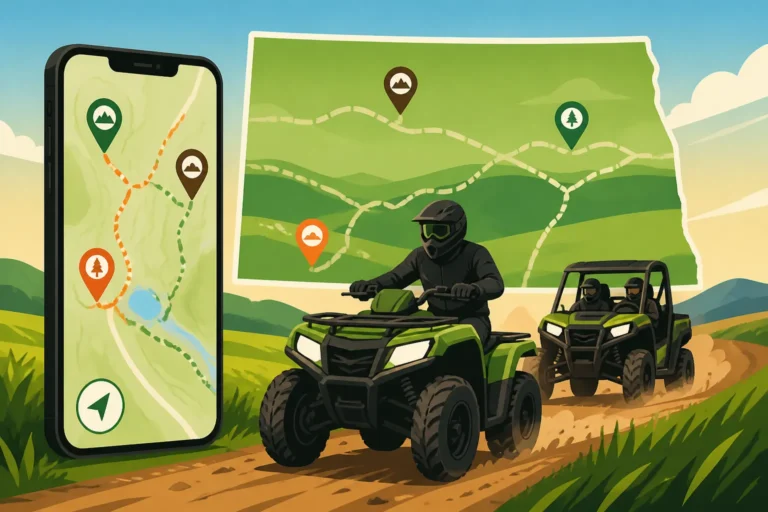
A trail map can help with orientation, but treat it as one tool, not a substitute for posted signs or current local information. Digital tools such as onX Offroad may be useful for reviewing route context and planning before a trip. Still, riders should follow official trail signs and closures, and should not assume a digital map reflects every temporary change on the ground. If you use a phone for navigation, download or save what you need before leaving an area with dependable service.
Pack for the conditions and the people riding
A comfortable day depends on more than choosing a loop. Bring water, weather-appropriate layers, basic first-aid supplies, and anything your group needs for the length of the outing. Conditions can feel different once you are moving through open areas or shaded sections, so a layer that seemed unnecessary in the parking lot may become welcome later.
Carry the essentials for your machines as well. A small tool kit, tire repair supplies appropriate to your setup, and a tow strap can be useful when something minor goes wrong. Keep gear secured so it cannot interfere with steering or become a hazard. If you are riding with children or newer riders, build in breaks and keep the pace steady rather than turning the ride into a test of endurance.
Tell someone who is not riding where you plan to go and when you expect to be back. That simple habit is particularly sensible when the group is unfamiliar with the area or plans to ride for several hours. If you are combining riding with a camping stay, review [North Dakota OHV Camping at Pembina Gorge] and [North Dakota Trailheads With Trailer Parking] as part of the logistics. Confirm the applicable arrangements and access details before traveling.
Ride responsibly and adjust your expectations
Stay on the authorized route
Staying on designated routes protects the riding area and helps avoid conflicts with land managers, other visitors, and nearby landowners. Do not create a shortcut around a muddy section, a closure, or a difficult turn. Leaving the route can damage plants and soil, widen the trail, and make it harder for managers to keep the area open.
Pay attention to gates, signs, and any changes in route direction. If a sign is unclear or you are unsure whether a connection is open to OHVs, stop and check rather than guessing. A trail map and a phone app can support navigation, but signs and current local instructions should guide your decisions. If you want to understand how access can vary across other public riding settings, [North Dakota Grassland Motor Vehicle Use Maps] explains a different kind of route-planning challenge.
Courtesy matters on narrow or busy sections. Slow down when approaching other riders, give people space, and avoid crowding someone who is taking a careful line. If you need to stop, choose a safe location where you are visible and are not blocking the trail. Riders who are patient with each other make the area more welcoming, especially for families and people learning to handle a machine.
Make the ride fit the day you have
A good ride is not measured by how many miles you cover. If the group is tired, the weather turns, or a machine begins acting unusually, changing the plan is sensible. Make sure everyone knows that stopping early is an acceptable choice. That can be especially reassuring for children and new riders who might otherwise stay quiet because they do not want to disappoint the group.
Think about the return trip before you set out. Leave enough time to load machines safely, secure the trailer, and travel home without rushing. If the route takes longer than expected or the ground is difficult, the group should not feel compelled to keep going simply to complete a loop. Follow the safest available option and ask for local guidance when needed.
Lady Slipper and Blazing Star can both be part of a rewarding Pembina Gorge outing when the route, machine, and conditions line up. The most reliable plan is a flexible one: verify access, confirm your vehicle fits, communicate with your group, and be willing to adjust. For broader trip ideas, [Best North Dakota OHV Trails for Beginners] can help you think through how Pembina Gorge fits into a first visit or a wider North Dakota riding itinerary.
Disclaimer
This article is for general informational purposes only and does not constitute professional advice. Laws, prices and regulations vary by location and change over time. Consult a qualified professional for guidance on your specific situation.