North Dakota Dealers Keep $1 of Each Permit
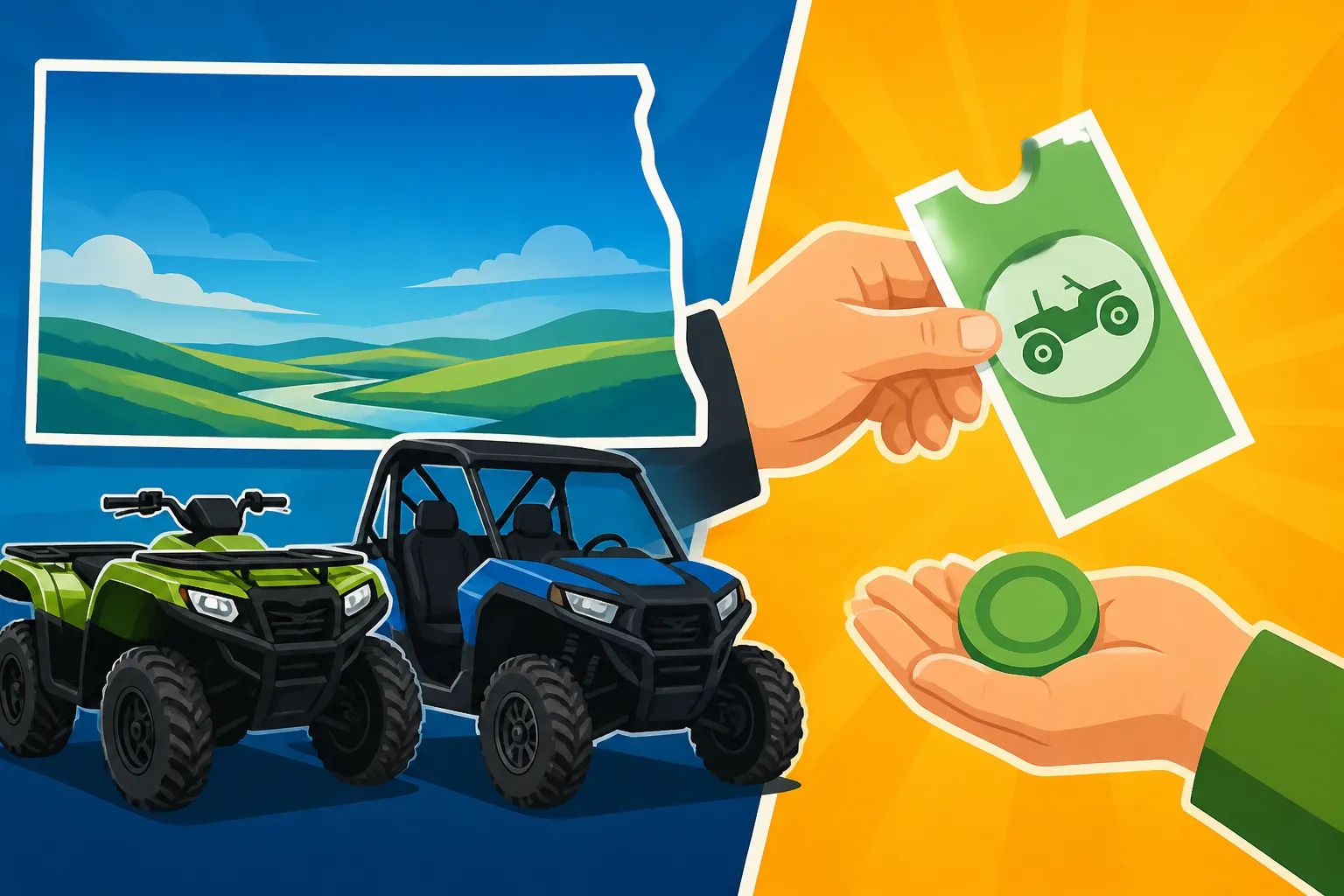
North Dakota dealers keep $1 from each nonresident OHV permit they sell. That can sound like an extra charge, but it is better understood as part of the permit-sale arrangement. Here’s what the dealer’s share means, how to avoid confusing it with other riding costs, and what to check before heading out with an ATV or UTV.
What the dealer’s $1 share means
When a participating dealer sells a North Dakota nonresident OHV permit, the dealer keeps $1 from that permit sale. The dealer is acting as a sales outlet, rather than simply handing you a permit and collecting an extra dollar on top of its price.
That distinction matters when you look at a receipt. The permit price is set through the state’s permit system, while the dealer’s share is part of how the sale is handled. It is not, by itself, a separate state fee added because you bought from a dealer.
The arrangement is similar to a retailer receiving compensation for processing a transaction. The dealer helps make permits available at a place riders may already visit to ask about machines, parts, or local riding. In exchange, the dealer keeps the stated portion of the permit sale and sends the rest through the required process.
| What you see | What it generally means |
|---|---|
| A dealer sells you a nonresident OHV permit | The dealer is an authorized sales outlet |
| The dealer keeps $1 from the permit sale | That is the dealer’s share of the transaction, not automatically an added rider fee |
| The permit has a state-set price | Check the current amount through an official permit source |
| Your receipt shows another charge | Ask the seller to identify whether it is a separate service, payment, or other charge |
| You have a permit | You have not automatically satisfied every registration, safety, access, or land-use rule |
The distinction is useful, but it does not mean every receipt will look identical. A dealer may issue a receipt in its own format, and payment systems can display charges in different ways. If something appears to be an added dollar, ask the clerk to explain the line item before you leave. You can also compare the receipt with the permit information from an official sales channel.
For broader details about who needs the permit and what it covers, see North Dakota’s Non-Resident OHV Permit. If you are buying one for a particular ATV or UTV, [North Dakota Permit for a Visiting Machine] can help you think through the vehicle-specific questions.
Who buys the permit, and what it does not replace
The nonresident permit is intended for qualifying out-of-state riders using OHVs in North Dakota. North Dakota does not offer blanket reciprocity that lets a visitor rely on a home-state sticker or registration alone in every situation. A machine’s home-state paperwork may still matter, but it does not automatically take the place of North Dakota’s visitor permit requirements. For that issue, see North Dakota Has No Reciprocity With Any State.
Before buying, identify the rider, the machine, and the kind of use planned. A permit question can turn on whether you are a North Dakota resident, whether the machine is visiting from elsewhere, and where you intend to ride. If you are staying for an extended period or bringing a machine that may need North Dakota paperwork, do not assume the visitor permit answers every registration question. Check North Dakota’s 30-Day Out-of-State Rule and confirm how the rule applies to your circumstances.
A permit is also not an all-purpose riding pass. It does not, on its own:
- Transfer ownership or prove that you own the machine.
- Replace a title or a registration required for that machine.
- Give you permission to ride across private land.
- Open every public area to OHVs.
- Replace a safety certificate when one is required.
- Pay a state park entrance charge or any other separate access charge.
- Make an otherwise prohibited road, trail, or route legal.
These distinctions are easy to miss when you are planning a trip and see “permit” used for different things. North Dakota’s nonresident OHV permit concerns the applicable OHV requirement for visiting riders. A state park entrance permit, trail access, and landowner permission are separate questions. If your route crosses more than one type of land, check the rules for each section rather than assuming the OHV permit opens the whole route.
The same caution applies to machine type. ATV and UTV owners often use “registration” casually to mean any paperwork attached to a machine, but different documents serve different purposes. A visitor permit is not a title, and it should not be treated as proof that a machine meets road-use equipment rules. Before riding on or near public roads, review the relevant requirements separately.
One practical way to avoid confusion is to write down three questions before you travel:
- What paperwork does this machine need because of where it is registered?
- Does the rider need a North Dakota nonresident permit?
- What rules apply to the exact trail, park, road, or land where the machine will be used?
If you cannot answer one of those questions, pause before assuming that a dealer’s permit sale has settled it. The clerk may be able to explain the transaction, but the dealer’s $1 share does not change the permit’s legal scope.
Where to buy and how to understand the receipt
A dealer is one place to buy a nonresident OHV permit, but it is not the only possible channel. Permits may also be available through other authorized outlets, including state park locations and online sales. The options can be convenient in different ways: a dealer may be close to your route or familiar with local machines, while an online purchase may let you handle the permit before you travel. See How to Buy a North Dakota OHV Permit for the purchase process, along with North Dakota Permits Sold at Any State Park and North Dakota Permits Sold Online.
No matter where you buy, focus on the permit itself, its validity, and the instructions for carrying or displaying it. Do not decide that a permit is valid just because a store receipt says “permit.” Make sure the permit record or document identifies the correct purchase and that you understand any placement or proof-of-purchase instructions that apply.
When a dealer sells the permit, the dealer keeps $1 of the sale. That does not necessarily mean the receipt will literally show a line reading “dealer keeps $1.” The receipt may simply show the permit transaction and total paid. If you need to understand how the money was handled, ask a straightforward question: “Is the displayed amount the permit price, or is there another charge on top of it?”
A dealer can help you with these practical points:
- Whether it sells the relevant nonresident permit.
- How it records the sale and what proof you receive.
- Whether the permit instructions require a decal, printed confirmation, or other form of proof.
- Whether the store has a separate charge for a service or payment method.
That last question is worth asking without assuming that every dealer adds a charge. The dealer’s $1 share is part of the permit transaction; any other charge should be identified separately. If the explanation is unclear, check an official permit channel before paying or buy through another authorized source.
Keep the receipt until you have confirmed that your permit is recorded and that you have the required proof. A receipt is useful if there is a purchase-record issue, but it may not be the same thing as the permit itself. Take a moment to check that the details match what you bought, especially if you are purchasing permits for several riders or machines.
For a paper permit or printed confirmation, a small waterproof document sleeve can keep the paperwork readable in a wet gear bag. Some riders use a simple pouch from a local outdoor store or Amazon, but the pouch is only for storage; it does not replace any required permit display or proof. Keep the permit where you can retrieve it without unpacking the whole machine.
Buying for a group, family, or second machine
The dealer’s share applies to each permit sold, so buying permits for several people or machines can make the transaction look like a bundle of small charges. The important point is to match each permit to the person or machine information the system asks for. Do not assume that one permit automatically covers an entire family, a group ride, or every OHV on a trailer.
Before a group purchase, make a simple list:
- Rider’s name, if the purchase process asks for it.
- Machine description or identifying details, if required.
- The planned riding dates.
- The sales channel and the proof each rider will carry.
- Any separate park, trail, or land-access requirements.
This is especially useful when one person is buying for several friends. A buyer may pay for the whole group, but each rider should know which permit applies to them and how to show it if asked. Do not rely on one person’s phone or paperwork to establish that every other rider is covered unless the permit instructions clearly allow that.
Families should also separate the permit question from youth-rider rules. A permit does not automatically satisfy a safety-course or supervision requirement. Check the rules for the rider’s age and experience as well as the machine and riding location. North Dakota Safety Course Minimum Age is a useful next read if a young rider is part of the trip, and North Dakota Safety Certificate Lookup can help when you need to confirm a certificate record.
The same care applies to a second machine. If a visitor brings an ATV and a side-by-side, do not assume one permit covers both. Confirm the requirement for each machine before buying. The sales receipt should make it possible to see what was purchased, and the permit instructions should tell you how each permit is associated with the machine or rider.
A useful travel setup is to keep three things together but distinct:
- The permit or required proof for the OHV.
- The machine’s ownership and registration documents.
- Any separate park or trail access information.
You can carry these in a waterproof pouch in the truck or gear bag. If you buy a document organizer through Amazon, make sure it is practical for your setup and does not interfere with required permit placement. Do not leave original paperwork exposed on the machine, where it can be damaged by rain, mud, or washing.
If you lose the permit or its proof, do not assume that a photograph of the purchase receipt will be accepted as a replacement. First check the replacement process and what information the issuing channel needs. [North Dakota Permit Replacement If Lost] covers the next steps. It is sensible to photograph paperwork for your own records, but a photo is a backup reference, not a guaranteed substitute for the required permit.
For people keeping a printed trip checklist, Amazon sells basic waterproof sleeves and small organizers, but a plain resealable pouch can work just as well. The useful feature is keeping documents dry and easy to find, not the brand or style.
Validity, timing, and the questions to ask
A nonresident permit has a defined validity period. Do not infer its end date from the day you bought it, the length of your vacation, or the expiration date on your home-state registration. Check the permit’s own dates and rules before you travel. North Dakota’s nonresident permits follow a calendar-based cycle; [Why the Non-Resident Permit Runs January to December] explains why purchase timing and permit validity are not necessarily the same thing.
That calendar cycle can surprise riders who plan a trip late in the season. Buying a permit near the end of its validity period may not give you a full year of use. Before purchasing, confirm the current validity dates and whether a new permit is needed for a later trip. Do not rely on an old permit, an old web page, or a previous season’s receipt to make that decision.
Ask the seller or official source these questions if anything is unclear:
- Is this the correct permit for a nonresident riding this machine?
- What date does the permit expire?
- Does it need to be displayed on the machine, or is another form of proof required?
- Does each machine or each rider need a separate permit?
- Is the amount shown the permit price, or does it include a separate charge?
- What should I do if the permit is lost or the purchase details are wrong?
The dealer’s $1 share should not distract from these more important checks. It explains part of the sale arrangement, but it does not tell you whether the permit is appropriate for your machine, whether it will cover your travel dates, or whether your route is open to OHVs.
Be particularly careful if you are planning a long stay, leaving a machine in North Dakota, or moving into the state. A visitor permit and a resident’s registration obligations are different issues. Once your situation changes, check whether you need to title or register the machine rather than continuing to rely on a visitor permit. The rules may also depend on how the machine is used and where it is kept, so confirm the requirement with the appropriate official office.
It is also worth checking conditions close to the ride date. A valid permit cannot override a temporary closure, wet-weather restriction, posted-land rule, or local restriction. Before setting out, check the trail or land manager’s current information and make sure your intended route is open. For general questions that come up during a stop, see North Dakota Permit Questions Rangers Hear.
A quick way to handle the purchase
For most visitors, the process is straightforward once the permit is separated from the other paperwork. Use this sequence:
- Confirm that you are a nonresident and identify the machine you plan to ride.
- Check whether your length of stay or ownership situation raises a separate North Dakota registration issue.
- Verify the permit requirement and current validity dates through an official source.
- Choose an authorized seller, such as a participating dealer, park location, or online channel.
- Review the amount before paying. If another charge appears, ask what it covers.
- Check the permit or purchase record immediately and keep the required proof accessible.
- Confirm that your destination is open to OHVs and that you meet its separate access rules.
If you buy from a dealer, the dealer keeps $1 from each permit sold. Treat that as part of the sales arrangement, not as a reason to skip the receipt check. If an extra charge appears, ask for an explanation rather than assuming it is the dealer’s share.
That small distinction can prevent a frustrating misunderstanding, but the bigger goal is arriving with the right paperwork for the right machine and knowing where you are allowed to ride. The permit is one part of the trip plan, not the whole plan.
Disclaimer
This article is for general informational purposes only and does not constitute professional advice. Laws, prices and regulations vary by location and change over time. Consult a qualified professional for guidance on your specific situation.