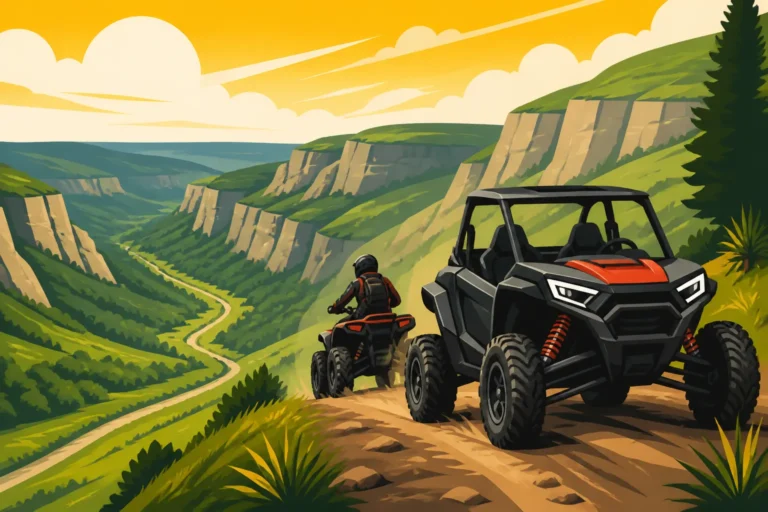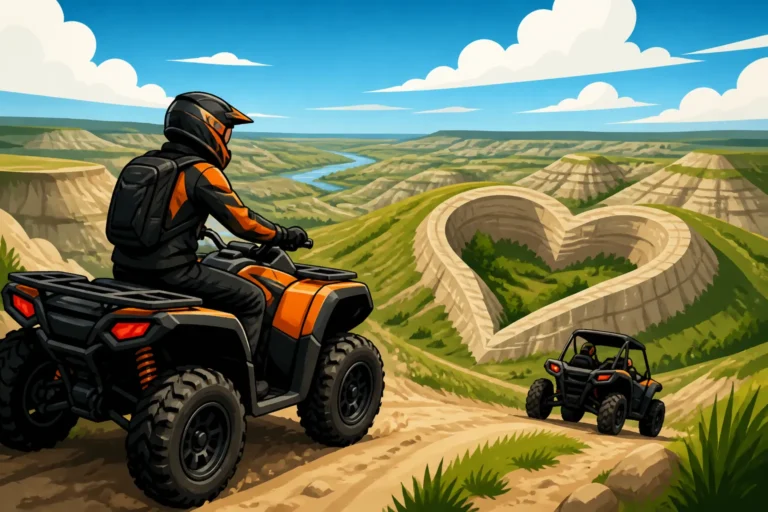
Turtle Mountain Northwest of Bottineau
Turtle Mountain, northwest of Bottineau, offers a different kind of North Dakota OHV outing: a compact riding area where trail planning, shared-use etiquette, and changing conditions matter as much as the machine you bring. This guide explains how to prepare, find your way around, ride considerately, and check the details that can make the difference between a relaxed day and a frustrating one.
Planning an OHV ride at Turtle Mountain
What to expect from the riding area
Turtle Mountain is northwest of Bottineau, in a landscape of wooded slopes, open spaces, and terrain that feels distinct from North Dakota’s broad prairie. The area is often described as having about 12 miles of OHV riding. That makes it a more compact outing than a destination where you can count on riding all day without repeating ground. Plan around the available routes rather than assuming the area is a sprawling trail network.
A smaller riding area can still make for a satisfying trip. You may have time to ride at an unhurried pace, take breaks, and enjoy the setting instead of trying to cover a huge distance. It can also mean that unfamiliar riders reach a junction, closed section, or shared-use area sooner than they expect. Bring a map and pay attention to signs as you go.
Trail layouts, access, and conditions can change. Before leaving home, check official information about the riding area, access point, and any temporary closures. The overview [Turtle Mountain Riding in North Dakota] can help you understand the area in the wider context of North Dakota riding, while [North Dakota OHV Trail Map Downloads] is a useful reminder to plan with maps rather than relying only on memory or a phone signal.
Choosing a starting point and planning your route
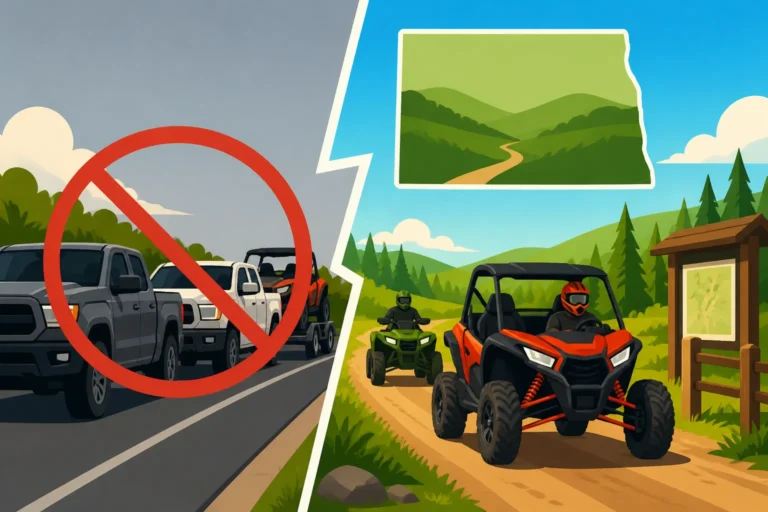
The Sjule Road entrance is a useful landmark to know when planning a Turtle Mountain ride. Before towing there, confirm the current access and parking arrangements. A route that looks simple on a map can be less convenient when you are maneuvering a long trailer, traveling with a group, or arriving during a busy period. For parking considerations, see [Finding the Sjule Road Entrance to Turtle Mountain] and [Parking a Long Trailer at Sjule Road].
If you are new to the area, begin with a conservative plan. Decide where you expect to unload, identify the riding routes you intend to use, and agree on a meeting point in case the group becomes separated. Avoid making the plan depend on every rider being able to follow one person closely through the entire outing; dust, trees, uneven terrain, and different comfort levels can quickly stretch a group out.
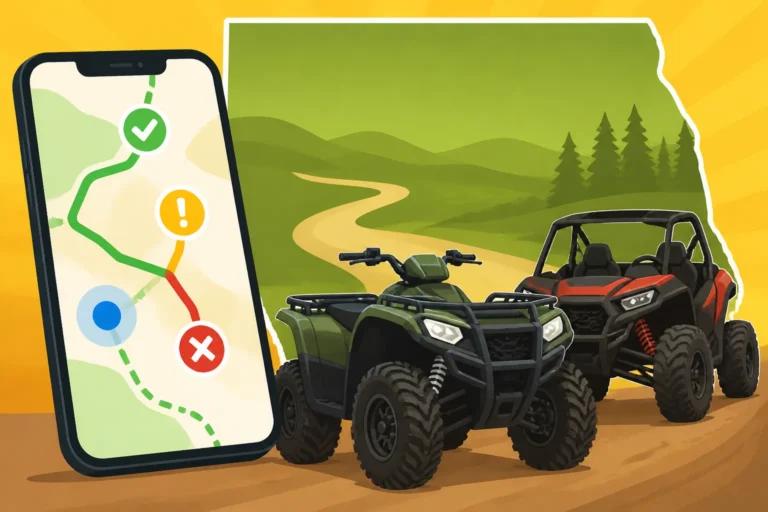
A mapping app such as onX Offroad may help you review a planned route and keep track of where you are, especially if you save information before setting out. Treat it as a planning aid, not as permission to ride somewhere. Posted signs, official maps, closures, and land-use rules should take priority over a line shown on a screen. Download or prepare the information you need before you arrive, since mobile coverage can be unreliable in some wooded or remote areas.
| Before you go | Why it matters |
|---|---|
| Check official access and closure information | A familiar trail or entrance may have changed conditions |
| Confirm where trailers can park | Tight staging areas can be difficult for long rigs |
| Review a current map | It helps you understand junctions and avoid accidental detours |
| Check the weather and recent rain | Wet ground can become slippery or easily damaged |
| Agree on a group plan | Riders can separate even on a relatively short route |
| Bring water, basic tools, and a charged phone | A short ride can still become a long wait if something goes wrong |
Getting ready for the trails
Check the machine, equipment, and paperwork
A quick mechanical check before loading can prevent a small issue from ending the day early. Look over tires, wheels, brakes, steering, throttle movement, lights, and visible fluid leaks. For a UTV, check the seat belts and make sure every passenger has a seat designed for them. On an ATV, confirm that the controls feel normal and that the machine is appropriate for the rider’s experience and the terrain.
Pack the basics you would want if you had to stop away from the trailer: water, a first-aid kit, a small tool kit, a tire repair option suited to your machine, and a way to contact someone. A tow strap can be useful, but only if you know how to attach and use it safely. Wear a properly fitted helmet and protective clothing, and dress for the weather rather than the temperature at the trailhead alone. Wind and shade can make a ride feel cooler, while physical effort and protective gear can make it feel warmer.
Paperwork is easy to overlook when the focus is on loading and meeting friends. Confirm that your machine is properly registered or permitted for the places where you intend to ride, and carry any documents you may need. North Dakota’s requirements can depend on the machine and the rider’s situation, so use [North Dakota Non-Resident OHV Permit] and [North Dakota Has No Trail Permit for Residents] to understand which rules may apply to your visit. Riders under 16 should also check the safety requirements described in [North Dakota OHV Safety Certificates at Age 12].
Check weather and trail conditions before unloading
Recent rain can change the character of a route. A surface that felt firm during a previous visit may become slick, rutted, or vulnerable to damage after wet weather. If conditions look soft, avoid forcing your way through muddy sections. Spinning tires can deepen ruts and make a trail harder for the next rider, as well as increasing the chance of getting stuck.
North Dakota’s prairie weather can shift quickly, and Turtle Mountain’s wooded terrain may create conditions that feel different from the open road. Check the forecast for wind, rain, and temperature, but also look at what has happened recently. A dry forecast for the afternoon does not necessarily mean the ground has dried after overnight rain.
When conditions are uncertain, choose a shorter outing and leave yourself room to turn back. Do not treat a navigation app as a live trail-status service unless it clearly provides verified current information. onX Offroad can be one part of route preparation, but confirm access and closures through official sources before you ride. For more on making that judgment, [North Dakota Trails Closed by Wet Weather] and [North Dakota Trail Closures After a Storm] offer relevant guidance.
Riding safely and sharing the area
Ride for the terrain, not the machine’s capability
A powerful machine can travel faster than the rider can safely read the terrain. Keep a pace that gives you time to respond to turns, uneven ground, other trail users, and unexpected obstacles. Reduce speed where visibility is limited, near junctions, and whenever the surface or trail width changes. If you cannot see far enough ahead to stop safely, slow down.
Stay on routes open to your type of machine. Do not assume that an open-looking space is an invitation to cut across it, and do not create a shortcut around a difficult section. Riding off route can damage vegetation and soil, confuse other visitors, and create conflicts over where machines are allowed. If a route is blocked or signed closed, turn around rather than improvising a new way through.
Keep enough distance between machines to avoid dust and sudden stops. In a group, set a pace that works for the least experienced rider rather than asking that person to keep up at all costs. Agree on a lead rider and a sweep rider, and decide in advance where the group will wait at intersections. These simple habits are especially useful when trees or bends prevent everyone from seeing one another.
Share the trails with horses and other visitors
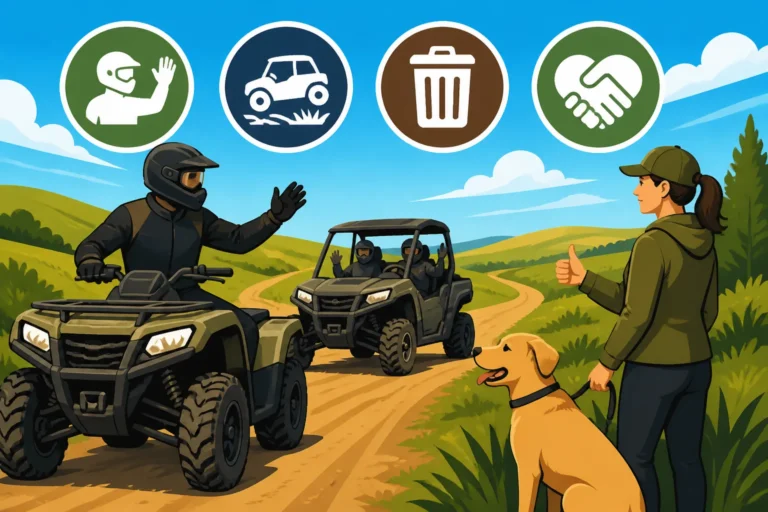
Turtle Mountain is a shared-use area, so an OHV ride may bring you near horseback riders or other visitors. A horse can react unpredictably to engine noise or a machine appearing suddenly around a bend. When you see horses, slow down well before reaching them, give the riders room, and follow their instructions about how to pass. If the trail is narrow or visibility is poor, stop and wait until the situation is calm and the riders indicate that it is safe to proceed.
Keep the engine noise low where practical, avoid revving near other trail users, and do not accelerate past a horse just because there seems to be enough physical space. Dust can also be unpleasant for people traveling on foot or horseback, so leave a generous gap and wait for it to settle before moving on. [Turtle Mountain Shared With Horses] is a helpful topic to review before your trip.
Etiquette matters even when everyone is following the rules. A calm, predictable pass can prevent a tense encounter; a sudden burst of speed can turn a routine meeting into a safety risk. If your group is large, allow room for other visitors to pass and avoid blocking trail entrances while regrouping. For more general guidance on being a considerate visitor, see [North Dakota Trail Etiquette Locals Expect].
Making the trip work for your group
Prepare for navigation and changing plans
A short trail system can still be confusing if several routes meet, signs are hard to spot, or riders in a group make different assumptions about which way to go. Before starting, identify the route you plan to follow and a point where everyone will pause if the group separates. Make sure each rider knows what to do if they lose sight of the person ahead.
Carry a navigation backup that does not depend entirely on mobile data. A saved map, a paper map, or a written note about the planned route can help if a phone battery dies or reception drops. If you use onX Offroad, review the map before arriving and consider saving relevant information for offline reference. Still, follow official signs and current land-management guidance if they differ from your planned route.
If you are exploring with children or less experienced riders, keep the outing flexible. A planned loop may take longer than expected when the group stops often, encounters other trail users, or needs to address a machine issue. Set a turnaround time, not just a distance goal. A relaxed ride with everyone comfortable is a better outcome than completing every planned mile while the group is tired or stressed.
Make a practical day trip from Bottineau
Bottineau is a natural base for planning a Turtle Mountain outing. Think through the full day, not only the time spent riding: travel to the area, trailer parking, unloading, breaks, and the drive back all take time. Bring food and water, and avoid assuming that fuel, supplies, or services will be immediately available at the access point. Check your fuel before leaving town and make sure your vehicle has enough range for the trip home.
If you are visiting from farther away, decide where you will stay and how you will secure your machine and trailer when not riding. Confirm lodging arrangements directly, especially if you need parking space for a long trailer. You can also compare this outing with other riding destinations in the state through [North Dakota OHV Trails: All Four Riding Areas] and [North Dakota Trails Near Minot].
After the ride, take a few minutes to inspect the machine before loading. Check for packed mud, loose parts, tire damage, or anything that feels different from the start of the day. Clean mud before it hardens, while following any local wash or drainage guidance. A brief post-ride check can reveal a problem before it becomes a bigger repair—or surprises you on the next trip.
Disclaimer
This article is for general informational purposes only and does not constitute professional advice. Laws, prices and regulations vary by location and change over time. Consult a qualified professional for guidance on your specific situation.