Pembina Gorge Closing After Rain
Rain can turn a planned Pembina Gorge ride into a frustrating trip if the trails close before you arrive. Wet ground is easily damaged by tires, and riding through it can deepen ruts or make a trail unsafe. This guide explains why closures happen, how to check conditions near Walhalla, and what to do when rain changes your plans.
Why Pembina Gorge closes after rain
Wet trails can be damaged quickly
At Pembina Gorge State Recreation Area, rain can make trail surfaces soft and vulnerable. A tire that would leave little trace on dry ground may sink into saturated soil, churn up the surface, or cut a rut that remains after the trail dries. Repeated traffic can magnify that damage, especially on narrow routes or slopes where water already runs downhill.
The problem is not limited to the ride you can see in front of you. A track can direct rainwater into a rut, and that rut can carry water farther along the trail. Erosion can loosen soil, expose roots, and make a route harder to maintain. Closing trails during wet conditions helps protect the riding surface and the surrounding landscape.
Wet ground can also make the ride less predictable. Mud can reduce traction, hide holes or rocks, and make it harder to steer or stop. A trail that seems manageable at the entrance may become slippery or deeply rutted farther in. For riders on an ATV or UTV, turning around can be difficult if the route narrows or the machine loses grip.
A closure is about conditions, not just rainfall
Rainfall totals alone do not tell the whole story. The ground may already be saturated from earlier precipitation, or a brief storm may leave a particular section slick even if other areas seem dry. Shade, drainage, slope, soil type, and the amount of recent traffic can all affect how quickly trails become rideable again.
That is why it is risky to decide that a trail must be open because the rain has stopped or the sun has come out. The surface can remain soft below a dry-looking top layer. A machine can break through that crust, leave deep tracks, and cause damage before the rider realizes how wet the ground still is.
A posted closure may apply to the whole riding area or to specific trails or facilities. Do not assume that one open-looking entrance means every route is available. Check the exact status before unloading, and follow posted signs once you arrive. For broader trip planning, [North Dakota Trail Closures After Rain] and [North Dakota Trails Closed by Wet Weather] explain how weather can affect riding access elsewhere in the state, too.
How to check Pembina Gorge trail status before leaving
Check official updates close to your departure
Before driving to Pembina Gorge, look for an update from the park or the agency responsible for managing the area. The most useful update is one that clearly states whether riding is open, closed, or restricted, and whether the notice applies to all trails or only particular areas. If the information is unclear, contact the park or managing office rather than relying on an old post or a report from another rider.
This matters particularly if you are traveling from outside the Walhalla area. A forecast can help you anticipate changing conditions, but it cannot tell you whether the manager has closed the trails. A social media comment, a map label, or a friend’s experience from a previous weekend may also be out of date by the time you arrive.
For a direct status-checking approach, see [Checking Pembina Gorge Status by Phone]. When you call or review an official update, ask whether the closure covers the riding area, whether any specific routes remain open, and whether the status has changed since the latest rain. If you are also comparing nearby destinations, [North Dakota OHV Trail Map Downloads] can help you plan a broader North Dakota riding trip, but maps do not replace current closure notices.
Use maps as a planning aid, not permission to ride
A mapping app can help you understand where trails and roads are in relation to your route, but a mapped line is not proof that riding is allowed that day. onX Offroad may be useful for organizing a route and keeping a map available while traveling, but confirm Pembina Gorge’s current operating status through the official park or agency information before you unload.
If you use onX Offroad, check that you have the map information you need before entering an area where cell reception may be limited. Still, treat the app as a navigation aid rather than a closure alert unless you have confirmed that it is showing an official, current notice. A route visible on a screen does not override a sign at the trailhead or an instruction from park staff.
It can help to keep three pieces of information separate: the route you hope to ride, the boundaries and access details shown on your map, and the current rules or closures issued by the area manager. For trail dimensions and machine fit, review [The 60-Inch Gate at Pembina Gorge] and [North Dakota Trails With Width Limits]. A route that suits your machine still may be closed because of wet conditions.
| Information source | Useful for | What it does not confirm by itself |
|---|---|---|
| Official park or agency update | Current closure or access notice | Conditions on every individual patch of trail |
| Phone call to the managing office | Clarifying an unclear or changing notice | Permission to ignore signs posted at the site |
| Weather forecast | Anticipating rain and planning travel | Whether the park has opened or closed trails |
| onX Offroad or another mapping tool | Route planning and navigation | Current legal access unless the information is confirmed |
| Trailhead signs | Instructions at the site | Whether an earlier online update has since changed |
What to do if the trails are closed
Do not ride around a barrier or onto another route
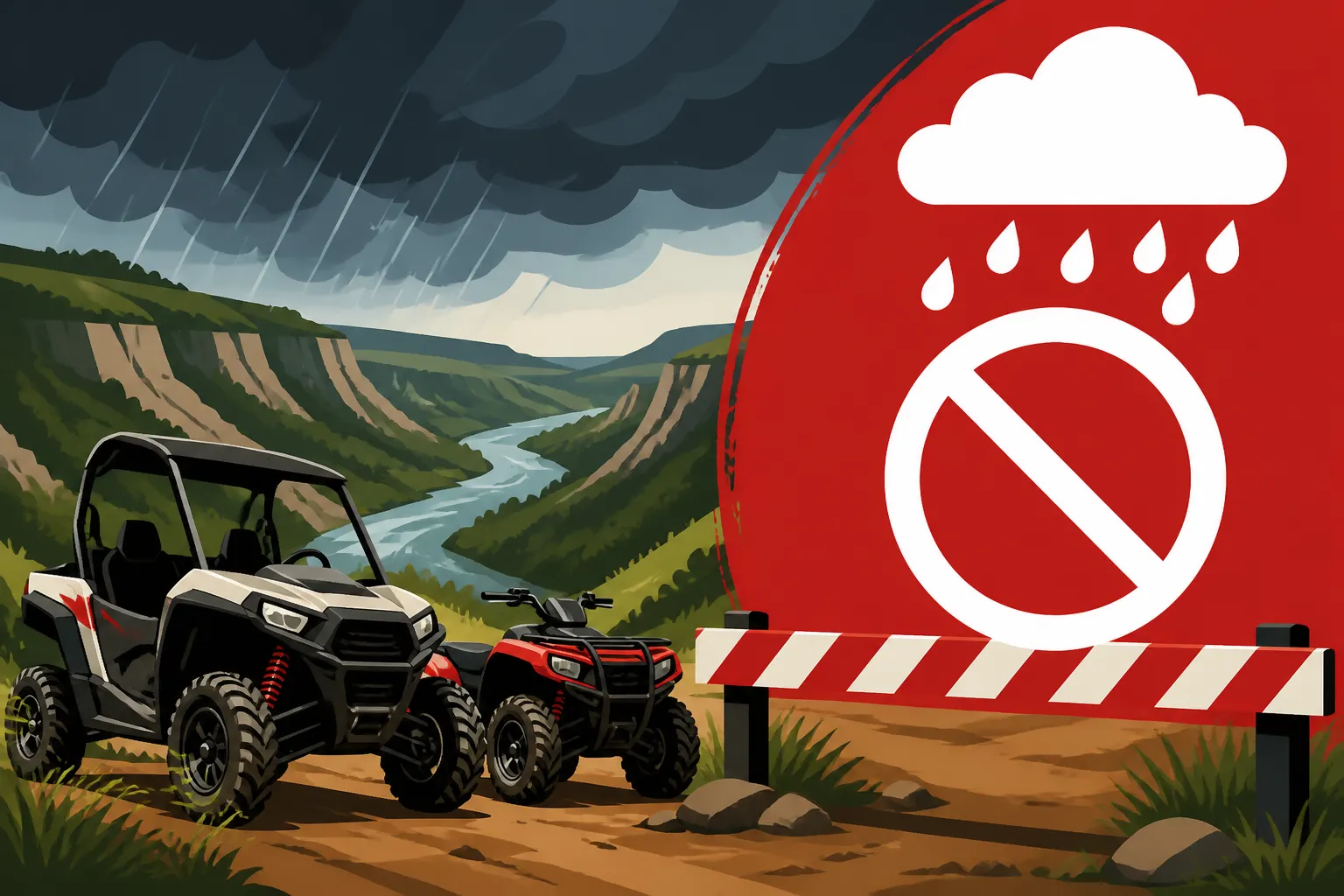
When the area is closed, do not try to bypass a gate, ride around a sign, or find an informal route that appears to skirt the closure. That can damage areas that are not designed for motorized use and may put you onto private land, an unsafe surface, or a route with different restrictions. A closure is not an invitation to decide for yourself that the ground looks dry enough.
If a closure notice is limited to certain trails, stay within the routes the managing agency has confirmed are open. Do not treat a partially open area as a blanket exception. A closed segment may be closed because of soft ground, maintenance, erosion, or another site-specific concern that is not obvious from the trailhead.
If you arrive and find a sign that conflicts with what you saw online, follow the sign and contact the park for clarification. Make a note of the location and wording of the notice so you can ask a clear question. You can also review [Pembina Gorge Closing After Rain] alongside [Pembina Gorge Became North Dakota’s 14th State Park] for context about the area and its management. Do not assume that a general description of the park establishes access on a particular day.
Make a backup plan before you travel
A backup plan can save a long drive from turning into a wasted weekend. Before leaving, identify another legal riding option or a non-riding activity nearby, and check that the alternative is open and appropriate for your machine. Do not simply follow a map to another public-looking area; motorized access can differ from one property or trail system to another.
If Pembina Gorge is closed, you might reschedule rather than switch destinations at the last minute. That can be the better choice if other nearby areas have also had rain or if you are unsure about their rules. For a future trip, [Pembina Gorge Camping Rates] and [North Dakota Campgrounds Near a Trailhead] can help you think through lodging and camping plans, but check current access and reservation details before making arrangements.
Keep your group informed as soon as you learn about a closure. Someone towing a machine, a family traveling with children, or a rider meeting friends at the trailhead may need time to adjust. A quick message with the status, the source of the update, and your alternate plan can prevent riders from making separate trips based on different assumptions.
Getting ready for your next Pembina Gorge ride
Prepare for changing prairie weather
North Dakota weather can change quickly, so build a status check into your departure routine rather than checking only when you first plan the trip. Review the forecast before loading, then confirm the riding-area update again before you head out. If rain develops during your drive, stop and check for a newer notice before continuing to the trailhead.
Carry enough supplies to deal with delays, especially if your route includes a long drive or your group is traveling with children. Water, warm or rain-resistant layers, a charged phone, and a basic first-aid kit are sensible preparations. If you use offline maps, download or save what you need while you have a reliable connection. onX Offroad can support navigation planning, but keep the park’s own status information as your authority for access.
It is also worth discussing a turnaround plan before the ride. Agree on what the group will do if rain begins, a trail becomes unexpectedly slick, or a closure is announced. That conversation can prevent pressure to continue simply because everyone has already traveled to the area.
Ride lightly when trails are open
When access is confirmed, stay on designated routes and avoid creating new tracks around mud or puddles. A detour around a soft patch can widen the trail and damage vegetation along its edge. If the surface is deteriorating, slow down, avoid aggressive acceleration, and consider turning back rather than trying to push through.
Mud can cling to tires and equipment, then transfer to firmer ground or other routes. Clean your machine as appropriate after a ride, and avoid returning to a trail system if the conditions remain too wet. Local trail information such as [Tread Lightly on Wet Clay] and [Washing Gumbo Off Before It Sets] offers practical reminders for minimizing the mess and impact of riding on wet ground.
The best approach is simple: check the official status, respect closures, and treat a wet trail as a reason to pause rather than a challenge to overcome. That protects the trails for the next ride and helps keep Pembina Gorge enjoyable for riders who come after you.
Disclaimer
This article is for general informational purposes only and does not constitute professional advice. Laws, prices and regulations vary by location and change over time. Consult a qualified professional for guidance on your specific situation.