North Dakota Gumbo Mud and What It Does
North Dakota gumbo can turn a firm-looking trail into sticky clay that clings to tires, packs into fenders, and makes steering unpredictable. If you’re planning an ATV or UTV ride after rain, this guide explains what gumbo mud does to your machine, how to judge conditions, and when the smartest move is to turn around.
What North Dakota gumbo mud does to an ATV or UTV
Why gumbo gets so difficult after rain
Gumbo is a sticky, fine-textured clay soil. When it’s dry, it may be hard and dusty; when it’s wet, it can soften into a slick layer that grips tires and builds up quickly. A trail that looked harmless from the truck can become a slow, messy slog after a shower, especially where water collects or vehicles have already churned up the surface.
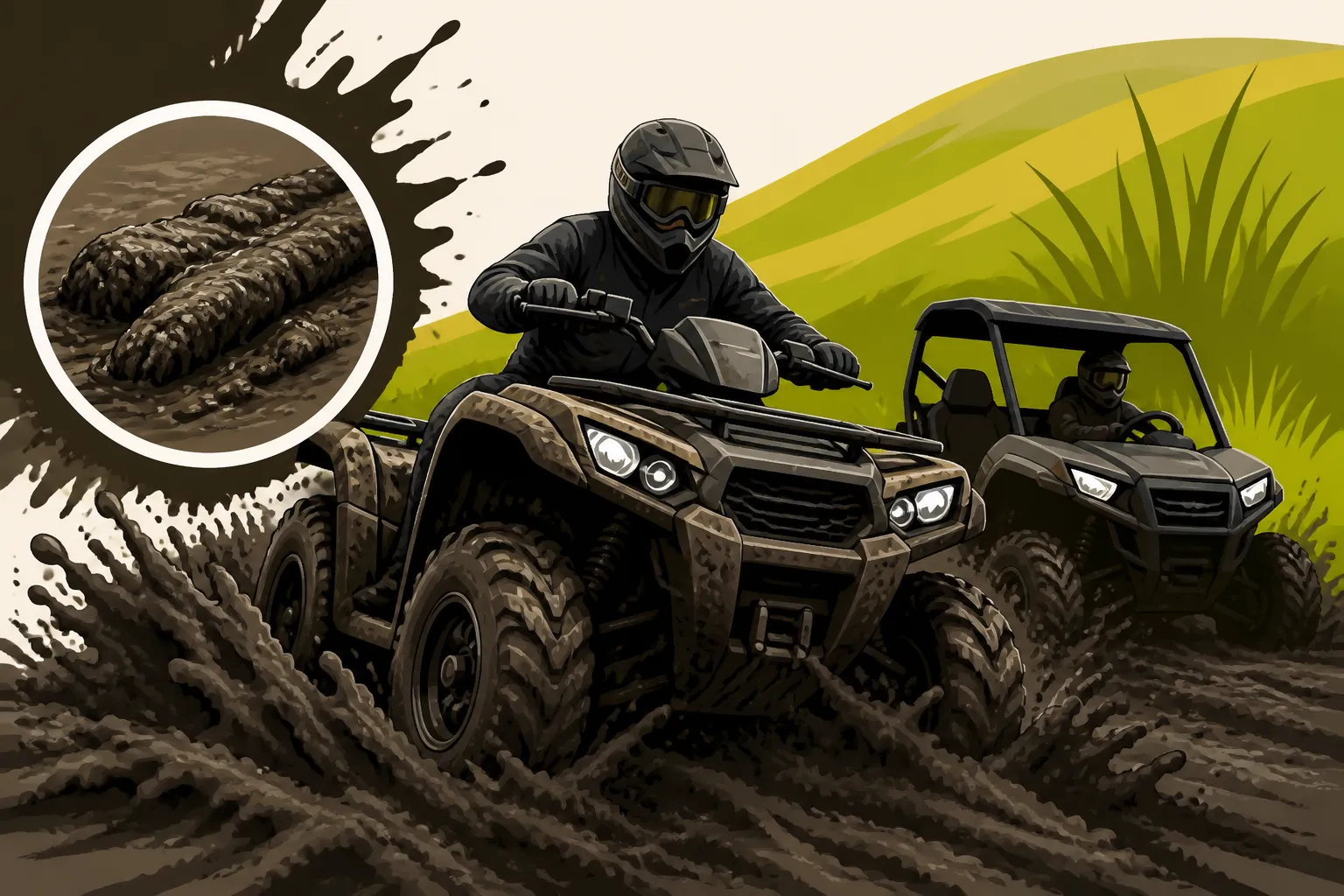
The problem isn’t just that gumbo is slippery. It can cling to tire tread until the openings that normally shed mud fill in. As the tread packs over, the tire loses the edges it needs to bite into the ground. The machine may spin even though the tires look aggressive, and extra throttle can dig ruts without helping you move forward.
Mud also builds up on the underside of a machine. It can collect around the skid plate, suspension, fenders, axles, and wheels. In a UTV, packed mud may affect moving parts or make the machine feel sluggish. On either type of vehicle, a thick layer can add weight and make it harder to see what’s happening around the tires and suspension.
The amount of trouble depends on the soil, slope, drainage, temperature, and recent use. A shallow wet patch on a well-drained route isn’t the same as a long stretch of saturated clay. For a broader seasonal perspective, see [North Dakota Riding in Spring Mud].
How gumbo changes traction and control
On gumbo, a tire can slide sideways even when the machine is pointed straight ahead. That can be unnerving on a slope or near a ditch edge. A quad may drift toward the low side, while a side-by-side can feel as if its front end is pushing wide in a turn. Sudden steering inputs and sharp throttle changes tend to make the situation worse.
Mud can also hide the shape of the ground. A wet patch may conceal a rut, a soft shoulder, a culvert edge, or a water-filled depression. If one wheel drops into a rut, the machine can pull abruptly in that direction. On unfamiliar routes, slow down before the surface changes rather than waiting until the tires are already sliding.
Repeated wheelspin is a warning, not a strategy. Spinning tires can dig deeper holes, damage a trail, and leave you more deeply stuck. If the machine stops making forward progress, ease off the throttle and reassess. Sometimes a slight change in line is enough; sometimes the conditions are telling you the route is no longer suitable.
That’s why wet-weather judgment matters as much as tire choice. Public trail conditions can change quickly, and a route that was manageable earlier may become badly rutted after more traffic or another shower. Check [North Dakota Trails Closed by Wet Weather] and [North Dakota Trail Closures After a Storm] before setting out, and follow closures rather than trying to find a way around them.
How to prepare before riding in gumbo
Check the route and the weather, not just the sky overhead
A dry parking area doesn’t guarantee dry trails. Rain may have fallen elsewhere along a route, and low areas can stay saturated after the nearby ground firms up. Check the forecast for the riding area and ask about recent conditions when possible. If you’re heading toward Pembina Gorge, Turtle Mountain, or another riding area, confirm that the route you intend to use is open and appropriate for your machine.
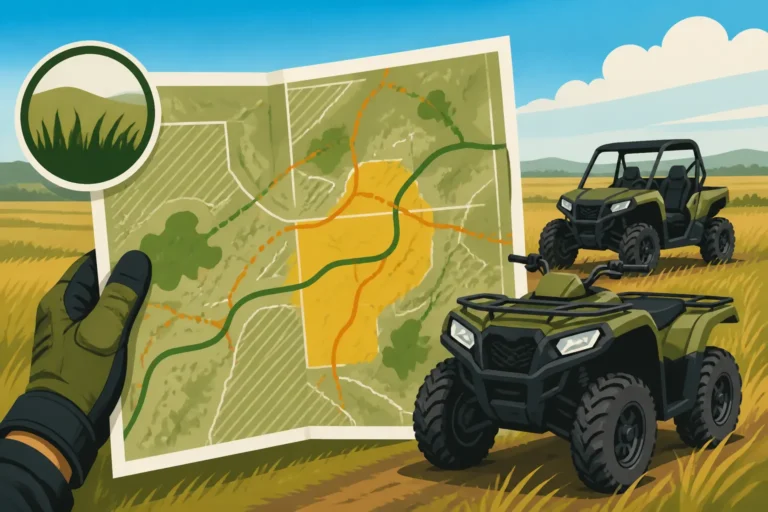
Use a map to understand where you are and where you can safely turn around. An offline map can be helpful in places where cell service is unreliable, but a digital route line is not proof that a trail is open or passable. onX Offroad can help riders review mapped routes and keep their location in view; check current public-land information and local notices separately before relying on any route. If you use onX Offroad, download the information you need before leaving service, and carry a backup plan for navigation.
Avoid treating a route shown on a map as permission to ride. Land access, closures, and permitted uses can differ from one place to another. In particular, don’t detour onto private land or closed ground because a marked route has become muddy. [North Dakota Trail Status by App and Phone] offers more on checking conditions before you travel.
Choose tires, gear, and recovery equipment thoughtfully
There isn’t one tire that makes gumbo harmless. Tire design, tread depth, machine weight, tire pressure, and the actual mud all affect performance. Mud-oriented tread may shed clay better than a shallow, worn pattern, but aggressive tires can also tear up a soft trail when they spin. Follow the machine and tire manufacturers’ guidance for pressure rather than copying a number from another rider’s setup.
A simple pre-ride check can prevent a frustrating day from becoming a mechanical problem:
- Inspect tire condition and look for cuts, embedded debris, or badly worn tread.
- Check that your winch, if fitted, operates correctly and that the line and hook are in good condition.
- Carry a rated tow strap and identify the recovery points approved for your machine.
- Pack gloves, eye protection, water, basic tools, and clothing suitable for a wet, windy ride.
- Tell someone where you plan to ride and when you expect to return.
A strap is useful only when it’s used safely. Attach it to a manufacturer-approved recovery point, never a tow ball or an improvised piece of bodywork. Keep people out of the space around a loaded strap, and don’t stand in line with it. Read [Carrying a Tow Strap on the Prairie] before you depend on a strap as your recovery plan.
How to ride when the trail is muddy
Use smooth inputs and stop before spinning tires dig in
Approach muddy sections slowly enough to read the surface, but maintain steady momentum where it’s safe to continue. Avoid sharp turns, abrupt braking, and sudden bursts of throttle. Smooth inputs give you a better chance of keeping the machine balanced and reduce the odds of digging deep ruts.
When choosing a line, look for firm ground and avoid the edges of water-filled ruts. Don’t assume the deepest-looking path is the only way through. If other riders have already created a trench, following it may pull your tires into a groove you can’t easily escape. On a side slope, think carefully before crossing; a sideways slide can be harder to correct than a slow retreat.
If the tires begin to spin, ease off rather than holding the throttle open. Stop in a safe spot, check what the machine is resting on, and look for a way to back out or reposition without tearing up the trail. If the route is deteriorating, turn around early. It’s usually easier to make that decision before the machine is buried to its frame.
Be especially cautious where water hides obstacles. Don’t charge into standing water if you can’t tell how deep it is or what lies underneath. Follow your owner’s manual for limits on water, mud, and maintenance. A machine that makes it through a deep crossing can still suffer problems if water or mud reaches components that aren’t designed for it.
Know when to turn around and protect the trail
A few signs mean it’s time to stop pushing forward: the machine repeatedly loses traction, the ruts are getting deeper, water is concealing the route, or you’re damaging the trail simply by trying to pass. Turning around isn’t a failure. It’s a way to protect your machine, avoid a recovery that could put someone at risk, and keep the riding area usable for the next visitor.
Wet clay is particularly easy to damage. A tire that spins can cut a rut down to firmer soil, and several machines following the same line can widen or deepen it quickly. If a trail looks too soft, don’t try to “help” it by riding around the muddy section. That can create a second track and increase the damaged area. Follow posted signs and closures, and give the route time to dry.
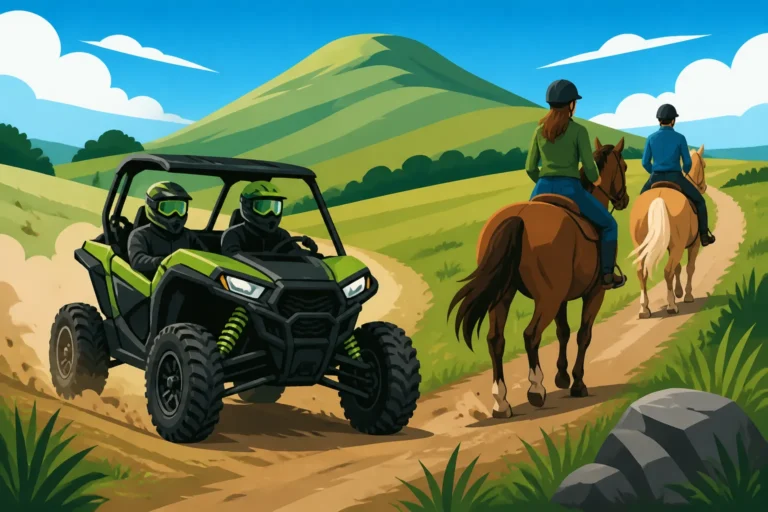
Trail etiquette matters when other riders are nearby, too. Leave room between machines so the rider ahead has space to stop or change direction. Don’t crowd someone who is assessing a difficult section, and ask before helping with a recovery. For more on riding lightly on wet ground, read [Tread Lightly on Wet Clay] and [North Dakota Trail Etiquette Locals Expect].
| What you notice | What it may mean | A sensible response |
|---|---|---|
| Tread fills with sticky clay | The tires may be losing their ability to grip | Reduce throttle, stop safely, and reassess the route |
| Machine slides sideways | The surface may be slick or the slope unstable | Avoid abrupt steering and retreat if you cannot hold a safe line |
| Ruts deepen with each attempt | The ground is too soft for continued traffic | Turn around rather than making the damage worse |
| Water hides the trail surface | Ruts, holes, or obstacles may be concealed | Don’t enter unless depth and footing are clear |
| Mud packs under the machine | Clearance or moving parts may be affected | Stop when safe and inspect; clean it before it hardens |
| The trail is posted closed | Riding is not allowed on that route | Leave the closed area and use an open route only if conditions permit |
What to do after a gumbo ride
Clean the machine before the clay hardens
Gumbo is easier to deal with while it’s still damp. Once it dries, it can become hard to remove from tight spaces and may hide damage underneath. Rinse carefully, paying attention to the wheels, suspension, underside, and areas around the brakes. Avoid directing high-pressure water at seals, bearings, electrical connectors, or other sensitive parts unless your owner’s manual says it’s safe.
After washing, inspect the machine rather than assuming it’s ready for the next ride. Look for packed mud around moving parts, damaged guards, loose fasteners, tire cuts, and anything caught around an axle. Check for unusual noises or a change in steering feel. If you rode through deep water or the machine began running differently, follow the manufacturer’s maintenance guidance and arrange professional service when needed.
Mud can conceal leaks and small damage, so a quick visual check is worthwhile even after a short ride. If a belt-driven UTV was worked hard in deep mud, consult its manual about inspection and cleaning. Don’t keep riding if you suspect a mechanical problem. [Washing Gumbo Off Before It Sets] has more practical cleaning guidance, and [Tires That Work in Gumbo] can help you think through tire choices for your usual riding conditions.
Review what happened before planning the next trip
Think about where the machine began to lose traction, how quickly the conditions changed, and whether you had a safe place to turn around. That information can help you make a better call next time. If a route became impassable or appeared damaged, share a factual update through the appropriate trail or land-management channel so others can plan responsibly.
If you used onX Offroad to keep track of your location, reviewing your route afterward may help you see where you encountered trouble and where a safer turnaround might have been. Don’t treat a recorded track as a recommendation for others to follow: conditions may have changed, and a line taken in wet weather can cross ground that should now be avoided. Use onX Offroad as a navigation aid alongside current closures and local guidance, not as a replacement for them.
Before the next ride, give the ground time to recover. A sunny afternoon doesn’t necessarily mean a clay trail is ready for traffic; shaded areas and low spots may remain soft. When in doubt, choose a better-drained route or postpone the trip. That small change can spare you a long recovery, a difficult cleanup, and a trail that’s badly rutted for everyone else.
Disclaimer
This article is for general informational purposes only and does not constitute professional advice. Laws, prices and regulations vary by location and change over time. Consult a qualified professional for guidance on your specific situation.