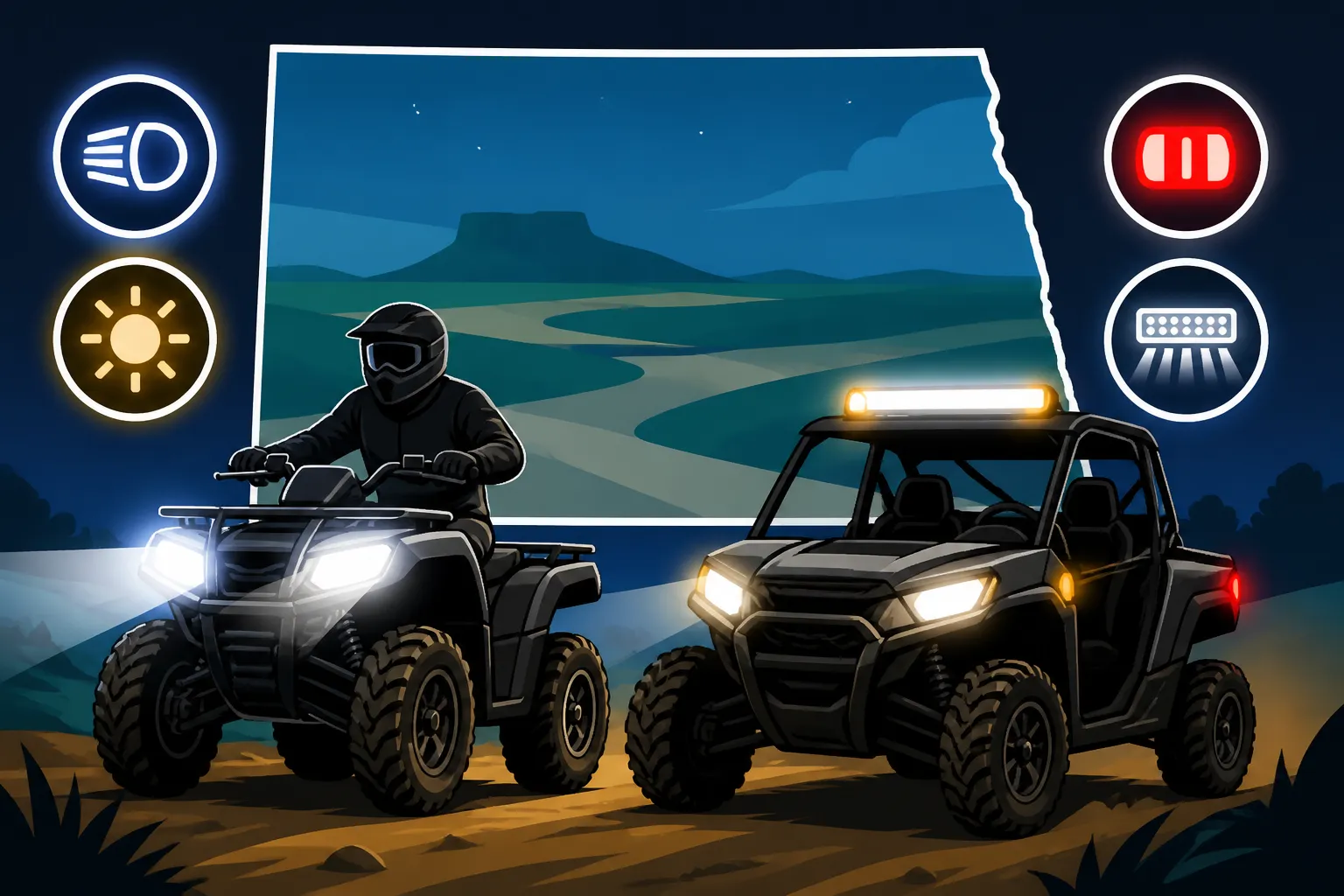
North Dakota Lighting Rules on a Quad
It’s incredibly frustrating when you want to take your ATV or UTV out for a spin, especially if the sun is starting to dip, but you’re just not sure what lights you actually need to be legal and safe on North Dakota’s roads and ditches. This guide is all about cutting through that confusion, helping you understand exactly what the law requires for your quad's lighting, and giving you practical tips to ensure you’re always visible and compliant, whether you’re just cruising to a fishing spot or heading out for a nighttime ride.
The Basics: What North Dakota Law Says About ATV/UTV Lighting
Navigating the rules for off-highway vehicles (OHVs) in North Dakota can sometimes feel like trying to read a map in the dark. When it comes to lighting, there are some very clear, non-negotiable requirements that all ATV and UTV owners need to be aware of, especially if you plan on using public roads, even for short distances. These aren't just suggestions; they're foundational safety standards designed to protect you and everyone else sharing the road. Understanding these basics is your first step toward responsible riding and avoiding unnecessary trouble.
Why Lights Are Crucial Beyond Just Seeing
Many riders think of lights purely in terms of illuminating their path, especially when hitting the trails after dusk or before dawn. While seeing where you're going is absolutely vital for avoiding obstacles, ruts, and wildlife, that's really only half the story. On North Dakota’s roads and even in those expansive ditches, your lights serve an equally, if not more, important function: making sure other people see you.
Think about it from the perspective of a driver in a full-sized pickup truck approaching you. An ATV or UTV is much smaller, lower to the ground, and often less conspicuous than a car. Without proper, bright, and correctly functioning lights, you can blend into the background, especially against the wide-open prairie sky at twilight or in the glare of an oncoming vehicle. This isn't just about avoiding a ticket; it's about preventing a potentially life-altering accident.
The reality of sharing our vast landscape means that even if you're only on the shoulder for a few hundred feet, you're interacting with cars, farm equipment, and other vehicles. Your lights are your primary communication tool to let others know you're there, what direction you're heading, and when you're slowing down. It's an investment in your safety and a courtesy to every other person on the road.
Minimum Requirements: Headlamps, Taillamps, and Reflectors
North Dakota law is quite specific about the essential lighting your OHV needs to operate legally on public roads or rights-of-way. At a bare minimum, your quad needs at least one headlamp, which must emit a white light. This headlamp needs to be capable of revealing persons and vehicles at a certain distance ahead. Beyond just seeing, its primary role on public land is to ensure you are seen. For specifics on how far that light should reach, you can check out [North Dakota Headlamp Distance Standards].
In addition to a headlamp, your machine must be equipped with at least one taillamp that emits a red light. This red light is your rearward indicator, crucial for preventing rear-end collisions. Just like the headlamp, the taillamp must be visible from a significant distance to drivers approaching from behind. Complementing the taillamp, you'll also need at least one red reflector on the rear of your OHV. These passive reflectors are a last line of defense, bouncing light back even if your taillamp fails.
The purpose of these requirements is simple: complete visibility. Imagine a scenario where you're cruising down a gravel township road just as the sun dips below the horizon. A farmer in a combine might be coming up behind you, or a car might be turning onto the road ahead. Your headlamp makes you obvious from the front, your taillamp and reflector from the back. These aren't optional accessories; they are fundamental safety devices that underscore the serious nature of operating an OHV on shared roadways.
Brake Lights and Directional Signals: When They're Necessary
While headlamps, taillamps, and reflectors are foundational, the rules extend to how you communicate your movements to other road users, primarily through brake lights and, in some cases, directional signals. Brake lights are generally a universal requirement for any vehicle operating on a roadway, and OHVs are no exception. Your quad must be equipped with at least one red brake light that illuminates when you apply the brakes. This is critical for preventing rear-end collisions, providing a clear visual cue to anyone following you that you are slowing down or stopping. It gives them precious seconds to react, especially on dusty roads where stopping distances can be longer. [North Dakota Brake Light Requirement] outlines these specifics, so make sure yours are in good working order.
Now, about directional signals, or turn signals, the requirements can be a bit more nuanced for OHVs compared to cars. While a car typically has built-in turn signals, many ATVs and UTVs come from the factory without them, especially those designed purely for off-road use. If you are operating your OHV on a roadway where vehicle traffic is permitted, and you plan to make turns or change lanes, having functional turn signals is a smart, and often legally necessary, addition. Without them, you'd be relying on hand signals, which can be less effective and less visible, especially at night or in challenging weather.
Many riders choose to install aftermarket turn signal kits to ensure full compliance and enhanced safety when transitioning between trail and road. These kits, often readily available, integrate seamlessly into your machine's electrical system, providing clear, unmistakable indications of your intended movements. For a comprehensive look at what other equipment might be required for road usage, including mirrors and horns that work in conjunction with signaling, you might also want to check out [North Dakota Mirror and Horn Requirements].
Riding After Dark: Specific Rules and Safety Considerations
Riding an ATV or UTV in North Dakota after the sun sets can be an exhilarating experience, offering unique perspectives of the prairie and its starry skies. However, the thrill of night riding comes with increased responsibility and stricter adherence to lighting rules. Visibility drastically decreases for everyone, making your machine's lighting system even more critical. It’s not just about what you can see; it’s about making absolutely sure that every other vehicle on the road can see you, understand your intentions, and react safely. Ignoring these rules can turn a fun night ride into a dangerous, and costly, ordeal.
The "Traveling With Traffic" Rule and Night Riding
One of the most important, yet sometimes overlooked, rules for operating an OHV on a roadway after dark in North Dakota is the "traveling with traffic" mandate. This isn't just a suggestion; it's a critical safety regulation. When you’re on a public road or shoulder during the hours of darkness, your machine must be operated in the same direction as vehicular traffic. You absolutely cannot ride against the flow of traffic, even if you think you’re being more visible by facing oncoming headlights.
The logic here is straightforward: drivers are conditioned to expect vehicles to travel in a certain direction, and their eyes are trained to spot headlights approaching from a distance on the correct side of the road. If you're riding against traffic, even with bright lights, you create an unexpected and confusing situation for oncoming drivers, drastically increasing the risk of a head-on collision. Your lights, regardless of how powerful they are, won't compensate for violating this fundamental rule of the road. For a deeper dive into this, take a look at [North Dakota Night Travel Direction Rule].
This rule extends beyond just paved highways; it applies to gravel roads, township roads, and any designated right-of-way where other vehicles might be present. Always assume that another vehicle could be around the next bend or cresting the next hill. Riding with traffic ensures that your lights are interpreted as they should be, giving other drivers maximum time to react to your presence. Safety isn't about hoping for the best; it's about setting yourself up for success and minimizing risks.
Supplemental Lighting: Beyond the Bare Minimum
While North Dakota law dictates minimum lighting requirements, many experienced riders, myself included, find that the standard factory lighting just isn't enough, especially when you're out past dusk or tackling challenging terrain. Investing in supplemental lighting can dramatically enhance your safety and riding enjoyment. We’re talking about adding powerful LED light bars, auxiliary pod lights, or upgraded headlights that cast a wider and brighter beam. These additions not only help you see much better into dark corners and over rough terrain, but they also significantly increase your overall footprint and visibility to others.
For those venturing into truly dark environments like deep woods trails or open fields at night, a good LED light bar can turn night into day, illuminating obstacles, animal eyes, and path changes long before your stock lights would catch them. Companies like SuperATV offer a huge range of LED light bars and pod lights that can make a world of difference for both seeing and being seen. They’ve got everything from small, focused spotlights to wide-angle floodlights that can transform your machine's illumination capabilities.
However, a word of caution: while these supplemental lights are fantastic for off-road use, many powerful light bars are not considered street-legal when fully illuminated on public roads. Their intense brightness can blind oncoming drivers. Typically, if you have a light bar, it should be off and potentially covered when you're on a public roadway. Always double-check local regulations and be considerate of other drivers. The goal is to enhance safety, not create new hazards.
Avoiding Glare and Ensuring Proper Aim
Adding powerful supplemental lights to your ATV or UTV is a fantastic way to boost visibility and enhance your night riding experience. However, with great power comes great responsibility, especially when it comes to aiming those lights. A poorly aimed headlight or an unshielded light bar, no matter how expensive or bright, can become a serious hazard for oncoming traffic and even for riders ahead of you. The intense glare from modern LED lights can temporarily blind drivers, leaving them unable to see the road or distinguish your machine.
It's not just about having the brightest setup; it's about having the right setup and using it intelligently. When installing new headlights or auxiliary lights, take the time to properly adjust their beam pattern. Most manufacturers provide guidelines for aiming, usually involving parking on a flat surface a certain distance from a wall and aligning the beam. The goal is to illuminate the path ahead without spilling excessive light upwards into the eyes of other road users. This small effort dramatically improves safety for everyone sharing the road.
Moreover, if you have those powerful off-road light bars, be extremely mindful of when you're using them. They are designed for situations where there is no oncoming traffic or when you're truly deep in the wilderness. The moment you transition onto a public road, even a seldom-used gravel one, those lights should be switched off or dimmed to their street-legal setting. Common courtesy, combined with legal compliance, dictates that you do everything you can to avoid creating a blinding situation for others. Your impressive light setup should enhance your adventure, not endanger others.
Practical Tips for Lighting Up Your Quad
Keeping your ATV or UTV properly lit isn’t a set-it-and-forget-it task. Just like any other crucial component on your machine, your lighting system requires regular attention and care. The harsh environments that OHVs often operate in – mud, dust, water, vibrations – can take a toll on bulbs, wiring, and lenses. Beyond mere compliance, ensuring your lights are always in top working order is a key aspect of proactive safety, preventing unexpected breakdowns or even a roadside citation. A few minutes of preventative checks can save you a lot of hassle and keep your night rides smooth and safe.
Regular Maintenance: Keeping Your Lights Working
One of the easiest ways to get a preventable ticket, or worse, put yourself in a dangerous situation, is to neglect your OHV's lighting system. Regular maintenance isn’t just about the engine or suspension; it’s critically important for your lights. Before every ride, especially if you anticipate being out after dark or in low-light conditions, do a quick walk-around. Turn on your ignition and check your headlamps, taillamps, and brake lights. Have a buddy stand behind you and press the brake pedal to confirm the brake light illuminates brightly.
Beyond just checking if they turn on, inspect the lenses. Are they caked with mud, dust, or scratched? A dirty lens can drastically reduce light output, making your powerful headlamp no better than a dim flashlight. Clean them regularly with a soft cloth and mild soap. Also, give the wiring a quick look. Vibrations from rough riding can sometimes loosen connections or chafe wires, leading to intermittent failures. Catching a loose wire or a slightly corroded terminal during a pre-ride check is far better than discovering it miles from anywhere in the dark.
Don't forget about your reflectors either. Even though they don't consume power, they're essential for passive visibility. Make sure they're clean, intact, and securely mounted. The frustration of getting a ticket for a simple burnt-out bulb or a mud-obscured taillight is something every rider wants to avoid. A little proactive maintenance goes a long way in keeping you safe and legal on every ride.
Upgrading Your System for Enhanced Safety
While stock lighting meets minimum legal requirements, it often leaves much to be desired in terms of brightness, durability, and beam pattern. Upgrading your OHV's lighting system isn't just about adding flair; it's a significant enhancement to your safety and the longevity of your components. The most common upgrade is switching from traditional incandescent or halogen bulbs to LEDs (Light Emitting Diodes). LEDs are brighter, draw less power from your battery, and have a much longer lifespan, making them a wise investment for any serious rider.
For those looking to really boost their visibility, especially on those dim gravel roads or during early morning ditch runs, checking out an aftermarket provider like SuperATV for their plug-and-play lighting kits can be a game-changer. They make it pretty straightforward to upgrade your factory setup with brighter, more reliable components, often without complex wiring modifications. Beyond just headlights and taillights, consider adding extra marker lights or even reflective tape to your machine. These small, relatively inexpensive additions can make your quad much more conspicuous from multiple angles, particularly crucial when you're sharing space with larger vehicles.
Remember, [North Dakota Equipment Required on a Roadway] outlines many of the legal necessities, but safety-conscious riders often go above and beyond these minimums. Think about situations where you might be temporarily stopped on a shoulder or navigating through tall grass in a ditch. Additional side markers or amber flashing lights can grab attention where standard lights might be obscured. These upgrades aren't just for extreme off-roaders; they're for anyone who values their safety and wants to be seen clearly by others.
Understanding Local Ordinances and State Law Overlaps
Navigating the rules for ATV and UTV riding in North Dakota means understanding a layered legal landscape. While the state provides a foundational set of laws regarding OHV operation, including lighting requirements, it's crucial to remember that local jurisdictions can, and sometimes do, implement their own specific ordinances. This means that what's perfectly legal in one county or township might have subtle differences or additional restrictions in another, especially when it comes to road access and the accompanying equipment.
For instance, a particular city might have more stringent rules about riding an OHV on certain municipal roads or within city limits, which could indirectly affect when and how your lights need to be used, or even if supplemental lights are permitted within those boundaries. While state law generally sets the baseline, it's always a good practice to check with local law enforcement or municipal offices if you plan to operate your OHV extensively within a specific city or county. This is particularly relevant given [North Dakota County and City ATV Ordinances] that can impose limitations.
The key takeaway here is not to assume that state law is the only law. The vast majority of regulations you'll encounter will indeed stem from state statutes, but that doesn't exempt you from localized rules. A quick call to the local sheriff's department or city clerk's office can save you a lot of headache and potential fines. Being informed about both state and local provisions ensures that your lighting setup, and your riding in general, is always compliant and safe, no matter where your North Dakota adventures take you.
Common Lighting Misconceptions and Troubleshooting
Even with the best intentions, riders often fall victim to common misconceptions about OHV lighting or face unexpected technical glitches that leave them in the dark. Whether it’s assuming lights are only for extreme night riding or encountering a sudden electrical problem on the trail, understanding these issues can save you from frustration, danger, and potential legal trouble. Being prepared for common lighting challenges and knowing when your assumptions might be off are crucial aspects of being a responsible and safe ATV or UTV owner in North Dakota.
The "Daylight Only" Myth
One of the most persistent myths I've heard from fellow riders is the idea that if you only ride during broad daylight, you don't really need to worry about your OHV's lighting system. "I've heard folks say, 'Oh, I only ride in broad daylight, I don't need fancy lights.' But even during the day, if you're out on the shoulders or crossing a paved road, your visibility to others is paramount. A bright headlight and taillight, even in the middle of a sunny afternoon, can literally save you from a close call." This couldn't be further from the truth, especially when you consider North Dakota’s diverse riding environments. Even in the brightest sunshine, lights play a critical role in your safety and legal compliance.
Consider situations like dusty gravel roads, which are common across the prairie. Your machine can kick up a significant dust cloud, drastically reducing visibility for vehicles behind you. A functioning taillight, especially if it’s bright, can cut through some of that dust, signaling your presence. The same goes for crossing busy highways or even rural paved roads. A flashing amber light, if permitted, or simply a bright headlight, makes you stand out against the background and helps oncoming drivers judge your speed and position.
Furthermore, weather can change in an instant in North Dakota. A clear, sunny morning can quickly turn into an overcast, foggy, or rainy afternoon, plunging visibility. Having fully functional lights means you're prepared for these sudden changes. Relying solely on the sun means you’re unprepared for low-light conditions that aren't necessarily "night." Your lights are a year-round, round-the-clock safety feature, not just a night-riding accessory.
Troubleshooting Common Lighting Issues on the Trail
There's nothing quite like the sudden dread of realizing your lights aren't working when the sun is setting and you're miles from your truck. Common lighting issues are a fact of life for OHVs due to vibrations, exposure to elements, and occasional impacts. But often, the fix is simpler than you might think. A quick pre-ride check, as mentioned earlier, can prevent many headaches, but knowing some basic troubleshooting steps can be a lifesaver when you're out in the field.
If a light suddenly goes out, start with the most obvious culprit: the bulb. Just like in a car, bulbs burn out. Carrying a spare bulb for your headlight and taillight is a smart move. Next, check the fuse box. OHVs have fuses to protect their electrical systems, and a blown fuse is a common reason for a light circuit to fail. Your owner’s manual will show you where the fuse box is and which fuse corresponds to your lights. "It's always a good idea to pack a small tool kit and maybe even some spare fuses if you're heading out for a long ride. There's nothing worse than being miles from home and having a headlight suddenly go out, especially if you planned on a bit of a dusk return."
If the bulb and fuse are good, the problem is likely in the wiring. Look for loose connections, frayed wires, or corrosion at the terminals. Vibrations can cause wires to pull out of connectors, and mud/water can lead to corrosion. A test light or multimeter can help pinpoint where the power stops. Sometimes, it’s a simple ground wire that has come loose. For more complex issues or if you're looking to upgrade to more robust and reliable wiring, checking out SuperATV for their replacement parts or upgraded wiring harnesses can provide a more permanent solution and added peace of mind.
The Legal Implications of Non-Compliance
It's easy to dismiss lighting regulations as just another bureaucratic hurdle, but ignoring them carries real and serious consequences. Beyond the immediate safety risks we've discussed, operating an OHV with inadequate or non-functional lighting in North Dakota can lead to legal penalties. An officer who pulls you over for a lighting violation isn't just being nitpicky; they're addressing a clear safety concern. Depending on the severity and specific circumstances, you could be facing fines, court costs, and potentially even more severe charges if your non-compliance contributes to an accident.
The cost of a ticket for a basic OHV violation, including equipment infractions like insufficient lighting, might seem minor at first glance. However, these costs can quickly add up, especially when you factor in court fees and the time lost dealing with the legal process. For a clearer picture of what a citation might entail, you can consult [North Dakota Ticket Cost for a Road Violation]. These penalties are designed to deter unsafe behavior and emphasize the importance of adhering to vehicle safety standards.
More importantly, if you're involved in an accident and your OHV's lighting was found to be non-compliant or defective, it could have significant implications for liability. Even if you believe the other party was at fault, a lack of proper lighting could be used to assign partial responsibility to you, affecting insurance claims and potential legal proceedings. The few dollars saved by neglecting a burnt-out bulb or opting out of a necessary lighting upgrade pale in comparison to the financial and emotional toll of a serious accident or legal battle. Being proactive about your OHV's lighting isn't just about following the rules; it's about protecting your wallet, your machine, and most importantly, yourself.
North Dakota OHV Lighting Requirements Summary
| Component | Requirement | Purpose | Notes |
|---|---|---|---|
| Headlamp | At least one, white light, visible ~500 ft | Illuminate path, ensure visibility to oncoming traffic | Essential for dawn, dusk, night, and low-visibility conditions. |
| Taillamp | At least one, red light, visible ~100-500 ft | Ensure visibility to following traffic | Critical for preventing rear-end collisions. |
| Reflector | At least one, red, rear-facing | Passive visibility if taillamp fails | Mandatory in addition to taillamp. |
| Brake Light | At least one, red, illuminates upon brake application | Signals slowing/stopping to following traffic | Crucial safety feature. |
| Turn Signals | Recommended for road use, especially at night | Clearly indicates turns/lane changes | May not be factory standard; aftermarket installation advised. |
| Supplemental Lights | Off-road use only; must be off/covered on public roads | Enhanced vision off-road, increased general visibility | Not street legal when fully illuminated on public roads. |
| Direction of Travel | Must travel with vehicular traffic on roadways | Essential for predictable and safe road sharing | Applies day and night; even more critical after dark. |
Disclaimer
This article is for general informational purposes only and does not constitute professional advice. Laws, prices and regulations vary by location and change over time. Consult a qualified professional for guidance on your specific situation.