North Dakota Noise Complaints About Quads
Few things can sour the relationship between an off-highway vehicle (OHV) enthusiast and their neighbors faster than noise. It’s a frustrating reality when you just want to enjoy your ride, but the sound your quad or side-by-side makes becomes a point of contention, leading to complaints and potential legal headaches. This guide is here to walk you through everything you need to know about noise complaints regarding OHVs in North Dakota, from understanding the regulations to proactive steps you can take to keep the peace and enjoy your machine responsibly.
Understanding North Dakota's Noise Regulations for OHVs
When you're out riding, whether it's on a designated trail, along a legal ditch, or even just crossing your own property, the sound your machine makes is a factor that can draw attention – both good and bad. North Dakota, like many places, has regulations in place to address excessive noise, though specific decibel limits can sometimes feel a bit like a moving target depending on where you are and who you ask. It’s important to understand the legal framework that governs OHV noise, because ignorance of the law is rarely an excuse that holds up.
The Legal Framework: What the Law Says
North Dakota's laws regarding OHVs aim to balance the freedom of riders with the peace and safety of residents and other public land users. While there isn't always a single, universal "OHV noise law" that covers every scenario, various statutes and administrative rules can come into play. Generally, these laws focus on preventing disturbances and ensuring machines are operated with proper equipment, such as a functional muffler. You won't typically find a blanket decibel limit posted on a state statute for every type of OHV in every location, but rather language that addresses "unreasonable" or "excessive" noise, or specific requirements for exhaust systems.
For instance, the state might require that all OHVs operating on public lands or public access areas be equipped with a muffler in good working order, designed to prevent excessive or unusual noise. This isn't just about volume; it's also about the type of sound. A poorly maintained exhaust system, even if not illegally loud, can create a grating, irritating sound that draws more complaints than a properly tuned, higher-performance system that still meets legal requirements. Understanding [North Dakota Muffler Requirements] is a crucial first step for any responsible rider.
It’s also worth noting that specific situations, like operating an OHV within residential areas or during certain hours, might fall under broader public nuisance laws or local ordinances even if there isn't an explicit OHV noise statute for that exact scenario. The state wants to ensure that the enjoyment of one group doesn't infringe unduly on the rights of others to peace and quiet, especially in areas where people live or recreate without motors.
Deciphering Decibel Limits: What's "Too Loud"?
This is often where the rubber meets the road (or the tire meets the trail) when it comes to noise complaints. While North Dakota may not have a simple "all OHVs must be under X decibels" rule across the board for every type of riding, certain contexts or types of machines may have more specific requirements. Often, the state will refer to the machine's original manufacturer specifications for noise output. Aftermarket modifications that significantly increase noise beyond these standards can be a problem.
What constitutes "too loud" can also be subjective, which is why enforcement often relies on an officer's judgment or a clear violation of a specific equipment requirement. However, some organized riding areas or events might have explicit decibel limits that are enforced using sound meters. If you’re participating in an organized race or event, it’s always best to check their specific rules. For general riding on public land, the focus tends to be more on "unreasonable" noise that disturbs others, particularly in designated quiet zones or near residences.
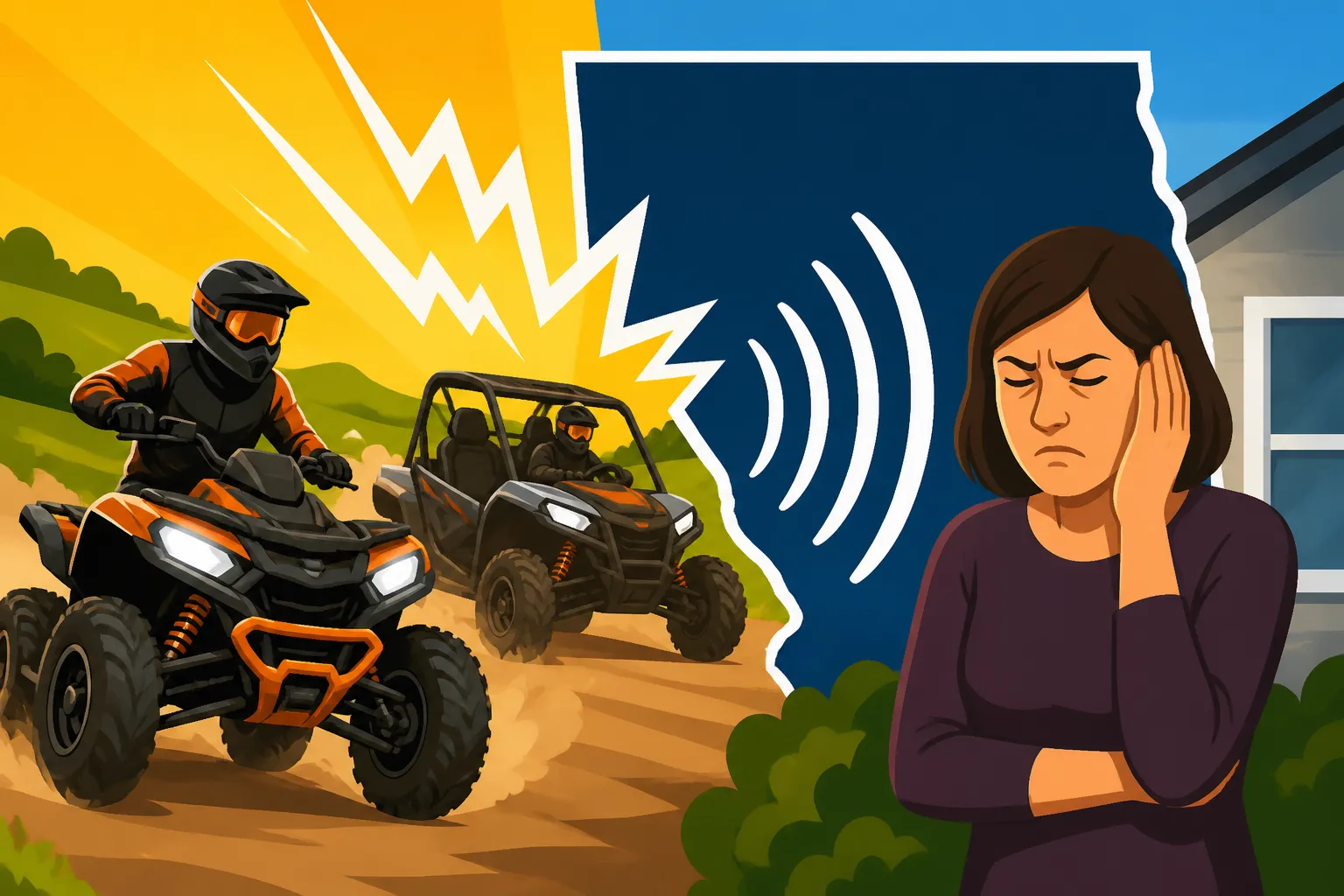
Beyond legal definitions, "too loud" also exists in the realm of community perception. What a rider considers "normal engine sound," a nearby resident might perceive as a jarring disruption to their peaceful afternoon. This disconnect is often at the heart of noise complaints and why proactive measures are so important. The perception of noise can also be amplified by the time of day, how often it occurs, and the specific location. Riding in an open field far from homes at midday might generate no complaints, while the same noise level near a lake cabin early in the morning could quickly lead to a phone call to local authorities.
Common Sources of OHV Noise
The primary source of noise from an OHV is, predictably, its engine and exhaust system. However, other factors can contribute to overall noise levels and the likelihood of a complaint. A stock machine generally meets manufacturer noise specifications, but riders often modify their vehicles, sometimes unwittingly increasing noise.
Aftermarket exhaust systems are a major culprit. While many are designed for performance, some sacrifice quiet operation for a more aggressive sound or increased horsepower. Removing baffles or spark arresters can also significantly increase noise. Tires, especially aggressive off-road treads, can create a surprising amount of road noise, particularly when riding on harder surfaces like gravel roads or paved sections. The [North Dakota Rules for Riding a Gravel Road] or a [North Dakota Rules for Riding a Paved Road] often consider tire noise, though it's usually secondary to exhaust.
Beyond the machine itself, riding style plays a huge role. Rapid acceleration, high RPMs, and aggressive throttle use in sensitive areas will naturally generate more noise than smooth, controlled operation. Riding in groups can also amplify the perceived noise, even if each individual machine is within acceptable limits. Finally, the terrain can influence noise – sound travels differently over open fields versus through dense woods, and echoes can make an otherwise moderate noise seem much louder.
How Noise Complaints Are Filed and Handled in North Dakota
Experiencing a noise complaint, whether you're the one making it or receiving it, can be a stressful situation. Understanding the process can help you navigate it more effectively. It’s not always a clear-cut case of an immediate fine; often, it involves a series of steps, starting with who gets involved and what kind of investigation takes place.
Who to Contact: Local vs. State Authorities
If someone has a noise complaint about an OHV, their first point of contact will usually be local law enforcement. This could be the county sheriff's department in rural areas or the city police department within municipal limits. These local agencies are typically the first responders to nuisance complaints because they have the jurisdiction and the resources to investigate on the ground. They are also most familiar with local ordinances that might apply.
Sometimes, if the riding is happening on state-managed land, like a state park or a designated OHV trail system, a complaint might go to a park ranger or a North Dakota Game and Fish Department enforcement officer. These officers are well-versed in the specific regulations governing state lands. It's less common for a general OHV noise complaint to go directly to a state-level agency like the Department of Transportation unless it involves a more serious, widespread issue or a specific road-related violation. Ultimately, local law enforcement often acts as the primary gatekeeper for most noise-related grievances.
It’s also important for riders to know that local jurisdictions can have their own rules. [North Dakota County and City ATV Ordinances] often include provisions related to noise, operating hours, and areas where riding is prohibited. What's perfectly acceptable in one rural township might be a violation in a nearby city. Checking with local law enforcement first can save a lot of headaches.
The Investigation Process: What to Expect
When a noise complaint is filed, what happens next can vary. Typically, an officer will respond to the location to assess the situation. This might involve observing the OHV operation, listening to the noise levels, and speaking with the complainant and the rider (if present). They’ll be looking for signs of excessive noise, such as a modified or faulty exhaust system, or operation that is clearly disturbing the peace.
In some cases, especially if specific decibel limits are part of an ordinance or trail rule, officers might use a sound meter to take measurements. More often, however, it's based on an officer's training and observation of what constitutes "unreasonable" noise in that specific context. They'll consider factors like the time of day, the proximity to residences, and whether the noise is sustained or intermittent. An officer might issue a warning first, giving the rider an opportunity to correct the issue, or they might proceed directly to a citation if the violation is clear or egregious.
It's important for riders to cooperate with law enforcement during an investigation. Being argumentative or uncooperative can escalate the situation and potentially lead to additional charges. Always carry your [North Dakota OHV Registration] and any other required documentation. If you believe your machine meets all legal requirements, you'll have the opportunity to present that information.
Potential Consequences of Noise Violations
The consequences of an OHV noise violation can range from a verbal warning to significant fines, and in some cases, even more severe penalties. For a basic noise violation, you might face a monetary fine. North Dakota categorizes violations differently, but a [A Basic OHV Violation Now Costs $50] for many common infractions. However, repeated offenses or violations deemed to be public nuisances could lead to higher fines or other legal actions.
An officer might also order you to cease operation of the machine until the noise issue is resolved. This could mean trailering your machine home if you're on public land. In more serious cases, if the noise is part of a broader pattern of reckless or irresponsible operation, you could face charges like reckless endangerment or disturbing the peace, which could be [What a Class B Misdemeanor Means in North Dakota]. These can carry higher fines, and potentially even jail time, though that's rare for a simple noise complaint.
Beyond legal penalties, there are social consequences. Repeated noise complaints can lead to public land closures, stricter local ordinances, or even a loss of goodwill from landowners who previously permitted riding. One bad actor's actions can impact the entire riding community, making it harder for everyone to enjoy their sport. This is why responsible operation isn't just about avoiding a ticket; it's about preserving access for all.
Being a Good Neighbor: Proactive Steps to Reduce OHV Noise
The best way to avoid noise complaints and maintain positive relationships with non-riders is to be proactive. Taking steps to reduce your OHV's noise output and adopting responsible riding habits can make a huge difference, ensuring you can enjoy your machine without becoming a nuisance.
Maintenance Matters: Keeping Your Machine Quiet
A well-maintained OHV is generally a quieter OHV. Regular maintenance helps ensure all components are functioning as they should, which includes your exhaust system. Check your muffler and exhaust pipes regularly for leaks, cracks, or loose connections. Even a small exhaust leak can significantly increase noise levels and change the character of your machine's sound in an irritating way. Worn-out packing in aftermarket mufflers is another common culprit for increased noise.
Engine health also plays a role. A properly tuned engine runs more efficiently and often more quietly than one that's struggling. Ensure your carburetor or fuel injection system is correctly adjusted, your air filter is clean, and your spark plugs are in good condition. These small maintenance tasks not only keep your machine running smoothly but also contribute to a quieter ride.
Consider the age and condition of your machine. Older machines, or those that have seen a lot of hard use, might develop rattles or squeaks that contribute to the overall perceived noise. Tighten loose body panels, check suspension components, and address any rattling parts. These often contribute to the overall "noisy" perception, even if the engine itself isn't excessively loud.
Aftermarket Solutions and Modifications
While some aftermarket parts can increase noise, many are designed with noise reduction in mind or can be part of a strategy to keep your machine quiet. If you're considering an aftermarket exhaust system, research options that are explicitly labeled as "quiet" or "low-db" compliant. Brands like SuperATV offer various accessories, including exhaust systems and components, that often focus on performance while trying to maintain reasonable noise levels. Always choose products designed for your specific make and model to ensure proper fit and function, and look for those that explicitly state compliance with sound regulations.
Spark arresters are not just for fire prevention; they also act as baffles that help reduce exhaust noise. Ensure your machine has a properly installed, functioning spark arrester, especially if you're riding on public lands. Removing them is not only illegal in many areas but will also make your machine significantly louder. Some riders opt for exhaust silencers or tips designed to further dampen sound without completely choking performance.
It's also worth thinking about tires. While you can't always change your tires just for noise, if you mostly ride on harder surfaces and find your aggressive mud tires are too loud, there are less aggressive tread patterns available that can offer a quieter ride. The key is to make informed choices about your modifications, prioritizing responsible noise levels alongside performance.
Responsible Riding Practices
Beyond the machine itself, your riding habits have a massive impact on noise. Conscious, responsible riding is perhaps the most effective way to be a good neighbor. This starts with recognizing sensitive areas. If you're riding near homes, campgrounds, or hiking trails, reduce your speed and avoid aggressive acceleration. Shift into higher gears to keep RPMs lower, which naturally reduces engine noise.
Time of day is also critical. Avoid riding early in the morning or late at night in areas where people might be sleeping or seeking quiet. Just because you can ride at 6 AM doesn't mean you should if you're within earshot of residences. Be mindful of dust, too, as it often accompanies loud riding and can further irritate neighbors.
Finally, show respect for private property. [North Dakota Posted Land Rules for Riders] are there for a reason, and respecting these boundaries, even if you’re just passing by, helps build trust with landowners. Riding politely and quietly around others reinforces a positive image of OHV enthusiasts, which goes a long way in preventing complaints and preserving riding access. Consider a casual wave or nod to pedestrians or homeowners as you pass, showing that you are aware of their presence.
Navigating Community Relations and Local Ordinances
Even with the quietest machine and the most responsible riding, navigating community relations can be complex. Local opinions on OHVs can vary widely, and it often boils down to understanding local rules and fostering open communication.
The Role of County and City Ordinances
While state laws provide a baseline, many of the most restrictive rules regarding OHV noise and operation come from local governments. Counties and cities in North Dakota have the authority to enact their own ordinances that can dictate where and when OHVs can be ridden, and often, specific noise limits. [North Dakota County and City ATV Ordinances] might include curfews for OHV operation, outright bans in certain residential zones, or even specific routes designated for OHV use on public roads.
It’s absolutely crucial to check with the local sheriff's department or city hall for any specific ordinances in the area you plan to ride. What’s legal in one rural county might be strictly prohibited in a more populated municipality just a few miles down the road. For example, some cities might have explicit "quiet hours" that apply to all motorized vehicles, including OHVs. These local rules are often created in response to resident complaints, so adhering to them is paramount for continued riding access.
Being informed means you can confidently ride without fear of unknowingly breaking a local rule. If you're a new resident or visiting a new area, making a quick phone call to [Checking With Local Law Enforcement First] can save you from a potential ticket and a lot of frustration. It shows you're a considerate rider, and local authorities often appreciate the initiative.
Open Communication and Rider Education
Sometimes, noise complaints stem from a lack of understanding between riders and non-riders. People unfamiliar with OHVs might not realize the different types of machines, their intended uses, or the efforts riders make to comply with regulations. Fostering open communication can help bridge this gap. This might involve local OHV clubs engaging with community leaders, hosting rider education events, or simply being available to answer questions from residents.
Rider education plays a vital role. Ensuring that all riders, especially youth, understand the importance of responsible operation, noise awareness, and respect for others is key. Organizations like the North Dakota Game and Fish Department often provide safety courses that cover these aspects. When riders understand not just the letter of the law but also the spirit behind it – to be good stewards of the land and good neighbors – it creates a more harmonious environment.
If you encounter a neighbor with a concern, try to engage respectfully. Listening to their perspective, even if you disagree, can de-escalate a situation. Sometimes, simply acknowledging their concern and explaining the steps you're taking to mitigate noise can turn a potential antagonist into an understanding neighbor. This person-to-person interaction is incredibly powerful and often more effective than any law enforcement action.
The Bigger Picture: Preserving Riding Access
Every noise complaint, every reckless rider, every instance of disrespect for private property or local rules chips away at the overall perception of OHV riding. This can lead to increased restrictions, trail closures, and a general loss of public and private land access for all riders. The fight to preserve riding access is an ongoing one, and it depends heavily on the collective behavior of the riding community.
Being mindful of noise is not just about avoiding a ticket; it's about being an ambassador for the sport. When non-riders see OHV enthusiasts operating their machines responsibly, respecting sound limits, and being courteous, it builds a positive image. This positive image is essential for advocating for new trails, maintaining existing access, and fostering a culture where OHVs are seen as a legitimate and valuable form of recreation and utility.
Ultimately, the choice to ride quietly and responsibly contributes to the long-term health of the sport in North Dakota. It ensures that future generations will also have the opportunity to experience the joy and utility of off-highway vehicles without constantly battling against negative perceptions and increasing restrictions.
Here's a quick overview of common noise complaint factors and potential solutions:
| Complaint Factor | Description | Proactive Solution |
|---|---|---|
| Excessive Volume | Engine/exhaust noise is too loud, often above legal or acceptable limits. | Maintain stock exhaust, install "quiet" aftermarket options (e.g., SuperATV low-db mufflers), check for leaks. |
| Irritating Tone | Even if not "loud," the pitch or quality of sound is grating. | Ensure proper engine tune-up, fix exhaust leaks, install or replace muffler packing. |
| Time of Day | Riding early morning or late evening in residential or quiet areas. | Avoid riding during sensitive hours, especially near homes or campgrounds. |
| Location | Riding too close to houses, designated quiet zones, or public gathering spots. | Choose appropriate riding areas, maintain distance from sensitive zones, be extra cautious in transition areas. |
| Riding Style | Aggressive acceleration, high RPMs, excessive throttle. | Practice smooth, controlled riding, keep RPMs lower, especially in sensitive areas. |
| Lack of Awareness | Rider is unaware of local ordinances or neighbor concerns. | Research local rules, communicate respectfully with neighbors if approached. |
Disclaimer
This article is for general informational purposes only and does not constitute professional advice. Laws, prices and regulations vary by location and change over time. Consult a qualified professional for guidance on your specific situation.