North Dakota Rules for Riding After Dark
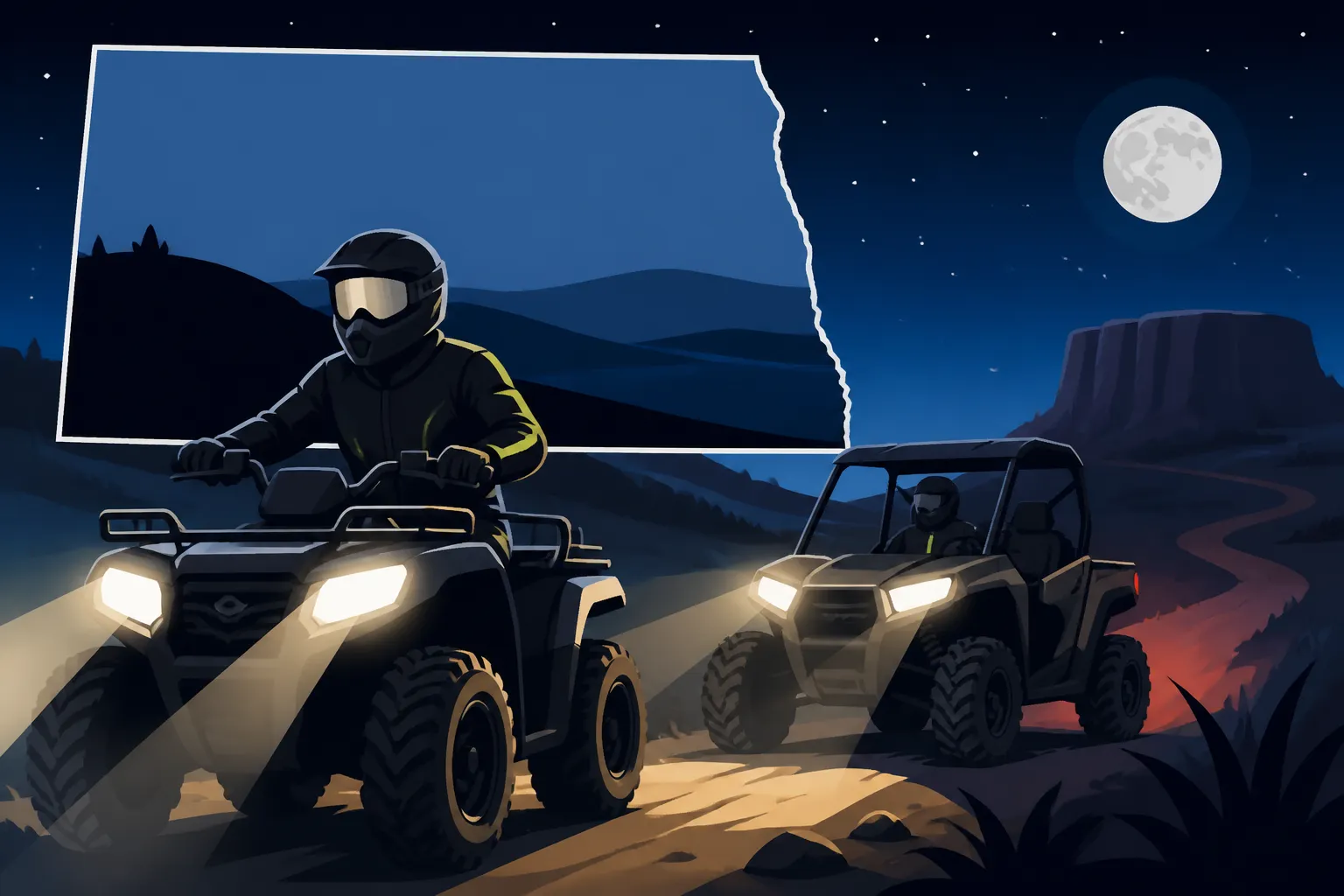
Riding your ATV or UTV in North Dakota after the sun dips below the prairie horizon can be an incredible experience, offering a completely different perspective on the landscape. However, the thrill of night riding often comes with a heap of questions and a gnawing uncertainty about what's actually legal and safe. Many riders worry about being caught off-guard by an officer or, worse, by an unseen hazard. This guide is here to shed some light on the specific rules and essential precautions for enjoying North Dakota's trails and roads safely and legally after dark.
Essential Lighting Requirements for Night Riding in North Dakota
When you're out there in the dark, whether you're cruising a section line or heading back to camp, your lights aren't just a convenience – they're your lifeline. North Dakota's laws are pretty clear about what's expected, and it's all about making sure you can see what's coming and, just as importantly, that other people can see you. Skimping on proper lighting is a recipe for trouble, both legally and for your safety.
Headlights and Tail Lights: Seeing and Being Seen
Let's start with the basics: your headlights and taillights. Think of your headlight as your personal moon, cutting through the darkness to reveal the path ahead. North Dakota law requires your headlamp to be capable of illuminating persons and vehicles at least [North Dakota Headlamp Distance Standards]. This isn't just a suggestion; it's a critical safety measure. Imagine cresting a small rise in a dimly lit field and suddenly encountering a deer or an unlit farm implement. A strong, properly aimed headlight gives you those precious extra seconds to react. Many stock lights on older machines might be a bit dim for serious night riding, so it's worth checking their output. Sometimes, an upgrade to brighter LED bulbs can make a world of difference, improving both visibility and your confidence.
Your taillight, on the other hand, is all about being seen by those behind you. It needs to cast a visible red light that signals your presence. Even more crucial is your brake light, which must be clearly visible whenever you hit the brakes. The law specifies a [North Dakota Brake Light Requirement] that ensures this critical safety signal functions properly. Too often, riders overlook the condition of their brake lights until it's too late. Dust, mud, and vibrations can quickly corrode wiring or damage bulbs. A quick check before you head out after dark, especially if you're riding with others or on a public roadway, is non-negotiable. You don't want someone coming up behind you in the dark, only to realize you're stopping at the last second. This is especially true on dusty gravel roads where visibility can drop to almost zero for trailing vehicles.
Reflective Tape and Other Visibility Enhancements
While the law might not always explicitly mandate reflective tape for every single night riding scenario, it's absolutely one of those "better safe than sorry" measures that can save your bacon. Think about it: if your lights temporarily fail, or if you're parked off to the side of a road, reflective material can catch the beam of an oncoming vehicle's lights, alerting them to your presence. Many experienced riders add reflective tape to the front, rear, and sides of their machines, especially on the bumpers, fenders, and roll cages. You can find kits designed for OHVs that are durable and easy to apply.
Beyond tape, there are other ways to boost your visibility. Auxiliary lighting, like light bars or floodlights, can dramatically increase your field of vision, particularly off-trail in open fields or dense woods. Brands like SuperATV offer a huge range of high-quality light bars and pods that are built tough enough for prairie conditions. Just be mindful of local ordinances and state laws regarding auxiliary lights when operating on public roads, as some are only legal for off-road use. Lighted whips are another popular addition, especially for dune riding or in open areas where dust might obscure your machine. They stand tall, catching the eye of other riders and ensuring you're seen from a distance, even if you're in a low-visibility dust cloud.
Why Your Lights Matter More at Night
It sounds obvious, but the simple truth is that everything becomes harder to see and judge at night. Your depth perception diminishes, colors fade into shades of gray, and your peripheral vision is drastically reduced. This means that your lights aren't just for illuminating the trail; they're essential for identifying potential hazards well in advance. That subtle dip in the trail, the rock that looks like a shadow during the day, or the barbed-wire fence line that suddenly appears out of nowhere – these are all magnified dangers at night.
Even with the best lights, your reaction time will naturally be slower in the dark than in daylight. That's why having ample illumination and ensuring your lights are in perfect working order is so critical. A burned-out bulb or a loose wire can turn a fun night ride into a dangerous situation in an instant. It’s also important to consider the battery draw of additional lighting. Ensure your machine's charging system can handle any aftermarket lights you add, so you don't end up stranded with a dead battery miles from home.
Navigating North Dakota's Roads After Dark on an OHV
North Dakota offers some unique opportunities for OHV riding on public roadways, but these freedoms come with very specific rules, especially after dark. You can't just treat public roads like an open field. Understanding where you can ride, how fast, and in what direction is paramount for both safety and legal compliance.
Permitted Roadways and Speed Limits
So, where can you actually ride your OHV after dark on North Dakota's roads? Generally, [North Dakota Gravel Roads Open to Registered Machines] are fair game, provided your machine is registered and you adhere to all other regulations. These roads are common routes for farmers and ranchers, and they often lead to prime hunting or fishing spots. However, "open" doesn't mean "unrestricted." You still need to obey posted speed limits and be incredibly cautious about other traffic, especially during planting and harvest seasons when large, slow-moving farm equipment might be on the move.
When it comes to paved roads, things get a bit tighter. [North Dakota Paved Roads Posted at 55] mph or less are typically open to registered OHVs, but again, check local ordinances as cities and counties can add their own restrictions. For Class III machines, which often include larger side-by-sides, there's even an allowance for [North Dakota Class III Machines at 65 mph Roads], but this is a very specific exemption and requires a machine capable of maintaining that speed safely. It's important to remember that interstates and controlled-access highways are never open to OHVs, regardless of the time of day. Riding on these roads is a serious violation and incredibly dangerous. Always verify the speed limit and road classification before heading out onto a paved surface after dark.
Direction of Travel and Hazard Awareness
One of the most crucial rules for riding on public roads after dark is the [North Dakota Night Travel Direction Rule]. You must travel on the right side of the road, with the flow of traffic. This isn't just a courtesy; it's a fundamental safety principle designed to prevent head-on collisions. Picture driving down a dark gravel road and suddenly seeing headlights coming towards you in your lane – that's the danger we're trying to avoid. Always assume other drivers might not expect to see an OHV, especially at night.
Beyond traffic, night riding brings a host of other hazards into play. Wildlife, especially deer, become incredibly active after sunset and can dart out onto the road with little warning. Be extra vigilant in areas known for deer crossings. Unlit obstacles, like farm equipment left near a field approach, potholes, or washed-out sections of gravel, can also be impossible to see until you're right on top of them. Reduced visibility means you need to slow down significantly, especially when approaching curves, hills, or any area where your line of sight is limited. Scanning far down the road with your eyes, not just relying on the direct beam of your headlights, can help you spot subtle changes in the terrain or unexpected reflections.
Ditch Riding at Night: Special Considerations
North Dakota's unique ditch riding laws allow OHVs in specific areas of the ditch, and this generally extends to after dark, provided you adhere to all the normal ditch riding rules. However, ditch riding at night presents a whole new set of challenges. The ditches often have variable terrain: hidden culverts, sudden dips, tall grass or brush obscuring obstacles, and approaches that blend into the landscape. What might be an easy daytime maneuver can become a jarring, dangerous surprise in the dark.
While [North Dakota Ditch Riding: The Legal Right Explained] does allow for this, exercising extreme caution at night is paramount. Slow down to a crawl. Use your lights to continually scan for changes in elevation, water hazards, or anything that could snag a tire. It's also much harder for other vehicles on the adjacent roadway to spot an OHV in the ditch after dark, especially if their headlights aren't aimed perfectly. If you're using the ditch to connect between fields or access private land, ensure you're familiar with the specific contours of that ditch line. Consider if it's truly necessary to ride that section of ditch at night, or if a safer, legal road route is available.
Additional Equipment and Safety Tips for Night Riding
Legal lighting is a great start, but it's just one piece of the puzzle. To truly ride safely and confidently after dark in North Dakota, you need to consider other essential equipment and adopt some smart riding habits. It’s all about layering on protection and preparedness.
Mirrors, Horns, and Speedometers: Legal Necessities
When you're out on any public roadway, even after dark, your machine needs to be equipped like any other vehicle sharing that space. This means having proper mirrors. North Dakota law requires a mirror that provides at least [North Dakota Mirror Rules on a Quad] and allows you to see the traffic behind you. This is crucial for making safe turns, changing lanes on wide roads, or simply being aware of larger vehicles approaching from the rear. You’d be surprised how many riders overlook this until they need to quickly check for an oncoming truck.
A horn is also a non-negotiable item, legally required to be [North Dakota Horn Rules on a Quad]. Even in rural areas, a quick toot of the horn can alert an approaching vehicle, a pedestrian, or even a deer that might be a little too close for comfort. You don't want to be yelling into the wind when you need to grab someone's attention. Finally, a functioning speedometer, calibrated in miles per hour, is a must. Knowing your speed is vital for staying within the legal limits on those [North Dakota Speedometer Rules on a Quad]. It's easy to misjudge your speed in the dark, especially when the landscape is less defined, so a reliable speedometer keeps you honest and safe.
Personal Protective Equipment and Visibility Gear
Your personal safety gear becomes even more critical after the sun goes down. A helmet is always a smart choice, but for riders [North Dakota Helmet Law for Riders Under 18], it's the law. In low light, any accident can have more severe consequences, and head protection is paramount. Make sure your helmet has a clear visor free of scratches, as even minor imperfections can significantly reduce visibility with oncoming headlights or streetlights. Tinted visors, great for sunny days, are a definite no-go at night; always switch to a clear one.
Beyond your helmet, think about clothing. High-visibility gear, like reflective vests or jackets, can make you stand out dramatically, even if your machine's lights are doing their job. A bright orange or yellow vest, especially one with reflective stripes, can mean the difference between being seen and being a roadside ghost. Consider gloves for grip and warmth, and sturdy boots to protect your feet. The goal is to make yourself as conspicuous as possible to other road users, while also protecting yourself from potential impacts or spills in an environment where hazards are harder to spot.
Pre-Ride Checks and Group Riding Strategies
Before you even think about firing up your machine for a night ride, a thorough pre-ride check is absolutely essential. This goes beyond the usual once-over. Specifically check all your lights: headlights, taillights, brake lights, and any auxiliary lighting. Wiggle the wires, check the bulbs, and ensure everything is clean and mud-free. Test your horn and make sure your speedometer is working. Confirm your fuel level; you do not want to run out of gas in the middle of nowhere after dark. Check tire pressure, as deflated tires can handle unpredictably, especially on uneven terrain.
If you're riding in a group after dark, communication and strategy become even more important. Appoint a lead rider who knows the area well and a sweep rider at the back. Maintain appropriate spacing between machines – enough to avoid dust (if it's dry) and react to hazards, but close enough to stay together. Many groups use two-way radios or helmet communicators for instant communication, which is invaluable at night. Establish hand signals or light signals for common actions like slowing down, stopping, or pointing out hazards. For instance, a quick flash of the brake light could mean "slow down." Riding at night requires a higher level of attentiveness and coordination from everyone in the group.
| Equipment Type | Specific Requirement | Purpose for Night Riding |
|---|---|---|
| Headlamp | Visible at [North Dakota Headlamp Distance Standards] | Illuminate path, make you visible to oncoming traffic |
| Taillamp | Visible from 500 feet, Red | Ensure you are seen from the rear |
| Brake Light | Clearly visible when brakes are applied | Signal stopping or slowing to traffic behind you |
| Reflectors | Rear & side, visible from 50-300 feet | Passive visibility, especially if lights fail |
| Horn | Audible at [North Dakota Horn Rules on a Quad] | Alert other road users or wildlife to your presence |
| Mirror | At least [North Dakota Mirror Rules on a Quad] | View traffic to the rear, crucial for public road safety |
| Speedometer | Measures in miles per hour (MPH) | Monitor legal speeds, vital for [North Dakota Speedometer Rules on a Quad] |
| DOT-Approved Helmet | Required for riders under [North Dakota Helmet Law for Riders Under 18] | Critical head protection, especially in reduced visibility |
| Clear Visor | Free from scratches or tints | Maximize vision; tinted visors are unsafe at night |
| Reflective Clothing | Highly recommended for all riders | Enhance personal visibility to other vehicles |
Penalties and Avoiding Common Night Riding Violations
Knowing the rules is one thing, but understanding the consequences of breaking them can be a powerful motivator to stay compliant. North Dakota law enforcement takes OHV regulations seriously, and ignorance is rarely a valid excuse, especially when safety is concerned.
What an Officer Can Ask to See
If you're stopped by an officer while riding your OHV after dark, they'll be looking for a few key things. First and foremost, they'll want to see your registration and proof of ownership. Make sure these documents are easily accessible and up-to-date. They'll also check your machine for proper lighting and other required equipment like a horn, mirror, and speedometer. This is exactly why those pre-ride checks are so vital. You don't want to find out your brake light is out when an officer is standing behind you.
Depending on your age and the specific riding area, they might also ask for proof of a valid safety certificate. [What an Officer Can Ask to See] includes these items because they all contribute to the safe and legal operation of an OHV on public or designated lands. Having your paperwork in order and your machine properly equipped demonstrates responsibility and can make an encounter with law enforcement much smoother. It's frustrating to have a fun ride cut short by a citation that could have been easily avoided.
Consequences of Non-Compliance
Riding an OHV without proper registration, or operating it on a public road after dark without the legally required lighting, can lead to various penalties. The cost of a ticket for a violation can vary, but even a basic OHV violation can add up once fines and court fees are factored in. Furthermore, operating an unregistered machine can result in higher fines. It's far cheaper and less stressful to simply register your machine and ensure it meets all equipment requirements than it is to deal with the aftermath of a citation. For example, [North Dakota Penalties for Riding Unregistered] can include a substantial fine.
Beyond monetary penalties, repeated or severe violations could impact your ability to register an OHV in the future or even lead to your machine being impounded. Imagine the hassle and expense of having your ATV or UTV towed and impounded, all for a fixable issue like a burned-out headlight or lack of a mirror. It's a real headache that can quickly overshadow any enjoyment you got from your illegal night ride.
DUI and Impaired Operation After Dark
This is perhaps the most critical warning for any night rider: North Dakota's DUI laws apply just as strictly to OHVs as they do to cars and trucks. Operating an ATV or UTV under the influence of alcohol or drugs is illegal, incredibly dangerous, and carries severe consequences. [North Dakota DUI Rules for OHV Riders] are clear: impairment on an OHV can result in hefty fines, license suspension (even if you weren't in a car), and even jail time.
The dangers of impaired driving are amplified tenfold at night. Your judgment is already naturally reduced by the darkness, and adding alcohol or drugs into the mix is a recipe for disaster. Your reaction time will plummet, your ability to spot hazards will be severely compromised, and you put not only yourself but also any passengers and other innocent people at extreme risk. There is absolutely no excuse for riding an OHV while impaired, especially after dark. If you've been drinking, designate a sober driver or simply don't ride. It's not worth the risk, the legal consequences, or the potential for tragedy.
Disclaimer
This article is for general informational purposes only and does not constitute professional advice. Laws, prices and regulations vary by location and change over time. Consult a qualified professional for guidance on your specific situation.