North Dakota Counties That Restrict Riding
It's incredibly frustrating, isn't it? You've got your ATV or UTV all prepped for a fantastic ride across North Dakota's stunning landscapes, only to realize that the rules aren't just statewide. Different counties and even individual cities can throw their own wrench into your plans, leaving you scratching your head and wondering where you can actually legally ride. This guide is here to cut through that confusion, helping you understand how local jurisdictions set their own OHV rules and how you can avoid an unexpected ticket or an angry landowner.
The Patchwork of Rules: State vs. Local OHV Laws in North Dakota
When you think about riding your ATV or UTV in North Dakota, your first thought is probably about the state laws. And rightly so! The state sets a foundational framework for off-highway vehicle (OHV) operation, covering everything from registration to ditch riding. But here’s the kicker: that framework isn't always the final word. Local governments have a significant say, and their rules can dramatically change what's permissible in their specific corner of the state. This creates a situation that can feel like navigating a legal minefield, where what's perfectly fine in one county might be strictly prohibited just a few miles down the road. It’s enough to make you wish there was just one simple rulebook!
North Dakota's Statewide Framework for OHV Use
At the state level, North Dakota provides clear guidelines for OHV operation, covering things like registration, basic equipment requirements, and general allowances for riding on certain public lands or ditches. For instance, the state generally permits [North Dakota Ditch Riding: The Legal Right Explained] for registered machines under specific conditions, and sets age limits for riders, as outlined in [North Dakota Rules for a 12-Year-Old Rider]. You’ll find details about titling your machine, paying excise tax, and ensuring you’re properly registered through the North Dakota Department of Transportation. This unified approach gives us a baseline, a common understanding of what it means to be a responsible OHV owner in the state. It's the big picture, telling us what's generally allowed or required across North Dakota.
However, even with these statewide provisions, riders often face the challenge of understanding that "generally permitted" doesn't mean "universally permitted." The state's broad strokes leave room for local nuances. It’s like the state gives you the main recipe, but each county can add its own spices, some of which might drastically alter the flavor of your ride. Knowing the state law is crucial, but it's only the first step in truly understanding where you can legally put your tires. For example, while the state might allow ditch riding, a specific city might have an ordinance that prohibits it within its corporate limits due to safety concerns or residential density.
Where Local Ordinances Come Into Play
This is where things get tricky, and where a lot of riders find themselves frustrated. While North Dakota sets the general stage, individual counties, townships, and incorporated cities have the authority to enact their own ordinances that further regulate or even prohibit OHV use within their boundaries. This local control can manifest in several ways. A county might decide to close certain county roads to OHVs, even if state law might otherwise permit riding on similar aggregate surfaces. A city might implement noise restrictions that make certain machines illegal to operate within town limits during specific hours.
These local ordinances often come from specific concerns within the community—whether it's public safety, noise complaints, property damage, or environmental protection. What works for a sparsely populated rural county might not work for a bustling town with tight neighborhoods. This means that as an OHV enthusiast, you can’t just assume that because you’re following state law, you’re in the clear everywhere. You absolutely need to be aware of [North Dakota County and City ATV Ordinances] before you head out. Failing to do so can turn a fun day of riding into a costly encounter with local law enforcement.
Understanding County and City Authority to Restrict Riding
It can feel a bit unfair, especially when you've done all the work to register your machine and understand the state laws, only to find out a local jurisdiction has its own set of rules. However, local governments in North Dakota have the legal standing to enact these restrictions. This authority is often granted through state statutes that allow municipalities and counties to regulate traffic, maintain public safety, and protect the welfare of their residents. They’re not just making rules up on a whim; there’s a legitimate legal basis for their actions, even if it complicates things for us riders.
The Legal Basis for Local Control
North Dakota state law delegates certain powers to local governmental entities, including counties and cities, to manage their public spaces and ensure the safety and peace of their communities. This means that while the state Department of Transportation handles overall OHV registration and general road rules, local entities can impose additional, stricter rules within their specific jurisdiction. They can do this for various reasons, from concerns about pedestrian safety in crowded areas to preserving quiet in residential neighborhoods. This is why you'll find different rules when considering [North Dakota Rules for Riding in Bismarck] versus riding out in a more rural county.
The key here is that these local ordinances generally cannot contradict state law by making something illegal that the state explicitly allows without specific statutory authority, but they can add to state law by imposing stricter conditions or outright prohibitions in certain areas. For example, while the state might permit ditch riding on most public roads, a county highway department might pass an ordinance closing ditches along specific county roads due to high traffic volume, narrow shoulders, or frequent accidents involving OHVs. This legal nuance is why you can’t just rely on the general state rules when planning a ride in an unfamiliar area.
Common Types of Local OHV Restrictions
When you're trying to figure out where you can ride, it helps to know what kind of restrictions counties and cities typically impose. They're usually aimed at addressing specific local issues.
Here are some common types:
- Time of Day Restrictions: Many cities and populated areas will restrict OHV operation to certain hours, often prohibiting riding after dark or early in the morning to reduce noise complaints. This is especially true for residential zones, where a roaring engine at 10 PM isn't exactly neighborly.
- Road Closures or Designations: Some counties might specifically designate certain county roads as open or closed to OHVs. While state law generally addresses ditch riding, local ordinances can further refine this, sometimes closing entire sections of public right-of-way that would otherwise be open. They might also have rules for [North Dakota Rules for Riding a Township Road] or [North Dakota Rules for Riding a Section Line].
- Area-Specific Bans: It's not uncommon for cities to have blanket bans on OHVs within their corporate limits, or to restrict them only to designated trails or private property. This can be particularly frustrating for riders who live just outside town and want to ride their machine into town for supplies.
- Equipment Requirements: While state law sets minimum equipment, a local ordinance might require additional items for street legality on designated roads within their jurisdiction. For example, if a county opens certain paved roads to OHVs, they might require specific mirrors or turn signals beyond what the state mandates for off-road use. If you're looking to modify your machine for maximum compliance and utility, exploring products from companies like SuperATV can provide robust mirrors, lighting, or other accessories that might help meet these stricter local demands, ensuring your machine is ready for any conditions.
- Noise Limits: Local governments often have more stringent noise ordinances than the state, particularly in residential or park areas. An OHV muffler that's perfectly legal under state law might still get you a ticket in a quiet city neighborhood if it exceeds their specific decibel limits.
These are just a few examples, but they highlight the need to do your homework before you embark on a ride. Ignorance of local law is rarely a valid excuse, and a ticket can certainly put a damper on your day.
Navigating Specific County-Level Considerations
It would be impossible to list every single county and city ordinance in North Dakota here; laws change, and what's true today might be tweaked tomorrow. Instead, let's talk about how to think about county-level restrictions and how you can prepare yourself and your machine to comply, no matter where you plan to ride. The key is proactive research and understanding that "it depends" is often the answer when it comes to local rules.
Identifying Counties with Known Restrictions or Unique Rules
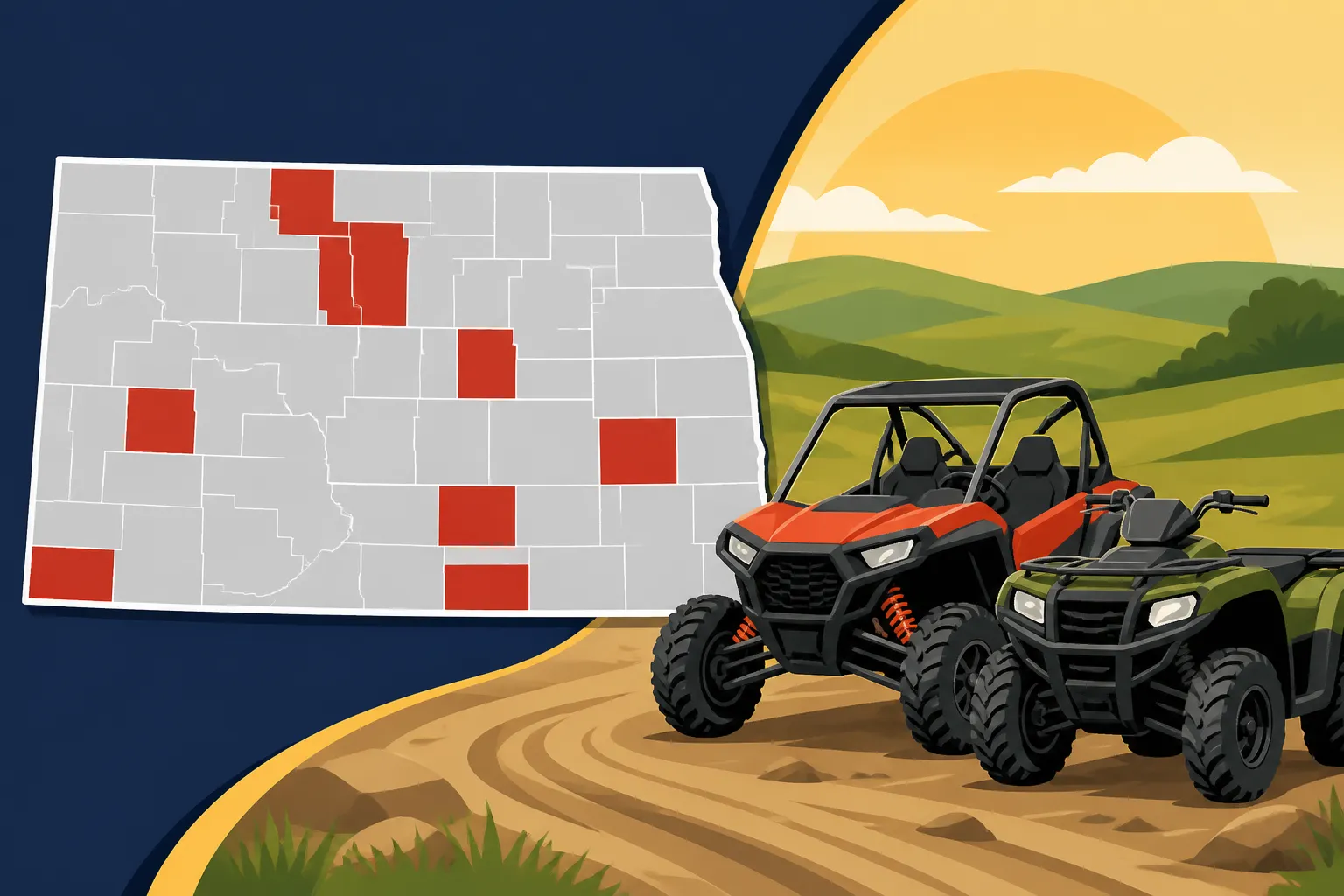
North Dakota is a vast state, and riding opportunities vary widely from the populated eastern regions to the wide-open spaces of the west. Consequently, the approach to OHV regulation can differ significantly. While many rural counties might have fewer specific restrictions beyond state law, it's the more populated areas or those with unique geographical features (like specific recreation areas or wildlife refuges) that tend to have more defined local rules.
For example, cities like [North Dakota Rules for Riding in Fargo], [North Dakota Rules for Riding in Grand Forks], or [North Dakota Rules for Riding in Bismarck] are far more likely to have strict ordinances regarding OHV operation within their city limits than, say, a small, unincorporated community. These ordinances often focus on preventing noise disturbances, ensuring pedestrian safety, and controlling traffic flow. Some counties might have specific designations for [North Dakota Ditch Riding: The Legal Right Explained], only allowing it on certain stretches or during specific hours. You might also find particular counties or townships that have taken steps to expressly open or close certain roads for OHV use.
While I can't give you a definitive list of every county's current unique rules, a general rule of thumb is this: the denser the population, the more likely you are to encounter specific restrictions. Areas with high agricultural activity might have different considerations than those focused on tourism or residential development. Always approach any new riding area with the assumption that local rules might apply, and be prepared to seek out that information.
Equipping Your Machine for Local Compliance
Sometimes, the ability to ride in a particular county or on a specific type of road comes down to how your machine is equipped. While state law has baseline requirements for things like headlamps and brake lights, local ordinances, especially if they permit OHVs on certain roads, might demand more. This is where strategic upgrades and modifications come into play.
Consider these potential local requirements:
- Mirrors: If a local ordinance allows OHVs on paved roads, they almost certainly will require mirrors. A high-quality set of side mirrors, like those available from SuperATV, can provide the necessary visibility and often come with durable construction to withstand off-road use, making them a practical investment for varied riding environments.
- Turn Signals: Some jurisdictions might require turn signals if you're operating on public roads, even if it's not a statewide mandate for OHVs. Adding a universal turn signal kit can make your machine more visible and compliant.
- Horn: A working horn is a safety device and often a requirement for any vehicle sharing the road with others.
- Tires: While not strictly a "legal" requirement in most places for local compliance, having the right tires for the terrain you're allowed to ride on can be crucial. If a county allows OHVs on gravel roads, aggressive mud tires might tear up the surface, leading to more restrictions. Choosing a tire designed for mixed-terrain use can be a good compromise.
- Mufflers/Exhaust: This is a big one for noise-sensitive areas. If you've modified your exhaust system for performance, make sure it still falls within acceptable noise limits for the areas you plan to ride. Some local ordinances are quite strict on this.
Being proactive about equipping your machine for compliance isn't just about avoiding tickets; it’s about being a responsible rider. When local governments see that OHV riders are taking steps to be safe and considerate of the community, they are often more amenable to allowing access. It's a "give and take" situation, and outfitting your machine properly is a great way to show you're doing your part.
Why Local Restrictions Are Enacted: Common Concerns
It’s easy to feel like local restrictions are put in place just to make our lives harder, but there are almost always legitimate reasons behind them. Understanding the "why" can foster a bit more empathy and help us as riders advocate for our sport more effectively. Local officials aren't usually trying to be difficult; they're responding to concerns from their constituents and trying to manage public resources responsibly.
Addressing Safety and Noise Complaints
Two of the biggest drivers behind local OHV restrictions are safety and noise. Imagine living in a quiet residential neighborhood and having ATVs and UTVs constantly roaring down the street or through nearby open fields. Noise pollution is a common complaint, and local governments often step in to regulate it to maintain the peace and quiet for their residents. This is especially true in densely populated areas or near parks and public gathering spots. Some cities have specific [North Dakota Noise Complaints About Quads] ordinances that can be quite strict.
Safety is another paramount concern. When OHVs operate on roads not designed for them, or in areas with high pedestrian or vehicle traffic, the risk of accidents increases. Local officials, particularly law enforcement and public works departments, are responsible for public safety. If they see a pattern of incidents or near-misses involving OHVs, they are almost obligated to consider restrictions. This can include limiting [North Dakota Rules for Riding After Dark], prohibiting OHVs on specific busy roads, or setting stricter rules for youth riders within city limits. They want to prevent accidents involving your machine, other vehicles, and pedestrians, and sometimes, restricting access is seen as the most direct way to do that.
Protecting Property and the Environment
Beyond safety and noise, local restrictions often aim to protect both public and private property, as well as the local environment. Uncontrolled OHV use can lead to significant damage. For example, riding on private land without permission can result in [North Dakota Trespass Law for Riders] violations and damage to crops, fences, or natural landscapes. Local farmers and landowners are understandably protective of their property, and a few irresponsible riders can quickly lead to widespread restrictions or outright bans on OHV access. This is why [North Dakota Posted Land Rules for Riders] are so important, and why local governments often support them with their own ordinances.
From an environmental standpoint, OHV use can contribute to soil erosion, damage sensitive habitats, and disturb wildlife, especially in areas with fragile ecosystems or during certain times of the year (like nesting seasons). Local parks and environmental commissions might push for restrictions to preserve natural areas or water quality. Areas around rivers, lakes, or protected wetlands are particularly susceptible to these kinds of restrictions. For example, while not a county restriction, [North Dakota Wildlife Areas Closed to OHVs] often fall under similar reasoning. It's all about balancing recreational opportunities with the preservation of valuable local resources.
Your Due Diligence: How to Research Local OHV Ordinances
Given the varying rules, you absolutely need to do your homework before you hit the trails or backroads in an unfamiliar county or city. Showing up unprepared isn't just risky; it can give all OHV riders a bad name. The good news is that with a little effort, you can usually find the information you need to ride legally and responsibly. It might feel like a chore, but it’s far better than facing a fine or the frustration of being turned around.
Essential Resources for Checking Local Rules
Finding accurate, up-to-date information on local OHV ordinances requires going directly to the source. Don't rely solely on what you hear through the grapevine or old forum posts; laws change!
Here are your best bets:
- County Sheriff's Office: The sheriff's department is the primary law enforcement agency for unincorporated areas of a county. They are usually the most knowledgeable about county-level OHV regulations. A quick phone call to their non-emergency line can often get you the answers you need. Be specific about where you plan to ride (e.g., "I'm looking to ride on county roads near [Specific Town] in [Specific County]").
- City Hall or City Clerk's Office: If you plan to ride within or near an incorporated city, contact their city hall or clerk's office. They can provide information on local ordinances affecting OHVs, including noise restrictions, time limits, or outright bans within city limits. Many cities have their ordinances published online, but a call can clarify any confusing language.
- County Commission or Board Websites: Many counties publish their ordinances and meeting minutes online. While sifting through them can be time-consuming, it's a direct way to see what rules have been formally adopted. Look for sections related to "traffic," "motor vehicles," or "recreation."
- Local Parks and Recreation Departments: If you plan to ride in a specific park or designated recreational area, check with the local park authority. They might have their own rules regarding OHV access, hours of operation, or specific permits required.
- North Dakota Game and Fish Department: While they primarily focus on hunting and fishing, they can sometimes offer guidance on OHV use in wildlife management areas or during hunting seasons, though this is less about specific county ordinances and more about general access rules.
Remember to write down who you spoke with, the date, and what information they provided. This can be helpful if there's ever a misunderstanding in the future, though it's not a legal defense.
The Importance of Asking Locals and Law Enforcement
While official channels are always best, don't underestimate the value of local knowledge – but always verify it. If you're visiting a new area, strike up a conversation with folks at the local gas station, hardware store, or diner. Many long-time residents, especially those who ride themselves, will have a good sense of where people generally ride and if there are any known "no-go" zones. They might tell you about a particular stretch of road or a field that's regularly posted or where problems have occurred in the past.
However, treat this as anecdotal information and always try to cross-reference it with official sources or, even better, directly ask local law enforcement. For instance, before you ride, it’s always a good idea to be [Checking With Local Law Enforcement First]. A quick visit to the local sheriff's substation or police department (during business hours, of course) to ask about OHV rules can save you a lot of trouble. Officers are often happy to clarify local rules, as they'd rather prevent a violation than write a ticket. They can point you to areas where riding is encouraged or explicitly prohibited. Establishing a friendly relationship with local law enforcement can go a long way in promoting responsible riding and ensuring that OHVs continue to have access in the future.
What Happens When You Ride Where Prohibited
It's one thing to accidentally stray onto private property, but knowingly or unknowingly violating a county or city OHV ordinance can lead to some pretty significant headaches. Beyond the immediate legal and financial consequences, there's also the broader impact on the OHV community. Each violation, especially a public or egregious one, can strengthen the argument for more restrictions, making it harder for all of us to enjoy our sport.
Penalties and Enforcement for Violations
The consequences of violating local OHV ordinances in North Dakota can vary depending on the specific rule broken and the jurisdiction. Generally, you're looking at fines, which can quickly add up. A basic OHV violation in North Dakota can start at a set amount, but this can increase significantly with additional court costs or if the violation is deemed more serious. For instance, [A Basic OHV Violation Now Costs $50], but local fines can layer on top of this, and if other laws are broken (like trespassing or reckless operation), the penalties can escalate rapidly.
Here's what you might face:
- Fines: The most common penalty is a monetary fine. These can range from dozens to hundreds of dollars, and some municipalities impose higher fines than state statutes for similar offenses.
- Impoundment: In some cases, especially for repeat offenses or severe violations, your OHV could be impounded, leading to additional towing and storage fees on top of the fine.
- Court Appearances: You might be required to appear in local court, which means taking time off work and facing a judge, potentially leading to more severe penalties or community service.
- Misdemeanor Charges: More serious violations, such as reckless operation, repeated trespassing, or operating while impaired, can lead to [What a Class B Misdemeanor Means in North Dakota] or other criminal charges.
- Loss of Riding Privileges: While not always direct, repeated violations could lead to a local jurisdiction tightening its rules even further, impacting future access for everyone.
Law enforcement officers, whether from the county sheriff's office or a city police department, have the authority to pull you over, issue citations, and enforce these local ordinances. They often receive complaints from residents, so they're usually responsive when OHV activity is causing a disturbance or a hazard.
The Impact on Rider Reputation and Access
Beyond the personal financial and legal headaches, riding where prohibited has a ripple effect on the entire OHV community. When incidents occur—whether it's property damage, excessive noise, or safety concerns—it often makes headlines or becomes a topic of discussion at local council meetings. This negative attention chips away at the public's perception of OHV riders, fostering the idea that all riders are irresponsible or disregard the law.
This perception can then lead to:
- Increased Restrictions: Local governments, facing public pressure, are more likely to enact new bans or tighten existing rules. A few bad apples can ruin access for everyone, turning formerly open areas into off-limits zones.
- Reduced Public Support: It becomes harder for OHV clubs and advocates to lobby for new trails or maintain access to existing ones if the public and local officials view riders negatively.
- Landowner Hostility: Farmers and private landowners, already dealing with various challenges, become more inclined to post their land, deny access, or become stricter about enforcement, which can limit casual riding opportunities for everyone, even those who would normally ask for permission.
- Community Division: Instead of being seen as a vibrant part of the local recreational economy, OHV riding can become a source of contention and division within a community.
Ultimately, respecting local rules, even if they seem inconvenient, is vital for the long-term health and growth of OHV riding in North Dakota. Every time you ride responsibly and legally, you're building goodwill and showing that OHV enthusiasts are good stewards of the land and considerate neighbors.
| Rule Type | Enforcing Authority | Common Examples of Restrictions |
|---|---|---|
| State Law | ND Department of Transportation, State Highway Patrol, Game & Fish | Registration, Equipment Standards (lights, brakes), Ditch Riding Conditions, Age Limits for Operators |
| County Ordinance | County Commissioners, County Sheriff's Office | Designating specific County Roads as Open/Closed to OHVs, Noise Ordinances in Unincorporated Areas, Restrictions near County Parks or Public Lands |
| City Ordinance | City Council, City Police Department | Time of Day Restrictions (e.g., no riding after dark), Outright Bans within City Limits, Specific Roads Closed, Noise Ordinances in Residential Zones, Special Permits for Parades/Events |
| Federal Regulation | US Forest Service, Bureau of Land Management, Army Corps of Engineers | OHV Use on Federal Lands (e.g., Kimball Bottoms), Designated Trails Only, Seasonal Closures, Width Limits, Spark Arrestor Requirements |
Disclaimer
This article is for general informational purposes only and does not constitute professional advice. Laws, prices and regulations vary by location and change over time. Consult a qualified professional for guidance on your specific situation.