North Dakota Paved Roads Posted at 55
Navigating North Dakota's vast network of roads on an ATV or UTV can feel like walking a legal tightrope, especially when you encounter those inviting stretches of paved highway. Many riders are desperate to know if they can legally connect trails or access services without risking a ticket, and the rules around paved roads posted at 55 miles per hour are often a source of confusion and frustration. This guide will meticulously break down what North Dakota law actually says about riding your off-highway vehicle on these specific paved roads, ensuring you understand the requirements, limitations, and essential gear needed to stay on the right side of the law.
Understanding the Legal Landscape for OHVs on Paved Roads
Let's be honest, the thought of being able to legally travel on a paved road with your ATV or UTV in North Dakota to get from one riding area to another, or even just to grab a quick bite, sounds like a dream for many off-road enthusiasts. However, the reality is far more nuanced than simply "yes" or "no." North Dakota has specific, often overlooked, regulations that govern exactly where and how off-highway vehicles (OHVs) can interact with the state's paved road system. It's not a free-for-all, but it's also not a complete ban, which is where much of the confusion lies.
The state's approach aims to balance the recreational and utility needs of OHV owners with public safety on roadways primarily designed for traditional motor vehicles. This means that while some allowances are made, they come with a stringent set of conditions and equipment requirements. Ignoring these details can lead to fines, legal issues, and even dangerous situations on the road. It's crucial to differentiate between the various types of roads and the specific rules that apply to each, as what's permissible on a gravel road might be strictly forbidden on a paved surface.
The Core of North Dakota's Road Rules for OHVs
At its heart, North Dakota's OHV law attempts to provide riders with options for accessing their desired destinations, whether that's a remote hunting spot or a gas station in a small town. This includes certain provisions for operating on roads, but these are almost always conditional. The overarching principle is that OHVs are generally not designed or intended for extensive public road use, and any allowance is typically a limited exception rather than a broad endorsement.
For instance, the law frequently refers to "unpaved roads," "gravel roads," or "secondary roads" as potentially open to OHV traffic under specific circumstances, often requiring the OHV to be [Registered at a Motor Vehicle Branch]. However, paved roads are usually a different beast entirely. The state recognizes the higher speeds, increased traffic density, and different vehicle dynamics involved on paved surfaces, leading to more restrictive rules. These restrictions aren't arbitrary; they're in place because an ATV or UTV, even one equipped with quality aftermarket parts from a brand like SuperATV, still handles differently than a car or truck, especially at higher speeds on pavement.
Distinguishing Between Paved and Other Road Types
It’s vital to understand that North Dakota’s OHV laws make a clear distinction between different road surfaces and classifications. You can't apply the rules for a section line or a gravel township road to a paved highway.
- Gravel Roads: Generally, [North Dakota Gravel Roads Open to Registered Machines] are more accessible for OHVs, often allowing travel unless specifically prohibited by local ordinance or signage. These roads are typically lower speed, have less traffic, and the terrain is more forgiving for off-road tires.
- Section Lines & Township Roads: These often follow property lines and can sometimes be unmaintained or gravel, falling under similar rules to other unpaved roads. [North Dakota Rules for Riding a Section Line] and [North Dakota Rules for Riding a Township Road] provide more specific guidance here.
- Paved Roads Posted at 55 MPH: This is our focus. These roads have specific conditions, primarily tied to the OHV's classification and capability.
- Paved Roads Posted at 65 MPH or Higher: These are generally not open to Class I or Class II OHVs. However, [North Dakota Class III Machines at 65 mph Roads] have a specific carve-out for these faster highways, provided they meet all other requirements.
- Interstates: Absolutely off-limits. [North Dakota Interstates Are Never Open] to OHVs. There are no exceptions for these high-speed, controlled-access roadways.
Understanding these distinctions is your first step to legal and safe riding. Don't assume that because you can ride on one type of road, you can ride on all. Always confirm the specific rules for the road you intend to use.
Specific Rules for Paved Roads Posted at 55 MPH
Now, let's zero in on those paved roads with a posted speed limit of 55 mph. This specific speed limit is crucial because it acts as a gatekeeper for which OHVs can even consider riding on that surface. It's not just about what you can do, but what your machine is allowed to do under state law. This section will peel back the layers on speed, engine size, and the critical question of when you can actually be on these roads.
The allowance for OHVs on these specific paved roads isn't about granting free reign. It's about providing a practical solution for riders who might need to connect riding areas, access local businesses, or travel short distances for specific purposes like farming or hunting. But these privileges come with serious responsibilities and strict adherence to the letter of the law.
Speed Limits and Your Machine's Capability
When you're on a paved road posted at 55 mph, it's not enough for your OHV to theoretically be able to hit that speed. The law requires that your machine must be "capable of maintaining a minimum speed of at least 30 miles per hour." This is a fundamental requirement. If your older utility quad or youth model simply can't comfortably and safely maintain 30 mph, then that paved road is off-limits, even if it's posted at 55. This rule is designed to ensure that OHVs don't become a moving hazard by significantly impeding the flow of traffic.
Think about it: imagine a road where cars are traveling at 55 mph, and you're struggling to hit 25 mph. That creates a dangerous speed differential, increasing the risk of accidents. So, before you even consider taking your OHV onto a 55 mph paved road, be honest about its capabilities. Your machine needs to be in good working order, with well-maintained tires and engine, to meet this minimum speed requirement consistently and safely. Manufacturers like Polaris, Can-Am, and Honda produce many machines that easily meet this speed requirement, especially their larger UTVs and sport ATVs.
It's important to differentiate this from the maximum speed limit. While the road might be posted at 55 mph, you are not necessarily required or even advised to go that fast. You must always operate at a speed that is reasonable and prudent for the conditions, and that means often staying below the posted maximum, especially with an OHV. [North Dakota's 30 mph Capability Rule] is a baseline, not a target maximum.
The Crucial "Under 350cc" Limitation
Here's where many riders get tripped up: not all OHVs are created equal in the eyes of North Dakota law when it comes to paved road use. A critical stipulation is [North Dakota's 350cc Minimum for Road Riding]. This means that if your ATV or UTV has an engine displacement under 350 cubic centimeters, it is generally prohibited from operating on paved roads, including those posted at 55 mph. This rule primarily affects smaller ATVs, many youth models, and some older, less powerful machines.
The legislative intent behind this rule likely stems from concerns about power, stability, and the ability of smaller engines to maintain safe speeds in traffic. While a 250cc sport quad might feel zippy off-road, it might not have the sustained power or stability needed for safe operation on a public paved road alongside cars and trucks. For riders with machines smaller than 350cc, your options for paved road travel are severely limited, and you should plan alternative routes or trailering your machine. There's no workaround or conversion path for a machine under this engine size; it's a hard limit.
Permitted Times of Day for Riding
Another important detail for paved road use is when you can actually ride. [North Dakota Rules for Riding After Dark] come into play significantly here. Generally, OHVs are permitted on paved roads posted at 55 mph during daylight hours. While the law might allow for limited operation during hours of darkness if properly equipped with headlamps and taillamps, it's a much stricter environment.
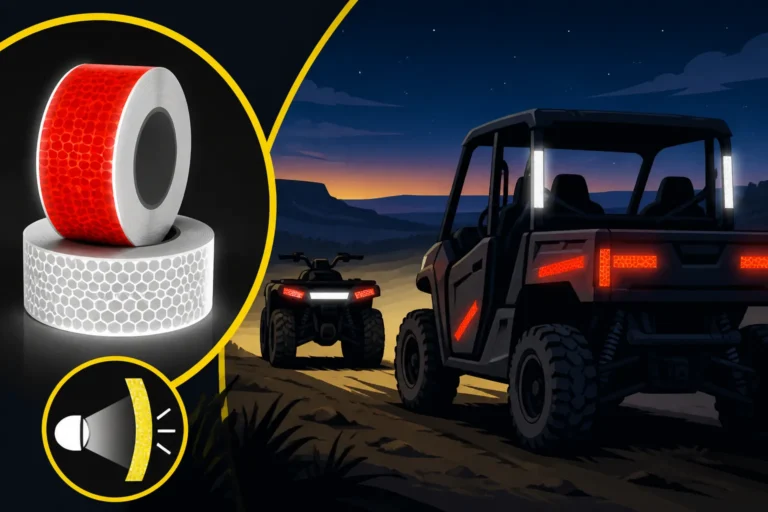
For safety, riding an OHV on a paved road at night is inherently more hazardous. Visibility is reduced for both the OHV rider and other motorists. Even with proper lighting, the smaller profile of an ATV or UTV can make it harder for drivers of larger vehicles to spot you, especially in rural areas with poor street lighting. If you absolutely must operate on a paved road after dark, ensure your lighting meets or exceeds all legal requirements, including [North Dakota Headlamp Distance Standards] and [North Dakota Brake Light Requirement], and consider adding reflective tape or additional lights from a reputable brand like SuperATV for enhanced visibility. However, for most recreational riders, it's best to stick to daylight hours when using paved roads.
Essential Equipment for Road-Legal OHVs in North Dakota
Just owning an OHV that meets the speed and engine size requirements isn't enough. To legally traverse North Dakota's paved roads posted at 55 mph, your machine must be outfitted with a specific suite of safety equipment. This isn't just about adhering to regulations; it's about ensuring your visibility and ability to safely communicate your intentions to other drivers on the road. Without these vital components, you're not just risking a ticket; you're putting yourself and others in harm's way.
Think of it this way: when you take your OHV off the trail and onto a paved road, you're entering a different ecosystem of traffic flow and interaction. The equipment requirements are designed to bridge the gap between an off-road machine and a road-legal vehicle, making your presence predictable and your movements clear to everyone else.
Mirrors, Horns, and Lighting: Non-Negotiables
These three categories are fundamental for any vehicle sharing the road, and OHVs are no exception.
- Mirrors: You must have at least one rearview mirror mounted on your OHV that allows you to see at least 200 feet to the rear. Many off-road machines don't come standard with street-legal mirrors, so this is often an aftermarket addition. Look for durable, adjustable mirrors that provide a clear field of vision, capable of withstanding the vibrations and potential bumps of both on-road and off-road use. [North Dakota Mirror and Horn Requirements] specify that a road-legal mirror needs 10 square inches of reflective surface.
- Horn: A working horn is mandatory. It needs to be audible from a distance of at least 200 feet. This isn't just for emergencies; it's for signaling your presence or intentions when necessary, just like in a car. Most OHVs have some form of a horn, but ensure yours is loud enough and easily accessible.
- Lighting: Beyond what you might need for typical off-road night riding, your OHV must have a functional headlamp capable of projecting light at least 300 feet forward, and a taillamp that emits a red light visible from at least 500 feet to the rear. A brake light is also required. If you're going to be riding after dark, these become even more critical. [North Dakota Equipment Required on a Roadway] lists these out clearly. Aftermarket LED light bars are great for off-road, but ensure your standard headlamp and taillamp meet the specific road-legal visibility standards.
Many riders will turn to aftermarket specialists like SuperATV to find compliant mirrors, horns, and lighting kits designed specifically for OHVs, ensuring they can easily adapt their machine for legal road use. Don't skimp on these items; they are literally your eyes and voice on the road.
Speedometer and Other Display Requirements
While you might rely on GPS apps or just the feel of the terrain when off-roading, operating on a paved public road demands precise speed awareness. That's why [North Dakota Speedometer and Odometer Rule] mandates that your OHV must be equipped with a functional speedometer that indicates speed in miles per hour. This isn't just a suggestion; it's a legal necessity. You need to know your speed to ensure you're complying with the posted limits and maintaining a safe speed for conditions.
An odometer isn't explicitly mentioned as a standalone requirement for road use in the same way a speedometer is, but most modern speedometers are integrated with odometers. The primary focus is on the real-time speed display. If your OHV is an older model or a bare-bones machine, you might need to install an aftermarket speedometer to meet this requirement. Verifying your speedometer is accurate is also a good practice, as incorrect readings could lead to unintentional speeding.
Spark Arresters and Mufflers
Even though these paved road rules focus heavily on safety equipment for interaction with other vehicles, environmental and noise regulations still apply. Your OHV must be equipped with a U.S. Forest Service-approved spark arrester. This is crucial for preventing wildfires, especially in dry conditions. Many factory-installed mufflers come with integrated spark arresters, but if you've modified your exhaust system, you need to verify it still meets this standard.
Additionally, your muffler system must be in good working order and effectively prevent "excessive or unusual noise." This is generally left to the discretion of law enforcement but is intended to prevent overly loud exhaust systems that can be a nuisance to residents. While there aren't specific decibel limits outlined for OHVs on North Dakota roads, a common-sense approach is best. If your machine is excessively loud, it draws unwanted attention and can be cited under general noise ordinances. Ensuring your machine is well-maintained, including its exhaust system, contributes to both legal compliance and good neighborly relations. [North Dakota Muffler Requirements] are in place for a reason.
Safety Considerations and Best Practices on Paved Roads
Riding an OHV on a paved road, even one posted at 55 mph and with all the legal equipment, is fundamentally different from off-road riding. The risks are amplified, and the margin for error is significantly reduced. It's not just about what the law allows; it's about what safe and responsible riding demands. Embracing a defensive mindset and understanding the unique challenges of OHV road use is paramount to preventing accidents and ensuring everyone's safety.
Drivers of traditional vehicles often aren't accustomed to seeing ATVs and UTVs on paved roads. This lack of familiarity means they might misjudge your speed, stability, or intentions. Therefore, your actions need to be even more predictable, and your awareness levels must be heightened.
Helmet Laws and Age Restrictions
Safety starts with personal protective equipment, and in North Dakota, helmets are a non-negotiable for younger riders. [North Dakota Helmet Law for Riders Under 18] states that any OHV operator or passenger under the age of 18 must wear a securely fastened helmet that meets U.S. Department of Transportation (DOT) standards. This rule applies regardless of whether you're on a trail, a gravel road, or a paved highway. While adults aged 18 and over are not legally required to wear a helmet, it is strongly, strongly recommended for everyone.
An OHV offers far less protection in a collision than a car or truck. A helmet can be the difference between a minor injury and a life-altering one. When considering the higher speeds and potential for interaction with larger vehicles on a paved road, wearing a helmet, even as an adult, is simply a smart choice. Beyond helmets, consider other protective gear like eye protection, gloves, long sleeves, and sturdy footwear.
Passenger Rules and Machine Capacity
Riding with passengers on an OHV, especially on public roads, requires strict adherence to manufacturer specifications and common sense. [North Dakota Passenger Rules on an OHV] state that an OHV can only carry as many passengers as it was designed by the manufacturer to carry. This means if your ATV is a single-rider model, you cannot legally or safely carry a passenger on it on a public road. Two-up ATVs and multi-seat UTVs are designed to safely accommodate additional riders, but even then, all passengers must be seated properly and using seatbelts if available.
Never exceed the manufacturer's stated weight or passenger capacity. Overloading an OHV, particularly on a paved road where stability and handling characteristics are crucial, can lead to dangerous instability, reduced braking performance, and difficulty controlling the machine. Ensure all passengers are aware of safe riding practices, keep their feet inside the vehicle, and do not attempt to stand up or make sudden movements while underway.
Sharing the Road with Other Vehicles
This is perhaps the most critical safety consideration. When riding your OHV on a paved road posted at 55 mph, you are sharing the space with cars, trucks, and semi-trucks that are larger, faster, and typically have significantly better braking and handling characteristics.
- Stay to the Right: Always ride as far to the right side of the road as safely possible. This gives other vehicles ample space to pass.
- Signal Clearly: Use hand signals or your machine's turn signals (if equipped and visible) to indicate your intentions well in advance.
- Be Predictable: Avoid sudden swerves or changes in speed. Drive in a consistent, predictable manner.
- Maintain Following Distance: Just like in a car, keep a safe following distance from vehicles in front of you. OHVs can have different braking distances on pavement compared to dirt.
- Anticipate Others: Assume other drivers may not see you or understand your movements. Be prepared for unexpected actions from them.
- Avoid High Traffic Times: If possible, try to use paved roads during off-peak hours when traffic is lighter.
- Road Hazards: OHV tires and suspension are designed for off-road. Potholes, loose gravel at intersections, or sudden changes in pavement can be more hazardous for an OHV than for a car. Stay vigilant for these.
Ultimately, riding an OHV on a paved road is a privilege, not an inherent right. Approach it with the utmost caution and respect for the rules of the road and the safety of others.
Common Misconceptions and Local Variations
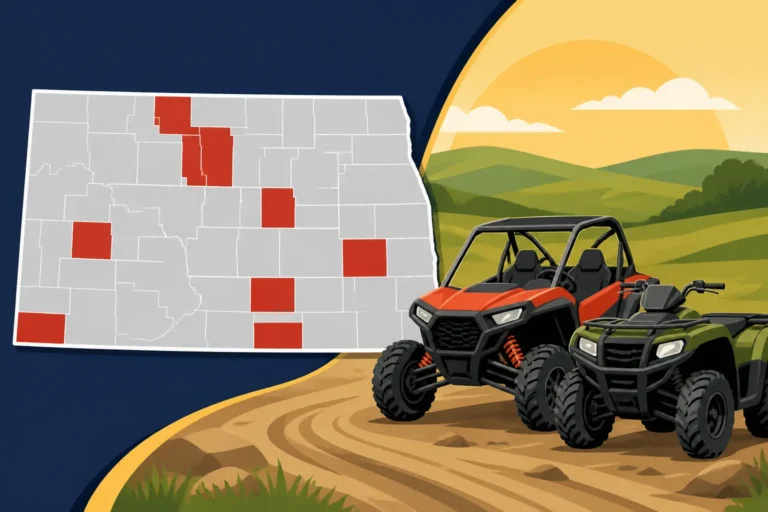
Even with a clear understanding of state law, many riders find themselves confused by local ordinances or lingering myths about OHV road legality. North Dakota's approach grants some statewide permissions, but it also allows for significant local control, creating a patchwork of rules that can be frustrating to navigate. Dispelling these misconceptions is vital for responsible and penalty-free riding. It's not enough to know the state law; you also have to check what the local sheriff or city council has to say.
The reality is that while the state sets the baseline, cities and counties often have the authority to add further restrictions within their jurisdictions. This means a road that's perfectly legal for your OHV under state law might become illegal as soon as you cross into a specific city limit or county.
Why Counties and Cities Can Still Restrict You
This is a point of frequent misunderstanding and often leads to citations for riders who thought they were compliant. While the state outlines general provisions for OHV use on certain paved roads, [North Dakota County and City ATV Ordinances] can, and often do, impose additional restrictions or outright bans within their boundaries.
For example, a paved road posted at 55 mph might be legally accessible statewide, but once that road enters a city like Bismarck or Fargo, the local ordinance might prohibit OHVs entirely from all paved roads within city limits. Similarly, some counties may have passed resolutions that limit or ban OHV use on certain county roads, even if those roads would otherwise fall under state allowances. This local control exists to allow communities to manage traffic, noise, and safety concerns specific to their areas.
Before planning any route that involves paved roads, especially through or near towns, it is imperative to:
- Check with Local Law Enforcement: A quick call to the local sheriff's department or city police non-emergency line can save you a lot of trouble. Ask specifically about the roads you plan to use within their jurisdiction.
- Look for Posted Signs: Local governments are required to post signs if they are restricting OHV use on roads that would otherwise be open under state law. Always be on the lookout for these signs, especially when entering new areas.
- Consult City/County Websites: Many local governments publish their ordinances online.
Failing to check local rules is a common mistake and can lead to unexpected tickets, even if you're perfectly compliant with state law. [Checking With Local Law Enforcement First] is always your best bet.
The Myth of "Just Being Registered"
Another pervasive misconception is that simply having your OHV [Registering a Side-by-Side in North Dakota] or ATV makes it automatically "street legal" for all roads. This is absolutely not true for paved roads, especially those posted at 55 mph. Registration is a necessary step, but it is far from the only step.
Registration primarily indicates ownership and contributes to the [North Dakota Off-Highway Trail Tax] fund. It does not magically equip your machine with mirrors, a horn, proper lighting, or a speedometer. It does not change your engine size if it's under 350cc, nor does it override any local ordinances. The state's OHV registration process focuses on documenting your machine, not on certifying its roadworthiness for paved public highways.
Think of it like this: your car is registered, but that doesn't mean you can drive it without working headlights or without a valid driver's license. The same logic applies, even more stringently, to OHVs on paved roads. There's a comprehensive checklist of requirements – equipment, rider age, engine size, local ordinances, and the specific road type – that all must be met simultaneously. Relying solely on your registration to justify riding on a paved road is a recipe for a citation. [What North Dakota's OHV Law Requires of Owners] extends far beyond just getting a decal.
Here's a quick reference table summarizing key requirements for OHV use on North Dakota paved roads posted at 55 mph:
| Requirement | Class I/II OHVs (e.g., ATVs, Side-by-Sides) | Class III OHVs (e.g., Jeep-like machines) | Importance |
|---|---|---|---|
| Engine Size | 350cc or greater | Generally 350cc or greater (most Class III are) | Ensures adequate power for traffic flow |
| Speed Capability | Capable of maintaining at least 30 mph | Capable of maintaining at least 30 mph | Prevents impedance of traffic |
| Road Type | Paved roads posted 55 mph | Paved roads posted 55 mph (and some 65 mph) | Specific allowance, not all paved roads |
| Headlamp | Visible 300 ft forward | Visible 300 ft forward | Critical for visibility, especially at night |
| Taillamp | Red, visible 500 ft rear | Red, visible 500 ft rear | Critical for visibility, especially at night |
| Brake Light | Required | Required | Signals braking to following traffic |
| Rearview Mirror | At least one, 10 sq inches, visible 200 ft rear | At least one, 10 sq inches, visible 200 ft rear | Essential for situational awareness |
| Horn | Audible 200 ft | Audible 200 ft | Signals presence and intentions |
| Speedometer | Displays speed in mph | Displays speed in mph | Crucial for obeying speed limits |
| Spark Arrester | USFS approved | USFS approved | Prevents wildfires |
| Muffler | Prevents excessive noise | Prevents excessive noise | Reduces noise pollution |
| Registration | Required, current | Required, current | Legal prerequisite for road use |
| Helmet (Under 18) | DOT compliant, securely fastened | DOT compliant, securely fastened | Mandatory for young riders' safety |
| Local Ordinances | Must adhere to county/city restrictions | Must adhere to county/city restrictions | Local rules can override state allowances |
| Interstate Use | Never permitted | Never permitted | High-speed, controlled access are always closed |
This article is for general informational purposes only and does not constitute professional advice. Laws, prices and regulations vary by location and change over time. Consult a qualified professional for guidance on your specific situation.