North Dakota Interstates Are Never Open
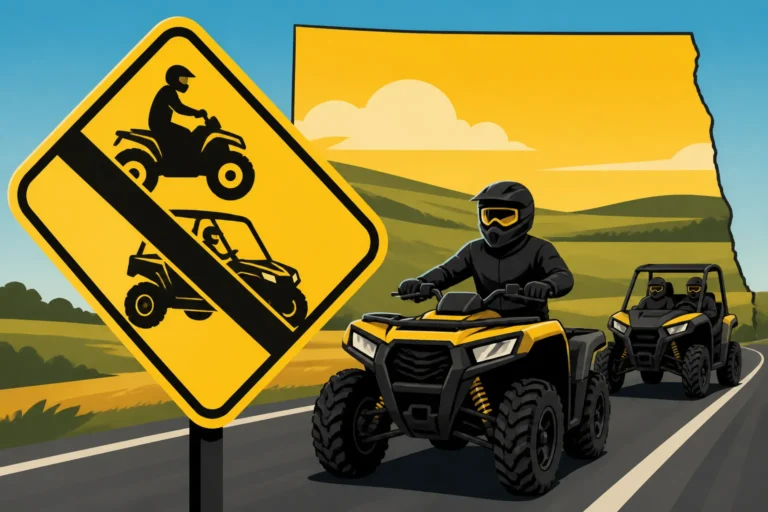
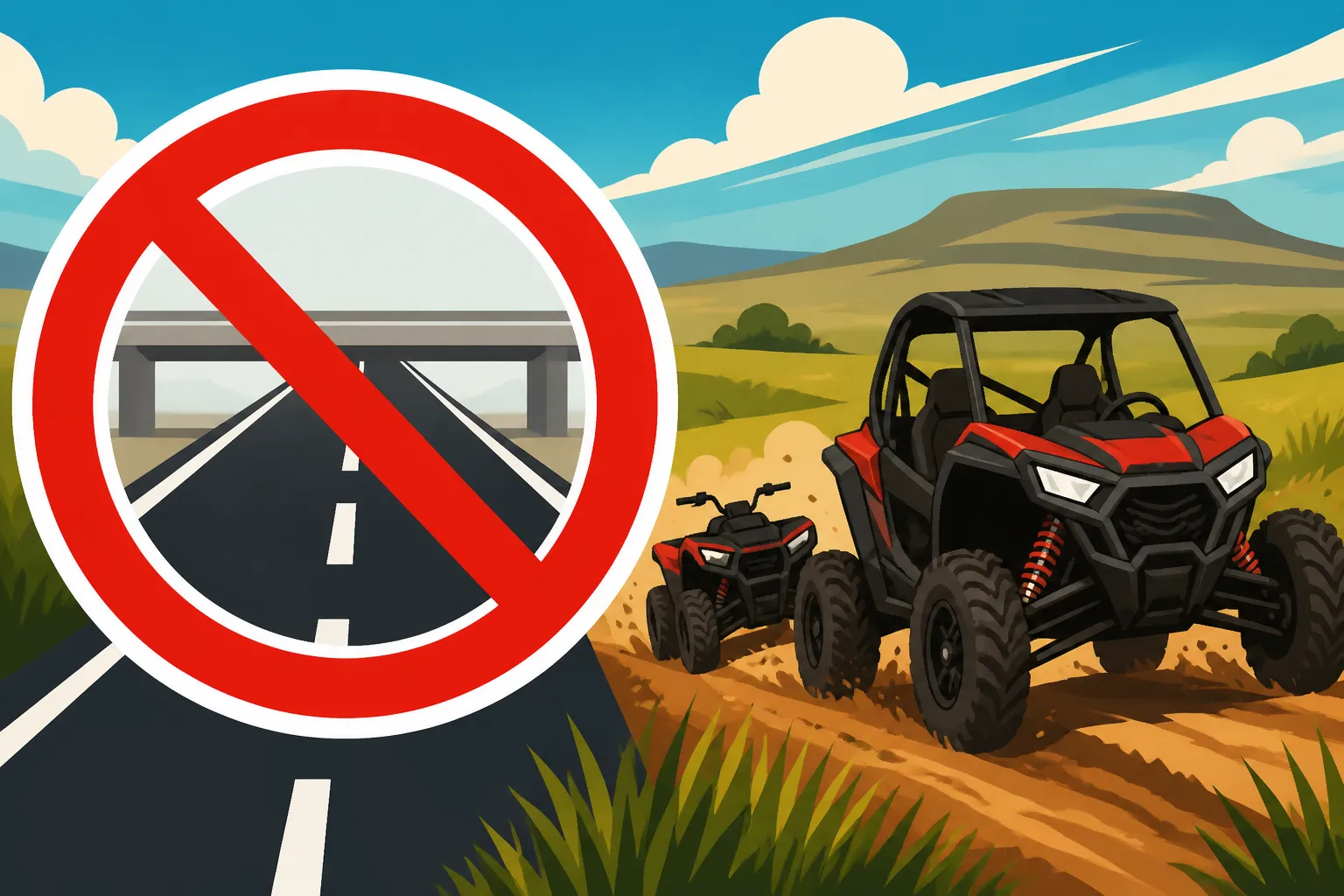
It can be incredibly frustrating to see wide-open stretches of road, particularly those fast-moving interstates, and wonder why your trusty ATV or UTV can't join the flow of traffic in North Dakota. Many riders grapple with the misconception that if a machine is registered and road-legal in some capacity, it should be allowed on all public roads. This comprehensive guide will clear up that confusion, explaining in detail why North Dakota's interstates are unequivocally closed to off-highway vehicle (OHV) traffic, regardless of your machine's setup or registration status.
Understanding North Dakota's OHV Law Framework
North Dakota has a very specific set of laws governing where and how off-highway vehicles can be operated. It’s not just about getting a license plate; it’s about understanding the nuances of the state's vehicle classifications and the intent behind road usage regulations. Many riders assume that if they meet certain criteria, like having a [North Dakota Registration for a Machine Over 65 Inches] or simply possessing a valid registration, they can go anywhere. This simply isn't the case, especially when it comes to the major arteries of the state.
Defining Off-Highway Vehicles in North Dakota
First, let's nail down what North Dakota considers an OHV. It's essentially any motorized vehicle used off public roads, including ATVs (all-terrain vehicles), UTVs (utility terrain vehicles, often called side-by-sides), and dirt bikes. The state categorizes these into Class I, II, and III machines, each with specific definitions related to their width, weight, and seating. For instance, a Class I machine is typically a quad designed to be straddled, while a Class II is a larger side-by-side that can be up to 65 inches wide, and a Class III encompasses wider machines up to 8,000 pounds. These classifications are crucial because they dictate where and how a machine can be ridden, especially on public rights-of-way.
However, even if your machine meets the requirements to be legally operated on certain roadways, such as having proper lighting, mirrors, and a horn, that doesn't grant universal access. The rules are designed to ensure safety and prevent conflicts with other types of traffic, which is why a general understanding of [What North Dakota's OHV Law Requires of Owners] is so important. Your machine might be perfectly legal for a gravel road, but that doesn't mean it's interstate-ready.
The Legislative Intent Behind OHV Road Rules
The laws governing OHV use on public roads in North Dakota are rooted in a clear legislative intent: to balance recreational access and utility with public safety. The state recognizes the value of OHVs for agriculture, recreation, and accessing remote areas. Hence, provisions exist for riding on certain types of roadways, like ditches and gravel roads, under specific conditions. However, this flexibility is never extended to high-speed, controlled-access highways. The design and function of interstates prioritize the rapid and safe movement of conventional, high-speed vehicles.
The legal framework is designed to prevent scenarios where slower-moving, less protected OHVs could create significant hazards for themselves and other motorists traveling at much higher speeds. This separation of vehicle types based on capability and design is a cornerstone of traffic safety legislation across the country, and North Dakota is no exception. It’s about more than just your machine’s top speed; it’s about the entire ecosystem of traffic flow and accident prevention.
Why Interstates Are Different: Controlled-Access Highways
Interstate highways are fundamentally different from other roads in North Dakota, and this distinction is at the heart of why OHVs are prohibited. It’s not an arbitrary rule; it’s a consequence of their design, purpose, and the inherent dangers they present to off-highway vehicles. Understanding this difference is key to grasping why [Why Interstates Fall Outside North Dakota's Highway System] when it comes to OHV access.
What "Controlled Access" Really Means
When a road is designated as "controlled access," it means entry and exit are strictly limited to specific interchanges. There are no driveways, no cross-traffic, and typically no pedestrian or bicycle traffic. This design is intended to allow for continuous, uninterrupted flow of traffic at high speeds. Ramps, rather than intersections, manage entry and exit, and access is explicitly "controlled" to optimize speed and minimize collision points.
For an OHV, which might have different acceleration, braking, and overall handling characteristics compared to a passenger car or semi-truck, navigating such an environment is inherently risky. Even a machine with significant horsepower or one upgraded with performance parts from a company like SuperATV would still face challenges in keeping up with the flow of traffic, merging safely, or responding to sudden changes in speed common on interstates. The infrastructure itself—the width of lanes, the design of shoulders, the absence of frequent turns or stop signs—is all geared towards vehicles that can maintain sustained high speeds and are built to withstand the rigors of interstate travel.
Speed and Safety Concerns on Interstates
The primary concern for banning OHVs from interstates boils down to speed differentials and safety. Interstates are built for vehicles traveling at 70 to 80 miles per hour, or even higher in some areas, depending on posted limits. While some modern UTVs might technically be capable of reaching speeds close to 60 mph, they are not designed for sustained high-speed operation alongside heavy truck traffic and passenger vehicles. Their tires, suspension, and overall stability are optimized for off-road or lower-speed road conditions, not the aerodynamic demands of an interstate.
Imagine a large side-by-side, even one equipped with all the necessary [North Dakota Equipment Required on a Roadway] like mirrors and turn signals, trying to merge onto an interstate where traffic is moving at 75 mph. The acceleration disparity alone creates a dangerous situation. Furthermore, the lack of substantial crash protection on most OHVs means that even a minor incident at interstate speeds could have catastrophic consequences for the rider and passengers. Lawmakers recognize these inherent dangers, and therefore, for the safety of all road users, they simply keep OHVs off these specific types of roadways.
The Specific Exclusion of OHVs from Interstates
It’s not just a recommendation or a suggestion; the exclusion of OHVs from North Dakota’s interstates is explicitly written into the state’s legal code. This clarity leaves no room for interpretation and helps explain why law enforcement will not hesitate to issue citations to anyone attempting to defy these rules. Understanding the specific legal language can really help to drive this point home for riders who might be looking for loopholes.
Explicit Prohibitions in State Statute
North Dakota statutes clearly define which types of roads are open or closed to OHVs. While certain county and township roads, and even the "ditch bottom" or "back-slope" of some highways, are permissible under specific conditions (as detailed in [North Dakota Ditch Riding: The Legal Right Explained]), interstates and other controlled-access highways are explicitly off-limits. The law typically states that OHVs are prohibited from operating on the main traveled portions of controlled-access highways, and often extends this prohibition to the shoulders as well.
This legal distinction is critical. It means that even if your OHV is fully registered, titled, and equipped with all the features like DOT-approved tires, a speedometer, and a horn, it still cannot be legally operated on an interstate. The intent of the law is to keep these high-speed corridors clear for their designated purpose, ensuring the safety of all road users by segregating slower, less protected vehicles. Attempts to circumvent these rules can lead to serious legal consequences, including hefty fines and potential impoundment of the machine. [A Basic OHV Violation Now Costs $50], and that's just the starting point for more serious infractions.
The "Roadway" Versus "Ditch" Distinction
A common source of confusion for OHV riders in North Dakota is the distinction between riding on a "roadway" versus riding in the "ditch" or "back-slope" of a highway. North Dakota law is unique in that it often permits OHV operation in the ditches adjacent to state and federal highways, provided specific conditions are met (like adhering to speed limits, avoiding private property, and staying out of the "inslope" or "shoulder"). However, this privilege absolutely does not extend to interstates.
The ditches of interstates are still considered part of the controlled-access right-of-way and are subject to the same prohibitions as the main travel lanes. There's no legal "ditch riding" loophole for interstates. The reason for this strictness often comes back to the speed and volume of traffic. Even operating in the ditch of an interstate can pose a significant distraction and safety hazard for drivers on the main road, not to mention the dangers to the OHV operator if they were to lose control and enter the high-speed lanes. Therefore, for interstates, the rule is simple and absolute: no OHVs, period.
Exceptions and Misconceptions (There Are None for Interstates)
Riders often search for any possible exception or special circumstance that might allow them to use an interstate, even for a short distance. It’s a natural human tendency to look for ways to make things more convenient. However, when it comes to North Dakota interstates and OHVs, the simple truth is that there are no legitimate exceptions in the law that permit their use. It’s important to dispel these myths clearly and unequivocally.
Emergency Situations and Enforcement Discretion
One common misconception is that an OHV might be allowed on an interstate in an emergency situation. For example, if a conventional vehicle breaks down on the interstate and an OHV is the only means of transport nearby to get help, or perhaps for rescue operations. While law enforcement personnel do have discretion in extreme, life-threatening emergencies, this is not a legal "exception" for general OHV riders. An emergency would have to be dire and involve direct authorization or involvement of emergency services.
For the average rider, getting stuck far from an exit and deciding to take the interstate shoulder "just this once" to get off is a recipe for a ticket, not an exemption. Law enforcement officers are tasked with enforcing the law as written. They understand the dangers of OHVs on interstates, and they will act to prevent accidents. Relying on an "emergency" to justify illegal interstate travel is a risky gamble, and one that is almost guaranteed to end with penalties rather than leniency, especially without official approval or immediate threat to life.
The Myth of the "Temporary Crossing" on Interstates
Another pervasive myth is that a brief, temporary crossing of an interstate, perhaps from one frontage road to another, might be permissible. While some states have specific provisions for temporary crossings of certain divided highways at designated points, North Dakota's laws do not extend this courtesy to interstates for OHVs. An interstate is a high-speed, controlled-access highway through and through, from entrance ramp to exit ramp, and across its entire width, including all lanes and shoulders.
There is no legal basis in North Dakota for an OHV to cross an interstate, even if it's just for a few yards. The dangers of entering and exiting the main flow of traffic, even for a moment, are simply too high. This applies whether you're riding a nimble Class I ATV or a powerful Class II UTV with all the bells and whistles, perhaps even sporting some heavy-duty axles or lift kits from SuperATV. The inherent design of the interstate and the capabilities of the OHV create an irreconcilable conflict, which is why the prohibition is absolute.
Where You Can Ride Your OHV in North Dakota
So, if interstates are off-limits, where can you actually ride your ATV or UTV in North Dakota? The good news is that the state offers a wealth of opportunities for OHV enthusiasts, both on designated trails and on specific types of public roads. It's all about knowing the rules and respecting the boundaries.
Exploring North Dakota's Ditch Riding Opportunities
North Dakota is quite unique in its widespread allowance for ditch riding. Many state and federal highways, excluding interstates and certain highly urbanized areas, permit OHV operation in the ditch bottom or on the back-slope. This means you can often use your OHV to get from point A to point B in rural areas, traversing long distances along the roadside. It’s a huge benefit for hunters, farmers, and recreational riders alike.
However, ditch riding comes with its own set of rules. You must stay out of the "inslope" and "shoulder" (the area closest to the paved roadway) and adhere to specific speed limits, typically lower than the posted road speed. You also need to be aware of private property lines and avoid causing damage to vegetation. For many riders, learning the specifics of [North Dakota Ditch Riding: The Legal Right Explained] becomes essential to enjoying their machines responsibly across the vast prairie landscape. You might even want to check with [Checking With Local Law Enforcement First] in an unfamiliar area.
Designated Trails and Public Land Options
Beyond the ditches, North Dakota also offers dedicated trail systems and public lands where OHVs are welcome. Places like Pembina Gorge, the Roughrider OHV Trail, and Turtle Mountain provide miles of managed trails for various skill levels. These areas are specifically designed for off-highway vehicles, offering a safer and more enjoyable experience away from highway traffic. [North Dakota OHV Trails: All Four Riding Areas] details these fantastic spots.
These trails often have width restrictions, so knowing if your side-by-side fits the [North Dakota Trails With Width Limits] is crucial. Additionally, areas like Kimball Bottoms offer open play areas where riders can explore and challenge themselves. Utilizing these designated spaces is not only legal but also supports the continued development and maintenance of OHV infrastructure in the state. Always check for current conditions and closures, especially after heavy rains, to protect the trails and ensure your safety.
The Role of Local Ordinances and Farm Use
It's also important to remember that local ordinances in counties and cities can further restrict OHV use, even where state law might allow it. While [North Dakota Cities Cannot Require Local Registration], they can impose rules about where and when OHVs can be ridden within their municipal limits. Always check with local authorities if you plan to ride your OHV within a town or city, as their rules might differ from the broader state guidelines.
For those involved in agriculture, North Dakota law provides specific allowances for using OHVs for farming or ranching operations. This often permits the use of OHVs on roads that might otherwise be restricted, provided the machine is being used directly for agricultural purposes. This flexibility acknowledges the utility of these machines in rural livelihoods. However, even these exemptions typically don't extend to interstates, as the nature of farm work rarely requires interstate travel with an OHV.
Practical Advice and Safety Considerations
Knowing where you can't ride is just as important as knowing where you can. Operating an OHV safely and legally requires more than just understanding the statutes; it involves practical steps and a commitment to responsible riding. For the best experience, and to avoid fines, a little preparation goes a long way.
Here’s a breakdown of common road types and OHV legality in North Dakota:
| Road Type | OHV Access | Specific Conditions/Notes |
|---|---|---|
| Interstate Highways | Strictly Prohibited | No exceptions for main lanes, shoulders, or ditches. Controlled-access. |
| State/Federal Highway Ditches | Generally Allowed | Must stay in ditch bottom/back-slope, avoid inslope/shoulder. Speed limits apply. |
| Paved Roads (non-Interstate) | Limited Access | Only if posted 55 mph or less; machine must be 350cc+, capable of 30 mph, equipped. |
| Gravel Roads | Generally Allowed | [North Dakota Gravel Roads Open to Registered Machines] for Class I, II, III. |
| Township Roads | Generally Allowed | Common for connecting properties in rural areas. |
| Section Lines | Generally Allowed | Within the 33-foot right-of-way, respecting private property. |
| Designated OHV Trails | Fully Allowed | Specific to trail systems like Pembina Gorge, Roughrider. Check width limits. |
| Private Land | Allowed with Owner Permission | Always require express permission from the landowner. |
Pre-Ride Checks and Equipment for Road-Legal Use
Before you even think about taking your OHV onto any public road in North Dakota (that isn't an interstate, of course!), ensure your machine is properly equipped and inspected. This isn't just about avoiding a ticket; it's about your safety and the safety of others. North Dakota has clear requirements for what makes an OHV "road-legal" for authorized roads.
Your machine needs to have at least one headlamp visible from 300 feet, at least one tail lamp visible from 500 feet, and a brake light. A working horn audible from 200 feet is also a must. For night riding, reflective tape might be a good idea, as [North Dakota Rules for Riding After Dark] require certain visibility standards. If you're riding a Class I or II ATV, you'll need at least one mirror providing a clear view of at least 10 square inches. Class III machines (like many side-by-sides) need two mirrors. A speedometer reading in miles per hour is also mandatory for road use. Many riders look to aftermarket parts from companies like SuperATV to ensure their machines meet these requirements, especially for mirrors, lighting, and even turn signal kits if they plan extensive road travel. Always remember the [North Dakota Helmet Law for Riders Under 18], which mandates DOT-approved helmets.
Understanding Penalties for Non-Compliance
Operating an OHV on an interstate in North Dakota is a serious offense that can lead to significant penalties. It's not just a slap on the wrist. You could face fines, court costs, and potentially even misdemeanor charges depending on the specific circumstances and any additional infractions. These penalties are designed to deter riders from engaging in dangerous behavior that endangers themselves and others.
Beyond the immediate financial cost, there's the inconvenience of dealing with law enforcement, potential impoundment of your machine, and the possibility of having a mark on your driving record. Furthermore, if an accident were to occur while you were illegally operating on an interstate, your insurance coverage might be jeopardized, leading to immense personal liability. It’s always best to err on the side of caution and stick to the many legal and enjoyable riding opportunities North Dakota truly offers. Don't let the temptation of a shortcut lead you down a path of legal troubles.
Disclaimer
This article is for general informational purposes only and does not constitute professional advice. Laws, prices and regulations vary by location and change over time. Consult a qualified professional for guidance on your specific situation.