North Dakota Passenger Rules on an OHV
Navigating the world of off-highway vehicles (OHVs) in North Dakota is a fantastic adventure, but it's not without its specific rules. One area that causes a lot of confusion and even frustration for riders is figuring out who can actually ride with them on their ATV or UTV. We all want to share the fun of the prairie or the Pembina Gorge, but North Dakota has clear laws about passengers that you absolutely need to understand before you head out, whether it’s for a quick trip to the fields or a weekend on the trails. This guide will walk you through everything you need to know about legally and safely carrying passengers on your OHV in our great state.
Understanding North Dakota's Core Passenger Rules
It's tempting to think that if you own the machine, you can decide who rides on it. However, North Dakota's statutes are pretty specific, designed to keep everyone safe. The fundamental principle revolves around the manufacturer's design and intent for the machine, coupled with age restrictions for younger riders. Ignoring these rules isn't just a minor oversight; it can lead to serious fines, accidents, and potentially even legal liability.
What Constitutes an Approved Passenger Seat
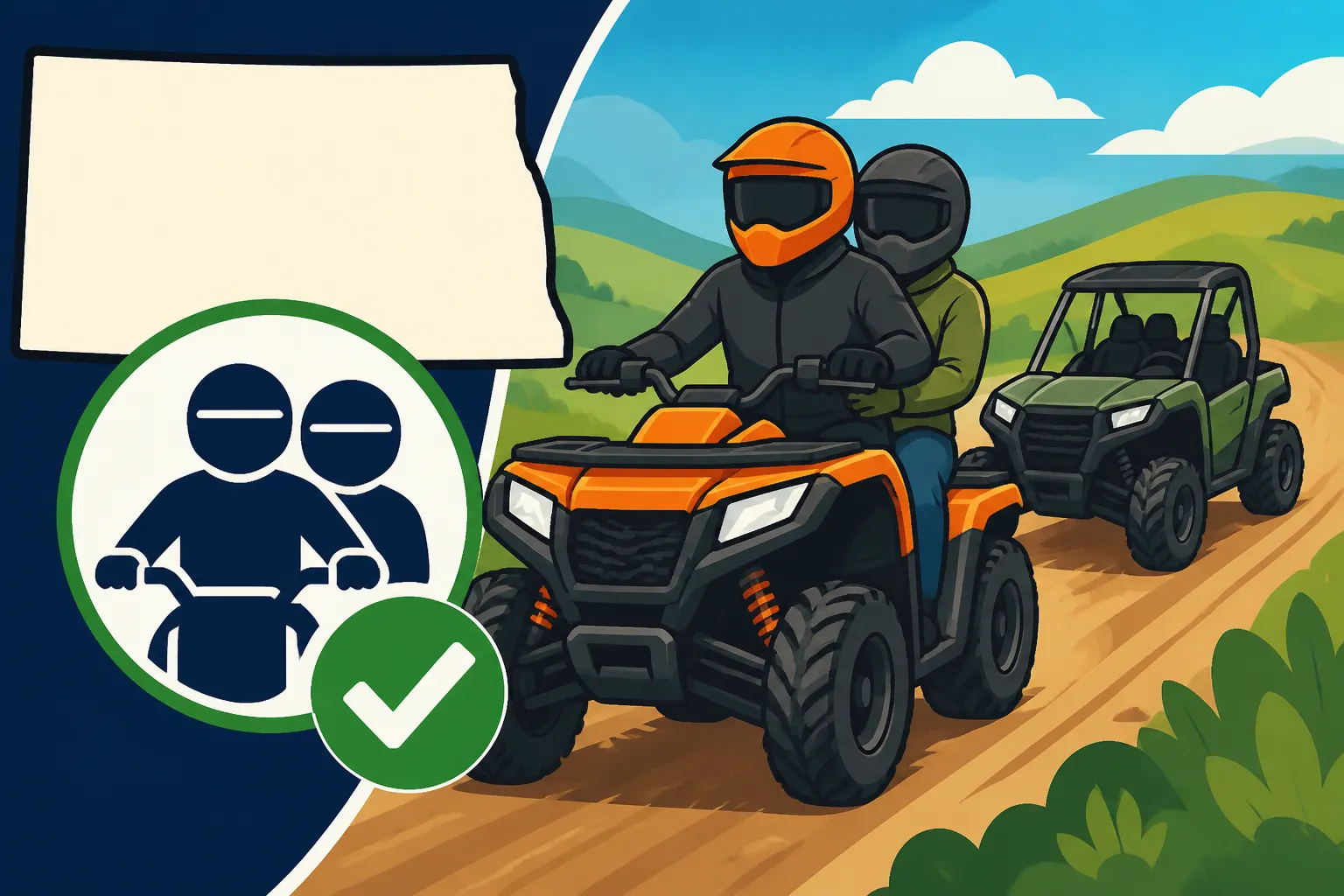
First things first: not every space on your OHV is a passenger seat. North Dakota law, like many other states, leans heavily on the manufacturer's design when it comes to passenger capacity. An "approved" passenger seat generally means a seat that was designed and installed by the manufacturer for the express purpose of carrying an additional person. This isn't just about a comfortable place to sit; it includes designated footrests or footwells, grab handles, and a seating position that allows the passenger to maintain balance and stability during operation.
Think about the difference between a single-rider ATV and a two-up model. A single-rider ATV, by its very design, often has a seat that tapers at the rear, lacks dedicated passenger footpegs, and doesn't offer secure handholds for a second person. Trying to squeeze another person onto this type of machine, even if they're small, means they’re unsecured and incredibly vulnerable to being thrown off. The law recognizes this inherent danger, and therefore, you cannot carry a passenger on a machine not specifically designed for it. For UTVs, which often come with multiple seats, the rule is generally clearer: if there's a factory-installed seatbelt and a designated seating position, it's typically an approved spot. However, adding extra people beyond the vehicle's rated capacity, even in a UTV, is still against the rules and unsafe.
The Manufacturer's Explicit Capacity
Your ATV or UTV manual isn't just a dusty book for repairs; it's a critical legal document, especially when it comes to passenger capacity. The manufacturer explicitly states the maximum number of occupants your machine is designed to carry, usually labeled as "one-up," "two-up," or a specific seating capacity for UTVs. This isn't a suggestion; it's an engineering specification based on factors like weight distribution, suspension, braking capability, and overall stability. Overloading a machine by carrying more passengers than it's designed for dramatically alters its handling characteristics, making it much harder to control, especially on uneven terrain or during sudden maneuvers.
Imagine trying to navigate a challenging section of the Pembina Gorge trails with an extra person perched precariously on your single-rider ATV. The weight distribution would be off, the suspension would be overtaxed, and any bump or turn could send your passenger flying. This is precisely why the law references manufacturer guidelines – they're rooted in safety science. Always check your machine's manual or the warning labels directly on the vehicle itself. Exceeding this stated capacity not only puts your passengers at risk but also exposes you to potential legal consequences, including fines and liability in the event of an accident.
Penalties for Violating Passenger Rules
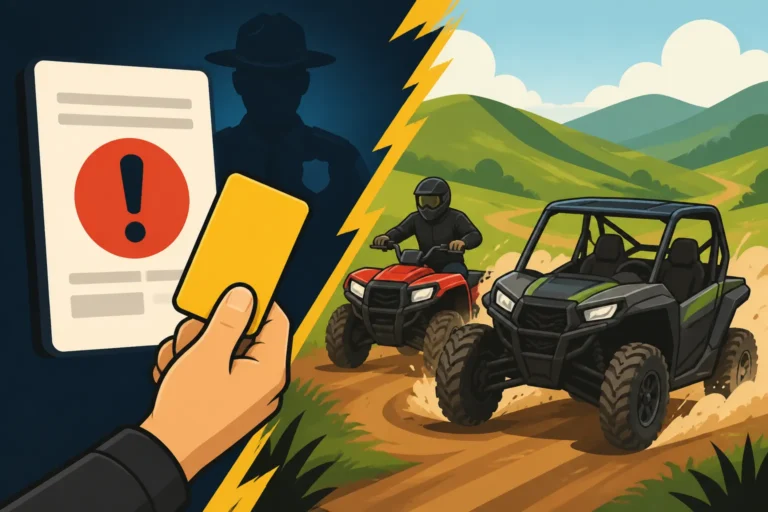
Breaking North Dakota's OHV passenger rules isn't just frowned upon; it carries real penalties. While specific fines can vary, you could be looking at a citation, which means a monetary penalty. These aren't usually cheap. Beyond the immediate financial hit, there's the significant risk of injury. If you have an accident while carrying an unauthorized passenger, or an excess number of passengers, you could face much more severe legal repercussions, including liability for any injuries sustained.
Consider a scenario where you're riding a single-seat ATV with a passenger, and you hit a hidden rut, causing a rollover. Your passenger, not being in a designed seat with proper restraints, could suffer severe injuries. In such a case, your liability insurance might deny the claim because you were operating the vehicle outside of its legal and manufacturer-specified parameters. This means you could be personally responsible for medical bills, lost wages, and other damages, which can quickly add up to tens or hundreds of thousands of dollars. The small thrill of having an extra rider is simply not worth the immense financial and personal risk involved. Always adhere to [North Dakota's OHV Law Requires of Owners] to avoid these serious consequences.
Specific Rules for Children and Youth Passengers
When it comes to our youngest riders, North Dakota takes an even more cautious approach. There are specific age limits, supervision requirements, and even safety certificate mandates that must be followed to ensure children are protected. These rules are in place because children, regardless of their enthusiasm, often lack the physical strength, judgment, and experience to safely ride as a passenger in all situations.
Age Restrictions for Carrying Child Passengers
North Dakota law states that a child under the age of 12 generally cannot operate an OHV or ride as a passenger, with a few crucial exceptions. This rule is designed to protect younger children who are typically too small to properly secure themselves, understand the dynamics of riding, or react appropriately in an emergency. Their center of gravity is different, and their ability to hold on can be compromised by fatigue or unexpected bumps.
The primary exception allows a child under 12 to ride as a passenger if they are operating the OHV on land owned or leased by their parent or guardian, or if they are participating in an organized OHV event or activity under proper supervision. For any other public land or designated trail riding, that 12-year-old minimum for passengers generally applies. It's a hard rule that aims to prevent preventable injuries. So, while your 8-year-old might beg to ride along on the Roughrider OHV Trail, you'll need to remember this age restriction for their safety and your compliance with the law. Always refer to [North Dakota Rules for a Child Passenger] for specific details.
Supervision Requirements for Young Riders
For those children aged 12 to under 16 who are permitted to ride as passengers, certain supervision rules apply. Even if they meet the minimum age, they often still require an adult's watchful eye. This isn't about distrusting your teenager; it's about providing an additional layer of safety and guidance. A younger passenger might get distracted, lose their grip, or become complacent on longer rides. An adult operator, with more experience, can anticipate hazards and react more effectively, ensuring the child's safety.
This supervision typically means the operator of the OHV, who must be an adult, is directly responsible for the child passenger. It emphasizes the need for constant awareness and communication between the operator and the young passenger. For instance, if you're taking your 14-year-old out to explore the Turtle Mountain riding area, you, as the adult operator, are accountable for their safety on the machine. This goes beyond just driving; it involves ensuring they understand how to hold on, how to lean with the machine, and what to do in case of an emergency. The responsibility is significant, and adhering to these guidelines helps prevent accidents and fosters a safe riding environment.
Safety Certificate for Youth Riders
North Dakota also has requirements for OHV safety certificates, particularly for younger riders. While this generally applies more to operators than passengers, understanding it is crucial because a youth passenger might eventually become an operator. If a child aged 12 through 15 wishes to operate an OHV, they must first complete a state-approved OHV safety training course and obtain a certificate. This certificate covers safe riding practices, basic maintenance, and understanding North Dakota's OHV laws.
While a safety certificate isn't explicitly required for a child passenger (the operator is the one who needs to be certified or meet age requirements), it’s highly recommended that any youth who spends time around OHVs, whether as a passenger or aspiring operator, takes such a course. It instills a foundational understanding of safety that benefits everyone on the trail. Think of it as empowering them with knowledge, even if they're not yet at the controls. Moreover, if that child passenger ever decides to take the handlebars, they’ll already have the necessary [North Dakota Safety Certificates at Age 12] in hand.
Road Riding with Passengers: Additional Considerations
Taking your OHV on certain North Dakota roads with a passenger introduces an entirely new layer of rules and safety considerations. The open road, with its higher speeds and mixed traffic, demands more from your machine and your riding practices than off-road trails do. It's not just about what's legal; it's about what's genuinely safe.
Equipment Requirements for Road-Legal OHVs
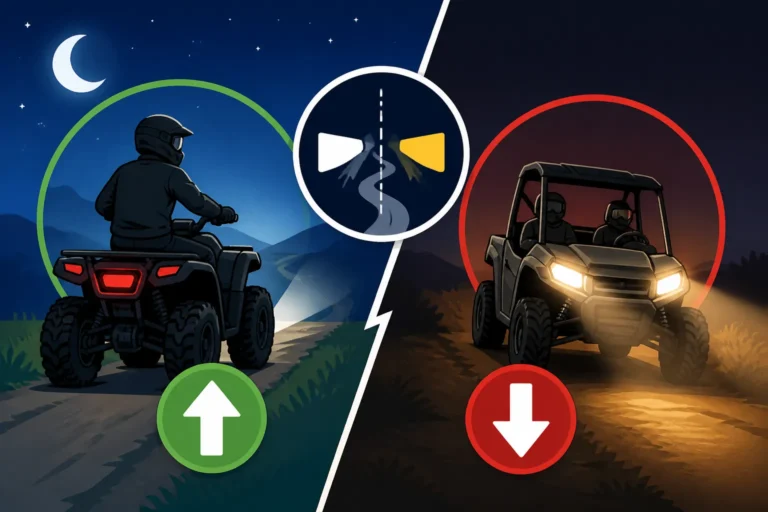
If you plan to ride your OHV on a public road in North Dakota, even with a passenger, your machine needs to meet specific equipment requirements. This isn't optional; it's a matter of making your OHV visible and controllable in a mixed-traffic environment. These requirements typically include working headlamps and taillamps, a brake light, mirrors (often requiring at least one on the left side, or sometimes two), a horn, and often a speedometer and odometer. Your tires must also be suitable for road use, which means they aren't exclusively designed for off-highway traction, sometimes referred to as "non-highway tires."
These extra pieces of equipment are critical for safety on the road. A horn can alert an inattentive driver, mirrors allow you to see traffic behind you, and proper lighting ensures you're seen, especially at dawn, dusk, or night. If you're carrying a passenger, their safety relies even more on these features. For instance, being able to see traffic in your mirrors is crucial before making a lane change or turn, especially with the added weight and dynamics of a passenger. High-quality aftermarket mirrors, like those available from SuperATV, can enhance your field of view and durability for road use. Don't assume your trail-ready machine is automatically road-ready; it often requires modifications to comply with [North Dakota Equipment Required on a Roadway].
Speed and Surface Restrictions with Passengers
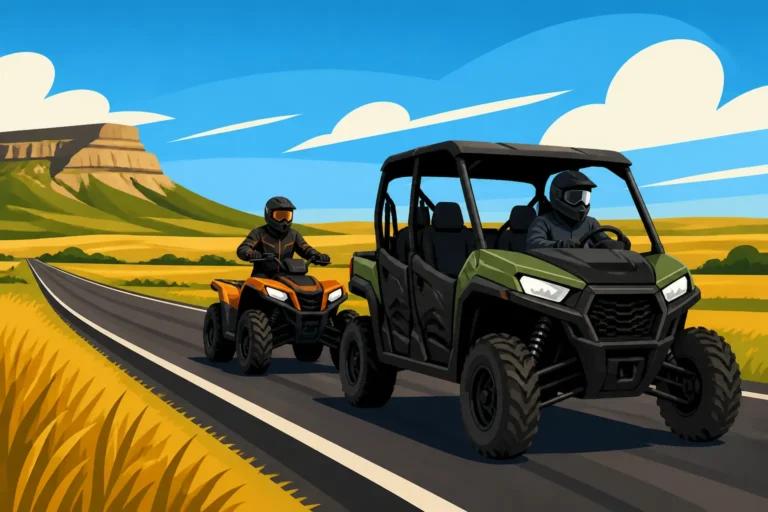
North Dakota has specific rules about where and how fast you can ride your OHV on roads, and these rules are especially important when carrying a passenger. Generally, OHVs are permitted on gravel roads and sometimes on paved roads with speed limits of 55 mph or less, provided the machine is capable of maintaining at least 30 mph. For Class III machines (often UTVs), there might be expanded access to roads posted at 65 mph. However, interstates and four-lane divided highways are almost always off-limits.
When you have a passenger, especially a younger one, maintaining appropriate speeds and being acutely aware of the road surface becomes even more critical. A sudden pothole or loose gravel patch can be jarring for an unsecured passenger, or even cause them to lose their grip. On higher-speed roads, the wind blast can be significant, making communication difficult and potentially fatiguing for a passenger. Always reduce your speed in unfamiliar areas or when conditions are less than ideal. Riding on a paved road versus a gravel road presents different challenges, and you should adjust your driving style accordingly, always prioritizing the safety and comfort of your passenger. Check [North Dakota ATV Road Rules by Surface Type] for detailed information.
Helmet Laws for Passengers
North Dakota's helmet law specifically addresses riders and passengers under the age of 18. If your passenger is under 18 years old, they must wear a safety helmet while riding an OHV, whether on public land, private land (unless it's owned by their parents and only used there), or on a public roadway. This isn't just a recommendation; it's a legal requirement designed to protect young, developing brains from serious injury in the event of an accident. Helmets significantly reduce the risk of head trauma, which can be devastating.
Even if your passenger is over 18 and not legally required to wear a helmet, it's always a wise safety practice to encourage or even require them to do so, especially on challenging terrain or at higher speeds. A helmet provides crucial protection that a baseball cap or knit hat simply cannot. As the operator, you have a responsibility for your passenger's safety, and ensuring they wear appropriate protective gear, including a DOT-approved helmet, is paramount. Always make sure the helmet fits properly and is securely fastened. This simple piece of gear can make all the difference in an unforeseen incident, protecting your passenger as effectively as possible. You can find more details on [North Dakota Helmet Law for Riders Under 18].
Insurance Implications for Carrying Passengers
Riding an OHV always comes with inherent risks, and carrying a passenger amplifies those risks. This makes understanding your insurance coverage absolutely vital. It's not just about protecting your machine; it's about protecting yourself and anyone you bring along for the ride.
Liability Coverage and Passenger Injuries
Your OHV insurance policy typically includes liability coverage, which helps cover costs if you're at fault for an accident that causes injury or damage to others. However, when it comes to passengers on your own machine, especially those who might be considered "unauthorized" by law or your policy's terms, things can get complicated. If you're carrying a passenger in violation of North Dakota law (e.g., on a single-rider ATV, or an underage passenger without proper supervision), your liability coverage might be jeopardized or even denied in the event of an accident where your passenger is injured.
Imagine a situation: you're riding with a friend on a single-seat ATV, you misjudge a turn, and they fall off, breaking an arm. Because you were operating the vehicle outside of its manufacturer's intended capacity and in violation of state law, your insurance company could argue that your policy doesn't cover the resulting medical bills. This leaves you, the operator, personally responsible for those potentially exorbitant costs. Always review your policy and understand its limitations. If you frequently carry authorized passengers, ensure your liability limits are sufficient. For detailed information, consult [North Dakota Insurance Requirements at Registration].
Medical Payments and Personal Injury Protection (PIP)
Some OHV insurance policies offer medical payments (MedPay) coverage or Personal Injury Protection (PIP). These coverages are designed to help pay for medical expenses for you and your passengers, regardless of who was at fault in an accident, up to a certain limit. This can be a real lifesaver if someone gets hurt on your machine. However, just like with liability, the validity of these coverages can depend on whether you were operating your OHV legally and within your policy's terms.
If your policy includes MedPay or PIP, and you're carrying a legal passenger on a properly equipped machine, these benefits can help cover their immediate medical costs. However, if you were operating recklessly, under the influence, or in direct violation of state passenger laws, these coverages might not apply. It's a sobering thought, but it underscores the importance of not only having adequate insurance but also strictly adhering to all safety and legal regulations. Always clarify with your insurance provider what your policy covers regarding passenger injuries and under what conditions.
Ensuring Passenger Safety Beyond the Law
While following North Dakota's laws is non-negotiable, true passenger safety goes beyond mere compliance. It involves proactive measures, good judgment, and a commitment to responsible riding that protects everyone on board. The legal minimum is just that – a minimum.
Pre-Ride Briefing and Communication
Before you even start the engine with a passenger, especially a new one, a thorough pre-ride briefing is essential. This isn't just a friendly chat; it's a critical safety talk. Explain how to properly hold on, where to place their feet, and how to lean into turns. Emphasize the importance of keeping their hands and feet inside the vehicle (for UTVs) or securely on the grab handles/footrests (for ATVs). Tell them to pay attention to your movements and signals, and establish a clear communication method if you need to stop or if they have a concern.
Imagine you're taking a friend on their first ride on a side-by-side through the winding paths of Pembina Gorge. Before you leave the trailhead, you'd explain the terrain, tell them about potential bumps, and instruct them to let you know immediately if they feel uncomfortable. This open communication builds trust and allows you to adjust your riding style to match their comfort level. A passenger who knows what to expect and how to communicate will be a safer, more enjoyable riding companion.
Appropriate Protective Gear for All Passengers
North Dakota's helmet law specifically mandates helmets for passengers under 18, but as we discussed, wearing a helmet is a smart choice for everyone. Beyond helmets, passengers should also wear other appropriate protective gear. This includes eye protection (goggles or a full-face helmet visor), long pants, a long-sleeved shirt or jacket, sturdy over-the-ankle boots, and gloves. This gear protects against abrasions, impacts, sun exposure, and flying debris.
Think about a typical day riding in North Dakota. You might encounter dusty trails, low-hanging branches, or sudden mud puddles. Proper gear protects your passenger from these elements. A quality helmet from a reputable brand, good goggles, and sturdy clothing can prevent minor scrapes from turning into serious injuries. Just as you, the operator, gear up for safety, your passenger deserves the same level of protection. Investing in proper gear for anyone riding with you is an investment in their well-being.
Adjusting Riding Style to Accommodate Passengers
Carrying a passenger significantly changes the dynamics of your OHV, and you, as the operator, must adjust your riding style accordingly. This means reducing your speed, especially on turns, bumps, and uneven terrain. Avoid aggressive maneuvers like sudden acceleration, sharp turns, or fast braking, which can easily unbalance a passenger or cause them to lose their grip. Maintain a smoother, more predictable pace.
When you have an extra person on board, your machine's center of gravity shifts, its braking distance increases, and its ability to absorb bumps changes. For example, if you're navigating a steep incline with a passenger, you'll need to approach it more slowly and deliberately than you might when riding solo. You're not just riding for yourself anymore; you're responsible for the comfort and safety of another person. Be mindful of their experience level, and never push them (or the machine) beyond their limits. This considerate approach ensures everyone has a positive and safe riding experience.
Exceptions and Special Scenarios
While the general rules cover most situations, there are a few specific instances where North Dakota's OHV passenger laws might have nuances or exceptions. Understanding these can prevent confusion and ensure you're always operating within legal boundaries.
Farm and Ranch Use
For many in North Dakota, ATVs and UTVs are essential tools for farm and ranch work. The law often recognizes these practical uses and may provide some leniency, particularly when it comes to carrying passengers for agricultural purposes. For instance, a farmer might need to carry a child to a field to help with chores, or transport a farmhand to a different part of the property. In these specific contexts, especially on private land directly related to agricultural operations, the rigid age restrictions or passenger capacity rules might be interpreted with more flexibility.
However, "farm use" isn't a blanket exemption for reckless behavior. The spirit of the law still emphasizes safety. If you're carrying a passenger for farm work, you should still ensure they are seated as safely as possible, that the machine is operated cautiously, and that you're not exceeding its overall weight capacity in a way that compromises stability. This is about practical functionality on private land, not using farm status as an excuse for unsafe public road or trail riding. Always use common sense and prioritize safety, even in these working scenarios. You can learn more about [Farm Machines and North Dakota Paperwork] to ensure full compliance.
Organized OHV Events and Activities
North Dakota provides an exception for children under 12 riding as passengers if they are participating in an organized OHV event or activity under proper supervision. This is a significant carve-out that allows families to participate in events like poker runs, charity rides, or designated club outings where specific safety protocols and supervision are often in place. These events often have designated routes, lower speeds, and a higher degree of oversight from event organizers, which helps mitigate some of the risks associated with younger passengers.
If you're considering taking your young child as a passenger to an organized event, always check the event's specific rules and requirements regarding age, machine type, and safety gear. They might have additional guidelines beyond state law. The "proper supervision" aspect is key here; it implies that adults are actively monitoring the safety of children throughout the event. This exception is designed to foster a community around OHV riding while still maintaining a focus on safety within a structured environment.
Common Misconceptions About OHV Passengers in North Dakota
Despite the clear rules, many myths and misunderstandings persist about carrying passengers on OHVs in North Dakota. Let's clear up some of the most common ones to ensure everyone is on the same page.
"My Kid Can Just Sit on My Lap"
This is a dangerous misconception that unfortunately still pops up. The idea that a child can simply sit on an adult's lap on an ATV or UTV is incredibly unsafe and almost certainly violates state law and manufacturer guidelines. While it might seem like a way to keep them "close and secure," it actually puts them in a highly vulnerable position. In the event of a sudden stop, bump, or rollover, a child on a lap can be easily crushed between the operator and the handlebars, or ejected from the machine entirely.
An adult's lap provides no secure restraint, no proper seating position, and no protection. The child is exposed to impacts from the steering wheel or controls, and the operator's ability to react and control the machine is severely hampered. North Dakota law, and every safety expert, would strongly advise against this practice. Always use a manufacturer-approved seat with appropriate restraints, or ensure the child meets the age and seating requirements for a dedicated passenger position. Your child's safety is worth more than a momentary convenience.
"It's Fine on Private Land, So Who Cares?"
While some of North Dakota's rules are indeed relaxed on private land owned or leased by the parent/guardian (especially for youth operators or passengers), the "who cares?" attitude about general passenger safety on private land can be incredibly dangerous. Even on your own property, the laws of physics still apply. A rollover on your back forty hurts just as much as one on a public trail.
Furthermore, if an accident happens on your private land and an unauthorized passenger is injured, you could still face civil liability, even if you weren't breaking a specific public riding statute. Your homeowner's insurance might not cover OHV-related incidents, or it might deny a claim if reckless operation or illegal passenger transport was involved. Always prioritize safety, communication, and proper seating for all passengers, regardless of where you are riding. The responsibility for preventing injury rests with the operator.
"My Machine Has a Big Back Rack, That's a Seat, Right?"
This is another common mistake, particularly with utility ATVs. Many ATVs come equipped with sturdy front or rear racks designed for carrying cargo, not people. These racks might look like a convenient place to sit, but they absolutely are not designed to be passenger seats. They lack proper footrests, grab handles, and the structural support and padding necessary for safe human transport. Sitting on a rack makes a passenger highly susceptible to being thrown off the machine during even minor bumps or turns.
The design purpose of these racks is to distribute weight for cargo, and trying to use them for passengers can lead to significant instability. It also places a passenger in a precarious position far behind or in front of the operator, making communication and balance coordination difficult. If you need to carry cargo and a passenger, you need a machine designed for both, or you need to make separate trips. Never substitute a cargo rack for a proper passenger seat. For safety and utility, make sure your machine has the right setup, perhaps looking at utility add-ons from SuperATV that are designed for cargo management, not extra seating.
Table: North Dakota OHV Passenger Rules Summary
To help clarify the various rules, here's a quick summary of North Dakota's passenger guidelines for OHVs:
| Category | ATV (One-Up) | ATV (Two-Up) | UTV (Multi-Seat) | Rules for Passengers Under 12 | Rules for Passengers 12-15 | Rules for Passengers 16+ |
|---|---|---|---|---|---|---|
| Seating | No passengers permitted | One passenger in designated seat only | Manufacturer's designated seating only | Only in approved seats | Only in approved seats | Only in approved seats |
| Age Requirement | N/A (no passengers) | N/A (see specific age rules below) | N/A (see specific age rules below) | Generally prohibited on public lands/trails | Permitted, but with supervision | Permitted |
| Helmet Requirement | N/A (no passengers) | If passenger is under 18 | If passenger is under 18 | Mandatory on public lands/trails | Mandatory on public lands/trails | Recommended, not legally required |
| Supervision | N/A (no passengers) | Operator must be 16+ and often adult for youth | Operator must be 16+ and often adult for youth | Required by parent/guardian for exceptions | Required by operator (adult) | Operator must be of legal age (16+) |
| Exceptions | N/A (no passengers) | Private land (parent/guardian), organized events | Private land (parent/guardian), organized events | Private land (parent/guardian), organized events | Private land (parent/guardian), organized events | None (standard rules apply) |
| Road Riding | N/A (no passengers on single-up) | Yes, if machine is road-legal & passenger legal | Yes, if machine is road-legal & passenger legal | No, generally too young | Yes, if machine is road-legal & passenger legal | Yes, if machine is road-legal & passenger legal |
| Manufacturer Limits | Strictly one rider | Strictly two riders | Strictly by manufacturer's seating capacity | Must adhere to machine's capacity | Must adhere to machine's capacity | Must adhere to machine's capacity |
Disclaimer
This article is for general informational purposes only and does not constitute professional advice. Laws, prices and regulations vary by location and change over time. Consult a qualified professional for guidance on your specific situation.