Photographing a VIN for the File
There's nothing quite as frustrating as needing to get your ATV or UTV paperwork in order in North Dakota – whether you're registering it, selling it, or just trying to keep your records straight – only to find that crucial VIN is hard to read or you can't quite capture it clearly for the required file. This guide is here to walk you through exactly why a good VIN photo is important, how to get those perfect shots, and when they'll truly save you a headache.
Why a Clear VIN Photo is Crucial for Your North Dakota OHV
In the world of off-highway vehicles (OHVs), the Vehicle Identification Number (VIN) is your machine's unique fingerprint. It's an alphanumeric code that tells authorities everything from the manufacturer and model year to specific features and serial numbers. Without a clear, legible VIN, you can hit a brick wall with almost any official process in North Dakota, leading to delays and unnecessary stress.
Imagine you're finally ready to take your new-to-you side-by-side out on the [Pembina Gorge: North Dakota's OHV Trail Park] for the first time, but you still need to get it registered. You fill out all the forms, think you're good to go, and then the clerk asks for proof of the VIN, or they can't quite make out a digit from your hastily taken photo. Suddenly, your weekend plans are on hold, and you're back home, trying to get a better picture. This isn't just an annoyance; it's a real time-waster that a little preparation can completely avoid.
The Dreaded "Re-Do" of Paperwork
One of the most common reasons folks need a clear VIN photo is for paperwork submitted to the North Dakota Department of Transportation (NDDOT). When you're going through processes like [Titling an ATV in North Dakota] or [Registering a Side-by-Side in North Dakota], the accuracy of that VIN is paramount. A single digit that's blurry, obscured, or simply misread can mean your application is rejected.
Think about the time it takes to gather all your documents, fill out forms like [North Dakota Form SFN 2872 Explained], and then make the trip to a motor vehicle branch or mail everything in. If your VIN photo isn't up to par, all that effort can be for nothing. You'll be asked to resubmit, which means another trip, more postage, and more waiting – precisely what you want to avoid when you're eager to hit the trails or get your machine ready for farm work. A good VIN photo helps ensure a smooth, one-and-done process.
Proof of Ownership and Identity Beyond the Title
Beyond the initial registration and titling, a clear VIN photo acts as an essential backup for proving ownership and identifying your machine. While your title is the primary legal document, there are scenarios where having photographic evidence of the VIN stamped on your machine can be incredibly valuable. This is especially true if you ever find yourself in a dispute or if your machine is stolen.
Consider selling your OHV privately. A potential buyer will want to verify the VIN against the title and any other paperwork. Having a pristine photo readily available, perhaps even integrated into a bill of sale you've created (many people use services like LawDepot for custom, legally sound documents), instills confidence. It allows you to quickly confirm that the machine's identity matches its documentation, helping to avoid misunderstandings or suspicions that can arise when buying from a private seller. A clear photo, paired with documents like [North Dakota Statement of Ownership Form SFN 2903] or a robust bill of sale, offers indisputable proof for both parties involved in a transaction.
Locating and Preparing Your OHV's VIN for the Lens
Before you can snap that perfect VIN photo, you first need to find the VIN itself. Unlike passenger cars where the VIN is typically prominently displayed on the dashboard, OHVs can be a bit more elusive. Once you've located it, a little preparation can make all the difference in getting a clear, usable photograph.
Finding the VIN can sometimes feel like a treasure hunt, especially if you're not familiar with your machine's specific layout. OHV manufacturers place VINs in various spots, often stamped directly into the metal frame. This makes them durable but also susceptible to dirt and wear, which can obscure the numbers and letters.
Common VIN Locations on ATVs and UTVs
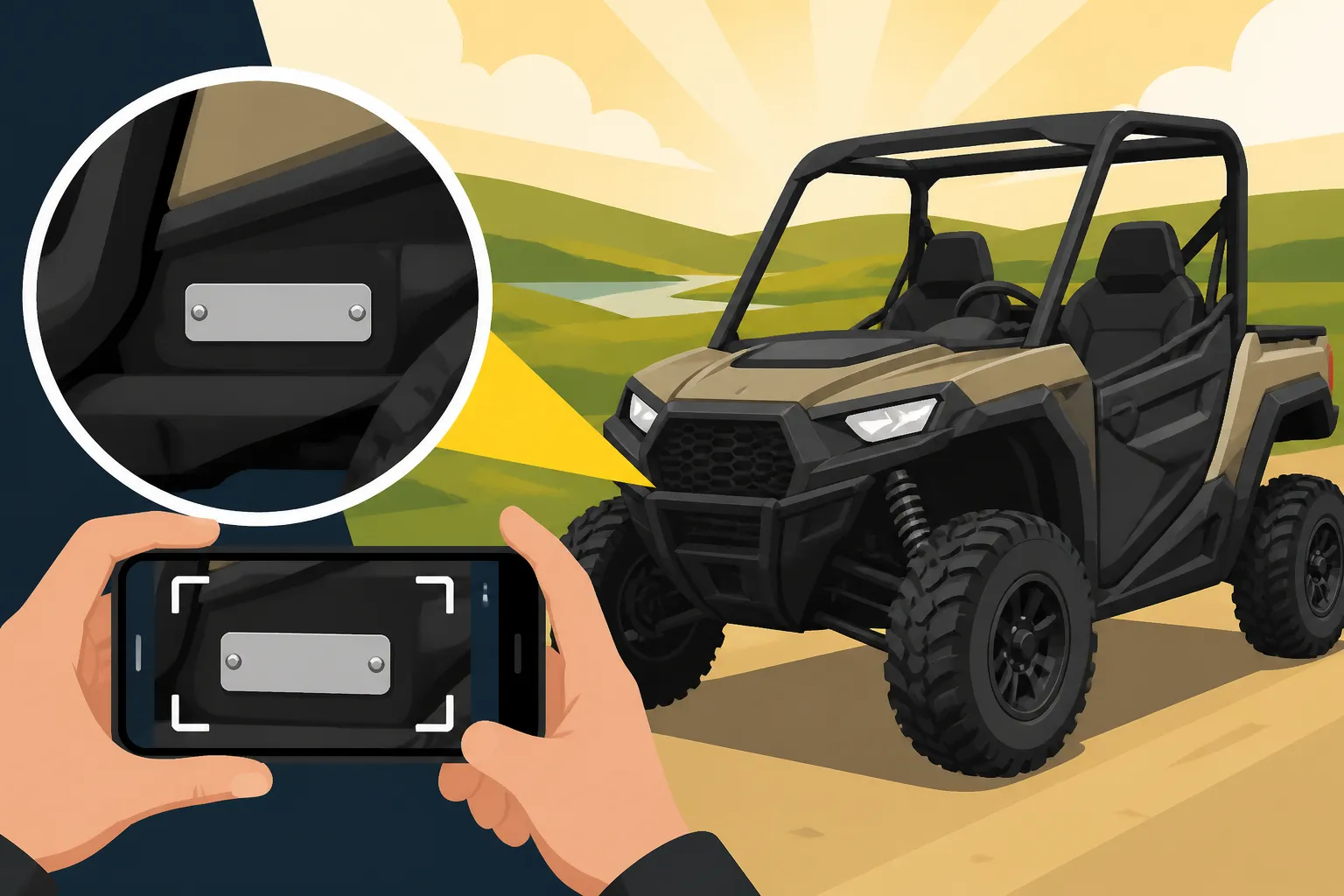
For most ATVs, you'll typically find the VIN stamped on the left-hand side of the frame, usually near the front wheel well, under the handlebars, or sometimes near the footpeg. It's often deeply etched into the metal. On UTVs, the locations can vary a bit more. Look on the frame under the driver's seat, sometimes on the frame near the rear wheels, or often on a cross-member of the frame, perhaps in the engine bay area.
Always consult your owner's manual if you're having trouble. The manual will have diagrams showing the exact location. Some manufacturers also place a VIN sticker in another visible, but less permanent, spot – while helpful, it's the stamped VIN you'll want to photograph for official purposes, as stickers can fade, peel, or be removed. Knowing these common spots will save you a lot of crawling around in the garage looking for that tiny, crucial string of numbers and letters.
Cleaning and Lighting for a Perfect Shot
Once you've located the VIN, the next step is crucial for clarity: cleaning the area. OHVs are designed for off-road adventure, which means they collect mud, dust, and grime like magnets. These elements can easily obscure the stamped digits, making them illegible in a photograph. A quick wipe-down with a damp cloth or even a gentle brush can work wonders.
After cleaning, focus on your lighting. Poor lighting is the enemy of a clear VIN photo. Direct sunlight can create harsh shadows or glare that makes numbers disappear. Overcast days or a well-lit garage often provide the best, most even light. If you're indoors or it's evening, use a strong flashlight. Angle the flashlight to illuminate the VIN from various directions to avoid shadows filling the stamped characters. Sometimes, holding the flashlight almost parallel to the surface will help the etched numbers stand out against the surrounding metal. Taking the time to properly clean and light the VIN will drastically improve your chances of a successful photo on the first try, saving you the hassle of repeat attempts.
Techniques for Photographing Your VIN Like a Pro
Now that you've found and cleaned your VIN, it's time to capture it. This isn't just about pointing your phone and clicking. A few simple photography techniques can turn a blurry, unusable image into a crystal-clear record that any NDDOT clerk or potential buyer will appreciate.
Remember, the goal is legibility. Every single character of the VIN must be perfectly clear and readable. If even one number or letter is ambiguous, the photo might be rejected, forcing you back to square one. Think of it like a detective trying to match fingerprints – precision is everything here.
Angle, Focus, and Multiple Shots
When taking the picture, position your camera (whether it's your phone or a dedicated digital camera) directly over or slightly angled towards the VIN. Try to get as straight-on a shot as possible. Avoid extreme angles, which can distort the characters and make them harder to read. Ensure your camera's focus is locked squarely on the VIN itself. Most modern smartphones allow you to tap the screen to focus on a specific area; make sure you're tapping the VIN.
Don't stop at just one photo! Take several shots from slightly different distances and angles. One shot might catch a reflection, another might have a tiny shadow. By taking multiple photos, you increase your chances of getting that perfect, unambiguous image. Get one shot that shows the VIN clearly and in full, and perhaps another that includes a bit more of the surrounding frame to provide context, especially if you ever need to prove the VIN is factory-stamped. When registering your OHV, for instance, a clear photo of the VIN is often preferred, similar to how [North Dakota VIN Inspection Requirements] might be fulfilled for other vehicles.
Integrating the VIN Photo into Your Digital File System
Once you have those clear, crisp VIN photos, don't just let them get lost in your phone's camera roll. A crucial step is to integrate them into a coherent digital file system. This isn't just about being organized; it's about having easy, immediate access to vital information when you need it most. Imagine you're trying to quickly answer a question about your machine for an insurance agent or a potential buyer, and all your paperwork is scattered.
Create a dedicated folder on your computer or cloud storage (like Google Drive or Dropbox) for each of your OHVs. Inside that folder, you should store digital copies of your title, registration, bill of sale, and, of course, your VIN photos. Name the files clearly, perhaps "ATV_VIN_Photo_Date.jpg" and "ATV_Title_Scan_Date.pdf." This kind of systematic approach saves immense time and stress down the line. Having your [North Dakota Bill of Sale Form SFN 2888] readily accessible alongside a clear VIN photo, for example, makes selling a breeze. Many riders also use digital tools like those from LawDepot to generate comprehensive ownership documents, which pair perfectly with a photo of your machine's VIN.
When and Where Your VIN Photo Becomes Indispensable
While the immediate thought might be "registration," a clear VIN photo actually has a much wider range of applications for North Dakota OHV owners. From unique titling challenges to insurance necessities, having that visual record can be a lifesaver, providing concrete evidence when verbal descriptions or blurry copies just won't cut it.
These photos aren't just for bureaucrats; they're for you. They provide peace of mind, knowing that if you ever face a situation where you need to definitively prove details about your machine, you have the visual evidence at your fingertips. It's a proactive step that every OHV owner in North Dakota should take.
Dealing with Out-of-State Purchases or No Paperwork Situations
One of the most challenging scenarios for an OHV owner is dealing with a machine that has little to no paperwork, or one purchased out of state. Perhaps you found a great deal on an older quad from a private seller in a neighboring state, and the previous owner wasn't as diligent with their records. In these situations, getting your machine properly titled and registered in North Dakota can be an uphill battle. This is where your pristine VIN photo becomes absolutely indispensable.
When you're trying to navigate processes like [North Dakota Registration Without a Title] or [North Dakota Machines With No Paperwork], the NDDOT needs to verify the machine's identity beyond a shadow of a doubt. A clear, well-taken photo of the VIN stamped on the frame provides critical visual evidence for the clerks. It helps them compare the physical VIN to any historical records they might be able to find, and it reassures them that they are working with the correct machine. This attention to detail can significantly expedite what might otherwise be a very lengthy and frustrating process, helping you avoid delays as your application goes through [Bismarck Central Office Review].
Proving Compliance for Registration and Insurance
Beyond tricky ownership situations, clear VIN photos also play a vital role in demonstrating compliance for standard registration and even insurance purposes. While North Dakota doesn't typically require a VIN photo for every single renewal, having one on file can streamline various interactions with both state agencies and your insurance provider. For instance, you might be asked to provide a VIN verification for [North Dakota Registration for a New Resident] who just moved to the state with an OHV.
When applying for [North Dakota Insurance Requirements at Registration], your insurance company will always ask for the VIN. A clear photo can prevent any transcription errors, ensuring your policy correctly identifies your specific machine. In the unfortunate event of a theft or a major accident, the VIN photo becomes critical evidence for your insurance claim. It helps prove the identity of the damaged or stolen machine, potentially speeding up the claims process and ensuring you receive proper compensation. Think of it as an extra layer of security, safeguarding your investment and your riding future.
Here's a quick guide to help you capture those crucial VIN photos:
| OHV Type | Common VIN Locations (Check Manual for Exact Spot!) | Cleaning Tip | Lighting Tip | Photography Tip |
|---|---|---|---|---|
| ATV | Left frame rail (front), under handlebars | Wire brush/damp cloth for mud/dirt | Overhead or angled flashlight to reduce shadows | Straight-on shot, fill frame with VIN |
| UTV | Frame near driver's seat, engine bay cross-member | Degreaser/stiff brush for grease/grime | Diffused light (overcast day) or strong side light | Multiple photos, focus sharply on digits |
| Dirt Bike | Steering head/frame near front fork | Soft brush/water for dust/light mud | Avoid direct sun glare, use a light reflector | Close-up, ensure all 17 characters are legible |
Disclaimer
This article is for general informational purposes only and does not constitute professional advice. Laws, prices and regulations vary by location and change over time. Consult a qualified professional for guidance on your specific situation.