Class III and the Steering Wheel
Navigating the world of off-highway vehicles (OHVs) in North Dakota can feel a bit like trying to read a map with half the roads missing, especially when you're trying to figure out where your specific machine fits into the legal landscape. Many folks own side-by-sides or other multi-purpose vehicles with steering wheels, and it's common to wonder how these machines are classified and what that means for things like registration and trail access. This comprehensive guide will break down what North Dakota considers a Class III OHV, focusing particularly on the defining characteristic of a steering wheel, and walk you through the specifics of owning and operating these machines in the Peace Garden State.
Understanding North Dakota's Class III Off-Highway Vehicles
When you think about an OHV, your mind might first jump to a traditional ATV where you straddle a seat and use handlebars. But North Dakota's definition is broader, encompassing several types of machines, each with its own "Class." Class III machines, in particular, are gaining popularity, and understanding their unique characteristics is crucial for any owner.
What Defines a Class III OHV?
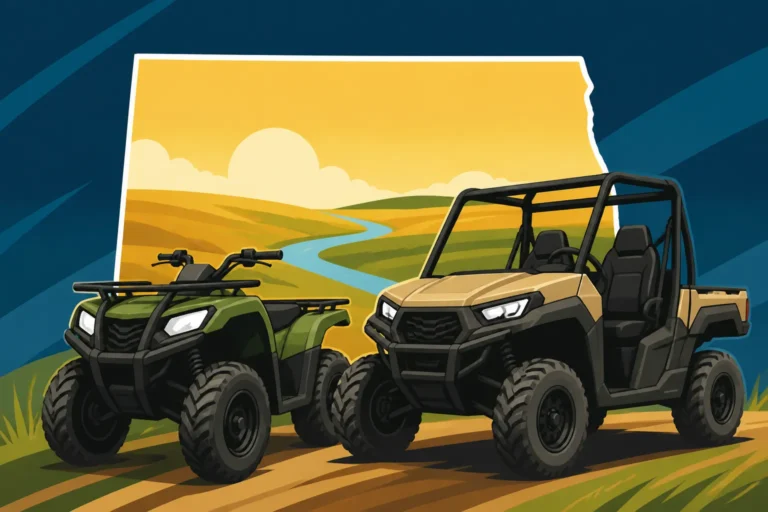
North Dakota law sets specific parameters for what qualifies as a Class III off-highway vehicle. These aren't your typical single-rider quads, nor are they the slightly larger side-by-sides that often get lumped into other categories. Instead, Class III OHVs are designed for specific tasks, often combining utility with passenger capacity. The key identifiers generally revolve around their weight, dimensions, and, most notably for this discussion, their control mechanism. They're built with a steering wheel and typically have multiple seating positions, differentiating them from their Class I and some Class II counterparts. Think of the larger, more robust utility vehicles, sometimes referred to as UTVs, that are purpose-built for tasks like hauling equipment or navigating difficult terrain with passengers. These machines are robust and versatile, often found working on farms, ranches, or providing transportation in hunting camps.
Distinctions from Class I and Class II Machines
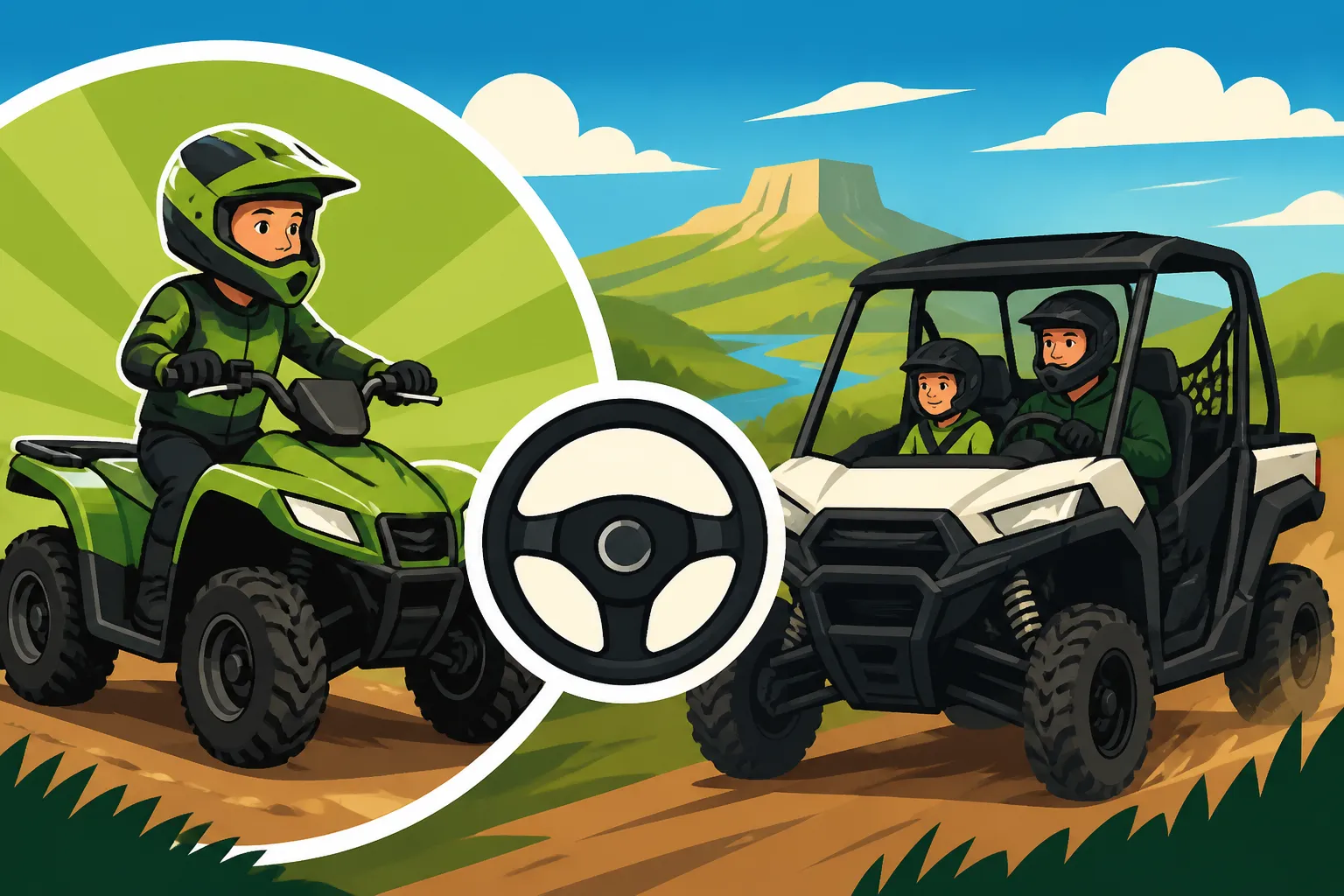
To truly grasp what a Class III OHV is, it helps to compare it to the other classifications. A [North Dakota Class I Machines Defined] are typically single-rider ATVs, designed for one person to straddle a seat and control with handlebars. They're agile and built for recreational riding or light utility. [North Dakota Class II Width and Weight Limits] are generally larger machines, including many side-by-sides. While some Class IIs might also have steering wheels, they have different maximum width and weight limits than Class III. The lines can sometimes feel a bit blurry between Class II and Class III, but the latter often implies a heavier-duty, multi-purpose design. For example, a sportier, narrower side-by-side might be a Class II, while a larger, more industrial UTV with a greater weight capacity falls squarely into Class III. The critical distinction for many is the operator controls: Class I is all about handlebars, while Class II and III can feature steering wheels, with Class III representing the heavier end of that spectrum. This classification system helps ensure that vehicles are regulated appropriately for safety and infrastructure impact.
The Defining Characteristic: Steering Wheel Operation
The steering wheel isn't just a comfort feature on these machines; it's a fundamental aspect that dictates their classification and, consequently, some of the rules for their operation in North Dakota. This control mechanism points to a specific design philosophy and expected use case for Class III OHVs.
Why the Steering Wheel Matters for Classification
For North Dakota, the presence of a steering wheel is a significant indicator that a machine falls into either Class II or Class III, immediately distinguishing it from Class I ATVs. More specifically, for Class III, this control system often accompanies a larger, more stable chassis designed to carry multiple passengers side-by-side, much like a conventional automobile. This design choice impacts everything from how the machine handles on varied terrain to the kinds of accessories it can accommodate. A steering wheel suggests a vehicle built for sustained operation, often with more sophisticated suspension and a greater emphasis on stability for utility or multi-person recreational use. It implies a machine that might be used for longer hauls, more demanding work, or simply transporting a family across a property, rather than agile, high-speed single-rider maneuvering. This design choice also aligns with the expectation of higher carrying capacities and a generally more robust construction compared to a typical quad.
Common Examples of Class III OHVs
When we talk about Class III OHVs with steering wheels, we're typically envisioning larger utility task vehicles (UTVs) that are designed for serious work or multi-person transport. These might include popular models from manufacturers known for their heavy-duty offerings, often boasting larger engines, robust suspensions, and beds for hauling cargo. You'll frequently see these machines on large agricultural operations, navigating vast fields or moving tools and supplies. They're also staples for hunters needing to transport gear and game deep into the wilderness, or for park services managing large tracts of land. These aren't just toys; they're often integral tools for livelihoods and serious recreational pursuits, providing stable and comfortable transport over challenging landscapes. The seating arrangements are usually bench-style or bucket seats for two or more occupants, positioned side-by-side, further emphasizing their utility and passenger-carrying capabilities.
Registration and Titling Your Class III OHV in North Dakota
Just like any other motorized vehicle that operates off-highway, your Class III OHV needs to be properly registered and titled in North Dakota. This process ensures legal ownership and contributes to the maintenance of OHV trails and riding areas. Don't skip these steps, as riding an unregistered machine can lead to penalties.
The Titling Process for a Class III OHV
Getting a title for your Class III OHV is usually the first step, establishing legal ownership. Whether you bought it new from a dealership, purchased it from a private seller, or even brought it in from out of state, you'll need to apply for a North Dakota title. The primary document for this is [North Dakota Form SFN 2872 Explained], which is your application for certificate of title and registration. You'll need to provide details about the vehicle, proof of ownership (like a manufacturer's certificate of origin or a bill of sale), and sometimes a VIN inspection, especially for out-of-state or homemade machines. If you're buying from a private seller, ensure you get a properly filled out [North Dakota Bill of Sale Form SFN 2888] to avoid headaches later. Remember, the title process also involves paying the [North Dakota Title Fee of $5] and the [North Dakota Excise Tax on an ATV Purchase], which applies to Class III machines as well. This excise tax is paid at the time of titling, so be prepared for that expense when you head to the motor vehicle branch. For those looking for templates or guidance on necessary legal documents, online services like LawDepot can provide customizable bill of sale forms, which can be useful when dealing with private sales, though always ensure they meet North Dakota's specific requirements.
Registering Your Class III OHV
Once your Class III OHV is titled, you'll proceed with registration. North Dakota uses a [North Dakota's Two-Year Registration Cycle] for OHVs, meaning you pay for two years at a time. The [North Dakota OHV Registration Cost] involves a registration fee and a trail tax. Currently, [North Dakota Charges $5 Registration Plus $15 Trail Tax], making the combined biennial fee relatively modest. Upon successful registration, you'll receive either an OHV plate or a decal, and [North Dakota OHV Plate or Decal: Your Choice] is a nice touch, allowing owners to select what works best for their machine. The trail tax portion of your fee is especially important, as it directly supports the development and maintenance of OHV trails across the state, ensuring there are places for you to legally and safely enjoy your machine. Remember to keep your registration current, as riding with an expired registration is an easily avoidable mistake. The process for getting your Class III machine on the books is essentially the same as for other OHV classes, designed to be straightforward at any motor vehicle branch.
On-Road Rules and Operation for Steering Wheel-Equipped OHVs
While Class III OHVs are designed for off-highway use, there are specific circumstances where you might operate them on public roads in North Dakota. Understanding these rules is absolutely vital to avoid citations and ensure safety for yourself and others. The presence of a steering wheel might make them feel more like a car, but they are still OHVs with their own distinct set of regulations.
Permitted Roadways and Speed Limits
North Dakota does allow registered OHVs, including Class III machines, to operate on certain public roads. This is a common point of confusion, as many states strictly prohibit OHVs on roadways. In North Dakota, you can generally ride on [North Dakota Gravel Roads Open to Registered Machines] and sometimes on [North Dakota Paved Roads Posted at 55] mph or less. However, [North Dakota Class III Machines at 65 mph Roads] are sometimes permitted, but this is a critical distinction based on the machine's capabilities and specific signage. It's never a free-for-all; you must always obey posted speed limits and yield to other traffic. Importantly, [North Dakota Interstates Are Never Open] to OHV travel. These rules are in place to ensure safety, as OHVs, even larger Class III models, handle differently than cars, especially at higher speeds or on paved surfaces. Always check local ordinances, as [North Dakota County and City ATV Ordinances] can add further restrictions that supersede state rules.
Required Equipment for Road Use
If you plan to take your steering wheel-equipped Class III OHV on any public road, it must be equipped to meet certain safety standards. This isn't just a suggestion; it's the law. Your machine will need specific lighting, mirrors, and a horn. For instance, [North Dakota Mirror and Horn Requirements] dictate that you must have at least one mirror that provides a view of the highway for at least 200 feet to the rear, and a horn audible from 200 feet away. [North Dakota Headlamp Distance Standards] require a headlamp visible from 300 feet, and a taillight. Furthermore, a [North Dakota Brake Light Requirement] is essential for signaling stops. While many modern Class III UTVs come with some of this equipment from the factory, it's crucial to double-check that yours meets North Dakota's exact specifications before venturing onto a public road. A speedometer, capable of displaying miles per hour, is also required. You might also consider carrying important documents, such as your registration and proof of ownership. If you're involved in a private sale, ensuring all previous ownership documentation is in order, perhaps verified with forms available from resources like LawDepot, can simplify future equipment-related checks or transfers.
Ditch Riding and Other Specific Scenarios
Beyond designated roads, North Dakota has specific rules regarding ditch riding, which is a common practice in the state for traversing between properties or accessing hunting grounds. [North Dakota Ditch Riding: The Legal Right Explained] allows for the operation of OHVs, including Class III machines, in the bottom and back-slope of public road ditches, provided certain conditions are met. You must ride on the farthest right side, travel in the same direction as adjacent traffic, and be mindful of visibility. However, areas like [North Dakota Inslopes and Shoulders Are Closed] to OHV traffic, meaning you can't ride directly alongside the pavement or close to the travel lanes. Special rules apply for crossing approaches, culverts, and dealing with obstructions. [North Dakota Rules for Riding to a Field] or for [North Dakota Farm Use on a Road] often provide exemptions or specific allowances, recognizing the practical needs of agricultural communities. For instance, temporary operation across an obstruction is allowed, with the rider returning to the ditch as soon as possible. Also, remember that [North Dakota Posted Land Rules for Riders] are always in effect; even if you're in a ditch, if the adjacent land is posted, you can't trespass onto it. It's a complex set of rules, but vital for safe and legal riding, especially with larger Class III machines.
Here's a quick overview of Class III OHV characteristics and requirements in North Dakota:
| Feature | Class III OHV Description | Key Requirement/Note |
|---|---|---|
| Steering Control | Steering Wheel | Differentiates from Class I (handlebars) |
| Seating | Side-by-Side seating for two or more passengers | Multi-person capacity is common |
| Typical Use | Utility, multi-person transport, heavier-duty tasks | Examples: Larger UTVs, agricultural vehicles |
| Titling Required | Yes | Use [North Dakota Form SFN 2872 Explained] |
| Registration Required | Yes (Two-Year Cycle) | [North Dakota Charges $5 Registration Plus $15 Trail Tax] |
| Road Use | Permitted on gravel roads, paved roads 55 mph or less (sometimes 65 mph for Class III) | [North Dakota Interstates Are Never Open] |
| Required Equipment | Headlamp, taillight, brake light, mirror, horn, speedometer | Check [North Dakota Mirror and Horn Requirements] |
| Ditch Riding | Generally permitted in back-slope/bottom (farthest right, same direction as traffic) | [North Dakota Inslopes and Shoulders Are Closed] |
| Excise Tax | Yes, 5% on purchase price | [North Dakota Excise Tax on an ATV Purchase] |
Remember, staying informed about these regulations is key to enjoying your Class III OHV responsibly and legally in North Dakota. Consult official state resources or a legal professional if you have specific questions about your machine or intended use, and consider using services like LawDepot for help with any necessary legal documents, ensuring you comply with all North Dakota laws.
Disclaimer
This article is for general informational purposes only and does not constitute professional advice. Laws, prices and regulations vary by location and change over time. Consult a qualified professional for guidance on your specific situation.