North Dakota Registration Before Your First Ride
There’s nothing quite like the excitement of buying a new (or new-to-you!) ATV or UTV and dreaming of all the open spaces you'll explore across North Dakota. But before you even think about hitting those trails or gravel roads, there’s a crucial step that many riders overlook or misunderstand: getting your machine properly registered. This guide is here to walk you through exactly why and how you need to get your off-highway vehicle (OHV) on the books with the state before your first ride, saving you from potential headaches and ensuring your adventures are always legal and enjoyable.
Why Registration Matters Before You Ride
Picture this: You’ve just unloaded your shiny new quad, the engine hums with anticipation, and you’re eager to explore. But what if a conservation officer or local sheriff pulls you over? An unregistered OHV can quickly turn that dream ride into a nightmare, complete with fines and frustration. Understanding why registration is mandatory before you hit public lands or roadways is the first critical step toward responsible riding.
The Legal Requirement for Public Access
North Dakota law is pretty clear: if you plan to operate your ATV or UTV on any public land, including designated trails, state park areas, or even the ditches alongside public roads where riding is permitted, your machine generally needs to be registered. This isn't just a suggestion; it's a legal requirement designed to ensure accountability, fund trail maintenance, and make sure that all riders are contributing to the upkeep and safety of shared spaces. Think of it like getting plates for your car; you wouldn't drive it on the highway without them, right? The same principle applies here. This applies whether you're taking a leisurely ride through Pembina Gorge or using your side-by-side for practical purposes on a section line. It's all about making sure that the machine you're operating is recognized and permitted by the state.
Without proper registration, you're essentially riding an invisible machine in the eyes of the law, which can lead to complications, even if you have the best intentions. It also ensures that funds are collected to support the very trails and areas you want to enjoy. Part of your registration fees typically goes towards the North Dakota Off-Highway Vehicle Trail Tax, which directly supports the development and maintenance of riding opportunities throughout the state. So, in a way, registering your machine is also an investment in the future of riding in North Dakota. It's a small price to pay for the incredible access and experiences our state offers.
Penalties for Riding Unregistered
Let's be honest, nobody wants to get a ticket, especially when you're out trying to relax and enjoy nature. Riding an unregistered OHV in North Dakota can lead to significant penalties. While the exact fine can vary depending on the specific circumstances and any additional violations, it’s safe to say that getting caught unregistered will cost you more than the registration fee itself. Enforcement officers frequently patrol popular riding areas, ditches, and road rights-of-way, and they are well-versed in checking for proper documentation. You can learn more about what to expect by reading about [North Dakota Penalties for Riding Unregistered].
Beyond monetary fines, repeated offenses could lead to more serious legal issues or even the temporary impoundment of your machine. It's simply not worth the risk. Imagine having your long-planned weekend adventure cut short because you didn't take the time to handle the paperwork. Plus, having a clear record means you’re seen as a responsible rider, which can prevent further scrutiny in the future. It’s also important to remember that if you're involved in an accident while riding an unregistered OHV, your insurance coverage might be complicated or even voided, leaving you on the hook for damages or medical bills. It’s a cascading series of potential problems that are entirely avoidable by simply getting registered.
Trail Access and Permitting
Proper registration isn't just about avoiding fines; it's also your golden ticket to official riding areas. Many of North Dakota's premier OHV destinations, like the trails at Pembina Gorge or the Roughrider OHV Trail, require your machine to be currently registered. These areas are managed to provide safe and sustainable riding experiences, and registration helps ensure that only authorized vehicles are using them. In some cases, specific permits might also be required in addition to registration, especially for out-of-state visitors, but registration is almost always the baseline requirement. Explore what that means for different areas by checking out [North Dakota Trail Access].
If you roll up to a trailhead without your decals or plate, you could be turned away, or worse, cited. This applies to all Class I, II, and III machines that meet the state's definitions for off-highway vehicles. It's about preserving these valuable resources for everyone and ensuring that the burden of maintenance and oversight is shared. Don't let a simple oversight prevent you from exploring the vast and beautiful landscapes North Dakota has to offer. Make sure your registration is current and visible before you load up and head out.
The Registration Process: Your First Steps
Okay, so you're convinced registration is important. Now, let's talk about how to actually get it done. The process in North Dakota is fairly straightforward, but it does require attention to detail and having the right documents in hand. Getting organized upfront will save you a lot of time and frustration.
Gathering Your Essential Documents
The foundation of a smooth registration process is having all your paperwork in order. For a newly purchased ATV or UTV, whether from a dealer or a private seller, you’ll need proof of ownership. This typically includes a manufacturer's certificate of origin (MCO) for new machines, or a bill of sale and the previous owner's title for used machines. If you're buying privately, a comprehensive bill of sale is crucial. You can find templates for these documents, for example, through services like LawDepot, which can help ensure all the necessary information is included. You might also need a Statement of Ownership Form SFN 2903 if the machine has never been titled in North Dakota or if there are gaps in the ownership history.
Here’s a general checklist of what you might need, though it can vary:
- Proof of Ownership: MCO (new) or Title (used)
- Bill of Sale: Especially for private sales, detailing the purchase price. A [North Dakota Bill of Sale Form SFN 2888] is a good reference.
- Photo ID: For the registrant.
- Proof of North Dakota Residency: If your ID doesn't confirm it.
- Application for Certificate of Title and Registration: Often form SFN 2872, as detailed in [What the Title Application SFN 2872 Asks For].
- Payment for Fees and Taxes: Be prepared for the registration fee, trail tax, and excise tax.
Having these documents neatly organized before you visit the motor vehicle branch office will make the process much faster. Don't forget to make copies for your records! It's always a good idea to have everything readily available, and a well-prepared bill of sale, perhaps generated using a reliable service like LawDepot, can smooth over any questions about the transaction details.
Understanding the Fees and Taxes
Beyond just the registration itself, there are several fees and taxes you'll encounter. North Dakota structures these costs to cover different aspects of OHV ownership and use.
- Registration Fee: This is the base fee for getting your machine registered with the state. This is typically a nominal amount that contributes to the administrative costs of the registration system.
- Off-Highway Vehicle Trail Tax: A separate fee that is specifically earmarked for the development, maintenance, and promotion of OHV trails and riding areas across North Dakota. This is often combined with your registration. You can find specifics on [North Dakota Charges $5 Registration Plus $15 Trail Tax].
- Excise Tax: When you purchase an ATV or UTV, whether from a dealer or a private party, you'll generally pay a motor vehicle excise tax. This is typically a percentage of the purchase price and is collected at the time of titling. It’s important to understand this cost when budgeting for your new machine, especially for private sales where it might be unexpected. You can learn more about it with [North Dakota Excise Tax on an ATV Purchase].
- Title Fee: There's also a one-time fee to get a title issued in your name. This is separate from the registration and excise tax.
These fees are usually collected at the same time you apply for your title and registration. The registration itself is typically for a [North Dakota's Two-Year OHV Registration] cycle, so you won't have to worry about it annually. While the exact dollar amounts can change, it's wise to check the North Dakota Department of Transportation (NDDOT) website or call your local motor vehicle branch for the most current figures. Always factor these costs into your overall budget when buying an OHV, as they can add up, especially the excise tax on a higher-priced machine. Being prepared for these costs prevents any surprises when you're at the counter.
Where to Complete Your Registration
Once you have your documents in order and a good grasp of the associated costs, the next step is to head to the right place. In North Dakota, you'll generally complete your OHV registration at a motor vehicle branch office. These are the same offices where you would register a car or truck. You can find locations throughout the state in various cities and towns. It's usually best to check their operating hours and any specific requirements before you visit.
While some basic information or forms might be available online, the full process, especially for titling and initial registration, typically requires an in-person visit. This allows the staff to verify documents, collect payments, and ensure everything is correctly processed. Be prepared for a bit of a wait, especially during peak times, but having your documents prepared will certainly expedite your turn. Don't hesitate to ask the staff questions if you're unsure about any part of the process; they are there to help ensure you leave with your machine properly registered and ready to ride.
What Happens After You Register
You’ve done the hard work, submitted your documents, and paid your fees. Congratulations! But the process isn't quite over. There are a few more important details to keep in mind once your registration is complete to ensure you stay compliant and enjoy your riding adventures without a hitch.
Receiving Your Plate or Decal
Once your registration is processed, you'll typically receive a registration decal or, in some cases, a small license plate. North Dakota uniquely offers owners a choice between an OHV plate or a decal. Many riders prefer the decal as it's often easier to affix to an ATV or UTV without drilling or additional brackets, and it's less prone to being damaged or falling off in rough terrain. However, the choice is yours to make. You can learn more about this option in [Why North Dakota Lets You Pick a Plate or Decal].
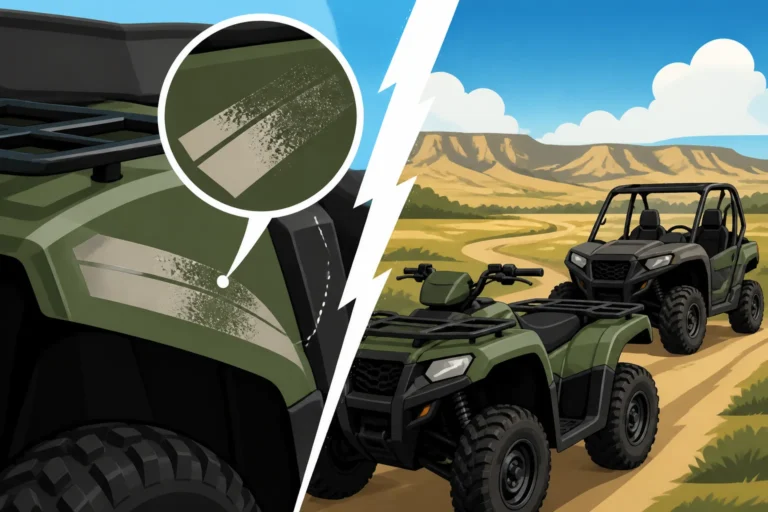
The decal or plate must be prominently displayed on your machine in a visible location as specified by state law. For most ATVs and UTVs, this means on the rear fender or another clearly visible flat surface. Make sure it's securely attached and kept clean so it can be easily read by law enforcement. A faded, dirty, or improperly placed decal is essentially useless and could still lead to questions from an officer. Take the time to apply it correctly the first time, ensuring it's not obscured by mud, gear, or accessories. This little piece of plastic or metal is your proof of registration, so treat it as such.
Keeping Your Registration Current
Remember, North Dakota OHV registrations operate on a [North Dakota's Two-Year Registration Cycle]. This means you won't need to renew annually, but it's crucial to keep track of that expiration date. You should receive a renewal notice in the mail as your expiration approaches, but it's ultimately your responsibility to ensure your registration is renewed on time. Letting it lapse, even for a short period, means you're operating an unregistered machine, with all the associated risks and penalties we discussed earlier.
Renewing your registration is typically a simpler process than the initial registration, often achievable online or by mail, but it still requires attention. If your address changes, make sure to notify the NDDOT so your renewal notices don't get lost in the mail. Keeping your contact information current is just as important as keeping your registration current. A well-maintained registration ensures continuous, legal access to North Dakota's beautiful riding areas and helps fund the trails we all love to explore.
The Importance of Carrying Proof
Finally, while your decal or plate is visible on your machine, it's always a good idea to carry physical proof of your registration with you whenever you ride. This might be a copy of your registration certificate, stored in a waterproof bag in your machine's storage compartment, or even a digital copy on your phone (though a physical copy is always safer in case of dead batteries or no signal). If an officer stops you, they will likely ask to see this proof, along with your photo ID.
Think of it as your machine's "driver's license." It verifies that the decal or plate matches the machine and that you are the rightful owner or authorized operator. Beyond registration, it’s also wise to carry any relevant permits, such as a [North Dakota Non-Resident OHV Permit] if you're visiting from out of state, and your OHV safety certificate if you're under 16 years old. Having all your documents readily available makes any interaction with law enforcement quick and painless, allowing you to get back to enjoying your ride faster.
Summary of Essential Documents for OHV Registration
| Document Type | Scenario | Key Information Needed | Where to Get It |
|---|---|---|---|
| Manufacturer's Cert. of Origin (MCO) | New OHV Purchase | VIN, make, model, year, seller info | Provided by dealer |
| Previous Title | Used OHV Private Sale | VIN, owner info, release of interest | Provided by seller |
| Bill of Sale | All Used OHV Purchases | Buyer/seller names, address, date, purchase price, VIN | Seller provides, or use a template (e.g., LawDepot) |
| Application for Title & Reg. | Initial Registration | Personal info, OHV details, lienholder (if applicable) | NDDOT website or motor vehicle branch |
| Statement of Ownership (SFN 2903) | No Title/Gaps in History | Proof of prior ownership, circumstances of acquisition | NDDOT website or motor vehicle branch |
| Photo ID | All Registrations | Proof of identity and residency | State-issued driver's license or ID card |
Remember, getting your ATV or UTV registered before your first ride isn't just about following the rules; it's about protecting yourself, contributing to the fantastic riding opportunities in North Dakota, and ensuring every adventure starts on the right side of the law. Happy trails!
Disclaimer
This article is for general informational purposes only and does not constitute professional advice. Laws, prices and regulations vary by location and change over time. Consult a qualified professional for guidance on your specific situation.