North Dakota Registration Compared to Minnesota
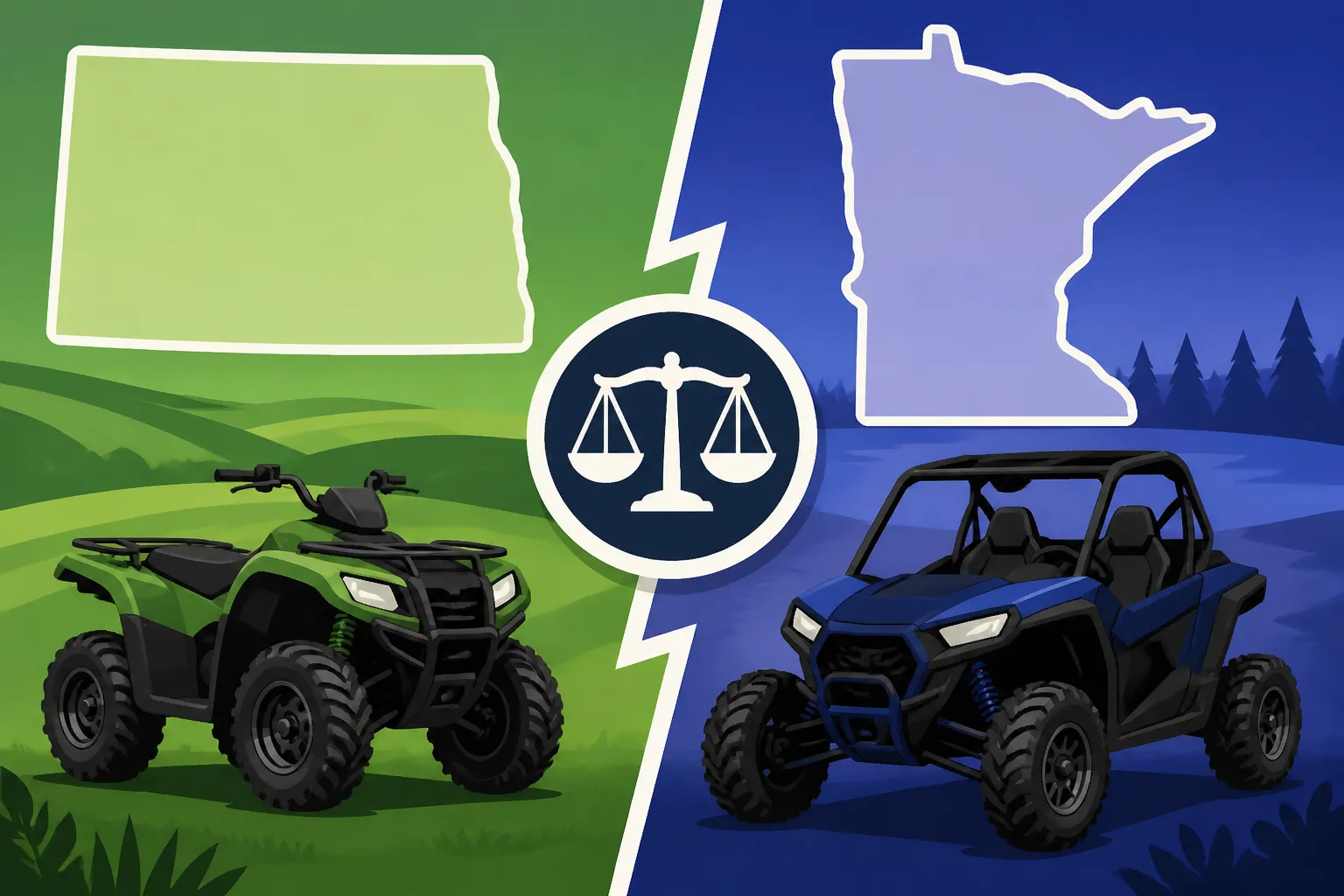
It's incredibly frustrating when you're just trying to enjoy your off-road machine, but the rules seem to change every time you cross a state line. Many riders in North Dakota and Minnesota frequently travel between the two states, often finding themselves scratching their heads over differing ATV and UTV registration, titling, and usage laws. This guide aims to clear up that confusion, offering a side-by-side comparison of how North Dakota and Minnesota handle off-highway vehicle (OHV) registration so you can ride confidently, no matter which side of the Red River you find yourself on.
Understanding the Core Differences in Philosophy: North Dakota vs. Minnesota
At first glance, both North Dakota and Minnesota want you to register your off-highway vehicle. But when you dig a little deeper, you'll find their fundamental approaches to OHV management, especially regarding what triggers registration and where you can ride, are quite distinct. It’s not just about a different sticker; it’s about a different mindset.
North Dakota, for a long time, has had a fairly lean approach to OHV registration, focusing more on making sure machines are accounted for and contributing to trail maintenance through a specific trail tax. The state recognizes the importance of these machines for both recreation and utility, particularly in agricultural settings. The emphasis is often on supporting access where it makes sense, such as ditch riding, and keeping the process relatively straightforward. You'll find the North Dakota Department of Transportation (NDDOT) handles the primary registration and titling.
Minnesota, on the other hand, has a more extensive and long-standing network of designated OHV trails and riding areas, and its registration system reflects a more robust funding mechanism for developing and maintaining these public lands. Minnesota's Department of Natural Resources (DNR) is heavily involved, emphasizing conservation and designated trail use. While both states value their OHV communities, Minnesota’s system often feels more geared towards a structured, public trail-based riding experience, which naturally leads to more detailed regulations around registration and fees to support that infrastructure. This can sometimes make the process feel a bit more complex for riders used to North Dakota's simpler system.
Navigating Registration Requirements: What Each State Asks For
Knowing if and how to register your ATV or UTV is the first hurdle. Both states have requirements, but the specifics of what machines need to be registered, and under what conditions, can vary significantly. This is where most of the cross-border confusion comes from.
In North Dakota, most off-highway vehicles, including ATVs, UTVs, and dirt bikes (unless they're specifically tracked dirt bikes, which have their own permit), are required to be registered if they are operated on public land, including designated trails, ditches, and other public rights-of-way. The good news is that if you're only using your machine on private land you own or have permission to use, you're likely exempt from registration. This is a common scenario for many farmers or landowners. The state has specific definitions for [North Dakota Class I, II and III Machines] that help determine exact requirements. The process often involves submitting forms like the [North Dakota Bill of Sale Form SFN 2888] or [North Dakota Statement of Ownership Form SFN 2903] if you don't have a title, along with proof of ownership and payment. For a detailed walkthrough, check out [How to Register an ATV in North Dakota].
Minnesota also requires registration for OHVs operated on public lands or trails. However, their system tends to be a bit more granular. They have separate classifications for ATVs, OHMs (off-highway motorcycles), and ORVs (off-road vehicles, which includes side-by-sides and other utility vehicles). While private land use might also offer some exemptions, Minnesota's extensive trail system means most riders will encounter the registration requirement. They also tend to have more strict rules about how a machine must be equipped for public trail use, such as spark arrestors and sound limits. You'll generally need proof of ownership, like a bill of sale or previous registration, to get your Minnesota registration completed. Navigating the proper documentation can sometimes feel like a puzzle, but online resources like LawDepot can help you create a robust bill of sale if you're buying from a private party, ensuring you have the necessary proof of ownership for either state.
The key takeaway here is to always assume you need to register if you plan to ride anywhere other than your own private property, and then verify the specific requirements for the state you're in. Don't rely on assumptions based on what you do in your home state.
Deciphering the Dollar Signs: Fees and Renewals in Both States
Nobody likes unexpected costs, especially when it comes to enjoying your hobby. The fees and renewal cycles for OHV registration can differ notably between North Dakota and Minnesota, impacting your budget and how often you need to update your paperwork. It's not just about the total amount, but how that money is collected and what it's funding.
North Dakota's registration system is known for its two-year cycle, which many riders appreciate for its convenience. You pay once every two years, and you're good to go. The state charges a base registration fee, but crucially, it also includes a trail tax. This trail tax is a significant component of the total cost and is earmarked for improving and maintaining OHV trails and riding areas within the state. For instance, you can learn more about [North Dakota Charges $5 Registration Plus $15 Trail Tax], illustrating how the costs are structured. This trail tax helps fund places like Pembina Gorge and the Roughrider OHV Trail. The NDDOT also gives you the option of a [North Dakota OHV Plate or Decal: Your Choice], which is a nice touch for personalization. If you're a new resident, the process for [North Dakota Registration for a New Resident] will guide you through getting set up.
Minnesota, on the other hand, typically uses a three-year registration cycle for its OHVs. While this offers a longer period between renewals than North Dakota's two-year cycle, the overall fee structure might be different, with various surcharges or specific funds being supported. Minnesota's fees generally contribute to the development and maintenance of its extensive state-managed trail systems, conservation efforts, and administrative costs. While both states are collecting funds to support OHV recreation, the specific breakdown and the duration of validity are key differences to keep in mind when budgeting for your ride time.
| Feature | North Dakota | Minnesota |
|---|---|---|
| Registration Cycle | Two years | Three years |
| Primary Agency | NDDOT | DNR |
| Trail Funding | Specific trail tax included | Fees contribute to DNR-managed trail systems |
| Titling Required | Generally required for all OHVs | Required for OHVs, but exceptions may exist |
| Non-Resident Permit | Required after 30 days | Required for out-of-state machines on trails |
| Common Forms | SFN 2872, SFN 2888, SFN 2903 | Proof of ownership, previous registration |
This table provides a quick overview, but remember that specific fee amounts are subject to change, so always check the respective state's official department websites for the most current figures.
Titling, Trails, and Travel: Beyond Just the Sticker
Registration isn't the only piece of the puzzle. Titling, access to trails, and rules for out-of-state visitors also vary, adding layers of complexity that riders need to be aware of. Getting this wrong can lead to fines, or worse, having your fun cut short.
In North Dakota, titling your ATV or UTV is generally a requirement for all off-highway vehicles, regardless of whether you're registering it for public land use. The title is proof of ownership, much like a car title, and is crucial for buying, selling, or transferring ownership. Even if your machine might be [North Dakota Registration Without a Title] for specific reasons, you'll still need to establish legal ownership, often through a bill of sale or statement of ownership. The state's fee for this is usually a one-time charge, separate from the registration. If you're buying a machine, ensure you get a properly filled out bill of sale; a template from LawDepot can be incredibly helpful here. This document ensures a smooth transition of ownership and helps avoid headaches down the line.
Minnesota also requires titling for most OHVs. Like North Dakota, the title establishes legal ownership. This becomes particularly important when you're looking to sell your machine, as a clear title assures the buyer of legitimate ownership. Without it, you could run into issues with proving the machine isn't stolen or encumbered.
When it comes to trail access, North Dakota has a mix of designated OHV parks like Pembina Gorge, specific routes, and a legal right to ride in many highway ditches. This ditch riding is a unique aspect of North Dakota's OHV landscape, often serving as the "trail system" between rural areas. However, there are strict rules about ditch riding, including speed limits, time of day, and avoiding private property. Minnesota, on the other hand, boasts a more formal and extensive network of designated OHV trails managed by the DNR. These trails are typically well-marked and maintained, offering a structured riding experience. Riders in Minnesota are generally expected to stick to these designated trails.
For those venturing across state lines, the rules for non-residents are critical. North Dakota has a [North Dakota's 30-Day Out-of-State Rule] for visitors. If you're from out of state and plan to ride for more than 30 consecutive days, you'll need to register your machine in North Dakota. However, if you're just visiting for a shorter period, your valid home-state registration is usually sufficient. Similarly, Minnesota requires non-residents to purchase a non-resident OHV permit if they plan to ride on public trails or public lands within the state, even if their machine is registered in their home state. This permit helps Minnesota fund its trail system, ensuring visitors contribute to the resources they use. Understanding the specific requirements for visitors, including the [North Dakota Non-Resident Permit Cost], is paramount to avoid penalties. When drafting any necessary paperwork, like temporary permits or declarations, having access to forms from a platform like LawDepot can streamline the process.
Ultimately, while both North Dakota and Minnesota are fantastic states for OHV enthusiasts, their individual approaches to registration, titling, and trail access require careful attention. Always consult the respective state's official NDDOT or DNR websites for the most up-to-date and specific information before you head out on your adventure. Don't let a simple misunderstanding of the rules ruin your ride!
Disclaimer
This article is for general informational purposes only and does not constitute professional advice. Laws, prices and regulations vary by location and change over time. Consult a qualified professional for guidance on your specific situation.