North Dakota Sales Tax Versus Excise Tax
One of the most common questions that pops up when you're looking to buy an ATV or UTV in North Dakota is, "Do I pay sales tax or excise tax?" It's a valid confusion because the terms get thrown around, and honestly, the paperwork can be a bit opaque if you're not used to it. This guide is here to clear up that very specific point of confusion, explaining exactly what you'll owe, when you'll owe it, and why North Dakota uses a different system for your off-highway vehicle (OHV) purchase.
Understanding North Dakota's Motor Vehicle Excise Tax
When you're eyeing that shiny new (or new-to-you) ATV or UTV in North Dakota, you might be bracing yourself for a hefty sales tax bill. However, here's a crucial piece of information that often surprises people: North Dakota does not charge a traditional sales tax on the purchase of off-highway vehicles, motor vehicles, or recreational vehicles that are titled. Instead, the state levies a motor vehicle excise tax.
This isn't just a fancy name for the same thing; it's a fundamental difference in how the tax is applied and collected. General sales tax in North Dakota applies to a wide range of goods and services you might buy, from groceries to clothing to household items. It's usually collected by the seller at the point of sale and then remitted to the state. The motor vehicle excise tax, on the other hand, is specifically designed for titled vehicles, including your beloved ATVs and UTVs. It's essentially a one-time tax on the privilege of ownership or transfer of a motor vehicle.
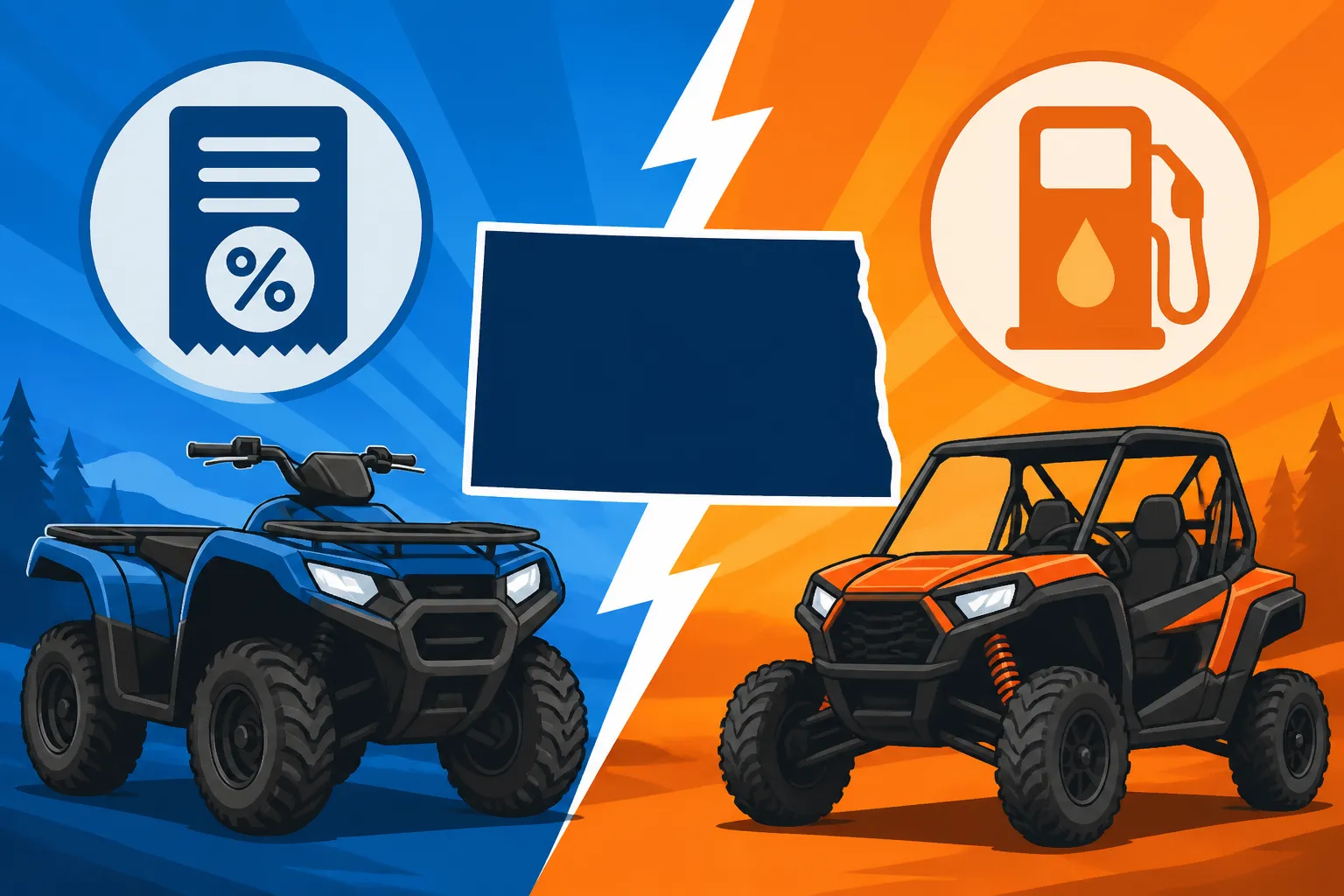
The rate for this excise tax in North Dakota is generally 5 percent of the purchase price or fair market value of the machine. This 5 percent is consistent whether you're buying a brand-new side-by-side from a dealer or picking up a well-loved quad from a private seller down the road. It's a statewide tax, so unlike sales tax which can sometimes have local additions, the excise tax remains fixed at that 5 percent. The key takeaway here is that you're paying a dedicated tax related to vehicle ownership, not the broader sales tax that applies to other retail items. This distinction is vital for North Dakota Sales Tax Versus Excise Tax and helps you understand your financial obligations.
The Collection Point: When and Where You Pay
So, if it's not sales tax, when do you actually pay this excise tax? This is another point of difference. The motor vehicle excise tax is collected at the time you register and title your ATV or UTV with the North Dakota Department of Transportation (NDDOT). Whether you're heading to a local motor vehicle branch office or handling the paperwork directly through a dealer, this is when that 5 percent comes into play.
For instance, imagine you just bought a rugged utility UTV. You'll bring your bill of sale, title application, and other necessary documents to the NDDOT. Alongside your [North Dakota Registration Cost Per Year] and [North Dakota Title Fee of $5], the excise tax will be calculated based on the purchase price listed on your bill of sale, or the fair market value if the sale price is deemed unusually low. This means the money isn't paid directly to the private seller, nor is it always lumped into the upfront cost at a dealership in the same way sales tax might be. It's specifically tied to the titling process, which ensures that every titled OHV contributes its fair share, whether it was a private transaction or a dealer sale. For a deeper dive, check out [North Dakota Excise Tax on a Private Sale] and [North Dakota Excise Tax on a Dealer Purchase].
Why Traditional Sales Tax Doesn't Apply to OHVs in North Dakota
It might seem a bit counterintuitive that something as substantial as an ATV or UTV isn't subject to regular sales tax, especially when you pay it on almost everything else. However, this isn't some strange oversight or a loophole that savvy buyers exploit. It's a deliberate legislative choice within North Dakota's tax code for certain types of property. Specifically, tangible personal property that requires a certificate of title is typically exempt from general sales tax and instead falls under the motor vehicle excise tax.
Think about it this way: the state already has a dedicated mechanism (the titling and registration process) to track and tax these specific types of vehicles. Applying both a general sales tax and a motor vehicle excise tax would essentially be double taxation on the same transaction, which most states try to avoid. By creating the excise tax specifically for titled vehicles, North Dakota ensures a consistent and predictable revenue stream from these purchases while streamlining the tax collection process at the point of registration. This system helps differentiate between general retail transactions and the unique process of buying and registering a vehicle that requires official state documentation.
This exemption is crucial for your budgeting. You don't need to factor in both taxes; only the excise tax will apply. It simplifies things, ensuring that when you calculate your "out-the-door" cost, you're only considering that one state tax related to the purchase price. However, remember that this applies to titled machines. If, for some reason, you bought an OHV that didn't require a title (which is rare for most modern machines intended for public land use, but might apply to specific exemptions like those used solely on private land), the situation could be different. But for the vast majority of ATVs and UTVs you'll be riding across the state, the excise tax is the only state-level tax on the purchase itself.
Navigating Excise Tax for Different Purchase Scenarios
The way excise tax is handled can vary slightly depending on where and how you purchase your off-highway vehicle. Understanding these nuances is key to a smooth transaction and avoiding any surprises when you go to register your new machine.
Dealer Purchases and Excise Tax
When you buy an ATV or UTV from a licensed dealer in North Dakota, they often play a significant role in the excise tax process. While they typically don't collect the sales tax on the vehicle itself, they will often facilitate the collection of the excise tax on behalf of the state. This means that the 5 percent excise tax might be included in the total "out-the-door" price you're quoted, or it might be listed as a separate line item on your purchase agreement.
A reputable dealer will clearly itemize all charges, including the excise tax, on your bill of sale or purchase invoice. They understand [North Dakota Dealer Paperwork at Delivery] and will ensure that the necessary funds are remitted to the NDDOT when they submit your title and registration paperwork. This process is generally quite seamless, as the dealer acts as a conduit, saving you an extra trip to the motor vehicle branch office just for the tax payment. They handle the calculation based on the agreed-upon purchase price, and you effectively pay it to them as part of your overall transaction. Just be sure to review all the figures to ensure the 5 percent excise tax is clearly accounted for and based on the correct amount.
Private Sales and Excise Tax
Buying an OHV from a private seller offers its own set of considerations, especially regarding excise tax. In a private sale, the responsibility for paying the 5 percent excise tax falls squarely on the buyer. The seller has no obligation to collect or remit this tax; their primary role is to provide you with a clear title (if applicable) and a detailed bill of sale.
When you take your newly acquired machine and its paperwork to the NDDOT for titling and registration, that's when you'll pay the excise tax directly to the state. The tax will be calculated based on the sale price documented on your [North Dakota Bill of Sale Form SFN 2888]. It's crucial to have a clear, accurate bill of sale, and resources like LawDepot can provide excellent templates to ensure all necessary information is included. This helps prevent any issues with the NDDOT disputing the stated value.
In some cases, if the sale price on the bill of sale seems unusually low compared to the vehicle's actual market value – perhaps you got an incredible deal from a friend – the NDDOT may require an appraisal to establish the fair market value. This is to prevent individuals from intentionally undervaluing a sale to reduce their tax burden. If this happens, you would typically need to get a dealer appraisal, which can confirm the vehicle's true worth for tax purposes. This scenario is detailed further in [Proving Fair Market Value With a Dealer Appraisal]. So, even if you're getting a steal, be prepared to potentially justify the price or pay tax on the NDDOT's assessed value.
Gifted or Inherited Machines
What if you're lucky enough to receive an ATV or UTV as a gift, or inherit one? Does the excise tax still apply? The answer, perhaps surprisingly, is yes. Even when no money changes hands, North Dakota's motor vehicle excise tax still applies to gifted or inherited vehicles. This is because the tax isn't just on the sale but on the transfer of ownership of a titled machine.
In these situations, since there's no purchase price, the excise tax is calculated based on the fair market value of the ATV or UTV at the time of transfer. You'll likely need to provide documentation to establish this value when you go to register and title the machine in your name. This could involve presenting a current appraisal from a reputable dealer or using an established valuation guide. The NDDOT needs a basis to calculate that 5 percent, even if it's not coming from a cash transaction. This ensures equitable treatment for all transfers of titled OHVs. Understanding [North Dakota Excise Tax on a Gifted Machine] can help you prepare for this specific scenario. Just because it's a gift doesn't mean it's entirely free of financial obligation to the state.
The Impact of Trade-Ins on Excise Tax Calculation
Many riders upgrade their machines by trading in an older ATV or UTV towards a newer model, especially when dealing with a dealership. This is a common and convenient way to reduce the overall cost of your new purchase. But how does a trade-in affect the calculation of your North Dakota motor vehicle excise tax?
The good news is that trade-ins can indeed lower the amount of excise tax you pay. North Dakota law allows the value of your trade-in to be subtracted from the purchase price of the new machine before the 5 percent excise tax is calculated. This is a significant benefit, as it means you're not paying tax on the full price of the new vehicle if you're also selling your old one to the dealer in the same transaction.
Let's illustrate with an example: Suppose you're buying a new UTV for $15,000, and the dealer is giving you $5,000 for your trade-in ATV. Instead of paying 5 percent excise tax on the full $15,000, you would only pay 5 percent on the net difference, which is $10,000 ($15,000 – $5,000). So, your excise tax would be $500 (5% of $10,000), rather than $750 (5% of $15,000). That's a solid $250 in savings, which you could put towards accessories, gear, or even your [North Dakota OHV Ownership Costs Year One].
This benefit makes trading in a machine an attractive option for many buyers, as it directly reduces their tax liability. The key is that the trade-in must be part of the same transaction as the new purchase. The dealer will handle the paperwork, ensuring the trade-in allowance is properly documented and subtracted from the taxable value. If you sell your old machine privately and then buy a new one, you wouldn't receive this same excise tax benefit, as they would be two separate transactions. This concept is thoroughly explained in [Does a Trade-In Lower North Dakota's 5 Percent Excise Tax?]. Always confirm with your dealer how the trade-in value will be applied to the excise tax calculation.
Other Fees and Costs Beyond Excise Tax
While the distinction between sales tax and excise tax is a major one, it's important to remember that the 5 percent motor vehicle excise tax isn't the only financial obligation you'll have when you acquire an ATV or UTV in North Dakota. There are several other mandatory fees that contribute to the overall cost of getting your machine legally on the trails and roads where permissible. Budgeting for these from the start will prevent any nasty surprises.
First and foremost, there's the [North Dakota Title Fee of $5]. This is a one-time fee paid when you first title the machine in your name. It's a small but necessary cost for establishing legal ownership. Following that, you'll encounter registration fees. North Dakota utilizes a two-year registration cycle for OHVs. The actual registration fee is quite modest, typically $5 for the two-year period. However, alongside this, there's a crucial [North Dakota Off-Highway Trail Tax] of $15, also charged for the two-year cycle. This means when you register, you're looking at a combined fee of around $20 (plus that $5 title fee for a new title). This trail tax is vital, as it directly funds the development and maintenance of North Dakota's OHV trail systems.
If you purchase from a dealer, you might also see a small [North Dakota Dealer Safety Fee of $5] on your invoice. This is a state-mandated fee that dealers collect and remit. It's another minor cost but one to be aware of. Additionally, while not a tax or a fee per se, don't forget about potential dealer documentation fees (sometimes called "doc fees") or freight and setup charges. These are administrative or service fees charged by the dealership to cover their costs for processing paperwork, assembling the vehicle, and preparing it for delivery. While the state doesn't regulate the exact amount of these, they are part of your "out-the-door" price.
Finally, while not a direct cost at registration, you'll need to consider insurance. While North Dakota doesn't mandate liability insurance for all OHV riding, it is required if you plan to ride on public roads. Even if not legally required, comprehensive [North Dakota ATV Insurance Requirements] is always a wise investment to protect your asset and yourself from unforeseen incidents. You'll find templates for various legal documents, including vehicle purchase agreements or bills of sale that can help with insurance claims, on sites like LawDepot. All these costs, when added up, give you a more realistic picture of the initial investment beyond just the purchase price of the machine and the excise tax.
| Feature | North Dakota Sales Tax (General) | North Dakota Motor Vehicle Excise Tax (OHV Specific) |
|---|---|---|
| Applicability | Most retail goods & services | Titled vehicles (ATVs, UTVs, cars, trucks, etc.) |
| Rate | Varies (State + local options) | Generally 5% statewide |
| Collection Point | At point of sale by retailer | At titling/registration with NDDOT |
| Purpose | General state revenue | Specific to vehicle ownership/transfer |
| Trade-in Benefit | No direct impact | Reduces taxable value of new purchase |
| Legal Basis | General tax statutes | Specific motor vehicle tax statutes |
| Documents Needed | Receipt from seller | Bill of sale (e.g., from LawDepot), title application |
Disclaimer
This article is for general informational purposes only and does not constitute professional advice. Laws, prices and regulations vary by location and change over time. Consult a qualified professional for guidance on your specific situation.