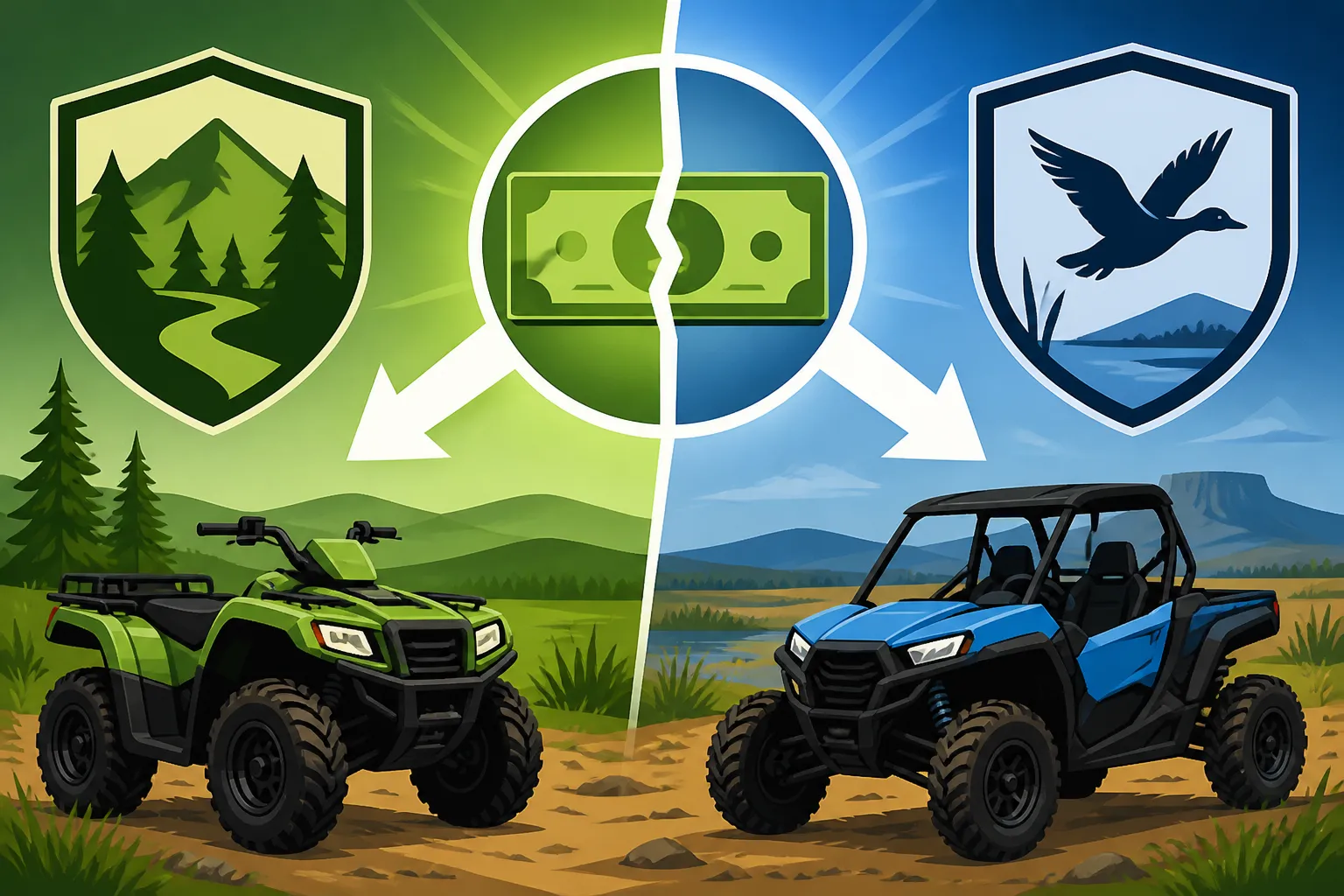
Why Two Agencies Split One Fee
It can be incredibly confusing and, let's be honest, a little frustrating when you're trying to do the right thing and register your off-highway vehicle (OHV) in North Dakota, only to find your money is going to two different places. Many riders wonder why the state doesn't just collect one lump sum. This guide will unravel the mystery behind why two distinct state agencies split your OHV registration fees, clarifying where your money goes and why this system is in place.
Understanding the North Dakota OHV Fee Structure
When you go to register your beloved ATV or UTV in North Dakota, you're not just paying a single fee to one entity. The total cost is actually comprised of different components, each serving a specific purpose and collected by a different state department. This can lead to a bit of head-scratching, especially for new owners or those coming from other states where the process might be more streamlined into a single payment. It's not about making things complicated; it's about specialized funding.
The Two Key Fees You Pay
At the heart of this split system are two primary fees. First, there's the basic registration fee, which covers the administrative costs of getting your machine on the books and keeping track of ownership. This is the fee that ensures your ATV or UTV has a legal identity within the state. It's a fundamental part of motor vehicle administration, similar to how cars are registered.
Then, there's the "trail tax," which, despite its name, is actually a dedicated fee designed to support the very places we love to ride. This portion is specifically earmarked for the development, maintenance, and improvement of North Dakota's OHV trails and riding areas. Without this crucial funding, the trails we enjoy might not be as well-maintained or as expansive as they are. Think of it as your direct contribution to keeping our riding spots in top shape.
Who Collects Which Portion
This is where the "split" comes into play. The North Dakota Department of Transportation (NDDOT), through its Motor Vehicle Division, is responsible for collecting the administrative registration fee. They handle the titling, registration, and overall record-keeping for all motor vehicles, including your OHV. When you fill out forms like [What the Title Application SFN 2872 Asks For] or handle an [North Dakota Ownership Transfer in 15 Days], you're primarily dealing with the NDDOT.
The other portion, the trail tax, is collected by the North Dakota Parks and Recreation Department. This agency is the steward of our state's recreational lands, and they manage the funds specifically allocated to OHV recreation. So, while you might write one check or make one payment, behind the scenes, these funds are being routed to the appropriate department based on their designated use. It's a system designed to ensure accountability and direct funding for specific state functions.
The Role of the Department of Transportation (DOT)
The NDDOT's involvement is primarily centered around the official recognition and legal documentation of your OHV. Just like with cars and trucks, they are the gatekeepers of vehicle records, ensuring that every machine operating in the state has a clear chain of ownership and meets certain administrative requirements. Their role is foundational to the legal framework of vehicle ownership in North Dakota.
Titling Your Machine
Before you can even think about hitting the dirt, your OHV needs a title. The NDDOT is the agency that issues and maintains these titles, which serve as the official proof of ownership. This process involves verifying information, processing paperwork, and ultimately, issuing that all-important document. Whether you're buying new from a dealer or used from a private seller, the title transfer process is handled by the NDDOT. It’s crucial for proving you legally own your machine, especially if you ever need to sell it, insure it, or report it stolen.
They also handle other vital services, such as issuing duplicate titles or assisting with complex ownership situations like [North Dakota Registration After the Owner Dies] or [North Dakota Registration With Two Owners]. The administrative fee you pay to the NDDOT covers the overhead of these services – the staff, the record-keeping systems, and the infrastructure needed to process thousands of vehicle transactions across the state every year. It’s about more than just printing a sticker; it’s about maintaining a robust and reliable system for vehicle identification and ownership.
The Importance of Accurate Records
Imagine a scenario where you've purchased a used ATV, and it turns out to be stolen. Without the NDDOT's diligent record-keeping, tracking down the legitimate owner or proving your own legal purchase would be a nightmare. Their database connects your vehicle identification number (VIN) to its registered owner, ensuring clarity and preventing fraud. This is also vital for law enforcement, who can quickly verify a machine's status if they encounter it on a trail or roadway.
Accurate records are also essential when it comes to things like excise tax collection. When you buy a machine, whether from a dealer or a private party, you'll typically pay [North Dakota's 5 Percent Motor Vehicle Excise Tax] on the purchase price. The NDDOT facilitates the collection of this tax, ensuring that proper state revenues are generated from vehicle sales. This administrative rigor helps keep the entire system transparent and fair for all OHV owners, making sure that what's on paper truly reflects reality. If you ever need official documents, a resource like LawDepot can help you generate general forms like a bill of sale to complement the state's specific title application requirements.
The Role of the Parks and Recreation Department
While the NDDOT handles the paper trail, the North Dakota Parks and Recreation Department is focused on the actual experience of riding. Their portion of the fee is directly funneled into making our outdoor adventures better, safer, and more accessible. They are the stewards of our public riding lands, constantly working to improve the infrastructure that OHV enthusiasts depend on.
Funding Trail Development and Maintenance
The "trail tax" you pay is a direct investment in North Dakota's OHV riding opportunities. These funds are used for everything from clearing new routes and expanding existing ones to routine maintenance like grading, signage repair, and trash removal. Picture this: you're planning a trip to [Pembina Gorge: North Dakota's OHV Trail Park] or looking to ride [North Dakota's 22-Mile Roughrider OHV Trail]. The smooth trails, clear markings, and available amenities like parking areas or restrooms are often a direct result of the Parks and Recreation Department's efforts, funded by this specific fee.
Without this dedicated funding stream, the burden of maintaining these trails would fall on general state funds, which are often stretched thin across many different programs. By earmarking a portion of OHV registration fees for trails, the state ensures that the users who benefit most from these facilities are also directly contributing to their upkeep. It creates a self-sustaining model for outdoor recreation, ensuring that our beautiful natural landscapes remain open and enjoyable for years to come.
The "Trail Tax" at Work
Beyond basic maintenance, the trail tax also supports broader initiatives. This could include educational programs promoting safe riding practices, research into sustainable trail development, or even acquiring new land for future OHV use. For example, if you've noticed new amenities at a trailhead, or improved mapping for [North Dakota OHV Trail Map Downloads], chances are the trail tax played a role in making that happen. It's a crucial funding source that allows the Parks and Recreation Department to not just react to immediate needs, but to proactively plan for the future of OHV riding in North Dakota.
This dedicated funding ensures that organizations, events, and resources that benefit the OHV community can continue to thrive. When a local OHV club applies for a grant to help with a trail cleanup project, those funds often come from the pool generated by the trail tax. It’s a clear example of how a seemingly small fee, when pooled together by thousands of riders, can have a significant and tangible impact on the quality and availability of riding opportunities throughout the state. [Where the Trail Tax Actually Goes] makes a big difference to riders.
Why This Split System Exists
The decision to split these fees wasn't arbitrary; it's rooted in a logical separation of governmental functions and a desire to ensure specialized funding for distinct purposes. North Dakota, like many states, aims for transparency and accountability in how public funds are managed and spent. This dual-agency approach is one way to achieve that.
Historical Context and Legislative Intent
Historically, vehicle registration and titling have always fallen under the purview of a state's department of motor vehicles or transportation, as these functions are integral to the legal administration of vehicles. Recreational activities, on the other hand, often fall under a parks and recreation department, which is better equipped to understand and manage outdoor resources. As OHV use grew in popularity and the need for dedicated trails became apparent, legislators recognized the necessity for a specific funding mechanism that would directly benefit trail development without burdening general taxpayer funds.
The creation of the trail tax was a deliberate legislative move to ensure that OHV riders, who benefit directly from these trails, contribute to their existence. It’s a user-pay, user-benefit model. Rather than creating a whole new agency or overhauling the existing DOT structure to manage recreational funds, it made more sense to leverage the expertise of the Parks and Recreation Department, which already specialized in outdoor recreation management. This separation ensures that each dollar is spent efficiently by the agency best suited to its purpose.
Separating Administrative and Recreational Funding
The primary reason for splitting the fee collection is to clearly delineate administrative costs from recreational investment. The NDDOT's portion covers the overhead of managing millions of vehicle records, issuing plates and decals, and processing ownership transfers. These are essential governmental functions that ensure legal ownership and vehicle identification across the state. This is similar to how the [North Dakota Title Fee of $5] and the [North Dakota Dealer Safety Fee of $5] are administrative in nature.
The Parks and Recreation Department's portion, the trail tax, is exclusively dedicated to enhancing and expanding actual riding opportunities. This separation prevents funds intended for, say, trail signage in Turtle Mountain from being inadvertently used for NDDOT office supplies in Bismarck. It provides a transparent way to show riders exactly how their money is being put to use for their passion. This clarity also helps in justifying future funding requests or addressing concerns from the OHV community about where their contributions are going. If you're looking to create legal documents for private sales, remember that platforms like LawDepot can assist, but the official fees will always be split between the state agencies.
What This Means for You as an OHV Owner
For you, the rider, understanding this split system isn't just an academic exercise; it impacts how you navigate the registration process and ensures you're fully compliant with North Dakota law. It means knowing which agency handles what part of your paperwork and where to direct specific questions.
Navigating the Registration Process
When you go to register your ATV or UTV, you'll typically interact with the NDDOT, either online, by mail, or at a motor vehicle branch office. They are the initial point of contact for submitting your application, proof of ownership, and payment. They will collect both the administrative registration fee and the trail tax, but they act as the central clearinghouse. From there, the funds are distributed to the appropriate departments. Understanding this helps manage expectations; for instance, if you have a question specifically about trail access or closures, you'd want to contact Parks and Recreation, while a question about your vehicle's title or [North Dakota OHV Plate or Decal: Your Choice] would go to the NDDOT.
It's also important to have all your ducks in a row when registering, especially if you're buying from a private seller. Ensure you have a proper bill of sale—something LawDepot can help you draft—along with the signed-over title. This documentation is crucial for the NDDOT to process your ownership transfer and registration accurately. [How to Register an ATV in North Dakota] details these steps. Without the correct paperwork, the process can become significantly delayed, keeping you off the trails longer than necessary.
Ensuring Your Machine is Fully Legal
Ultimately, paying both components of the fee ensures your machine is fully registered and legal for use in North Dakota. This means you'll receive your official registration decal or plate, which must be properly displayed on your OHV. Riding an unregistered machine can lead to fines and other penalties. An officer checking your registration isn't just looking for proof of payment; they're verifying that your machine is properly documented by the NDDOT and that you've contributed to the trail system through the Parks and Recreation Department.
This two-part compliance is your passport to enjoying North Dakota's vast and varied riding landscape, from state-managed trails to legally riding ditches and section lines. By understanding that your registration fee is funding both the administrative backbone and the recreational opportunities, you gain a clearer picture of your responsibilities and the benefits that come with being a compliant OHV owner in the Peace Garden State. It’s about being a responsible rider and a good steward of our shared resources.
| Fee Type | Collecting Agency | Primary Purpose | Example Use of Funds |
|---|---|---|---|
| Administrative Fee | NDDOT Motor Vehicle Div. | Record-keeping, titling, ownership tracking | Staff salaries, database maintenance, decal printing |
| Trail Tax (Recreational) | ND Parks & Recreation Dept. | Trail development, maintenance, recreational programs | Trail grading, signage, trailhead amenities, safety education |
Common Misconceptions and Clarifications
The dual agency system can sometimes lead to misunderstandings about what certain fees are and who benefits. Let's clear up some common points of confusion that many OHV owners encounter.
Is it a Sales Tax or an Excise Tax?
One common question that pops up when discussing OHV costs is whether the state applies a sales tax or an excise tax. In North Dakota, when you purchase an OHV, you pay an excise tax, not a general sales tax. The difference is subtle but important. General sales tax applies to a wide range of goods and services, often varying by city or county. Excise tax, however, is a specific tax levied on certain goods, in this case, motor vehicles, including ATVs and UTVs.
This [North Dakota Excise Tax on an ATV Purchase] is paid to the NDDOT when you title your machine. It’s a one-time fee based on the purchase price or fair market value, and it doesn't get split with Parks and Recreation. The trail tax, on the other hand, is a recurring fee that is part of your [North Dakota OHV Registration Cost], paid every two years, and is explicitly for trail funding, as discussed. So, while both involve money changing hands with the state, their purpose and application are distinct. Understanding this helps you budget accurately for the full out-the-door cost of your new or used machine.
Why Aren't All OHV Fees Combined?
The idea of combining all OHV-related fees into a single, seamless payment might seem simpler on the surface. However, the current split system serves a vital purpose in governmental accounting and transparency. Each department has a specific budget and reporting requirements tied to its core mission. The NDDOT needs its administrative fees to operate its motor vehicle services, while the Parks and Recreation Department relies on the trail tax to fulfill its mandate of providing and maintaining recreational opportunities.
If all fees were combined into one general fund, it would become much harder to track how much revenue is specifically generated by OHV users and, more importantly, how much is then reinvested directly into OHV programs and infrastructure. The split system ensures that the funds collected for trails are demonstrably used for trails, providing accountability to the OHV community. While it might require an extra click or two during an online transaction, this separation offers a clearer picture of financial stewardship and ensures that your contributions are going exactly where they're intended, benefitting both the administrative integrity and the recreational enjoyment of our beautiful state.
Disclaimer
This article is for general informational purposes only and does not constitute professional advice. Laws, prices and regulations vary by location and change over time. Consult a qualified professional for guidance on your specific situation.