North Dakota Tracked Dirt Bike Permit at $25
If you're an off-road enthusiast in North Dakota who loves to extend your riding season or tackle extreme terrain, you might have swapped out your dirt bike's wheels for a set of tracks. It's a fantastic way to transform your machine, turning it into a winter warrior or a mud-conquering beast. However, many riders hit a snag when they realize that putting tracks on their dirt bike changes its legal status in the eyes of the North Dakota Game and Fish Department. What seems like a simple modification actually triggers a requirement for a special permit, distinct from your regular OHV registration. This guide will walk you through the ins and outs of the North Dakota Tracked Dirt Bike Permit, ensuring you understand why it's needed, how to get one, and where you can legally ride with your newly equipped machine.
Understanding the North Dakota Tracked Dirt Bike Permit
When you think of a dirt bike, you typically picture two wheels with knobby tires, tearing up trails or cruising through ditches. But the innovation of track kits has completely changed the game, allowing these agile machines to traverse snow, sand, and deep mud with remarkable stability and flotation. This versatility is incredible, but it also places tracked dirt bikes in a unique category, separate from traditional wheeled OHVs and even snowmobiles. North Dakota recognized this difference and implemented a specific permit to address the unique operational characteristics and environmental impact of these machines.
What Exactly is a Tracked Dirt Bike?
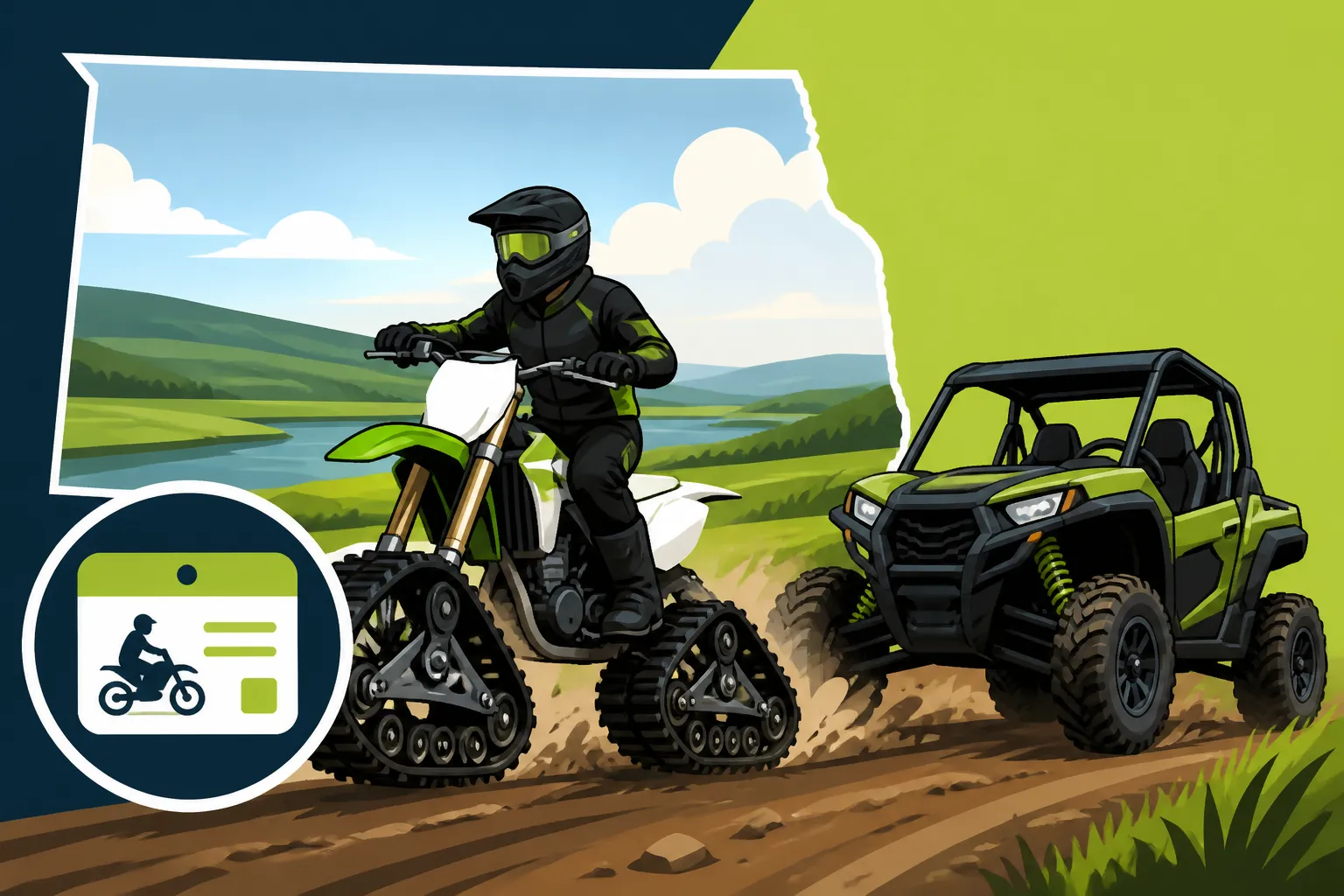
A tracked dirt bike, often referred to as a "snow bike" or a "dirt bike conversion," is essentially a standard dirt bike that has had its front wheel replaced with a ski and its rear wheel replaced with a continuous track system, similar to what you'd find on a snowmobile. These conversion kits are designed to be relatively easy to install and remove, allowing riders to switch between wheeled and tracked configurations as seasons and conditions demand. Common manufacturers of these kits include brands like Timbersled, Camso, and Yeti, offering various designs to fit a wide range of dirt bike models. The result is a machine that maintains the nimble handling of a dirt bike while gaining the flotation and traction of a snowmobile, opening up new possibilities for off-road exploration.
This adaptation significantly alters how the machine interacts with the ground. Instead of a small contact patch from tires, a tracked system distributes weight over a much larger area. This not only enhances traction in soft conditions but also changes the potential for compaction and disturbance to different surfaces, especially sensitive ecosystems or groomed trails. Because these machines can travel in places where wheeled vehicles might get stuck or cause excessive damage, and often operate during seasons typically reserved for snowmobiles, they need a specific regulatory framework to ensure responsible use and mitigate any unique environmental concerns.
Why a Separate Permit for Tracks?
The core reason North Dakota requires a separate permit for tracked dirt bikes, costing $25, is primarily due to their operational characteristics and the areas they are likely to access. While a standard dirt bike might already have a [North Dakota's Two-Year OHV Registration], that registration primarily covers its use as a wheeled vehicle on designated OHV trails, road ditches, or private land. Tracked machines, however, often operate during winter months on snow-covered terrain, including areas that might be groomed snowmobile trails.
This additional permit serves a few key purposes. Firstly, it helps fund the maintenance and development of trails and public lands that these machines utilize, especially during the winter season. The fee contributes to the infrastructure that supports diverse recreational activities. Secondly, it helps the state monitor the usage and impact of tracked vehicles, which can differ from wheeled OHVs or traditional snowmobiles. This distinction allows the Game and Fish Department to implement specific rules regarding where and when tracked dirt bikes can operate, protecting both the environment and the safety of other recreational users. Essentially, the state views a tracked dirt bike as a hybrid vehicle that doesn't fit neatly into existing wheeled OHV or snowmobile definitions, necessitating its own specific permit. Without this extra layer of regulation, there could be confusion about trail access, safety protocols, and funding allocations for different types of outdoor recreation.
Who Needs the Tracked Dirt Bike Permit in North Dakota?
The question of who needs this special $25 permit can sometimes cause confusion, especially for riders who already have their dirt bike registered as an OHV. The rule of thumb is quite straightforward: if you convert your dirt bike to a track system and plan to operate it on any public land, public trails, or even on certain roadways (like ditch bottoms where permitted), you need this permit. It's not an either/or situation with your standard OHV registration; it's often an additional requirement that reflects the unique nature of these machines.
Residents vs. Non-Residents
For North Dakota residents, the $25 tracked dirt bike permit is mandatory if you intend to ride your tracked machine anywhere other than entirely private land (owned by you or with direct permission from the landowner). This permit is specific to the machine itself and must be displayed. It operates on an annual basis, generally from January 1st to December 31st. It's crucial to understand that this permit is separate from your general OHV registration. So, if your dirt bike is already registered as an OHV for summer use, and you convert it to tracks for winter, you will need both the OHV registration (if applicable to your machine, especially if it's a [North Dakota Class I Machines Defined]) and the tracked dirt bike permit to be fully compliant. The base registration covers the machine as a wheeled vehicle, while the track permit covers its operation in the tracked configuration.
Non-residents visiting North Dakota with a tracked dirt bike also fall under this requirement. If you're coming from a neighboring state like Minnesota or South Dakota, and you plan to ride your tracked machine on North Dakota's public lands, you'll need to purchase the North Dakota Tracked Dirt Bike Permit. This is in addition to any permits or registrations you might have from your home state. While there is a [North Dakota Non-Resident OHV Permit] for wheeled machines, the tracked dirt bike permit is a distinct requirement. So, a visiting rider with a tracked dirt bike would essentially need to secure this $25 permit, regardless of their home state's registration status. This ensures that all tracked machines operating on North Dakota's public lands contribute to the maintenance and management of those areas. The state does not offer reciprocity for this specific permit with other states, meaning your out-of-state tracked vehicle registration won't exempt you from North Dakota's requirement.
Exemptions to the Permit Requirement
While the rules are fairly broad, there are specific situations where a North Dakota Tracked Dirt Bike Permit might not be required. The most common exemption, applicable to both residents and non-residents, is when the tracked dirt bike is operated exclusively on private land. If you own the land or have explicit written permission from the landowner (and we always recommend getting written permission, perhaps using a template from a service like LawDepot, just to be safe), and your machine never touches public roads, trails, or state-managed property, then the permit is not necessary. This is similar to the [North Dakota's Exemption for Machines Used on Private Land] for wheeled OHVs.
Another potential exemption might involve organized, closed-course competitive events. Often, machines used solely within the confines of a sanctioned race or event, which takes place on private property or a specially permitted public area, may not require individual permits. However, this is usually at the discretion of the event organizer and the permitting authority, so it's always best to confirm with the specific event rules or the North Dakota Game and Fish Department directly. For instance, if you're participating in a track-only event at a private track, that would typically be exempt. Beyond these specific scenarios, if you intend to explore the state's vast recreational opportunities on a tracked dirt bike, assume the $25 permit is a necessary part of your gear.
Applying for Your North Dakota Tracked Dirt Bike Permit
Getting your North Dakota Tracked Dirt Bike Permit is a fairly straightforward process, designed to be accessible to most riders. Unlike some more complex vehicle registrations, this specific permit focuses on the machine itself and its unique configuration rather than extensive ownership transfers or detailed inspections. However, having the correct information and knowing where to go will make the process smooth and quick.
Required Documents and Information
When you go to apply for your $25 tracked dirt bike permit, you'll generally need to provide some basic information about yourself and your machine. While the process isn't as intensive as [Titling a Dirt Bike in North Dakota] or a full OHV registration, you should be prepared with:
- Personal Identification: A valid driver's license or state ID will confirm your identity.
- Vehicle Information: You'll need the Vehicle Identification Number (VIN) of your dirt bike. Even though it's converted to tracks, it's still the underlying wheeled vehicle that the state wants to identify.
- Proof of Ownership: While a full title transfer might not be required for the permit itself, demonstrating that you are the rightful owner of the dirt bike is usually a good idea. This could be your vehicle title, a previous registration card, or a bill of sale. If you've just acquired the machine, having a solid [North Dakota Bill of Sale Form SFN 2888] on hand, perhaps generated through a service like LawDepot, can be very helpful as proof.
- Payment: Be ready to pay the $25 fee. This is typically accepted in cash, check, or credit/debit card, depending on the issuing office.
It’s always a good practice to call ahead to the specific location where you plan to obtain your permit to confirm their exact requirements and accepted payment methods. Being prepared with all necessary documents ensures a quick and hassle-free transaction, getting you back to thinking about your next ride.
Where and How to Submit Your Application
Obtaining your North Dakota Tracked Dirt Bike Permit is quite convenient, with several options available across the state. The North Dakota Game and Fish Department is the primary authority for these permits, and they have structured the distribution to be as accessible as possible for riders.
- North Dakota Game and Fish Department Offices: You can visit the main office or one of their regional offices directly. This is often the most reliable way to get immediate assistance and ensure all your questions are answered.
- State Parks: Many North Dakota State Parks also serve as points of sale for various permits, including the tracked dirt bike permit. This is especially convenient if you're planning to ride near a state park or are already visiting one. Check the specific park's operational hours before you go. Remember, you might also need a separate [North Dakota State Park Entrance Permits] if you plan to enter the park itself.
- Online: For maximum convenience, the North Dakota Game and Fish Department often provides an online portal where you can purchase permits. This allows you to complete the transaction from the comfort of your home, print out your temporary permit, and usually have the official decal mailed to you. This is an excellent option for non-residents or those who live far from a physical office. When using online services, double-check that you're on the official North Dakota Game and Fish website to avoid any third-party scams.
Once you’ve successfully applied and paid the fee, you'll receive a permit decal or sticker that needs to be affixed to your tracked dirt bike. The exact placement rules will typically be provided with your permit, but generally, it needs to be clearly visible on the machine, such as on the tunnel or a side panel. This allows law enforcement or park rangers to easily verify your compliance while you're out riding.
Permit Costs, Validity, and Renewal
Understanding the financial and temporal aspects of the North Dakota Tracked Dirt Bike Permit is crucial for responsible riding. This isn't a "set it and forget it" kind of permit, and knowing its cycle will help you avoid any unexpected issues while you're out enjoying the trails.
The $25 Permit Fee Explained
The cost of the North Dakota Tracked Dirt Bike Permit is a flat $25. This fee is relatively modest, especially when considering the access it grants to public lands and trails for specialized tracked machines. This $25 charge is specifically allocated to the North Dakota Game and Fish Department. A portion of these funds is used to manage and maintain the trails and public lands that OHVs, including tracked dirt bikes, utilize. This can include everything from signage and trail mapping to supporting search and rescue operations or environmental restoration projects related to off-highway vehicle use.
It’s important to reiterate that this $25 permit is in addition to any other registration or permit your base dirt bike might require. For example, your wheeled dirt bike might still need its [North Dakota OHV Registration Cost] for when it's in its wheeled configuration, and if you're a non-resident, you might have also paid for a [North Dakota Permits for Visiting Riders]. The tracked dirt bike permit is a separate fee specifically for operating your machine with tracks. The logic here is that tracked machines often access different types of terrain, or at different times of the year (like winter), requiring distinct management efforts and funding. So, consider the $25 as your contribution to keeping the winter riding opportunities open and managed responsibly.
Permit Duration and What Happens When it Expires
The North Dakota Tracked Dirt Bike Permit is issued on an annual basis. This means it is valid from January 1st through December 31st of the calendar year in which it is purchased. This fixed expiration date is very important to remember, especially if you purchase your permit late in the season. For instance, if you buy your permit in November, it will still expire on December 31st of that same year, not one year from your purchase date. This makes it crucial to plan your purchase around the riding season you intend to use it for. This annual cycle is common for many state-issued recreational permits and simplifies administration. This also means you'll need to renew it annually if you plan to continue using your tracked dirt bike in subsequent years.
When your permit expires, your tracked dirt bike is no longer legally permitted for use on public lands or trails in North Dakota. Riding an expired permit is treated similarly to riding without a permit at all, which can lead to citations and fines. It’s always best practice to mark your calendar for December 31st and plan to renew your permit in early January if you intend to ride in the new year. Renewing is generally the same process as the initial application, whether online or in person. Don't let the excitement of fresh snow or a new adventure lead you to overlook this simple but essential requirement.
Where Can You Ride a Tracked Dirt Bike in North Dakota?
Once you have your permit, the burning question is, "Where can I actually ride this thing?" North Dakota offers a variety of landscapes, but not all of them are open to tracked dirt bikes. Understanding the rules for different types of terrain is critical to avoiding trespass issues and ensuring a safe, legal ride.
Public Lands and Designated Trails
North Dakota has a limited but growing number of designated OHV trails that cater to various machines. For tracked dirt bikes, the situation can be a bit more nuanced. While some general OHV trails might be open to tracked machines, you often find specific rules related to [Riding a Snowmobile Trail on Tracks]. Many snowmobile trails are managed by different organizations or have specific agreements that might or might not include tracked dirt bikes. It is absolutely vital to check the local regulations and trail signage for any specific trail system you plan to use. Do not assume that because it’s a public trail, it’s automatically open to your tracked machine. For example, some groomed snowmobile trails might explicitly forbid tracked dirt bikes due to concerns about rutting or damage to the grooming.
Areas like the Turtle Mountain riding area or parts of Pembina Gorge may have specific allowances or restrictions. Before heading out, it’s always best to consult the North Dakota Game and Fish Department's official trail maps or contact the managing authority for the specific area. Websites and apps like OuterSpatial often provide updated trail status and rules, which are indispensable resources. Remember that national grasslands in North Dakota also have specific rules, and often cross-country travel is prohibited. Stick to designated routes and always respect signage. [North Dakota OHV Trails: All Four Riding Areas] would be an excellent resource to cross-reference for specific tracked bike access.
Ditch Riding and Tracked Machines
Ditch riding is a popular activity for OHV enthusiasts in North Dakota, and generally, [North Dakota Ditch Riding: The Legal Right Explained] allows for the operation of registered OHVs in the ditch bottoms and back-slopes of most public roads, with certain stipulations. However, the question of whether this applies to tracked dirt bikes is where it gets a little hazy, especially during winter months when ditches are snow-covered.
While the statute generally refers to "off-highway vehicles," the unique characteristics of a tracked machine, particularly its use in winter conditions, might lead to different interpretations or local ordinances. During seasons when snowmobiles are actively using ditches, tracked dirt bikes might be treated more like snowmobiles than wheeled OHVs. It's crucial to exercise caution and, if in doubt, verify with local law enforcement or the county sheriff's office. You might find that some counties or townships have specific rules that supersede the general state law or interpret the definition of an OHV in a way that impacts tracked machines differently, especially if you're riding in areas like [North Dakota Counties That Restrict Riding]. Always consider visibility, road conditions, and the potential impact of your tracked machine on the snowpack or underlying terrain when ditch riding. The safest bet is to assume stricter rules might apply where snow is present, and to always prioritize safety and avoid any potential conflicts with other road users or landowners.
Consequences of Riding Without a Permit
Ignoring the North Dakota Tracked Dirt Bike Permit requirement might seem like a small oversight, but the consequences can range from inconvenient fines to more serious legal troubles. Law enforcement, including North Dakota Game and Fish wardens, county sheriffs, and state troopers, are authorized to enforce these regulations, and they take them seriously. They want to ensure that all riders are contributing to trail maintenance and operating responsibly.
Fines and Citations for Non-Compliance
Riding a tracked dirt bike on public lands or trails in North Dakota without the required $25 permit can result in a citation. While I cannot provide specific current fine amounts, these tickets are designed to be a deterrent and can certainly put a damper on your riding day. Typically, the fine for operating an unregistered or improperly permitted OHV can be significant, often escalating beyond the cost of the permit itself. It's a common misconception that if you have your standard OHV registration, you're covered. As discussed, the state considers the tracked configuration distinct enough to warrant its own permit, so your wheeled OHV registration won't save you from a tracked dirt bike permit violation.
Additionally, if you are cited, you may also incur court costs and administrative fees, further increasing the financial burden. These penalties are not merely about revenue generation; they are about encouraging compliance with regulations designed to manage recreational use and protect public resources. Imagine being hundreds of miles from home, enjoying a weekend ride, only to have it cut short by a costly citation. A quick $25 purchase could prevent such an ordeal, allowing you to focus on the joy of riding. The costs and hassle of a citation are far greater than simply getting the permit in the first place. This is also why having official documents readily available, perhaps even digital copies stored securely, is a good idea. LawDepot could provide templates for other important documents you might carry, like landowner permission forms, giving you a centralized way to manage your ride paperwork.
Other Potential Legal Repercussions
Beyond direct fines, riding without the proper permit for your tracked dirt bike can lead to additional complications. In some cases, law enforcement may have the authority to impound your machine until the permit issue is resolved or the fines are paid. An impoundment can be a major headache, involving towing fees, storage fees, and the time and effort required to retrieve your vehicle. This can quickly turn a minor infraction into a very expensive problem.
Furthermore, repeated offenses could lead to increased penalties or even a temporary suspension of your riding privileges on public lands. While less common for a first-time permit violation, a pattern of non-compliance demonstrates a disregard for state regulations, which authorities may address more stringently. It’s also worth considering the impact on any insurance coverage you might have. If you're involved in an accident while operating your tracked dirt bike without the required permit, your insurance provider might deny coverage, arguing that you were operating the vehicle illegally. This could leave you personally liable for damages or injuries, which could be financially devastating. Always aim for full compliance to protect yourself, your machine, and your finances. Understanding [What North Dakota's OHV Law Requires of Owners] is the first step towards ensuring all your adventures are both thrilling and legal.
| Permit Type | Cost | Validity Period | Primary Purpose | Required In Addition To… |
|---|---|---|---|---|
| Tracked Dirt Bike Permit | $25 | Jan 1 – Dec 31 | Operation of a dirt bike with track conversion kits. | Standard OHV Registration (if applicable) |
| Standard OHV Registration | $20 | Two Years | Operation of wheeled OHVs on public lands/trails. | None (unless tracked) |
| Non-Resident OHV Permit | $10 | Jan 1 – Dec 31 | Wheeled OHV use by non-residents for up to 30 days. | Tracked Dirt Bike Permit (if applicable) |
| Tracked Dirt Bike Permit (Non-Resident) | $25 | Jan 1 – Dec 31 | Operation of a dirt bike with track conversion kits by non-residents. | Non-Resident OHV Permit (if applicable) |
Disclaimer
This article is for general informational purposes only and does not constitute professional advice. Laws, prices and regulations vary by location and change over time. Consult a qualified professional for guidance on your specific situation.