Alcohol and Riding on Public Land
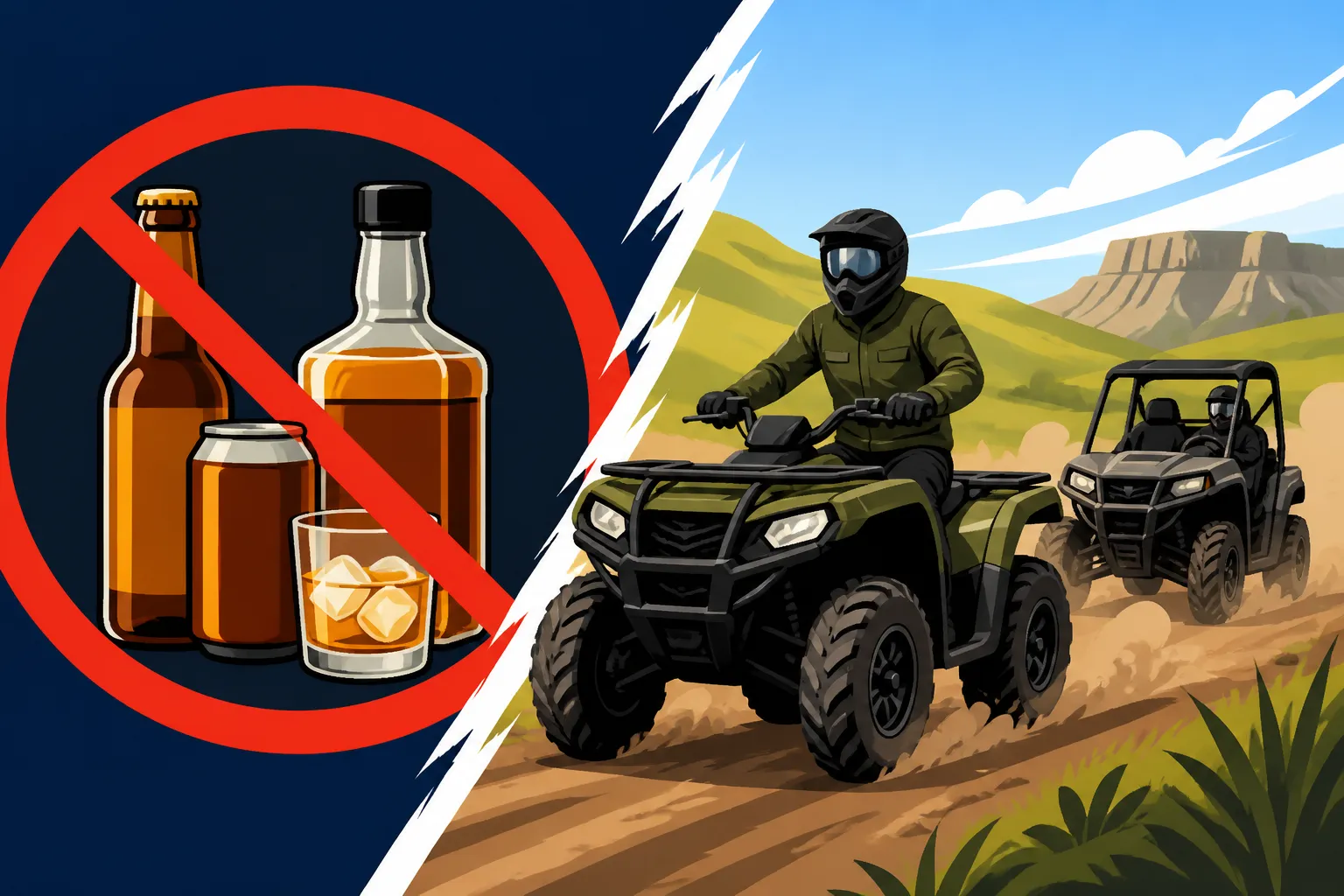
A ride that includes a beer at camp or a drink before heading back can turn into a serious safety and legal problem. In North Dakota, public land does not make impaired operation acceptable, and rules may differ between roads, trails, parks, and other managed areas. The safest plan is simple: keep the person operating the ATV or UTV sober, and sort out transportation before anyone drinks.
What North Dakota’s impaired-riding rules mean
An ATV or UTV is still a motorized machine when it is being ridden on public land. Do not assume that DUI or impaired-operation rules apply only to cars on paved highways. North Dakota has rules addressing impaired operation, including operation on public ways and areas open to the public. The exact legal question can depend on the circumstances and where the machine is being operated.
The important practical point is that riding on a trail, at a public riding area, or on another place open to public use is not a safe loophole. A machine can injure its operator, a passenger, another rider, or someone on foot just as easily on dirt as on pavement. Alcohol can affect balance, judgment, reaction time, and the ability to manage changing terrain, even if a rider feels capable.
For the legal overview focused on machines, see North Dakota DUI Rules for OHV Riders. For a closer look at trail operation, Impaired Operation on a Trail explains why a trail ride is not automatically outside impaired-operation rules.
It also helps to separate three questions that are often mixed together:
- Is the operator impaired? Impairment can create legal exposure and raises the risk of a crash.
- Is alcohol allowed in that particular area? The land manager may have rules about possessing or consuming alcohol, separate from rules about operating a vehicle.
- Is the machine being operated legally? Registration, permits, access restrictions, and route rules still apply whether or not anyone has been drinking.
A “yes” or “no” to one question does not settle the others. For instance, a place’s rules about alcohol consumption do not give anyone permission to operate a machine while impaired. Likewise, being sober does not automatically make alcohol possession or riding there permissible.
| Situation | Practical concern | Safer choice |
|---|---|---|
| Drinking before riding | Impairment can affect control and decision-making | Do not operate; arrange a sober ride |
| Drinking during a group ride | The route back may still involve operating an OHV | Stop riding before drinking begins |
| Drinking at a public campground | Site rules may differ from riding rules | Check the campground and land manager’s rules |
| Parking after drinking | Being near the controls or keys can create additional risk | Leave the machine parked and have a sober person handle transportation |
| Riding on a road or public access area | Road and impaired-operation rules may apply | Do not assume an unpaved route is exempt |
The table is a planning aid, not a ruling on any individual situation. Local ordinances and land-management policies can add requirements, and the precise law can depend on location and conduct.
Public land is not one set of rules
“Public land” can mean a state park, a public OHV area, a national grassland road, a wildlife management area, or another property managed for a particular purpose. The agency, access rules, and permitted activities can differ. Even within one property, a road, designated trail, campground, and parking area may be governed by different rules.
Before a trip, check the rules for the specific place rather than relying on what was allowed at another riding area. Confirm whether OHV use is open, which routes are legal, and whether the site has separate policies about alcohol. Do not assume that a public campground’s rules apply to the riding area, or that permission to camp means permission to ride anywhere nearby.
This matters especially on public land where motorized access is limited to designated roads or routes. A machine can be operated unlawfully even by a sober rider if it leaves an authorized route. On national grasslands, for example, riders should use the applicable motor vehicle use map and follow route designations; cross-country riding may be prohibited. The resource Reading a Grassland Vehicle Use Map can help explain how route maps work.
Other access rules can matter too. A trail may be closed because of wet conditions, a public area may have seasonal restrictions, or a posted property may require permission. Check current conditions before loading up, and do not treat an open gate or visible tire tracks as proof that riding is permitted. North Dakota Trail Status by App and Phone is useful for checking trail conditions, while North Dakota Posted Land Rules for Riders covers permission and posted-property issues.
Rules about alcohol on the land itself are separate from impaired driving rules. Some properties may restrict consumption or possession, and policies can vary by managing authority and location. If you cannot confirm the rule, ask the land manager before bringing alcohol. Also check whether a campground, event, or rental operator has its own conditions. A riding permit or vehicle registration is not a substitute for permission to use a site in a particular way.
For visitors bringing an out-of-state machine, alcohol rules do not replace permit requirements. North Dakota may require a non-resident permit in situations where an out-of-state registration alone is not enough. Check North Dakota Permits for Visiting Riders before travelling, and confirm that your planned route and riding area are open to your machine.
Plan the ride so nobody has to make a risky choice
The most reliable approach is to decide who will operate before the group starts drinking. “I’ll see how I feel later” is not a plan: alcohol can impair judgment about one’s own ability, and a ride back can involve unfamiliar terrain, darkness, other riders, or road crossings.
Use a plan that leaves no doubt:
- Choose a sober operator for the entire ride. Make the agreement before alcohol is present, not after.
- Keep riding and drinking at different times. If the group plans to drink at camp, park the machines first and leave them parked.
- Arrange transportation for everyone. A sober driver, a separate vehicle, or an overnight stay may be needed. Do not make the impaired person responsible for moving a vehicle or trailer.
- Secure the machines and keys. Ask a sober person to keep the keys if that helps prevent an impulsive decision. Do not let someone who has been drinking sit at the controls or attempt to reposition a machine.
- Make the plan work for the whole group. A designated operator should not be pressured into drinking, and no rider should be left without a safe way back.
- Build in a weather and daylight buffer. A trip that runs late can create pressure to ride when tired or after drinking. Set a turnaround time and stick to it.
A designated driver in a pickup can solve the transportation problem only if that person remains sober and the group has a safe way to get both riders and machines where they need to go. Do not plan on towing an OHV behind another OHV unless the equipment, route, and applicable rules allow it. A safe ride home is not worth turning a transport problem into a second incident.
Fatigue is worth taking seriously as well. Long rides, wind, dust, heat, cold, and difficult terrain can wear riders down. Alcohol adds another risk rather than helping someone recover. If the operator is tired, stop and rest; if the operator has been drinking, do not resume the ride. See North Dakota Trail Etiquette Locals Expect for practical group-riding habits that help reduce avoidable risks.
If someone has already been drinking, keep the conversation calm and direct. Do not hand over the keys, and do not ask the person to “just move it a little.” Have a sober adult take charge of transportation and the machine. If there is an immediate risk that someone will ride impaired, prioritize preventing the ride and seek help from appropriate local authorities when necessary.
If a stop, crash, or dispute happens
An encounter with an officer or land manager can involve more than alcohol. Depending on the location and circumstances, an officer may ask about the machine, the route, registration, a permit, or the operator’s conduct. Keep required documents accessible and answer questions truthfully. What an Officer Can Ask to See explains common inspection issues for OHV riders.
If a rider is suspected of impaired operation, do not try to argue that a trail or dirt surface makes the rules irrelevant. Be calm, follow lawful directions, and avoid obstructing an investigation. The legal consequences can depend on the facts, so anyone facing a citation or criminal allegation should get advice from a qualified attorney rather than relying on general online information.
A crash can create separate responsibilities. Get medical help for anyone injured, protect the scene from further danger, and follow applicable reporting requirements. Do not leave an injured person alone while looking for a way to move machines. For more on what may be required after a collision, see North Dakota Accident Reporting for an OHV.
Insurance is another reason not to treat an alcohol-related ride as a small gamble. Coverage can depend on the policy, the facts of the incident, and the terms that apply to the machine and its use. Do not assume a policy will cover every loss or liability. Review your policy before riding and contact the insurer with questions; North Dakota Insurance Rules for OHV Riders gives more context.
For trip planning, the simplest rule remains the most useful: if the operator has been drinking, the machine stays parked. Check the rules for the specific public land, confirm the ride is open and legal, and arrange a sober way home before anyone has a drink. That approach protects the group and makes it much less likely that a recreational outing will end with an injury, citation, or complicated insurance claim.
Disclaimer
This article is for general informational purposes only and does not constitute professional advice. Laws, prices and regulations vary by location and change over time. Consult a qualified professional for guidance on your specific situation.