Why a Permit Is Not a Trail Sticker
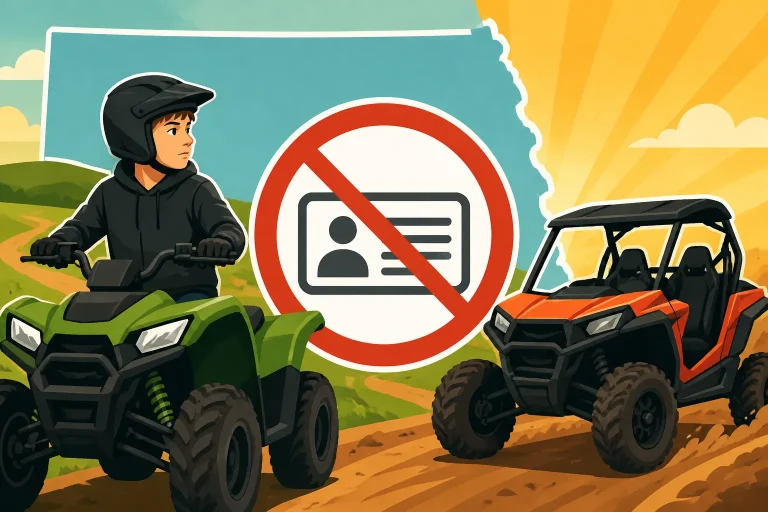
If you’re bringing an ATV or UTV into North Dakota, it’s easy to assume a permit works like a ticket that opens every trail. It doesn’t. The nonresident OHV permit is a state authorization for eligible visiting machines; it does not replace every other requirement or guarantee access to a particular place. Knowing the difference helps you arrive with the right paperwork and a realistic riding plan.
What a North Dakota OHV Permit Actually Does
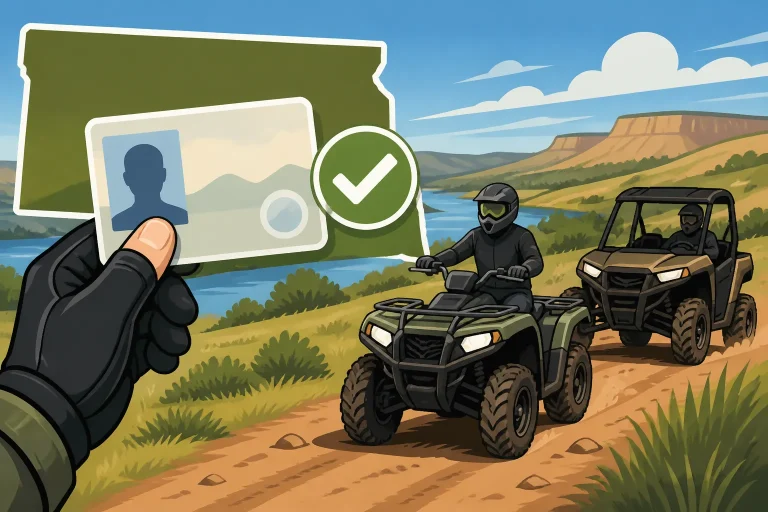
North Dakota’s nonresident OHV permit applies to eligible off-highway vehicles brought into the state by visitors. It addresses the machine’s authorization to operate under North Dakota’s OHV rules. It is not a general admission pass to trails, public land, or state parks.
That distinction matters because riding permission is often a combination of separate things: the machine must qualify to operate, the rider must meet applicable requirements, and the route or property must be open to that kind of use. A permit can satisfy one part of that picture without satisfying the others.
The permit is also not the same as North Dakota registration. Registration is the state process for machines registered in North Dakota and comes with its own requirements and charges. A visiting machine may instead need the nonresident permit, depending on its circumstances. The difference is explained in North Dakota Registration Versus a Non-Resident Permit.
A permit is authorization, not a route map
A permit does not tell you which trails are open, whether a trail allows your machine’s width, or whether wet conditions have prompted a closure. Nor does it grant permission to cross private land. You still need to check the rules and current status for the place where you intend to ride.
For example, designated OHV areas can have different access limits from roads on public grasslands or routes on private property. A permit does not override those limits. Before setting out, check the managing agency’s information for the specific riding area and confirm that your machine is allowed there.
It is not the same as a resident trail tax
North Dakota resident OHV registration and the nonresident permit are separate systems. Resident registration includes a trail tax component. Visitors should not assume that buying a permit means they have purchased the same thing as a resident registration’s trail tax, or that either payment functions as a universal trail pass. North Dakota Trail Tax Instead of a Trail Sticker explains the distinction between the trail-tax concept and the idea of buying access to every trail.
The words “permit” and “sticker” can also create confusion. People may use “sticker” informally to mean any visible proof of authorization, but a decal or permit is not necessarily a fee for trail entry. What matters is what the authorization legally covers—not whether it is displayed as a sticker, decal, card, or other proof.
What the Permit Does Not Replace
A nonresident permit is only one piece of compliance. It does not erase the need to follow North Dakota’s operating rules, and it does not turn a closed or private route into a legal riding route.
| Requirement or access issue | What the permit means | What you still need to check |
|---|---|---|
| Permission for a visiting OHV to operate in North Dakota | The permit addresses state authorization for an eligible nonresident machine | Whether the machine qualifies and whether the permit is current |
| North Dakota registration | The visitor permit is not the same as resident registration | Which process applies to your machine and circumstances |
| Trail access | The permit is not a ticket for every trail | Whether the area is open and allows your machine |
| State park entry | The OHV permit does not automatically cover park admission or vehicle entry requirements | Current park entrance rules and any separate permit needed |
| Private property | The permit does not grant access to someone else’s land | Landowner permission and posted-land restrictions |
| Rider requirements | The permit is not a rider safety credential | Age, training, helmet, passenger, and other applicable rules |
| Road use | The permit does not make every public road legal for OHVs | Road-specific rules, machine requirements, and local restrictions |
Reciprocity is not automatic
Do not assume a registration sticker from your home state will automatically substitute for North Dakota’s requirements. North Dakota has no general reciprocity arrangement that lets visitors rely on another state’s OHV authorization as a blanket replacement. Review North Dakota Has No Reciprocity With Any State and confirm the current visitor requirements before traveling.
This is especially important for riders crossing a nearby state line for a weekend. A home-state registration or decal may still be important proof about the machine, but it does not necessarily satisfy North Dakota’s separate nonresident permit requirement. Being registered at home and being authorized to ride in North Dakota are related questions, not identical ones.
Park entry and trail access are separate questions
A visitor may need to consider park entrance rules in addition to OHV requirements. A park permit or entrance authorization concerns access to a park with a vehicle; an OHV permit concerns the machine’s state authorization. Neither should be treated as a substitute for the other. See Park Entrance Versus Trail Access before assuming that one payment covers both.
The same principle applies outside state parks. Public land may have designated routes and restrictions, while private property requires permission from the owner. On grasslands, roads shown as open to motor vehicles are not the same as permission for cross-country travel. Use official maps and follow posted instructions rather than treating the permit as an all-access pass.
A permit does not waive rider or equipment rules
The operator remains responsible for following rules that apply to the machine, the rider, and the situation. Depending on the ride, that can include safety-training requirements, helmet rules, passenger limits, equipment standards, and restrictions on riding public roads. A visitor permit does not change those rules.
If a young rider is coming along, check the age and safety requirements before the trip. A permit for the machine does not serve as a safety certificate for the person operating it. The relevant requirements are covered in North Dakota OHV Safety Certificates at Age 12 and North Dakota Rules for Riders Under 16.
Choosing the Right Authorization Before You Travel
The simplest way to avoid a paperwork surprise is to identify how the machine is registered, where it is registered, and how long it will be in North Dakota. Then check the state’s current instructions for that situation. If you are unsure whether your machine needs resident registration or a visitor permit, don’t guess based only on the sticker you already have.
For an overview of the visitor process, see North Dakota’s Non-Resident OHV Permit. The details to confirm include the permit’s validity period, what proof you must carry or display, and whether any special category applies to your machine. Those details can change, so check the official instructions before purchase or departure.
A practical pre-trip sequence looks like this:
- Identify the machine and its home-state status. Gather its registration or ownership paperwork and note where it is registered. If you have questions about whether a different authorization applies, compare the visitor permit with resident registration rather than assuming they are interchangeable.
- Check whether North Dakota’s visitor permit applies. Use the current state guidance for nonresident machines. Do not rely only on another state’s sticker or a seller’s description of what is “usually accepted.”
- Confirm the permit’s period and proof requirements. North Dakota’s nonresident permit follows a calendar-year structure, so check the current validity dates and how the permit must be shown. Details are outlined in North Dakota Non-Resident Permits Run January to December.
- Check access for the exact riding area. Confirm that the route is open, appropriate for your machine, and legal for OHV use. A map showing a road or trail does not automatically establish that every vehicle can use it.
- Check separate park or land requirements. If you are entering a state park, private property, or another managed area, verify any additional access rules and permissions.
- Review rider and vehicle rules. Check requirements for the operator’s age, safety training, helmet use, passengers, equipment, and any planned road riding.
- Keep proof available during the ride. Carry or display documents as the current rules require, and keep a copy of important information in a safe place. A permit receipt is useful for your records, but don’t assume it replaces the required permit proof.
A little planning is particularly useful if you are trailering a machine into the state for a short trip. The time spent on the permit does not tell you whether the area will be open after rain, whether a gate is closed, or whether a route is limited to narrower machines. Check those details separately as your travel date approaches.
A Better Way to Think About the “Trail Sticker”
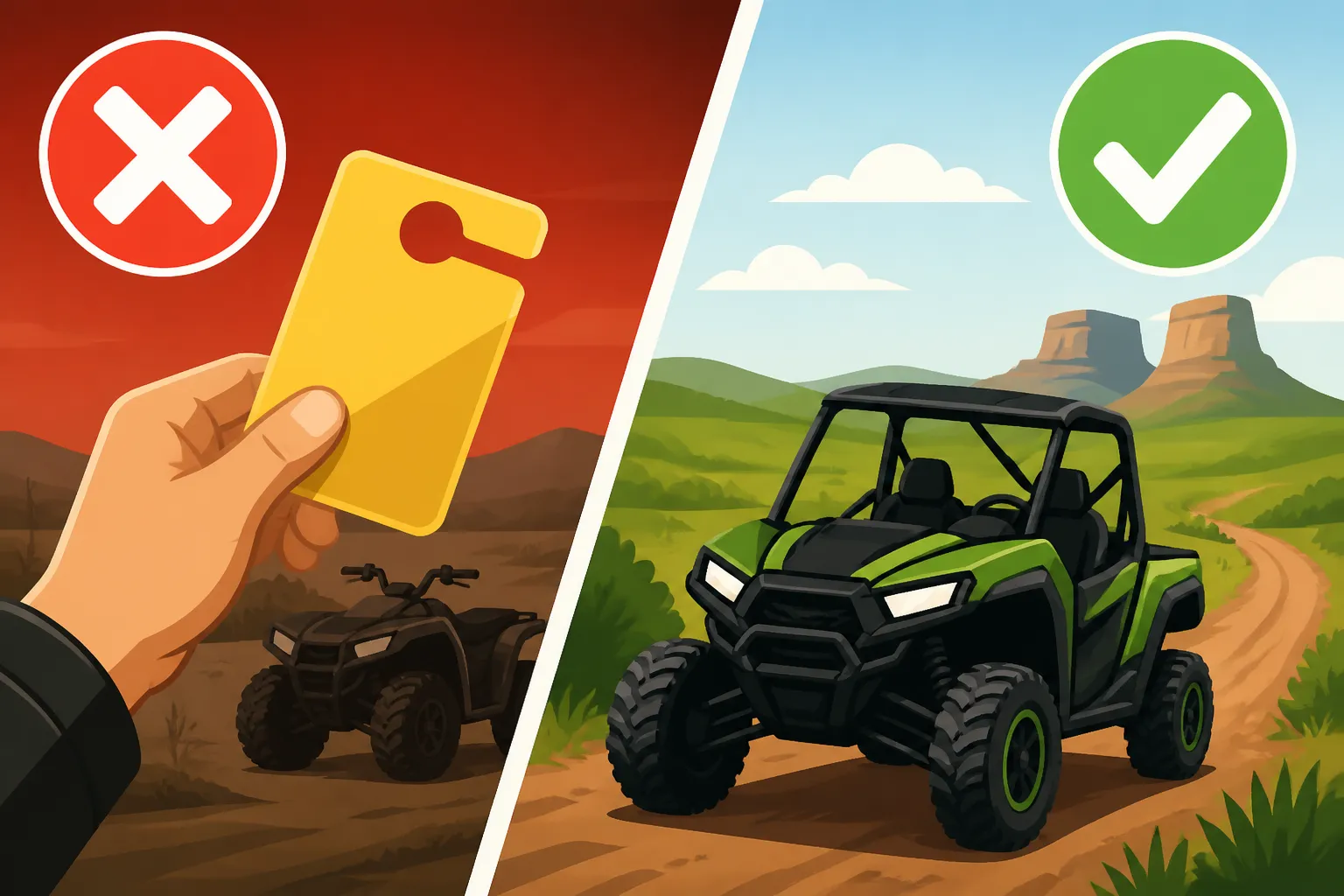
Treat the nonresident permit as authorization for a visiting machine—not as a bundle that includes every form of access. That mental model avoids the most common misunderstanding: paying for one permit does not mean you have paid for trail entry everywhere or gained permission to ride any route you find.
Before leaving, make sure you can answer four questions:
- Is this the correct authorization for my machine as a nonresident?
- Is the permit valid for the dates I will be riding?
- Is the particular riding area open to my machine and type of use?
- Do I need separate park access, landowner permission, or other paperwork?
If you cannot answer one of those questions, resolve it before unloading. Start with the permit rules, then check the access information for the actual route or riding area. Which Ground a Visitor Permit Opens to You can help separate statewide authorization from land-specific access, while North Dakota Permits Sold Online covers one way visitors may be able to handle the permit before traveling.
The same approach helps with the word “sticker.” A visible decal can be evidence that a requirement has been met, but it does not define the full scope of where you may ride. Follow the permit’s instructions for display or proof, and use current trail maps, closure notices, and land rules to plan the ride itself.
When those pieces are kept separate, the process becomes easier to understand: the permit addresses the visiting machine’s authorization; the riding area determines where it may go; and rider and equipment rules apply throughout the trip. That is why a North Dakota OHV permit is not a trail sticker in the sense many visitors mean—it does not buy universal access.
Disclaimer
This article is for general informational purposes only and does not constitute professional advice. Laws, prices and regulations vary by location and change over time. Consult a qualified professional for guidance on your specific situation.