North Dakota Wildlife Area Rules for OHVs
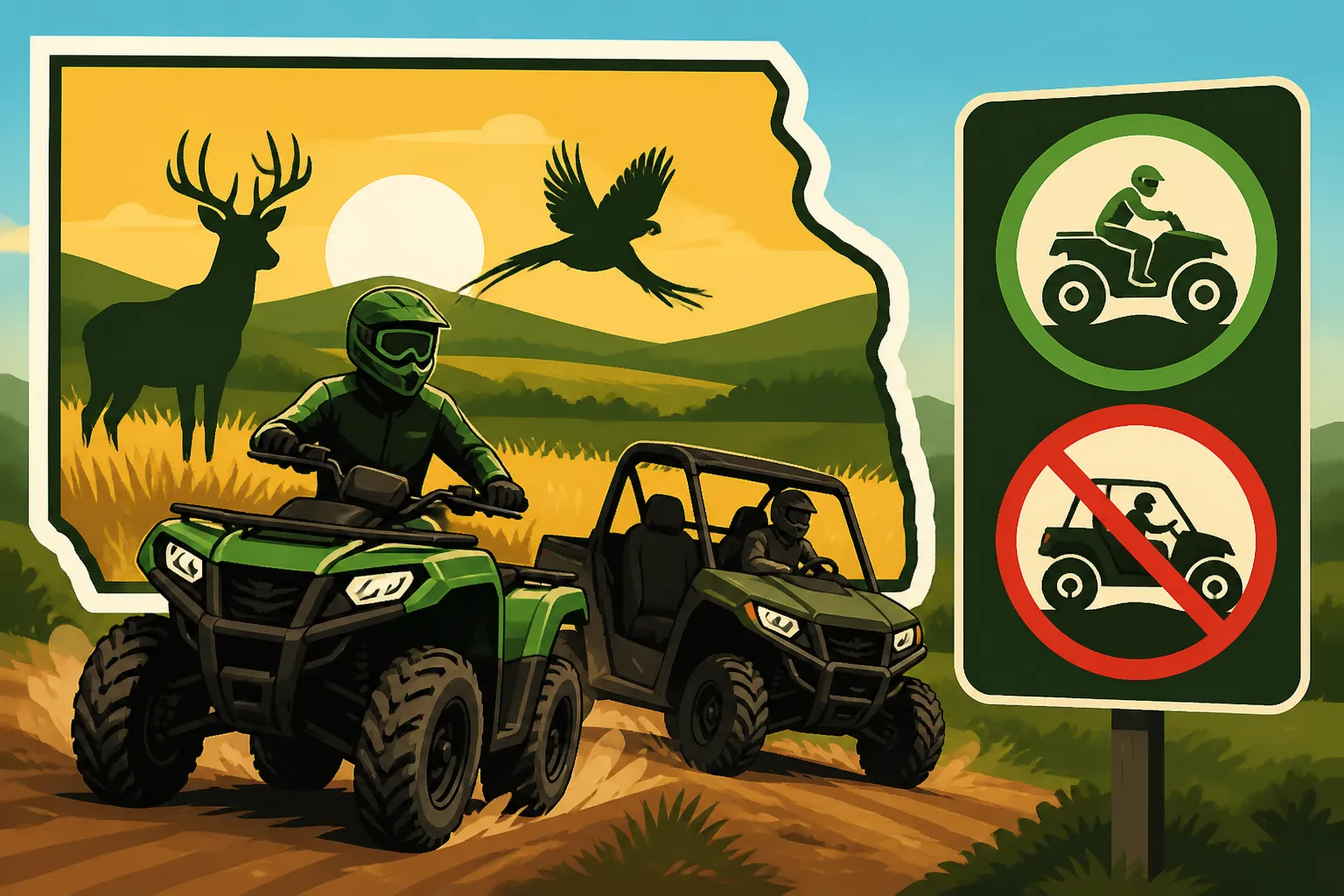
North Dakota wildlife areas can look like open riding country, but public access does not automatically include permission to drive an ATV or UTV across the land. The practical rule is to stay off motorized routes unless the specific area clearly allows them. Here’s how to check boundaries, understand permits, and avoid mistaking hunting access for permission to ride.
A permit does not make a wildlife area rideable
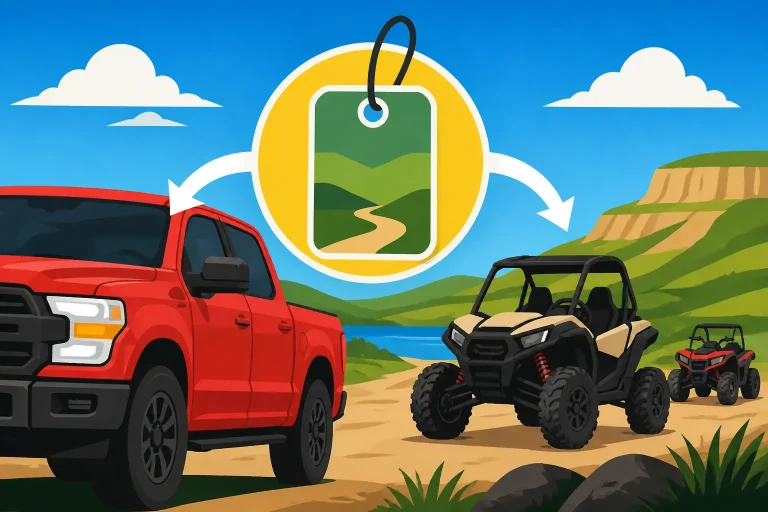
An OHV registration or visitor permit deals with the machine’s legal status; it does not grant access to every piece of public land. Wildlife management areas have their own access rules, and a route that appears passable on the ground is not necessarily open to motorized travel.
For North Dakota wildlife areas, take a conservative approach: do not ride off-road unless the area’s current rules, map, or posted signs expressly allow motorized use on that route. Access may be limited to certain roads or designated trails, and restrictions can differ between areas. A route open to a highway vehicle, or a path used by foot traffic, should not be treated as an OHV route without confirmation.
A North Dakota OHV permit does not replace those land-use rules. If you are visiting from another state, first confirm whether your machine needs a North Dakota permit or qualifies for an exemption. Then check whether the particular wildlife area allows your planned route. The North Dakota Non-Resident OHV Permit information can help with the machine-permit question; it cannot establish that a wildlife area is open to riding. For the difference between permission to operate and permission to enter a particular place, see Which Ground a Visitor Permit Opens to You.
This distinction matters even when the area is publicly owned and there is no gate. A public wildlife area may welcome visitors who are walking, hunting, or viewing wildlife while still restricting motor vehicles to protect soil, vegetation, habitat, and other users. The absence of a “no OHVs” sign is not reliable proof that cross-country riding is allowed.
| What you have or see | What it tells you | What it does not tell you |
|---|---|---|
| A valid OHV registration or visitor permit | The machine may meet a state registration or permit requirement | That a wildlife area is open to OHVs |
| A public wildlife area | The area offers some form of public access | That motorized travel is allowed everywhere |
| A visible track or worn path | Someone has traveled there | That the route is legally open today |
| A road or trail on a map | A route is shown on that map | That it is designated for OHVs |
| An open gate | The gate is not physically blocking entry | That motorized access is authorized |
| Permission to hunt or enter | You may have access for a stated purpose | That you may drive an OHV across the property |
When in doubt, pause before entering with the machine. Identify the area, find its current access information, and confirm the status of the exact road or trail. If the rules do not clearly authorize the route, park where motorized access is allowed and continue on foot, or choose a designated OHV riding area instead.
How to check an area before unloading
Wildlife area boundaries and access points are not always obvious from a road. A public road may run beside or through an area, while nearby parcels may have different owners or restrictions. Before you unload, establish which land you are on and where motorized use is allowed.
Confirm the exact area and route
Start with the area’s official map or access information, not just a general navigation app. Look for the named wildlife area, boundary lines, designated access roads, trail designations, gates, and any notes about vehicle use. If a map shows a road but does not identify it as open to OHVs, do not assume that the line is permission to ride.
If you arrive at an entrance, read the signs before proceeding. A sign may identify a closed route, limit access to particular users, or direct visitors to a permitted route. Pay attention to signs at more than one entrance: a restriction posted at a gate or trail junction may apply even if you entered the property elsewhere.
Maps and signs can also become outdated or difficult to interpret. If the information conflicts, or a route is unclear, contact the agency responsible for the wildlife area before riding. For a planned trip, do this early enough to change the route or destination if needed.
Separate public roads from off-road routes
A public roadway that borders or crosses a wildlife area is different from an internal track or an informal two-track. If you ride on a public road, the rules for that road still apply, including the applicable OHV operating requirements. Leaving the roadway to follow a ditch, field edge, two-track, or shortcut can be a separate land-access issue.
Do not assume a path is open because it appears on a satellite image, has tire marks, or connects two public roads. It may be a maintenance route, an access route for authorized users, or an old track that is no longer open. The rules for public-road operation are covered separately in North Dakota ATV Road Rules by Surface Type.
Check postings and neighboring parcels
A wildlife area may sit beside private land, and boundaries can be easy to cross without noticing. Posted signs, gates, fences, and electronic land-posting information all matter. Check the boundary before you ride close to private parcels or leave an authorized route. North Dakota Posted Land Rules for Riders explains why access rights do not follow from a visible trail or a lack of fencing, while North Dakota Electronic Posting and Riders covers another way a parcel may be marked.
If you cannot tell whether the route remains inside the wildlife area, stop and check. A route that begins on public land can lead onto a neighboring parcel without a clear physical barrier. Continuing because the route looks established can turn a navigation mistake into an unauthorized entry.
Hunting access is not blanket OHV permission
Some visitors come to a wildlife area to hunt, retrieve game, or reach a location with equipment. Those purposes do not automatically authorize motorized travel wherever it is convenient. Access rules may limit vehicles to specified roads, restrict travel by season or location, or reserve routes for particular uses. Check the area’s current rules for the activity and route you have in mind.
Do not treat a general hunting-access explanation as permission to drive off-road. Even if you are legally hunting and have the necessary OHV paperwork, you still need to confirm that motorized operation is allowed on that land and route. The North Dakota Hunting Access by OHV topic is useful for thinking through the separate questions of access and vehicle use.
A simple pre-ride check helps prevent assumptions:
- Name the area. Confirm which wildlife area you are entering, rather than relying on a nearby town, road name, or informal local label.
- Check the current access rules. Look for limits on motorized vehicles, designated routes, seasonal restrictions, and closures.
- Trace the intended route. Confirm that the route is identified as open to the type of machine you plan to ride.
- Check the land around it. Confirm that the route stays within the wildlife area and does not cross a private parcel or another restricted property.
- Check the machine requirements separately. Make sure the machine meets applicable registration or permit requirements, and carry any documents you may need.
- Recheck before departure. Weather, maintenance, habitat protection, or other conditions can affect access. A route that was open on a previous visit may not be open now.
If your purpose requires leaving the authorized route, ask the responsible agency before you do it. Do not rely on informal advice from another rider unless it can be confirmed against current area rules. Permission from a landowner on an adjacent parcel also does not necessarily authorize riding on the wildlife area, and public access to the wildlife area does not authorize crossing private land.
What to do when rules or conditions are unclear
The safest plan is to use only routes that are clearly designated for motorized travel. If you cannot verify that a road or trail is open, treat it as closed to your OHV until you get confirmation. That may mean unloading somewhere else, choosing another area, or covering the final distance on foot.
A few practical habits make that decision easier:
- Save or carry the area map before heading out. Cell service may be unreliable, and an online map may not show land-use restrictions.
- Photograph or note the name of the wildlife area and the access point. That gives you clear information to provide when asking about a route.
- Stay on the designated route instead of widening it to avoid mud, brush, or another obstacle. Detours can cause damage and may take you outside the authorized corridor.
- Do not move a gate, bypass a barrier, or follow another rider around a closure.
- If conditions are wet, soft, or recently disturbed, be especially cautious. A route may be vulnerable to damage even where motorized access is normally allowed.
- If a sign is missing, damaged, or inconsistent with the map, do not assume the least restrictive interpretation. Stop and check with the agency.
- Plan a backup destination so that uncertainty at one area does not tempt you to ride an unverified route.
A wildlife area’s general public-access status is not a substitute for route-specific confirmation. The North Dakota Trail Status by App and Phone topic may help when you are comparing designated riding options, but a wildlife-area road should still be checked under the rules for that specific property.
Keep the paperwork question and the land-access question separate. A machine may be properly registered and still be prohibited from a particular wildlife area. A route may be open to motorized use but still require the rider to meet the applicable state permit or operating rules. Getting both answers before the trip is more reliable than trying to resolve them at a gate or after unloading.
When a wildlife area does not clearly allow OHV use, choose a location intended for motorized riding. North Dakota has designated options with their own access information, such as those described in North Dakota OHV Trails: All Four Riding Areas. Matching the destination to the kind of riding you want is often easier than trying to interpret an ambiguous track in a wildlife area.
Disclaimer
This article is for general informational purposes only and does not constitute professional advice. Laws, prices and regulations vary by location and change over time. Consult a qualified professional for guidance on your specific situation.